You’re tired of fiddling with cords and missing sunrise, so your coop door needs a hands‑off solution that actually works in winter storms. Here’s the thing: a solar‑powered door with a reliable battery and a sturdy aluminum frame will keep the flock safe while you sip coffee, but you’ll have to pick between a simple timer or a Wi‑Fi‑enabled model that streams video. All right, if you want peace of mind without extra gadgets, go for the basic timer; if you love checking on the birds from your phone, the smart version is your match. Choose the one that fits your tech comfort level and you’ll stop worrying about doors and start enjoying the sunrise.
Solar-Powered Auto Chicken Coop Door with Timer & Remote
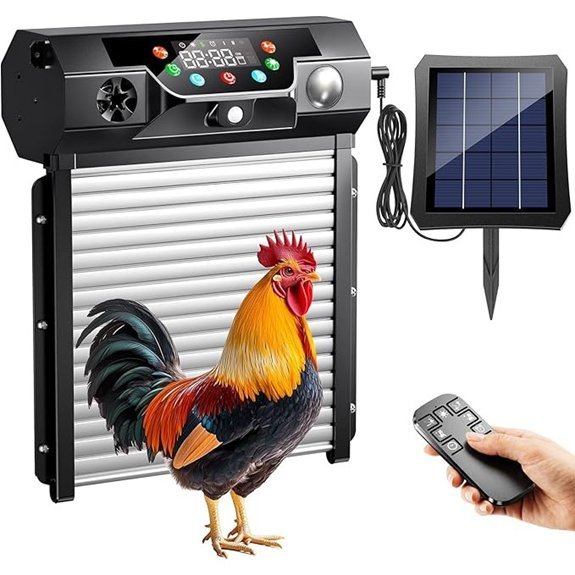
All right, you’ve probably wrestled with tangled wires and dead batteries, and you’re tired of manually opening the coop every sunrise. This solar‑powered door solves that by harvesting sunlight with a high‑efficiency panel, so you never need to run a cord. It stores enough charge for cloudy days, and the built‑in timer and light sensor let you set a sunrise‑to‑sunset schedule or tweak it with the remote—no more guessing when the birds are ready.
Now, safety matters. The anti‑pinch tech stops and reverses the door if a hen or a curious raccoon gets in the way, and the secure closing latch keeps predators out. The roll‑up design fits low coops with tight headroom, and the black aluminum alloy resists rust, water, and temperatures from –15 °F to 140 °F. It’s light—3.5 lb—yet sturdy enough for Leghorns, Plymouth Rocks, or Rhode Island Reds.
Here’s the thing: if you have a small backyard setup and want a set‑and‑forget solution, this kit fits perfectly. You’ll need a sunny spot for the panel, but the backup charger covers occasional shade. The remote adds convenience, though you could rely on the timer alone if you prefer simplicity. Choose it, and you’ll spend less time fiddling and more time enjoying your flock.
Smart Solar Chicken Coop Door with Camera and WiFi Control
https://m.media-amazon.com/images/I/71iNfad1kgL._AC_SX679_.jpg
You’re tired of guessing whether the coop door closed right and and missing the chance to see what’s happening inside.
All right, the smart solar door solves that with a 1080P HD camera that streams live video to your phone. and night‑vision lets you peek after dark, while a predator‑alert alarm snaps photos and pushes instant notifications.
Now, Wi‑Fi control means you open or close the door from anywhere, set daily schedules, and share access with family or neighbors. The built‑in talk feature lets you speak to your birds, and a handheld remote works up to 15 meters away.
Here’s the thing: the 7 W solar panel keeps the system powered, but you can swap in a removable 5000 mAh battery or USB charger if sunlight’s scarce. The roll‑up design fits most coops, and the anti‑pinch safety reverses gently if a chicken blocks the door, sending you a notification.
If you want real‑time monitoring, remote operation, and a solar‑powered solution that tolerates –15 °C to 60 °C, this setup matches those needs. It’s not for ultra‑budget builds, but it eliminates guesswork and protects your flock with minimal effort. Choose it, and you’ll finally know exactly what’s happening inside.
Solar Powered Automatic Chicken Coop Door with Timer & Remote Control
https://m.media-amazon.com/images/I/718CzWOssiL._AC_SX679_.jpg
If you’re tired of waking up at sunrise just to open a coop door, the solar‑powered automatic system with timer and remote control solves that hassle. You’ll set the timer once, and the door opens at dawn, closes at dusk, no more early‑morning scrambles. The remote works 50‑100 m away, so you can check it from the porch without stepping outside.
All right, the battery lasts up to five years and the solar panel keeps it topped off, but you still have a USB charger for cloudy days. The LCD screen shows status at a glance, and you can switch to manual or light‑triggered mode if you like flexibility.
Now, safety matters: the anti‑pinch design stops the door if a chicken blocks it, then resumes, and the waterproof aluminum housing survives snow, rain, and temperatures from –15 °F to 140 °F. The opening is 20 % larger than most competitors, giving you extra headroom for ducks or geese.
Here’s the thing: installation takes five minutes with the included hardware, so you won’t need a handyman. If you want a set‑and‑forget solution that still lets you intervene when needed, this is the one for you. Go ahead, trust the timer and remote, and enjoy more sleep.
Solar Powered Automatic Chicken Coop Door – 6 Modes, LCD Display
https://m.media-amazon.com/images/I/71bJezo-XfL._AC_SX679_.jpg
Solar‑powered operation lets you forget about wires, and the 2000 mAh battery keeps the door moving even on cloudy days. You’re tired of fiddling with timers that miss a sunrise, right? Here’s the thing: this door offers four automatic modes—dawn, dusk, sunset and sunrise plus two manual overrides, so you can set it and walk away, or intervene when you feel like it.
All right, the LCD display shows mode, timer, and battery status in crisp color, so you never wonder if it’s charging or stuck. You’ll love the anti‑pinch sensor with nine sensitivity levels; it stops and reverses at an obstacle, but cranking it up in winter saps a few extra watts.
Now, the aluminum alloy frame resists rust and survives -40°F to 140°F, meaning you won’t need a replacement after a snowstorm. If you’re okay with occasional rail cleaning and a Type‑C revive when the battery sleeps, this model fits a backyard flock perfectly. Choose it, and you’ll get a reliable, low‑maintenance door without the hassle of external power.
Solar-Powered Automatic Chicken Coop Door with Timer, Sensor, Remote
https://m.media-amazon.com/images/I/71V1YifqS6L._AC_SX679_.jpg
Tired of scrambling at sunrise to let your flock out? You’ll love the IBKINXX BSV‑AD002, a solar‑powered door that opens on sunrise and shuts at sunset without you lifting a finger. It offers four modes—timed, light‑sensitive, or combos—so you can match any routine, and the 9.45 × 10 inch opening gives your birds plenty of space.
All right, the anti‑pinch sensor stops the door if a chicken slips underneath, and the intrusion alarm deters predators. Weather‑proof aluminum alloy keeps rain out, while the LCD remote lets you adjust settings from the porch. This one’s for you if you want stress‑free access and better airflow, but expect a bit of learning curve with the timer.
Now, the remote control and LCD display make daily tweaks painless, and the green finish blends into most coops. If you have ducks or larger breeds, the spacious hatch works well, though very small birds might need a lower latch. Obviously, solar power means you won’t pay electricity bills, but cloudy days may need a backup battery. Choose this if you value hands‑off safety and don’t mind a short setup—your flock will thank you.
Factors to Consider When Choosing a Solar Powered Chicken Coop Door
You’re probably worried that a tiny panel won’t keep the door moving on cloudy days, so you’ll want to check the solar panel size and battery capacity first. Obviously, a higher‑efficiency source and a robust, weather‑rated battery will outlast cheap kits, but they add weight and cost—good if you have steady sun, not if you’re in a rainy zone. Here’s the thing: pick a model with anti‑pinch safety if you have curious chickens, and you’ll avoid a frantic morning repair session.
Power Source Efficiency
If you’ve ever watched your flock miss the sunset because the door stayed stuck, you know how frustrating that can be. The power source you pick decides whether that drama repeats. All right, high‑efficiency panels keep the door moving without any wiring, and they charge a backup battery for cloudy days, so you never hear a clank at dusk.
Now, consider battery type. Removable 5000 mAh units let you charge indoors via USB, perfect if you want a quick swap when solar power falls short. Built‑in 2000 mAh packs run 24/7 and revive from sleep with a direct port, but you can’t pull them out for charging. The combo systems blend solar and rechargeable cells lasting up to five years, giving you long‑term peace of mind.
Obviously, temperature matters. Panels that work from –40 °F to 140 °F stay efficient in any climate, so you won’t lose power in a freeze or heatwave. Pick the setup that matches your routine: if you love hassle‑free, go with built‑in; if you want flexibility, choose removable. Either way, you’ll keep the coop door humming and your chickens happy.
Solar Panel Size
The biggest gripe you’ll face with a solar‑powered coop door is the door stalling at dusk because the panel can’t keep up with the battery drain. All right, you need a panel that spits out enough watts to refill the battery faster than the door uses it. A 7 W panel works in bright summer, but if you get cloudy days or winter’s short sun, bump up to 10‑12 W or choose a high‑efficiency model. This one’s for you if you want a set‑and‑forget system that never calls for a manual charge.
Now, think about what else you run: a camera, an alarm, maybe a light. Those extras add a few watts, so size your panel accordingly. Obviously, a larger panel costs more, but it saves you from frequent outlet trips.
Here’s the thing: if you live in a region with long nights, a bigger panel is the safe bet; if you’re in a sunny desert, a modest 7 W will do. Choose the size that matches your climate and accessories, and you’ll enjoy reliable automatic door action all year.
Battery Capacity & Life
A weak battery makes the door stall at sunset, and you’ll end up scrambling for a charger when clouds linger. You’ve felt that frustration, so let’s fix it. Choose a 5000 mAh or larger battery; it gives you extra hours on cloudy days and cuts down on recharging trips.
All right, now think lifespan. A battery promising five‑year life means you won’t be swapping cells every season, which saves time and money. If you’re a DIY‑type, a unit with a USB backup port lets you juice it indoors when solar input dips.
Here’s the thing: some models boast a “revivable” cell that awakens from deep sleep via a charging port. That’s handy if you ever let the door sit idle for weeks. Pair a 7 W panel with a robust battery, and you’ll keep the door humming regardless of weather.
Obviously, a bigger battery adds weight and cost, so if you have a small coop and a sunny roof, a 3000 mAh pack might suffice. But if you want peace of mind during long overcast stretches, go big.
Now you know the trade‑offs. Pick the capacity that matches your climate and how often you can check the door. The right battery makes the whole system reliable, so you can relax and let your flock enjoy seamless open‑and‑close cycles.
Weather Resistance Rating
All right, you’ve seen doors jam when frost builds on the rails, and you’re tired of hunting for a spare part after a storm. The thing you need is a clear weather resistance rating that tells you the door will survive your climate’s extremes. Look for a temperature range that stretches from –40 °F up to 140 °F; that covers winter freezes and scorching summer heat without hiccups.
Now, check the material. Aluminum alloy frames resist rust and corrosion, so you won’t be swapping out a busted door every spring. Waterproof sealing on the control unit and mechanism keeps rain, snow, and dust out, and a solar panel rated for all‑weather use means cloudy days won’t leave you in the dark.
Here’s the thing: ice on sliding rails can still be a nightmare. If you live where frost builds fast, pick a model with anti‑ice design features or plan regular maintenance. Otherwise, a standard rust‑proof door will work fine. Obviously, you want a battery that handles cloudy weather, too—so a sealed, weather‑proof battery housing is a must.
In short, match the temperature range, material, and sealing to your local weather, and you’ll avoid costly repairs. Choose the door that meets those specs, and you’ll feel confident your flock stays safe, no matter what Mother Nature throws at you.
Anti‑Pinch Safety Features
If frost builds on the rails and the door slams shut, you’ll hear a thud and risk a chicken getting stuck—so you need a system that senses an obstruction and reverses instantly. Anti‑pinch safety stops the door the moment it meets resistance, then backs it out with barely any force. You can tweak sensitivity, which helps when ice builds up in winter, but too much adjustment may cause false triggers on windy days.
All right, some models ping you when a reversal happens, so you know exactly when something went wrong. Keep the rollers and hinges clean; grime dulls the sensor and defeats the safety net you expect.
Now, if you love tech alerts and don’t mind occasional maintenance, choose a door with adjustable sensors and notifications. If you prefer set‑and‑forget simplicity, a basic fixed‑sensitivity system works fine—just remember to wipe the tracks each season. Either way, you’ll avoid pinched chickens and sleep easier at night.
Remote Control Range
You’re probably tired of trekking to the coop every time you want to let the chickens out, especially when the weather’s lousy. That’s why remote control range matters. Obviously, a 15‑meter limit means you’ll be out in the rain just to open a door, which defeats the convenience of solar power.
Now, think about your layout. If your house sits 30 meters away, a system that reliably reaches 50‑100 meters lets you stay dry and still override the timer. The thing is, walls, barns, or rolling hills can shave off a good chunk of that range, so test the signal before you buy.
Here’s the thing: a 100‑meter claim sounds great, but only in open fields. If you have dense fencing or multiple outbuildings, a 50‑meter model might be your sweet spot. Choose the range that matches your daily walk‑to‑coop distance, and you’ll feel confident that the door obeys you without a marathon trek.
Installation Simplicity
Remote‑control range got you out in the rain, but the real headache starts when you actually try to install the door. You’ll love a tool‑friendly design that comes with every bolt, bracket and screw you need, letting you finish the job in under five minutes. All right, if your coop has low headroom, choose a roll‑up model that needs barely any clearance—no extra space required.
Now, look for pre‑installed connection cables and a clear manual; you won’t be hunting for spare parts or guessing wiring steps. Obviously, a system that runs purely on solar power means you skip permanent wiring and an outlet entirely, which is a huge time‑saver. This one’s for you if you want a hassle‑free setup that fits most standard coop frames without drilling into your budget. Go ahead and pick the one that matches your coop’s layout, and you’ll have a door up before sunset.
Compatibility With Coop Size
Measuring your coop’s opening and the clearance above it is the first hurdle; a roll‑up door slides in tight spaces, while a swing‑out needs extra headroom. You’ll want to check the door’s listed dimensions against your frame so nothing blocks feeders, perches, or the roofline. If you raise a larger breed—say, Jersey Giants—make sure the opening is wide and tall enough for them to pass without bumping the frame.
All right, now think about mounting. Wood‑sided coops take a simple bolt‑on bracket, but metal frames may need extra reinforcement or a custom plate. A swing‑out door can be a nightmare in a low‑ceiling coop; the roll‑up will glide cleanly even when space is scarce.
Here’s the thing: this one’s for you if you have a compact, low‑profile coop and need a door that doesn’t eat up headroom. If you enjoy a classic swing‑out aesthetic and have plenty of clearance, go ahead—just verify the hinge clearance. Either way, you’ll know exactly which design fits your coop, so you can buy confidently without second‑guessing.