If you’ve ever tossed raw chickpeas to your flock and noticed gassy, bloated hens, you’re not imagining things. Raw chickpeas contain lectins, protease inhibitors, and oligosaccharides that wreck chicken digestion. Cooked chickpeas, though? Totally different story — boiling deactivates lectins, pressure cooking slashes tannins by 94%, and iron availability jumps 56%. You can safely include cooked chickpeas up to 20% of their diet. Stick around, because there’s a lot more your flock’s health depends on.
Can Chickens Eat Chickpeas?
Obviously, flavor vs. safety matters here — your chickens will peck at almost anything, but that doesn’t mean everything’s good for them. Chickpea economics also work in your favor since they’re affordable and protein-rich when processed correctly.
All right, bottom line: chickpeas earn their place in your flock’s diet — just not straight from the bag.
What Nutrients Do Chickpeas Actually Provide?
So you’ve decided chickpeas are worth trying — smart call. Here’s the thing: chickpeas pack serious macronutrient density into every cup. You’re looking at 14.5g of protein, 12.5g of fiber, and key minerals like manganese (74% DV) and copper (64% DV). Your flock benefits from that nutritional punch.
Now, obviously raw chickpeas contain phytic acid, which blocks mineral absorption. That’s where anti‑nutrient mitigation matters — soaking or boiling breaks down those compounds, making zinc, iron, and phosphorus actually available to your birds.
All right, the folate, B vitamins, and iron aren’t flashy, but they support feather growth and egg production quietly in the background. You’re not just tossing scratch — you’re genuinely supplementing their diet. That’s the difference worth making.

The information below is per-pack only


Raw vs Cooked Chickpeas: Which Should You Feed?
Protease inhibitors, lectins, tannins, amylase inhibitors, oligosaccharides — compounds that actively block your flock’s ability to absorb nutrients and mess with their digestion. Raw chickpeas carry all of them. That texture impact alone makes raw chickpeas tough for chickens to break down, and the anti-nutritional load compounds the problem fast.
Here’s the thing — cooking changes everything. Heat deactivates most of those blockers, softens the texture, and makes the protein and starch actually usable. If you’re weighing fl vs chickpeas debates in poultry forums, cooked consistently wins.
Obviously, nobody wants to slow their flock’s growth over something preventable. Cook them until soft, chop them up, mix them into regular feed. That’s it. Simple prep, real results — you’ve already done the hard part just by knowing this.

COMPLETE STARTER FEED FOR CHICKS: Specifically formulated for chicks from hatching to 16 weeks, this non-medicated chick starter feed delivers balanced nutrition and essential nutrients to support strong, healthy early growth and development.

COMPLETE ALL FLOCK FEED FOR MIXED BACKYARD FLOCKS: Versatile poultry feed & all flock feed designed to support chickens, ducks, turkeys, geese, & more; a balanced bird food that simplifies feeding a diverse species in your backyard or homestead
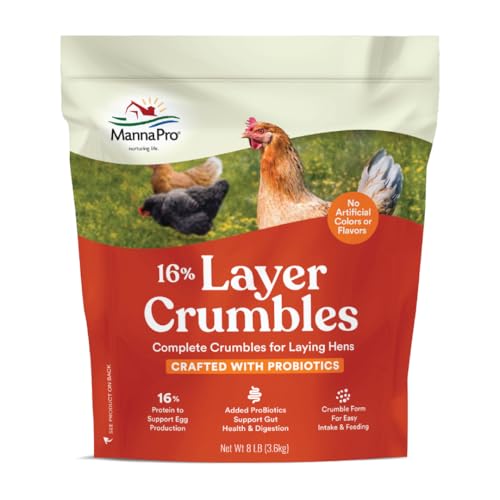
COMPLETE CHICKEN FEED FOR LAYING HENS: Manna Pro Chicken Feed delivers complete nutrition designed for laying hens, supporting strong egg production, healthy feathers, and overall wellness; balanced formula helps maintain optimal health in backyard flocks
Why Raw Chickpeas Cause Digestive Problems
When raw chickpeas hit a chicken’s digestive tract, the trouble starts fast — and it’s not just one compound causing the problem, it’s a whole pile-up. Oligosaccharides like raffinose and stachyose aren’t fully broken down, so they reach the lower gut undigested, where bacteria ferment them and produce excess gas. That’s your oligos intolerance bloating situation right there. Now layer on resistant starch, FODMAPs, and antinutrients like lectins and phytic acid interfering with normal digestion — suddenly you’ve got a compounding mess. Here’s the thing: raw chickpeas also pack serious fiber. Fiber overload hits hard when the digestive system isn’t adapted. All right, the takeaway’s simple — cooking eliminates most of these issues. Skip raw entirely, and you skip the problem.


Shan Murgh Cholay recipe and seasoning mix comes packaged and sealed in a box containing 1 sachet of powder mix of 50g/1.76oz.

How Cooking Neutralizes Chickpeas’ Anti-Nutritional Factors
Cooking’s the fix — and not in a vague, hand-wavy way, but in a genuinely measurable, compound-by-compound way that should actually make you feel better about feeding chickpeas to your flock. You’ve already seen what raw chickpeas do. Now here’s where it gets good. Pressure cooking delivers maximum antinutrient reduction — tannins drop nearly 94%, polyphenols drop 87%. Boiling bumps iron up 56% while breaking down lectins. High-pressure treatment handles texture softening beautifully, creating larger pores and achieving over 93% hydration with pre-soaking. Microwave cooking retains more B-vitamins than boiling while still crushing antinutritional factors markedly. All right — every method has trade-offs, but every method beats raw. You’ve got options. Pick one, cook those chickpeas, and your birds win either way.
How Much Is Safe to Feed Your Chickens?
So you’ve cooked the chickpeas — great — but now you’re staring at the bowl wondering how much actually goes in the feeder without crossing a line you’ll regret later. Here’s the thing: treats, including chickpeas, shouldn’t exceed 10% of their daily diet. For processed or cooked chickpeas, you’re safe up to 20% inclusion without production problems.
Now, don’t dump an entire batch weekly. Offer chickpeas once or twice weekly, keeping portions honest. Build a seasonippea rotation around seasonal sourcing — fresh batches during harvest months mean better quality at lower cost.
Obviously, overfeeding causes obesity and digestive chaos. Methionine and cysteine remain limiting amino acids regardless of preparation. Keep it measured, keep it rotating, and your flock stays healthier without you overthinking every handful.

NUTRITIOUS CHICKEN TREATS FOR LAYING HENS & FLOCKS: Wholesome mix offers fun & nutrition in one tasty snack; these premium chicken treats for laying hens encourage natural pecking behavior, support strong eggs, & are a perfect choice for backyard flocks

7 GRAINS: Our scratch grains for chickens offer a high-protein, high-fiber blend of corn, wheat, milo, barley, oats, sunflower seeds, and millet, delivering essential vitamins and minerals to keep your birds healthy, energized, and thriving every day.

Premium Quality Chicken Treats: Specially formulated, high-quality chicken snacks for laying hens, ensuring only the best for your pet chickens
How Chickpeas Improve Meat Quality and Fatty Acid Profiles
The fat your chickens eat ends up in their meat — that’s not a metaphor, that’s just biology. If you’re frustrated that your homegrown chicken tastes bland or fatty in all the wrong ways, here’s the thing: chickpeas can actually shift that.
Chickpeas carry over 50% linoleic acid in their fat profile — a PUFA that transfers directly into better meat composition. Studies show higher unsaturated fatty acids improve the nutritional outline of the meat you’re eventually eating. Now, biofortified breeding has even produced chickpea varieties optimized specifically for this.
All right, here’s your practical nudge — if you want eggs and meat that reflect genuinely better inputs, adding chickpeas to your feed rotation isn’t experimental. It’s just smart.
What to Watch Out for When Feeding Chickpeas
Chickpeas aren’t a free pass — and if you’ve been tossing raw ones into the run thinking you’re doing your flock a favor, here’s the thing: you’re probably causing more harm than good. Raw chickpeas carry trypsin inhibitors, lectins, and tannins that wreck nutrient balance and stress your birds’ pancreas. Now, toxin monitoring doesn’t need to be complicated — just cook or extrude them first, rinse any canned versions to cut sodium, and skip hummus entirely. Keep feedutrient balance tight by capping chickpeas at 10% of daily intake raw, or 20-30% if cooked. Watch for bloating, wet litter, or sluggish egg production — those are your early warning signs. Handle prep right, and chickpeas become an asset, not a liability.
How to Add Chickpeas to Your Flock’s Diet
Getting chickpeas into your flock’s routine isn’t complicated, but it does require a little structure — and if you’ve just been tossing whatever’s convenient into the run, that’s exactly the frustration we’re untangling here.
Here’s the thing: cooked or extruded chickpeas work up to 30% inclusion, while raw stays under 20%. For flow diversity and diet rotation, combine chopped cooked chickpeas with your regular layer pellets at a 3-to-1 ratio, or blend them into scratch mixes to bump protein by roughly 2%.
Now, you don’t need a system overhaul. Start with a few tablespoons, introduce gradually, and watch how your flock responds. Add them once or twice weekly as treats, or incorporate them regularly for soy substitution. Simple, practical, done.