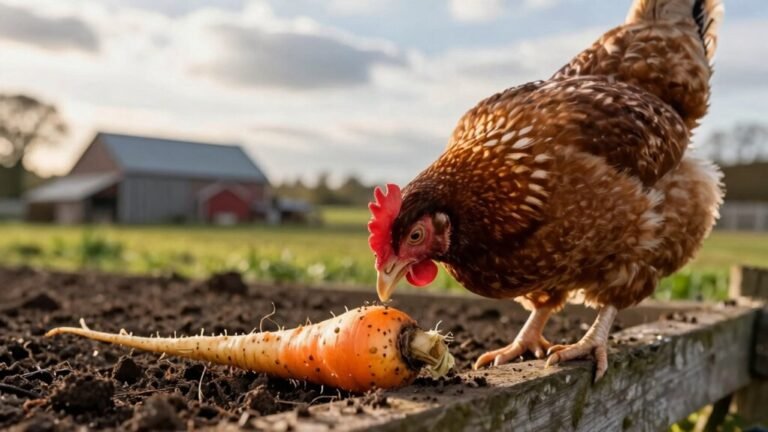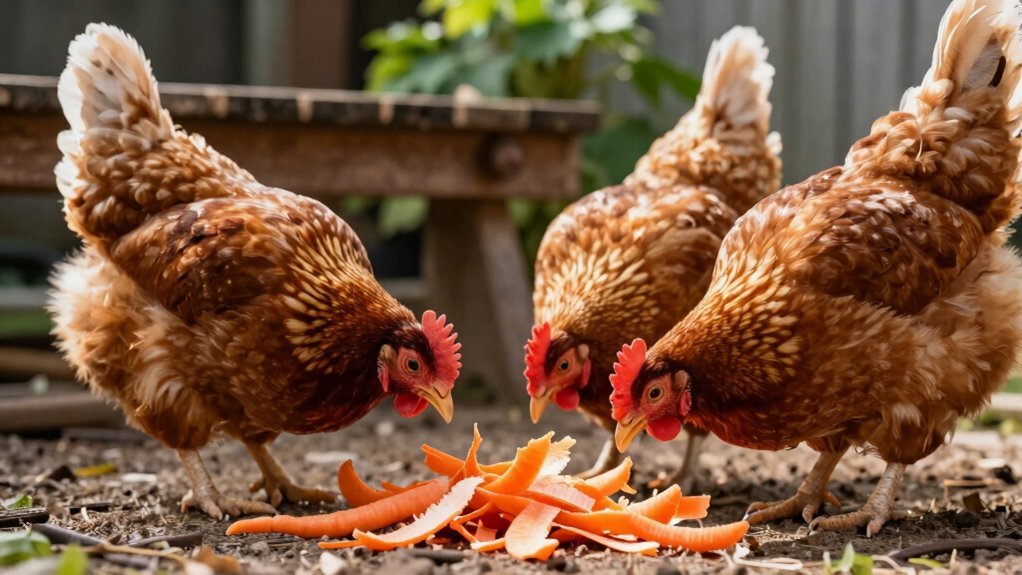
You’re right to wonder if carrot peels are safe for your flock, and the short answer is yes—just wash, trim, and serve them in small, bite‑size pieces. Peel the carrots, rinse off any grit or pesticide residue, cut them into 1‑2 cm strips, and offer a few per bird once or twice a week, keeping treats under 10 % of the diet. The peels add vitamin A, antioxidants, and fiber, which boost eye health, immunity, and gut microbes; now you’ll see brighter yolks and sturdier shells. If you keep portions modest and monitor for crop issues, you’ll enjoy a tasty, low‑cost enrichment that supports overall health.
Quick Answer: Chickens Can Eat Carrot Peels
If you’re wondering whether carrots’ skins belong on a chicken’s plate, the answer is a straightforward yes—just in moderation. You can feed raw peels for a crunchy treat, or cook them lightly to soften the bite. Peel texture variations matter: softer pieces suit older birds, while crisp bits keep younger hens pecking happily. Cooking temperature effects also count; a quick steam at 100 °C preserves vitamins while making the peel pliable.
Here’s the thing: a handful of chopped peels won’t replace balanced feed, but the vitamin A, antioxidants, and fiber boost health. Studies show 1.5 % peel powder improves egg yolk color and shell thickness. Carrot peels are a good source of dietary fiber and support digestion. All right, remember to keep treats under 5 % of the diet. The takeaway? Carrot peels are safe, nutritious, and versatile—just watch portion size and texture. Ready to try a mix of raw and lightly steamed peels for your flock? Always remove any uneaten leftovers promptly to prevent spoilage and pest attraction. As with any kitchen scraps, ensure the peels are free from harmful additives like salt or spices before offering them to your flock. While carrots support gut health, they are not a substitute for veterinary deworming treatments when parasites are a concern.
Safety First: Clean & Inspect Carrot Peels
Wash those carrot peels thoroughly before you give them to your chickens. You’ll rinse under cool running water, using a produce brush if grit clings, especially on organic roots that may still hold soil. This step cuts pesticide residue and any chemical contamination from conventional carrots.
Now, inspect each piece. Toss any peel with mold, slime, black spots, or a sour odor—these signs mean microbes or decay that could sick your flock. Remove sections damaged by insects or decay, because they harbor harmful bacteria. Just as the guide advises chopping veggies to avoid choking, ensuring peels are cut into small pieces prevents similar hazards for your birds.
All right, follow storage guidelines. Refrigerate fresh peels promptly, keep them below 40 °F, and use them within a couple of days. If you need to hold them longer, freeze them. Proper storage prevents spoilage and keeps the feed safe. While carrot greens are known to provide beneficial dietary fiber, ensuring the peels are equally clean and fresh is essential for supporting your flock’s digestion. Just as carrots are appreciated for their nutritional value, maintaining high standards for preparation ensures these snacks remain a healthy addition to your birds’ diet.
Takeaway: Clean, inspect, and store carrot peels correctly, and you’ll give your chickens a safe, nutritious treat. Ready to learn how to make the peels easy for them to peck?
How to Prepare Peels for Easy Pecking
How should you cut carrot peels so chickens can peck them easily? You’ll want bite‑sized, uniform strips—about 1‑2 cm long. Thin pieces scatter, giving many pecking spots, while short bits prevent slips and tangles. First, rinse the peels, then slice them into even sticks. Lightly steam for 2‑3 minutes, then pat dry; this softens without turning them mushy.
Now, you can add a pinch of peel seasoning—herbs, garlic powder, or a splash of apple cider vinegar—to boost flavor without overwhelming the birds. If you’re feeling creative, try a quick peel dyeing with beet juice; a few drops give a bright hue that sparks curiosity. Incorporating these fresh veggie scraps alongside baked flock blocks made from oats and seeds provides varied textures that encourage natural foraging behavior. All right, spread the cooled, dry strips on a shallow tray or low dish, and let the flock peck at their own pace. Remember that treats should never replace balanced nutrients found in age-appropriate feeds, as excessive snacking can dilute essential dietary requirements. The takeaway: uniform, lightly softened, and optionally seasoned or dyed peels make for a tidy, enticing treat. Ready to mix them into scratch grains? Just as Black Sex Link chickens rely on quality nutrition to maintain their high egg production and health, providing well-prepared vegetable treats supports your flock’s overall vitality.
Recommended Portion Size & Feeding Frequency
You’re probably wondering whether a handful of carrot peels is enough or if you should be loading the coop. The answer is a few small peels per bird, not a full meal. For a flock of ten hens, toss five to eight peels; for a larger flock, double the amount but keep each serving modest.
Now, how often should you offer them? Treats belong in the occasional category—once or twice a week is ideal. Daily scraps can make chickens picky and push them away from their balanced feed. It is crucial to ensure that treats like carrot peels never exceed 10% of the diet so that hens continue to consume their essential high-protein layer feed as the staple. Remember that an adult chicken typically requires about 120 grams of complete feed daily to maintain health and production, so treats should never displace this primary nutrition source.
Here’s the thing: intake monitoring is vital. Watch how quickly each bird pecks, remove leftovers, and adjust portions based on age and size. If you notice a drop in regular feed consumption, cut back. Unlike raw or dried beans which can cause digestive blockages and poisoning, carrot peels are safe when fed in moderation.
Takeaway: Small, infrequent servings keep peels a healthy supplement. Next, consider how to mix them with other veggie scraps for variety.
Mix Carrot Peels With Other Veggie Scraps
If you’re wondering how to turn carrot peels into a tasty, balanced snack, the answer is simple: blend them with other veggie scraps. You’ll notice that combining scrap types—leafy greens, cruciferous stems, and even fruit rinds—creates a texture chickens love, while adding vitamins A, K, C, and fiber. Just as parsnip roots are safe but their greens are toxic, always ensure your mix excludes any harmful plant parts like parsnip greens. Now, here’s the thing: wash all scraps, then chop them into peck‑sized pieces. A food processor can give you a uniform mix, or a sharp knife works fine for smaller batches. All right, batch preparation methods matter. Portion the mix into daily servings and keep it refrigerated for no more than two days to avoid spoilage. Takeaway: a varied, freshly chopped blend keeps chickens interested and healthy. Next, consider how to store leftovers safely. Remember that chickens are omnivorous birds who naturally hunt for essential nutrients found in insects, so mixing vegetable scraps with occasional protein sources like mealworms can further support their health and egg production. It is also crucial to avoid overfeeding these treats to prevent nutrient dilution in their primary diet.
Using Peels as Enrichment, Not a Staple
Why should you treat carrot peels as enrichment, not a staple? You’re probably wondering if those orange strips belong in the daily ration. The answer: they’re a low‑cost foraging treat that sparks pecking and scratching, keeping bored birds busy for short bouts.
How do you deliver them? Use varied dispensing methods—scatter a few dry strips over clean bedding, hang a thin‑slice basket, or drop them into a treat ball. Each method slows consumption, extends engagement, and keeps the litter tidy. Rotate these methods weekly; the novelty maintains interest and mimics natural foraging. The distribution is done directly to the chickens. Incorporating other items like hanging swings can further reduce boredom and prevent bullying while promoting physical activity. Just as chickens naturally hunt cabbage white caterpillars for protein, offering peels in varied ways taps into their instinctual drive to forage for diverse food sources. You can also adapt puzzle feeders from dog toys to hold the peels, providing an additional layer of mental stimulation that challenges your flock.
What’s the right amount? Offer only a handful at a time, enough to spark curiosity but not to replace balanced feed. Remove leftovers within a few hours to avoid flies and waste.
Takeaway: Treat carrot peels as occasional enrichment, not a diet staple. Next, ask yourself which dispensing method fits your coop layout best.
Health Benefits of Carrot Peels for Chickens
What can carrot peels actually do for your flock? You’re probably wondering if those orange skins are just waste or a hidden boost. The truth is they pack beta‑carotene, which your birds convert into vitamin A—think of it as a natural “vitamin conversion” engine that fuels eye health, skin integrity, and reproductive vigor.
Now, here’s the thing: the antioxidants and fiber in the peels help calm oxidative stress and keep gut microbes happy, while the vitamin A drives immune enhancement, giving your chickens a stronger defense against infections. Fresh peels can be given boiled and mixed into the feed for a quick nutrient boost. Unlike toxic nightshade plants, carrot peels offer a safe way to supplement your flock’s diet without the risk of solanine poisoning. All right, give a few fresh, pesticide‑free peels each week as a treat, not a staple, and you’ll see brighter eyes, steadier droppings, and a modest yolk‑color lift. This nutrient support is especially valuable since bantam chickens often have shorter lifespans and require optimized diets to maintain their health within their 4 to 8 year average.
Takeaway: carrot peels are a low‑risk, nutrient‑dense supplement that supports vision, immunity, and overall essentiality. Ready to add a handful to your feeding routine?
Spotting Digestive Trouble After Feeding Peels
You’re probably wondering whether those orange skins could turn a happy flock into a digestive disaster. When you see a crop that stays full the next morning, it isn’t automatically bad, but watch for a hard lump on the chest or a squishy, swollen crop that feels like a balloon. Those signs point to crop impaction or fungal fermentation, respectively.
Here’s the thing: loss of appetite, lethargy, or pale combs often accompany a blocked crop, while a sour, yeasty smell and liquid droplets indicate fungal fermentation. If droppings turn dry or drop in number, the blockage may be worsening.
All right, keep a close eye on the bird’s behavior and breath. If nothing improves in 48 hours, call a vet. The takeaway: a full crop isn’t a problem unless it’s hard, sour, or the bird shows other distress signals. Next step—check the bird’s feed and water, then decide whether to adjust the diet. The crop is a temporary storage organ that can become a bottleneck if overloaded.
Organic vs. Conventional Carrots: Pesticide Risks
Do organic carrot peels really keep my flock away from pesticides? Obviously, “organic” doesn’t mean pesticide‑free. You’ll still find residue types—natural biopesticides like pyrethrin or copper—on organic peels, while conventional ones often carry synthetic residues. The key difference is level: USDA data show about 75 % of conventional produce tests positive for any pesticide, but organic samples usually sit below those levels.
Now, what does that mean for your chickens? Exposure health effects depend on dose, chemical class, and frequency. A single low‑level residue rarely harms a bird, but chronic intake of toxic compounds could affect liver function or immune response.
All right, the takeaway: organic peels lower synthetic exposure, yet both types need a good wash. Your next step? Test a few peels, rinse thoroughly, and observe any changes in flock health.
Common Mistakes When Feeding Carrot Peels
Any chicken keeper who’s ever wondered why a handful of carrot peels can cause chaos in the coop is asking the right question. You might think “just toss a bag of peels” and watch your flock feast, but that habit brings unwashed contamination and diet imbalance consequences.
What happens if you overfeed?
You give too many peels at once, the treat becomes the main meal, and the chickens skip their balanced layer ration. The result? weaker eggs, sluggish growth, and a flock that craves scraps over nutrition.
Why wash and chop?
Unwashed peels carry dirt and pesticide residues that can poison the coop. Cutting them into bite‑size pieces keeps pecking tidy and reduces waste.
How do you avoid spoiled scraps?
Never feed moldy or off‑smelling peels; they trigger digestive upset. Fresh, clean pieces keep your birds healthy.
Takeaway: Treat carrot peels as occasional, washed, chopped supplements, not a staple. Next, check your kitchen waste routine and keep treats under 10 % of daily feed.