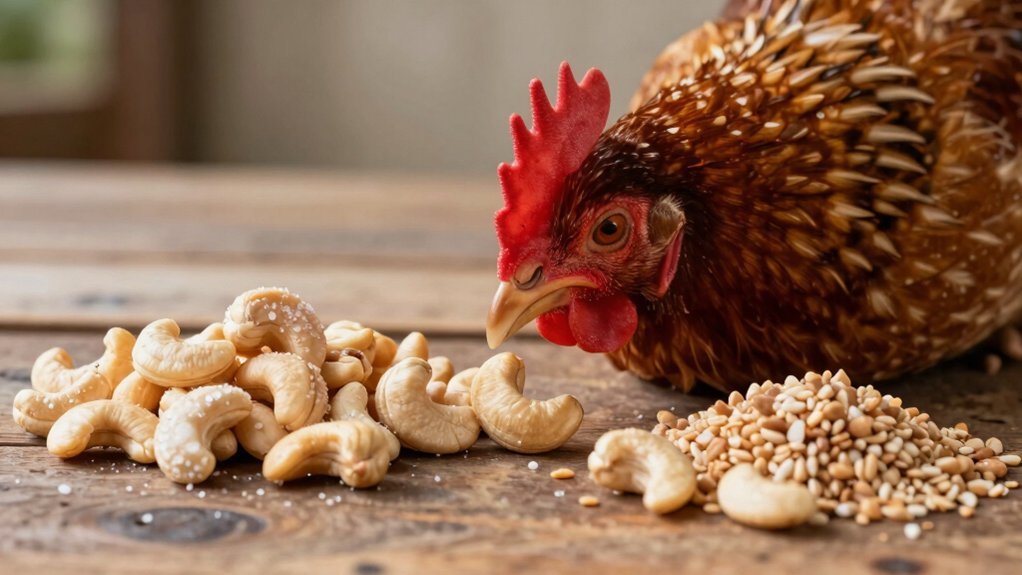
You’re probably wondering if you can toss a cashew to your chickens without risking their health. Here’s the thing: only plain, unsalted kernels are safe, and you must strip any shell oil—think of it like removing a peppery rind. Offer just one half‑inch piece per bird a few times a week; anything more can displace essential calcium and protein in their diet. If you see hoarse clucks, rapid breathing, or shaking, stop the nuts and call a vet—those red flags mean trouble. Keep the next step simple: try a single unsalted piece and watch their reaction.
Can Chickens Safely Eat Cashews?
If you’re wondering whether you can safely toss a few cashews into your flock’s diet, you’ve hit the right spot. You’re probably confused about shells and seasoning, so let’s clear that up. Toxic shells contain irritants that can harm chickens, and any ingredient coatings—salt, spices, or oils—add unnecessary risks.
Here’s the thing: only plain, unsalted kernels are safe, and they should be chopped or crushed to avoid choking. Commercially roasted nuts have already shed the harmful shell oils, but always double‑check that no extra flavors slipped in.
All right, remember that cashews are a high‑fat treat, so they’re fine in moderation but not as a staple. The takeaway? Offer small, plain pieces, skip the shells and coatings, and watch your birds’ reaction. Ready to try a tiny handful and see how they like it?
Like walnuts, these nuts provide beneficial nutrients like protein and healthy fats when given correctly as an occasional treat. Additionally, cashews contain essential magnesium and calcium that support your chickens’ joint and immune health. Just as you must avoid toxic foods like white potatoes, ensure all nut treats remain free of harmful additives to keep your flock safe.
How Many Cashews Can Chickens Eat? Portion Guidelines
Grasping how many cashews you can safely feed your chickens clears up a common confusion. You wonder how many you can give without overdoing it. The answer is simple: start with one cashew per bird and treat it as an occasional treat, not a daily staple.
Now, consider treat frequency. Offer cashews only a few times a week; daily feeding crowds out balanced layer feed and adds unwanted fat. If you have a small flock, a handful total will satisfy everyone, but larger flocks still need only a few per bird.
All right, keep portion size tiny when you mix other treats. Salted or flavored nuts demand even stricter limits. The takeaway: one cashew per chicken, a few times weekly, and adjust for flock size. This keeps your birds healthy and happy. Remember that overfeeding treats can lead to nutrient dilution, which prevents chickens from getting the essential proteins and calcium found in their primary diet. Since layers specifically require 3.5-4.5% calcium for strong eggshells, displacing their main feed with nuts can quickly compromise their health. To maintain consistent production, ensure their primary diet remains a complete layer feed formulated with the right balance of protein, vitamins, and minerals.
How to Prepare Cashews for Chickens: Cutting & Serving Tips
You’re probably wondering how to turn those whole cashews into a chicken‑friendly snack without turning feeding time into a mess. First, wash your hands and sanitize the cutting board—good chopping hygiene prevents contamination. Grab a chef’s knife and coarsely chop the nuts into bite‑size pieces about half an inch long; smaller fragments keep hens from choking and reduce competition.
Now, choose a serving method. A shallow dish keeps pieces visible and stops them from sinking into bedding, while light scattering on clean ground mimics natural foraging. Spread the chunks evenly across a few spots to limit squabbling and let each bird peck at its own portion. Just as with almonds, offering plain unsalted nuts ensures your flock avoids the harmful effects of added seasonings or excessive sodium. Similar to how high salt content in potato chips can cause dehydration and kidney damage in chickens, salty cashews pose serious health risks to your flock. Processed snacks loaded with salt can lead to electrolyte imbalances and potentially heart failure in chickens, so it is crucial to avoid seasoned varieties.
All right, remember to discard any damp or rancid nuts and clean up leftovers promptly. The takeaway: chop dry cashews into small pieces, practice strict chopping hygiene, and use either a shallow dish or careful scattering methods for tidy, safe feeding. Ready to try it? Raw cashews must be toasted before offering to chickens.
Should I Give My Chickens Salted or Unsalted Cashews?
You’re probably wondering whether the cashews you just chopped should be salted or left plain. The truth is simple: salted cashews bring salt hazards that push chickens past their sodium limits, causing dehydration and electrolyte imbalance. Unsalted nuts skip that risk, letting you stay within safe sodium levels while still offering a tasty treat. Just as high salt content in pickles can lead to salt poisoning and digestive upset in chickens, excessive sodium from salted nuts poses similar severe health risks. Now, think of a chicken’s diet like a balanced budget. Adding a pinch of salt is like a hidden fee that quickly adds up, while plain cashews are a modest expense you can afford occasionally. Keep portions tiny—about a quarter of a walnut per bird—so the fat doesn’t tip the scale. All right, the takeaway: give only unsalted cashews, in tiny amounts, and treat them as an occasional indulgence, not a staple. It is crucial to remember that excessive salt intake poses serious risks including kidney damage, weakness, and even death in poultry. Similar to how french fries can strain their kidneys, the high sodium in salted nuts places dangerous stress on a chicken’s renal system. Next, ask yourself how often you’ll rotate this treat with other snacks.
What Signs Show My Chickens Are Having Trouble After Cashews?
You’ve probably noticed your flock acting a little off after you tossed them a few cashews, and it’s natural to wonder whether those changes are just a mild upset or something more serious.
What does a shaky voice mean?
If a hen’s clucks become hoarse, quieter, or unusually rapid, that’s a vocal change signaling distress. It can accompany nausea or a throat irritation from a mild allergy. Keep an ear on the coop; a sudden shift often precedes digestive upset.
How can I spot seizure activity?
Seizure activity looks like brief, uncontrolled twitching, loss of balance, or a sudden collapse. It’s rare but dangerous, often linked to severe allergic reactions or toxic exposure. If you see this, treat it as an emergency, remembering that consuming toxic items like chocolate or raw beans can also trigger similar neurological crises in poultry.
When should I act?
Look for multiple signs—diarrhea, swelling, labored breathing, or lethargy—especially if they appear quickly after feeding. Remove cashews, monitor closely, and call a vet if symptoms persist or worsen. Just as high temperatures can cause lethargy and panting in chickens, adverse reactions to food may present with similar signs of physical distress. However, if you observe your birds breathing with open mouths, this could indicate respiratory distress caused by infections or airway obstructions rather than just a reaction to the nuts.
Takeaway: Vocal changes and any seizure‑like behavior are red flags; act fast to protect your birds.