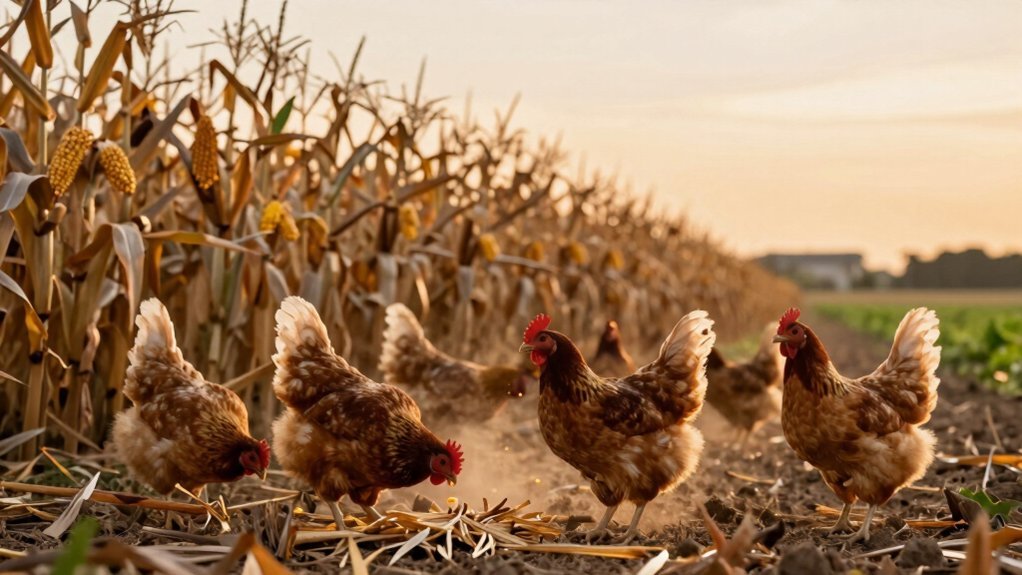
You’re right to wonder if deer corn is safe for chickens, because it’s cheap but nutritionally thin. It gives a quick 3,350 kcal/kg energy boost, yet it lacks the protein, methionine, calcium and minerals they need, so feeding more than 10 % of their diet can cause weak eggshells, gut upset and even aflatoxin poisoning if it’s moldy. If they wander into a field corn patch, they’ll snack on the high‑calorie kernels, but without grit and balanced feed they’ll waste the treat and risk deficiencies—so keep it occasional, check for mold, and mix it sparingly with commercial feed.
Are Deer Corn Safe for Chickens?
Now, think about storage safety. Moisture, heat, and long‑term storage invite mold and mycotoxins like aflatoxin. Fresh, dry kernels from a reliable source stay safe; any dusty, broken, or damp bag should be tossed. Check the label for additives or medication—those aren’t for chickens. Deer corn can be slow‑cooked to make it easier for chickens to digest. All right, the takeaway: feed deer corn sparingly, keep it dry, and always prioritize a complete ration. Next, ask yourself whether your birds need extra energy or a balanced feed. While corn provides energy, it lacks sufficient protein and essential nutrients, so it must complement a diet rich in quality feed rather than replace it. Unlike barley, which contains beta-glucans that impair digestibility and cause sticky droppings, corn is generally more digestible for poultry when fed in moderation. Scattering small amounts daily helps prevent overfeeding and related health problems while supporting activity.
How Does Deer Corn Supply Energy but Miss Essential Nutrients?
You’re probably wondering why deer corn can boost your chickens’ energy yet still leave them hungry for other nutrients. The grain’s starch packs about 3,350 kcal/kg, so a handful fuels their activity instantly. But corn’s crude protein hovers near 7.5 % and lacks methionine, so the calories arrive before the amino acids your birds need. Here’s the thing: corn’s mineral profile is almost nonexistent—calcium sits at 0.01 % and essential trace elements are scarce. That’s why you must practice protein pairing with soy or fish meal and add mineral supplementation like limestone or dicalcium phosphate. All right, think of corn as a sprint drink, not a full‑course meal. The takeaway? Use it as an energy booster, then balance it with protein and mineral sources. Next, ask yourself which complementary feeds will round out your flock’s diet. Just as feed enzymes can help chickens digest wheat starches better, specific dietary adjustments are often required when relying heavily on corn to ensure optimal nutrient absorption. Corn provides quick energy but lacks essential nutrients. Relying solely on such grains ignores the need for balanced nutrition tailored to specific life stages for overall health and egg production. Since diet requirements vary by age and purpose, incorporating a quality layer feed ensures your flock receives the 16-18% protein and adequate calcium necessary for thriving.
What Risks Arise From Over‑Feeding Deer Corn?
Over‑feeding deer corn can feel like a quick energy fix, but it quickly turns into a nutritional minefield for your flock. You’ll see gut upset, constipation, or loose droppings because corn lacks fiber and overwhelms digestion.
Why does feed dilution matter?
When corn dominates, essential vitamins, calcium, and amino acids get pushed out of the diet. Your birds may lay thinner shells or grow slower, especially young chicks and layers that need those nutrients. Dent corn is the primary type used for feed, accounting for nearly 99% of US corn production. Relying on corn instead of a balanced diet means your hens miss out on the optimal protein levels required for healthy growth and consistent egg production.
What about pest invasion?
Stored corn attracts mites, beetles, and mold. Those pests carry mycotoxins that harm appetite and health, turning a simple treat into a contamination source.
Obesity and production loss
Corn’s high calories add unwanted fat, reducing egg output and mobility. Birds become “over‑conditioned” and strain their hearts. While this energy boost is beneficial in cooler months, it is a myth that such high-calorie food dangerously raises a chicken’s body temperature.
Takeaway
Keep corn a tiny treat, not a staple. Monitor storage, avoid pest invasion, and protect your flock’s balanced nutrition. Next, ask how field corn differs from deer corn for your chickens.
What Happens If Chickens Eat Field Corn?
All right, you’re wondering what actually happens when your chickens peck at field corn. The kernels give a quick energy burst, like a sugary snack for you, but they lack the protein and calcium you’d find in a balanced feed. If you feed them too much, they’ll develop nutritional deficiencies, especially in amino acids and bone‑strength minerals, and their egg production can dip.
How does digestion work?
Your birds need grit to grind the hard kernels; with grit, digestive efficiency rises, and they extract the carbs. Without it, whole corn passes mostly undigested, wasting the treat. Since chickens lack teeth, providing granite grit is essential to physically grind these hard kernels in the gizzard and prevent fatal digestive blockages. Different types of grit exist, such as insoluble flint grit which is specifically designed to aid in the mechanical breakdown of food within the gizzard.
What should you do?
Treat cracked corn as an occasional supplement, not a staple. Pair it with complete feed, monitor weight, and keep the diet varied. The takeaway: corn fuels short‑term energy, but overreliance creates gaps in nutrition. Feeding this high-carb treat before bedtime helps chickens generate body heat during colder months while encouraging natural foraging behavior. Next, consider how to spot moldy corn before you serve it.
How to Spot Moldy Deer Corn Before You Feed It?
If you’re wondering whether that bag of deer corn is still safe, you’ve asked the right question.
What does mold look like?
White, gray, green, blue, or black fuzzy spots on kernels, dusty clumps, or caked masses signal spoilage. Check seams, feeder corners, and the bag’s bottom—mold hides in pockets.
How does it smell and feel?
A sour, musty, or “moldy basement” odor, plus sticky or slimy texture, means moisture is thriving. Warm bags hint at active decay.
What storage protocols help?
Keep corn under 15 % moisture, seal bags tightly, and avoid repeated wet‑dry cycles.
When should you run contamination testing?
If you spot any discoloration, odor, or suspect mold, test the batch before feeding.
Takeaway: Inspect every layer, trust your senses, and test if doubt remains. Next, learn how to feed safe corn without overdoing it.
*July conditions (warm, humid) can produce harmful aflatoxin levels within just five days.*
Even small amounts of this contaminated feed can cause fatal liver damage due to dangerous toxins like aflatoxin. Just as raw potatoes contain solanine that causes severe neurological symptoms in poultry, moldy corn introduces equally lethal risks that require immediate attention. Like moldy bread, feeding spoiled grain can expose chickens to toxic molds that may lead to serious health issues or death.
How to Use Deer Corn as a Treat Without Overdoing It?
You’re probably wondering how to give your chickens deer corn without turning it into a diet disaster. Here’s the thing: treat schedules keep the snack rare, not daily. Offer a light scattering—about a half‑cup for a small flock—once a week, preferably in the evening when they’re winding down. That keeps corn under 10 % of total intake and avoids crowding the regular ration.
Now, portion tips matter. Use cracked kernels for younger birds and whole kernels for adults, matching size to be. If you notice any birds gaining excess weight, cut the amount in half. Adjust for cold weather, where a little extra energy helps, but skip it in summer. To prevent nutrient dilution from excessive snacking, always ensure your flock receives their balanced starter or layer feed as their primary food source. Since commercial rations are specifically formulated with added amino acids to support growth and egg production, relying too heavily on corn can displace these essential nutrients. Proper digestion is also supported by providing grit to help grind food in the gizzard, which is especially important when introducing harder treats like whole corn.
All right, remember: corn is a treat, not a staple. Stick to these limits, and your flock stays healthy while enjoying the occasional crunch. Next, you might wonder how to blend this treat with their regular feed.
How to Mix Deer Corn With Commercial Feed for Healthy Chickens?
Your confusion about how much deer corn to toss into the daily feed is totally understandable—mixing treats with a balanced ration can feel like a culinary experiment.
What’s the right proportion?
Proper ratios keep commercial feed as the base. Aim for about 5 % deer corn by weight for laying hens and even less for growers—roughly one cup of corn per 20 cups of feed. This conserves protein, calcium, and vitamins while adding a tasty energy boost.
How should you blend it?
Mixing techniques matter. Toss the corn into a clean bucket, add the commercial feed, then stir until the kernels disperse evenly. Avoid clumps so birds can’t sort out only the corn. Since high-quality commercial feed is formulated to provide consistent nutrition tailored to your flock’s specific age and production needs, diluting it excessively with corn can disrupt this careful balance. To ensure your birds receive complete nutrition beyond just energy, consider incorporating whole grains like wheat or oats alongside the corn for a more diverse diet. Remember that offering unlimited access to this mixed ration allows chickens to eat according to their needs and helps reduce pecking order conflicts.
What’s the takeaway?
Treat corn as a supplement, not a replacement. Stick to modest ratios, use simple stirring, and you’ll keep the flock healthy and happy. Next, consider how seasonal changes might shift those ratios.
When Should You Adjust Deer Corn Feeding for Winter vs. Summer?
You’re probably wondering when to swap your summer‑time deer‑corn routine for a winter plan. Here’s the thing: summer feeding runs from mid‑spring to late summer, when deer need protein for antlers and fawn growth. Seasonal timing guidelines tell you to boost high‑protein feeds and minerals during that window, then pause as fall arrives.
Now, winter calls for a metabolic adjustment period. Deer shift to fat reserves and cut intake, so you wait until late December or when snow reaches about 12 inches. Then you introduce energy‑dense corn and natural browse gradually—three weeks is safe—avoiding abrupt changes that can upset digestion.
All right, remember: summer equals growth, winter equals energy. Adjust feeds according to snow depth, local severity, and those timing guidelines. Your next step? Check snow depth and plan a gradual corn rollout.
What Common Myths About Deer Corn, Heat, and Weight Gain?
If you keep hearing that deer corn will “heat up” your chickens, you’re not alone—many backyard flock owners wonder whether those golden kernels act like a tiny heater.
Does corn raise a chicken’s temperature?
No. “Hot” corn means metabolic heat from digestion, not a literal rise in body temperature. Fat and protein generate more heat than starch, so corn actually produces less metabolic warmth than a high‑protein feed.
Will corn make my birds gain healthy weight?
Corn is calorie‑dense, so excess can add fat, not muscle. Layers need protein for egg shells and feather quality; too much corn dilutes those nutrients, slowing growth and reducing feed efficiency.
What about the digestive myths?
Whole kernels pass slowly but are safe in moderation. Overeating can upset digestion and crowd out balanced feed, leading to nutrient gaps.
*Takeaway:* Use deer corn as a small energy supplement, not a heat source or weight‑gain miracle. Next, check your ration balance and make certain protein needs stay met.
Heat production from digestion can affect feed intake and weight gain.