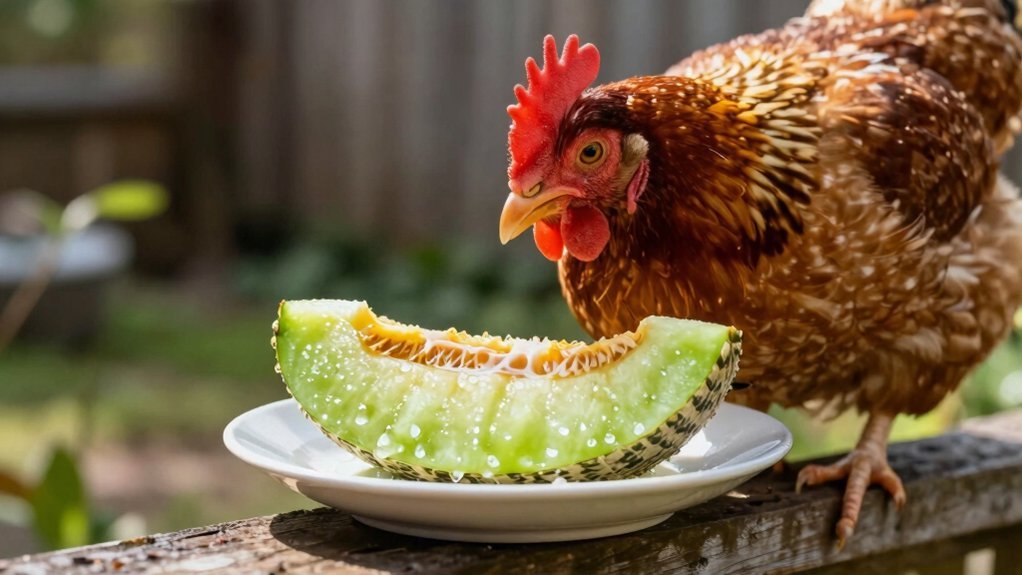
You’re right to wonder if honeydew is safe for chickens, and the short answer is yes—just give them tiny, rind‑free chunks a few times a week. Offer about one tablespoon per bird, no more than 10 % of their daily diet, and always after their regular feed to avoid nutrient dilution. The fruit’s high water content, vitamin C, potassium and fiber help with hydration and digestion, but over‑feeding can cause soft droppings. Next, you’ll see how to prep and store it safely.
Are Honeydew Melons Safe for Chickens?
Are honeydew melons safe for chickens? You’re wondering if that juicy green fruit fits into a chicken’s diet, and you asked the right question. The short answer: yes, fresh honeydew is safe, and it shows good plant compatibility with poultry. It won’t harm them if you keep portions modest and avoid moldy pieces, just like you’d give a dog a small apple slice.
Here’s the thing: honeydew is mostly water, so it hydrates your flock during hot days. It also supplies vitamin C, potassium, and a bit of fiber—tiny boosts that support digestion but won’t replace balanced feed. Think of it as a summer snack, not a staple. Similar to how cucumbers provide hydration, this high water content helps keep chickens hydrated, especially in hot weather. While treats help with hydration, you must also ensure your birds have access to plenty of fresh, cool water to effectively regulate their body temperature during heat waves.
Obviously, you must wash the fruit to remove pesticides and keep the feeding area clean to protect soil health and prevent pests. The takeaway: offer bite‑sized, fresh pieces occasionally, and watch your chickens enjoy a low‑risk treat. Next, ask yourself which parts of the melon you’ll actually give them. Since fruits are high in sugar, you should limit treats to 2–3 times per week to prevent digestive disruption.
Which Parts of a Honeydew Should You Give Chickens?
You’re probably wondering exactly which bits of a honeydew are safe for your flock, and that’s a great question. The ripe flesh is the star—soft, juicy, high in water, vitamin C, B, potassium, magnesium. It hydrates and fuels your birds without fuss.
All right, the rind is edible, too. It adds fiber and chickens usually chew through it after the flesh. Just cut it into bite‑size pieces; avoid moldy or overly tough sections that could become waste.
Here’s the thing about seeds: they’re safe in moderation, offering a little protein and fat. Too many seeds raise choking risk, especially for younger birds, so practice seed moderation and keep pieces small for choking prevention. It is crucial to chop or mash the fruit into small pieces to avoid choking hazards and ensure easy digestion for your flock.
Takeaway: give fresh flesh, manageable rind, and a modest amount of seeds, discarding any spoiled parts. Next, learn how to prep honeydew for your chickens.
How to Prepare Honeydew for Chickens
Now, think about Storage Techniques. Keep cut honeydew in an airtight container in the fridge for up to two days; if you need longer, freeze portions in ice‑cube trays for a cool summer treat.
Presentation Ideas matter, too. Use a shallow, clean feeder or a small dish so chickens can peck without spilling. Mixing a few cubes with other safe fruits adds variety without extra work. Just as cutting blueberries in half helps prevent choking hazards, ensuring honeydew pieces are appropriately sized protects smaller birds from similar risks. As with peaches, you must avoid feeding chickens the toxic cyanide compounds found in honeydew seeds to ensure their safety. Always ensure the fruit is fresh and ripe to prevent illness, just as you would when preparing mango treats for your flock.
Takeaway: clean, rind‑free, appropriately sized pieces stored properly keep your flock safe and happy. Next, you might wonder what nutritional boost honeydew gives chickens.
The experiment showed that chickens quickly devour the overripe golden honeydew, confirming its appeal.
Nutritional Benefits of Honeydew for Chickens
What does honeydew actually give my chickens? You’re probably wondering if that sweet, watery fruit does more than just quench thirst. It packs vitamin C—about 34 % of the daily value per cup—so you get a natural antioxidant boost that helps neutralize free radicals and supports immune function. That antioxidant edge can act as an antibiotic alternative, nudging flock immunity upward without meds.
Now, the high water content (≈90 %) hydrates birds during heat stress, keeping them active and comfortable. The fiber aids digestion, preventing constipation and smoothing mixed‑diet processing.
All right, minerals like potassium, folate, and a hint of magnesium keep heart, nerve, and muscle health on track. Similar to cantaloupe, this melon also provides manganese and magnesium which are essential minerals that support skeletal and metabolic health in your flock. While honeydew offers hydration, remember that treats like pumpkin seeds provide the added benefit of naturally deworming your chickens. Just as you must avoid feeding chickens pumpkin pie due to harmful additives, ensure any fruit treats remain free of sugars and spices to prevent health issues.
Takeaway: honeydew is a low‑calorie, nutrient‑dense treat that enhances hydration, digestion, and immunity—great as a supplemental “superfood” for your flock. Next, consider how much to offer each day.
How Much Honeydew Should You Feed Your Chickens?
You’ve just learned why honeydew’s vitamins and water are good for your birds, but you’re probably wondering how much is safe to give them.
How much can a chicken handle?
Now, aim for 1–2 tablespoons per standard‑sized bird, and only 2–3 times a week. That keeps sugar moderation in check and prevents the fruit from crowding the regular feed. Remember that treats should never exceed 10% of the daily diet to ensure your flock receives a balanced, complete layer feed as their primary nutrition source. Always ensure foods are offered without harmful additives like salt or spices to keep your chickens safe. To further support hydration during hot weather, you can try serving wet feed alongside fresh fruit treats.
What shows you’re overdoing it?
If droppings turn watery, appetite drops, or you see more squabbling, cut back. Those signs mean you need tighter portion control.
How to serve it cleanly?
Cut the melon into bite‑size chunks, offer it after the main feed, and clear leftovers right away.
Takeaway: Feed honeydew sparingly, watch the flock’s response, and adjust as needed. Ready to plan your next treat schedule?
Chickens will happily eat the whole melon when it’s coaxed gently.
Feeding Honeydew to Chicks: Safety Tips
If you’re wondering whether it’s safe to give honeydew to your chicks, you’ve hit the right topic. First, make sure your chicks are already eating starter feed and thriving. Offer only a few bite‑size pieces a day—think pea‑sized cubes—so they can peck without choking. Remove the rind and any seeds, then wash the fruit well to avoid dirt or pesticide residue.
Here’s the thing: chicks have delicate digestive tracts, so watch for any digestive symptoms like soft droppings or reduced appetite. If you notice these signs, stop feeding honeydew immediately and check for melon allergies, which can cause itching or swelling.
All right, keep the brooder clean; discard uneaten pieces within an hour to prevent mold and pests. The takeaway: tiny, peeled, fresh pieces are fine, but treat honeydew as an occasional enrichment, not a staple. Ready to try it? Start with a single small piece and observe your flock. Remember that maintaining continuous access to high-protein chick starter feed and fresh water remains the priority for their growth. Since starter feed typically contains around 18% protein, it is vital that treats do not displace this essential nutrition needed for early development. Selecting feeds with balanced protein levels supports proper muscle and bone development during this critical growth stage.
Common Mistakes When Feeding Honeydew to Chickens
When you start handing out honeydew, it’s easy to think “a little more can’t hurt,” but that mindset leads to the most common slip‑ups.
How much should you give?
Portion control matters. Treats stay under 15 % of the daily diet, so a few bite‑sized cubes per bird is enough. Giving whole wedges or large chunks makes it hard to track intake and can cause bloating, gas, or diarrhea. Overfeeding sugary fruits can also lead to nutrient dilution which prevents chickens from getting the balanced nutrition found in their primary feed. Since adult birds typically require approximately 120 grams of quality feed daily to maintain health, treats must never displace this essential base ration. Relying too heavily on scraps can harm egg production and bird wellbeing by disrupting the balanced diet required for optimal health.
What prep steps prevent problems?
Wash the fruit, strip the rind, and cut it into uniform pieces. Rind is tough to digest, and seeds or big bits clutter the coop and hide leftovers. Clean prep also simplifies digestive monitoring.
What should you watch for after feeding?
Observe droppings and appetite. Loose droppings or reduced eating signal you’ve over‑served or missed a wash. Adjust portion size and prep method accordingly.
Takeaway: Keep servings small, prep clean, and monitor digestion.
Next, consider how to keep the coop tidy after the treat.
Prevent Waste & Pests After Giving Honeydew
How do I stop fruit flies and mess after feeding honeydew? You’ve probably wondered why the tiny pests appear so fast. The key is immediate cleanup and smart compost management. Scoop up any rind, seed, or sticky fragment right away, then wipe trays and mats to keep sugary residue off surfaces. Store leftovers in a sealed bin or trash, and if you compost, keep the pile covered and turn it often to avoid fruit fly breeding.
Now, control temperature in the coop and feeding area. Warm, moist melon scraps ferment quickly, drawing ants, flies, and rodents. Keep feeding stations elevated, use dry bedding, and replace soiled litter promptly. To further maintain a sanitary environment and reduce odors from moisture, you can apply barn lime to the coop floor as part of your regular cleaning routine.
All right, remember: clean up fast, manage compost, and watch temperature. That simple routine cuts waste and pests dramatically. Your next step? Check your coop’s drainage and set up a sealed compost container.
Honeydew Feeding Safety Checklist
You’re probably wondering exactly how to keep honeydew safe for your chickens, and that’s a great question. First, nail the washing technique: run cool water over the fruit, scrub the rind if you’ll use it, then give a quick chlorine rinse to kill bacterial contamination. Use water temperature around 40‑45 °C to loosen grime without cooking the flesh.
Now, cut away any moldy spots, seeds, or tough rind, and serve only the fresh flesh. Keep portions small—about a tablespoon per bird—so you avoid digestive upset.
All right, watch the flock as they peck. If you see choking or loose droppings, adjust the amount or skip that batch.
Takeaway: a clean, trimmed, modest serving protects health and lets you enjoy watching your chickens love honeydew.