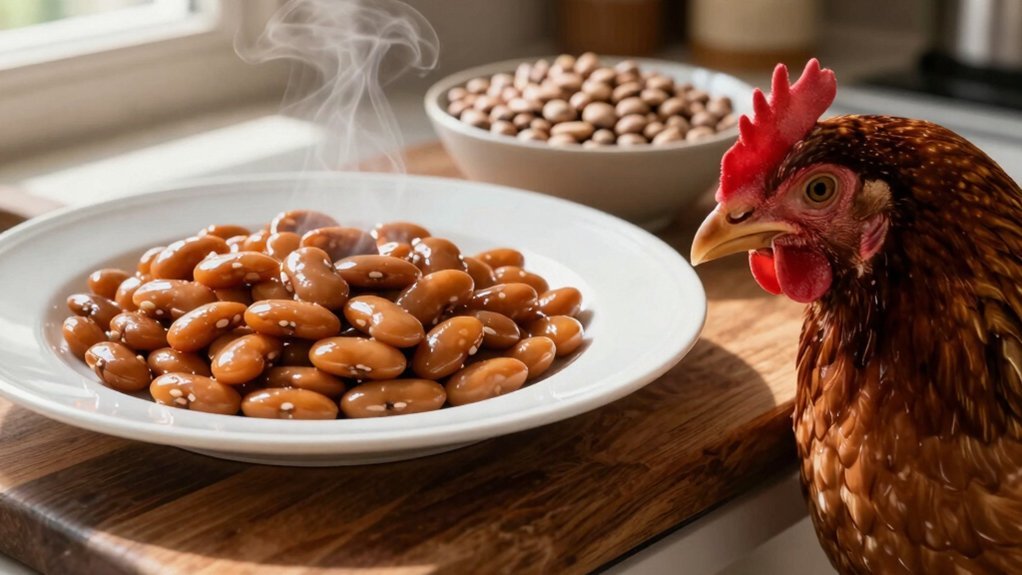
You’re right to wonder why raw pinto beans can kill a hen while cooked ones are a tasty treat. Raw beans pack phytohaemagglutinin, a lectin that irritates the gut and can shut down nutrient absorption, so even a tiny bite can cause lethargy or death. Boiling the beans at 100 °C for at least ten minutes (or soaking then simmering 1–3 hours) denatures that toxin and releases 9–15 g of protein per 100 g, making them safe in a small, occasional portion. If you follow the proper soak‑and‑boil routine, you’ll give your chickens a nutritious supplement without the risk.
Why Raw Pinto Beans Are Unsafe for Chickens?
Why are raw pinto beans unsafe for chickens? You’re probably wondering why that pantry staple shows up on “unsafe foods” lists. Here’s the thing: raw pinto beans pack lectins, a plant defense protein that triggers lectin poisoning in a chicken’s sensitive gut. Those lectins block nutrient absorption and irritate the gastrointestinal lining, causing feed toxicity that shows up as digestive upset, reduced feed utilization, and even lethargy. Just as green potatoes contain solanine that causes neurological symptoms, raw beans introduce specific toxins that disrupt poultry health. Now, think of lectins like tiny spiked hooks that cling to gut cells, preventing proper digestion—much like a poorly cooked steak can make you feel sick. Sprouting doesn’t reliably shave off enough lectins, so the risk stays high. Even sprouted beans retain dangerous lectin levels. All right, the takeaway: avoid raw or merely sprouted pinto beans in your flock’s diet, especially since dried raw beans contain toxins that can cause rapid death. This aligns with the fact that phytohaemagglutinin toxins found in uncooked legumes are the specific compounds responsible for these fatal reactions in poultry. Next, ask yourself if you’re ready to learn how cooking neutralizes these toxins.
How Cooking Neutralizes Toxins in Cooked Pinto Beans for Chickens?
You’re probably wondering how cooking actually makes pinto beans safe for your chickens. The answer lies in toxic lectins, specifically phytohaemagglutinin, which cling to intestinal cells and cause poisoning. When you boil beans at 100 °C for at least ten minutes, heat denaturation unfolds the lectin proteins, stripping them of binding ability and rendering them harmless.
How does heat denaturation work? Imagine a tightly folded origami figure that unravels under steam; the lectin’s three‑dimensional shape collapses, so it can’t latch onto gut tissue. This process also softens the bean’s interior, making nutrients more accessible and digestion easier. Similar to green beans, steaming or boiling pinto beans is the safest method to ensure these harmful compounds are fully neutralized before feeding.
Takeaway: Only fully boiled, soft beans guarantee toxin neutralization. Next, you’ll want to know the exact step‑by‑step method to prepare safe cooked pinto beans. Adding a pinch of salt enhances flavor without affecting the detoxification process.
What’s the Step‑by‑Step Method to Prepare Safe Cooked Pinto Beans?
All right, you’ve just learned why boiling kills the bean’s toxin, but now you’re probably wondering how to actually get those safe, soft beans onto your chicken’s menu.
How do you start?
Pick through the dry pinto beans, toss out stones and bad ones, then rinse thoroughly. Soak them in cool water, covering by 2–3 inches, for at least 6 hours or overnight. Drain and rinse again—this removes the oligosaccharides that cause gas.
What’s the cooking set‑up?
Use a large pot or Dutch oven, add fresh water so beans sit 2–3 inches below the surface, and toss in optional aromatics like onion or bay leaf. Bring to a rolling boil, skim foam, then lower to a gentle simmer. Keep the pot exposed or partially covered, stirring occasionally. Just as with chickpeas, proper heat treatment is essential to deactivate anti-nutritional factors that can interfere with digestion and harm the birds. While beans provide protein, remember that a balanced diet for your flock should also include whole grains to ensure they receive essential fats, vitamins, and minerals.
When are they done?
Simmer 1–3 hours, checking after the first hour; older beans need longer. Add water if they dry out. Beans are ready when they’re creamy, not chalky. Remove aromatics, season lightly, then cool in their cooking liquid before refrigerating or freezing.
Takeaway: Follow these steps, avoid shortcuts or substitutions, and you’ll have safe, tender pinto beans ready for your flock. Next, you might ask what nutrients those cooked beans deliver. Remember that treats like these should be offered in small amounts to avoid waste and prevent nutrient dilution in your flock’s primary diet.
What Nutrients Do Cooked Pinto Beans Give Chickens?
You’re probably wondering exactly what your flock gains when you toss cooked pinto beans into their diet.
How much protein do they get?
Cooked pinto beans act as a solid protein source, delivering roughly 9–15 g of protein per 100 g. That boost aids feather growth, muscle repair, and egg production. While beans offer a helpful boost, remember that balanced nutrition tailored to different life stages remains the foundation of a healthy feeding regimen. For comparison, other high-protein snacks like dried mealworms can provide up to 53% protein to support your hens during crucial growth periods. Unlike broiler feeds that require around 22% protein with specific calcium-to-phosphorus ratios to ensure efficient weight gain, beans serve best as a complementary treat rather than a complete diet.
What vitamins and minerals are packed in?
The vitamin content includes B‑vitamins (B1, B6, folate), vitamin E and K, plus minerals like potassium (≈ 436 mg) and phosphorus (≈ 147 mg). These nutrients support metabolism, blood health, and eggshell quality.
Do carbs and fiber matter?
Yes. About 26–63 g of carbs and 9 g of fiber per 100 g give energy and digestive bulk, but treat beans as a supplement, not a staple.
Takeaway: Cooked pinto beans enrich your chickens’ diet with protein, vitamin content, and essential minerals—just keep portions modest. Next, decide how often to feed them. Raw beans are unsafe for chickens.
How Much Cooked Pinto Beans Should You Feed and How Often?
Obviously you don’t want beans to replace the balanced feed your hens already get, so think of cooked pinto beans as a treat, not a meal. Now, you’re probably wondering how much is safe. The appropriate portion size is tiny—about a tablespoon per hen, roughly 15 g, mixed with their regular ration. This keeps beans a minor share of daily calories, leaving the bulk of nutrition from commercial feed.
All right, what about how often? The ideal feeding frequency is a few times a week, not daily. Offer the treat on Tuesday and Thursday, for example, and keep the rest of the week bean‑free. This schedule lets you enjoy kitchen leftovers without crowding out essential nutrients. Just as pumpkin seeds naturally deworm chickens while providing nutrition, occasional beans offer variety without compromising health when fed correctly. Incorporating these legumes alongside homemade chicken treats can further support flock morale and encourage natural foraging behaviors. Unlike commercial feed which serves as a main diet, scratch grain is a supplement used to add variety and pleasure without displacing necessary nutrients.
Takeaway: Small, occasional servings keep beans a harmless supplement. Next, watch your flock’s reaction and adjust if needed.
What Signs of Digestive Upset Mean You Should Stop Feeding Beans?
You’re probably wondering which bean‑related symptoms mean it’s time to stop feeding them.
What does abnormal droppings tell you?
If you see watery droppings, blood, or a sudden change in consistency, the beans are irritating the gut. Diarrhea steals fluids fast, so you’ll notice dehydration signs like sunken eyes and dry combs. Since heat stress and infections can also cause impaired intestinal water absorption, ensure the coop is cool and clean to rule out other causes.
When does bloating become a red flag?
A swollen or tense abdomen signals gas or fermentation. The bird may hunch, stand apart, or show unusual lethargy. Those signs mean the beans aren’t digesting properly. Just as raw or dried beans contain hemagglutinin that causes severe health problems, improperly prepared pinto beans can trigger similar toxic reactions in your flock.
What other behaviors demand you stop?
Persistent refusal to eat, sluggish movement, or weakness indicate nausea or dehydration. If normal feeding doesn’t resume quickly, pull the beans and give fresh water. Remember that all treats should be offered without harmful additives like salt or spices to prevent further digestive distress.
Takeaway: Watch for abnormal droppings, abdominal swelling, lethargy, and dehydration signs—stop the beans at the first warning.
Now, consider how often you’ll re‑introduce a tiny test portion after the birds recover. The crop stores excess food before it reaches the gizzard.
Why Canned or Seasoned Beans Aren’t Ideal for Chickens?
If you’re wondering why canned or seasoned beans aren’t the best treat for your flock, you’ve hit the right spot. The main issue is sodium risks: most cans come packed in salty brine or sauce, and even rinsing won’t strip all the extra salt. Chickens need only a pinch of sodium, so the added load can stress their kidneys and raise water intake, especially if you already give other salty snacks. Since excessive intake can lead to salt poisoning and severe dehydration, maintaining strict control over dietary sodium is critical for flock safety. Just as salty pretzels can cause dangerous electrolyte imbalances in chickens, the high sodium content in processed bean products poses a similar threat to their cardiovascular health. Here’s the thing: ingredient dangers hide in seasoned blends. Onion, garlic powder, hot spices, sugar, preservatives, and oils can irritate a chicken’s digestive tract or even be toxic. Those flavor boosters taste great to us, but they’re unnecessary and risky for poultry, as compounds like thiosulfinate found in alliums can cause onion toxicity leading to anemia and death. All right, think of canned beans as a shortcut that trades control for convenience. You lose the ability to choose low‑sodium, no‑additive beans, and you risk feeding hidden toxins. The takeaway: stick to plain, home‑cooked beans or low‑sodium, no‑seasoning cans that you rinse thoroughly. Next, you might wonder how cooked pinto beans compare to other legume treats for your birds.
How Do Cooked Pinto Beans Compare to Other Legume Treats for Poultry?
How do cooked pinto beans stack up against other legume treats? You’re wondering if they’re worth the hassle. Compared with peas, faba beans, and chickpeas, cooked pinto beans sit in the high‑protein range—around 27 % crude protein—similar to field peas but below soybeans’ 50 %. They also supply fiber and B vitamins, giving chickens steady energy and better digestion.
All right, here’s the thing: cooking eliminates lectins, making pinto beans safer than raw beans, while fermentation methods or sprouted legume alternatives can also reduce antinutrients. However, fermentation adds a tangy flavor that chickens may or may not like, and sprouting boosts certain vitamins but requires careful drying to avoid spoilage. Much like split peas, sprouting legumes is a nutritious option that can enhance protein intake and support digestive health in your flock.
Obviously, pinto beans work best as a supplemental treat, not a primary protein source. Takeaway: use them sparingly alongside other processed legumes for a balanced snack. Next, consider how to blend these treats with your regular feed.
How to Blend Cooked Beans With Commercial Feed for a Balanced Diet?
You’re probably wondering how to turn those tasty cooked pinto beans into a practical part of your flock’s daily feed.
How much bean should I add?
Start with commercial feed as the base and treat beans as a supplement. A safe feed ratio is about one part beans to four parts layer or grower feed, adjusted for age and purpose. Mix cooled beans into a measured daily portion, not a bulk bin, to keep texture right and waste low.
What about different birds?
Layer hens need calcium‑rich feed, so keep beans under 20 % of the total. Young growers can handle a slightly higher share, but never replace the complete ration.
How do I keep the diet balanced?
Add beans just before feeding, stir well, and remove any leftovers. This preserves the commercial feed’s nutrient density while giving a protein boost.
*Takeaway:* Use beans sparingly, respect feed ratios, and secure diet integration for each flock segment. Next, check your daily intake limits to stay safe.
The batch yields about twelve pounds of feed, providing roughly 27 ounces per day for the flock.
Quick Checklist for Safely Feeding Cooked Pinto Beans to Chickens
When you wonder whether cooked pinto beans are safe for your chickens, you’ve hit the right topic.
Are the beans fully cooked?
Check texture cooking methods—beans must be soft throughout after at least 30 minutes of boiling post‑soak. No raw, undercooked, or lightly steamed beans. Offer only plain beans, no salt, sugar, spices, or sauces.
How much should you give?
Treats stay tiny: a spoonful per bird, mixed into commercial feed. Too much displaces complete nutrition and can upset chicken digestion insights.
What about serving?
Cool beans, break large clumps, and keep the feeding area clean. Remove leftovers promptly.
Do you watch the flock?
Start with a small batch, then monitor droppings, appetite, and activity. If anything looks off, stop the treat.
Improperly prepared beans can be deadly, so always ensure they are soaked and cooked. Takeaway: Follow these steps, and you’ll safely add cooked pinto beans to your chickens’ diet. Ready to try a tiny test portion?