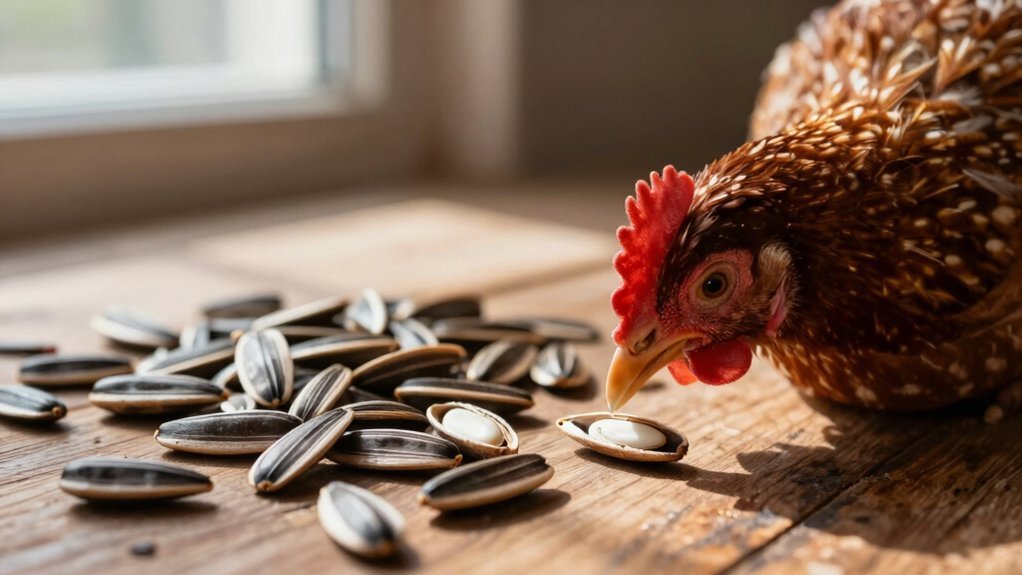
You’re right to wonder if shell‑on sunflower seeds are safe for chickens, and the short answer is yes—just keep it plain, raw, and unsalted, and give only a tiny amount, like a tablespoon per hen per day, while making sure they have plenty of grit. Obviously, salted, flavored, or moldy seeds can poison them, and too many whole seeds can jam the crop like bricks. If you scatter a few seeds, let the birds sip water, and you’ll avoid blockages and keep their diet balanced.
Are Shell‑On Sunflower Seeds Safe for Chickens?
You’re wondering if those crunchy shells will hurt your flock, and that’s a smart question. In garden cultivation you’ll see backyard keepers toss a handful of raw, unsalted seeds as a treat, and in commercial farming the same practice appears in limited “scratch” mixes. Chickens’ gizzards grind the fibrous hulls, so a few shells pass through without issue—especially when they have grit. The thinner hulls of black oil sunflower seeds also make them easier to digest compared to other varieties, reducing the risk of crop issues while providing essential nutrients. Obviously, overloading the crop with hard material can cause impaction, so keep portions to a small handful, roughly 10 % of daily intake, and avoid salted or flavored varieties. Since these treats are calorie-dense, overfeeding can cause chickens to fill up on them and miss out on essential nutrients from their regular balanced feed. Additionally, choosing black oil sunflower seeds is recommended because their thinner hulls and higher fat content offer superior nutrition and ease of consumption for your flock.
Takeaway: Offer shell‑on seeds sparingly, verify they’re plain and raw, and you’ll give your birds a safe, enjoyable snack. What’s the next step for planning a balanced treat schedule?
Sunflower seeds are high in unsaturated fats, providing an excellent energy source during moulting.
Nutritional Benefits of Shell‑On Black‑Oil Sunflower Seeds for Chickens
You’re probably wondering if those crunchy, shell‑on black‑oil sunflower seeds actually give your chickens a nutritional boost.
What’s in the kernel?
The seed’s kernel packs about 50 % fat, delivering a dense calorie punch that fuels cold‑weather activity and high‑energy moments. You also get 20‑26 % protein, perfect for feather regrowth and tissue repair, especially when you need molting support.
Why the shell matters.
Thin hulls add roughage, slowing intake and turning snack time into a natural foraging game. This pecking enrichment keeps the flock busy and mimics wild‑type feeding. However, because these seeds lack the specific mineral balance required for reproduction, they should not replace a layer feed designed to provide the elevated calcium levels necessary for strong eggshells. Just as with other high-energy treats, moderation is key to prevent chicken obesity while ensuring the flock remains healthy and active.
Micronutrients and antioxidants.
Vitamin E, magnesium, phosphorus and B‑vitamins round out the profile, boosting immunity and bone health while protecting cells from oxidative stress.
Takeaway
Shell‑on black‑oil seeds supply energy, protein and antioxidants, plus a fun foraging challenge. Offer them as a supplemental treat to support molting and overall vigor, or consider pairing them with dried mealworms to further increase the protein content of your flock’s diet.
What’s the next step? Decide how you’ll integrate these nutrient‑dense snacks into your flock’s routine.
How Much and How Often Should You Offer Shell‑On Seeds?
How often can you give shell‑on seeds? You’re probably wondering whether daily treats or a few times a week work best. The simple answer: offer small portions daily if you keep them under 10 % of the total diet, or limit them to 2–3 times weekly for extra safety.
How much should each bird get? Think of a tablespoon per adult hen per day, less for smaller breeds. For a flock of three to six, a single tablespoon scattered works fine. If you’re already feeding other treats, cut the amount in half.
When should you tweak the schedule? Frequency adjustments help during cold snaps or molt, but you’ll reduce servings if other high‑fat snacks appear. While managing treat frequency, remember that avoiding toxic foods like chocolate, avocado pits, and raw beans is just as critical for maintaining a healthy flock. To ensure these treats do not unbalance their nutrition, always prioritize a high-quality commercial feed matched to your flock’s specific age and production needs. Feeding in small amounts is a best practice that helps prevent waste and ensures your birds consume their nutrient-dense base diet before filling up on extras.
Takeaway: Use portion control, stick to the 10 % rule, and adjust frequency based on overall treat load. Ready to try scattering a handful in the run?
Risks of Overfeeding: Fat, Grit, and Crop Impaction
You’re probably wondering why feeding shell‑on sunflower seeds every day can backfire.
What happens when the fat piles up?
You’ll see weight gain and a slippery liver because about half the seed is fat. The extra calories push out balanced feed, so your flock misses essential vitamins and minerals. A diet heavy in seed shells also lowers calcium absorption, and the omega‑3 ratios get skewed, weakening eggshell quality.
Why does the grit matter?
The tough hull adds bulk without nutrition, crowding the crop and slowing digestion. Too many indigestible pieces can cause a firm, painful crop—crop impaction—especially when birds snack on handfuls of unshelled seeds. Since chickens lack teeth, they rely on insoluble grit to mechanically grind these hard shells in the gizzard for proper digestion. Providing the correct sized grit based on your flock’s age ensures these hard shells are broken down effectively to prevent digestive blockages and maintain gut health. Without this mechanical breakdown, chickens risk digestive blockages and poor nutrient uptake that can lead to serious health issues.
Takeaway: Limit shell‑on seeds, watch weight and egg quality, and keep the crop clear. Next, learn how to prevent impaction when you do offer seeds.
How to Prevent Crop Impaction When Feeding Seeds
Why does seed size matter for crop health? You’re right to wonder; big, whole sunflower seeds act like bricks in a chicken’s crop. They sit, swell after drinking, and can jam the passage. Since chickens lack teeth and rely on a gizzard to mechanically grind food, large unbroken seeds place excessive strain on this internal organ. What can you do to keep the crop moving? First, break or crush the seeds. Smaller pieces behave like sand, not a solid block, and they pass more easily. Second, always give fresh water right when you serve seeds—this water timing lets the dry feed soften before it expands. If you soak the seeds for a few minutes, they absorb moisture early, reducing the sudden swell that creates pressure. How do you keep a balanced routine? Offer seeds as a limited supplement, not a staple, and keep a consistent feeding schedule so birds don’t gorged after a fast. Preventing birds from binge eating is crucial because poor feeding management can contribute to crop distension and muscle damage. If blockages do occur, gentle crop massage can help shift the material while you withhold food to allow the crop to empty. Takeaway: Chop seeds, provide water immediately, and stick to a regular, modest supplement. Next, check your pasture height—short grass cuts the mechanical load further. Crop impaction can be prevented by ensuring seeds are appropriately sized and hydrated before consumption.
Which Sunflower Seeds Should You Skip? (Salted, Flavored, Moldy)
You’re probably wondering which sunflower seeds are safe for your flock and which ones you should toss.
Should you skip salted seeds?
Salt adds unnecessary sodium, and high sodium can dehydrate chickens and throw off electrolytes. Even a small handful of salted snack mixes can push intake above safe limits. Obviously, the salt risks outweigh any flavor benefit, so stick to plain, unsalted kernels. Since excessive intake poses serious risks like salt poisoning, it is crucial to avoid any added sodium in their diet. Just as salty pretzels can lead to heart failure in chickens, avoiding high-sodium treats entirely is the safest approach for your flock. Similarly, processed snacks like potato chips contain significant sodium that can cause kidney damage if given frequently or in large quantities.
What about flavored or seasoned varieties?
Seasonings often hide salt, sugar, onion, garlic, or artificial additives that are toxic to poultry. A sweet glaze or barbecue spice is a human treat, not a chicken treat. All right, any coated seed belongs in the trash bin.
And moldy seeds?
Mold produces mycotoxins that can cause weakness, digestive upset, or worse. Even a speck of green fuzz signals danger. Discard any moldy batch immediately.
Takeaway: Feed only raw, unsalted, mold‑free seeds. Next, consider how to store them to keep them fresh.
Best Practices for Feeding Shell‑On Sunflower Seeds: Grit, Scattering, and Complementary Diet
How do I make sure my chickens can handle shell‑on sunflower seeds? You’re right to wonder; the key is grit, scattering, and balance.
Do they need grit?
Obviously, without grit the gizzard can’t crush shells. Provide a shallow tray of sand or fine gravel, especially if you keep birds indoors. Free‑range hens pick up stones naturally, but a grit box guarantees every bird gets enough. While grit handles mechanical digestion, remember that oyster shell is a separate calcium supplement essential for laying hens to produce strong eggshells and maintain healthy bones. Insoluble granite grit stays in the gizzard to physically grind food, which helps prevent fatal digestive blockages when birds consume hard shells.
How should I offer the seeds?
Scatter a small handful on the ground once a week. This mimics foraging, slows intake, and keeps them busy. Whole seed heads add extra enrichment and reduce waste.
What about diet and age?
Stick to the 90/10 rule: 90 % complete feed, 10 % treats. For four chickens, limit sunflower shells to about 9‑10 oz weekly. Young chicks should wait until at least 30 days before you try shell‑on treats.
Storage tips?
Keep seeds in a cool, dry container; airtight jars prevent mold and keep shells crisp.
Takeaway: give grit, scatter modest portions, and keep treats secondary to feed. Ready to set up a grit box and try a weekly scatter?