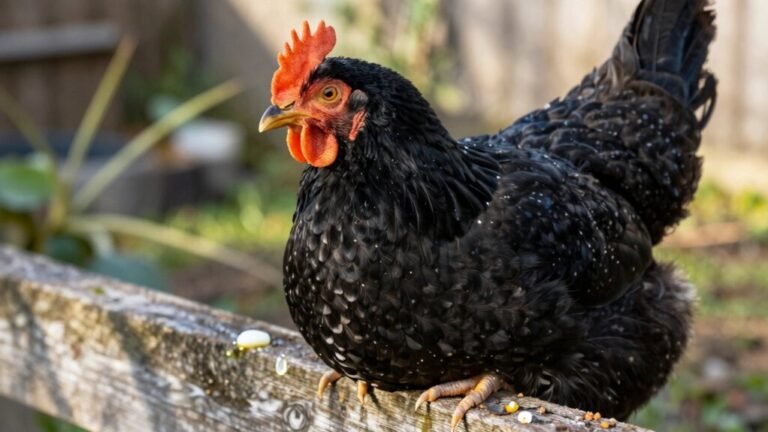
Yes, foxes absolutely eat chickens — and they don’t stop at one. Once a fox breaches your coop, its predatory drive kicks into overdrive, killing everything moving and caching the leftovers for later. You’re not dealing with bad luck; you’re dealing with a calculated predator that’ll return once it knows where you are. Watch for feather clumps, digging around your coop base, and puncture wounds on survivors. Stick around — there’s a lot more you need to know.
Yes, Foxes Eat Chickens: Here’s Why They Target Your Flock
If you’ve ever walked out to your coop and found feathers everywhere — or worse, nothing at all — you already know that sick, sinking feeling. Foxes aren’t random opportunists. They’re wired for this. That predatory drive kicks in the moment they enter your coop, triggering an instinctive pursuit that doesn’t stop until every moving target goes still. It’s not malice — it’s biology they can’t override.
Here’s the thing: foxes also demonstrate caching behavior, sometimes burying kills nearby for later. So even birds you don’t find immediately aren’t necessarily gone far.
Now, once a fox detects your flock, it remembers. It returns. Understanding *why* they target you is honestly the first step toward actually stopping them.

Keep every hen you have at sunrise: predator lights for chicken coop that work the way a flock guardian does, two red eyes flashing at 4 Hz through the night, so a fox or raccoon finds the run already claimed and moves on

[Upgraded Visual Deterrence] -- Featuring a unique, amber campfire-like flicker, this predator-deterrent device mimics the presence of a larger, aggressive nocturnal hunter. Unlike standard lights, this intense pulse triggers a deep-seated flight response in coyotes, raccoons, and foxes.

Effective Nighttime Protection: Keep unwanted animals away with this solar-powered repeller. Designed to work at night, the dual red LED lights mimic the eyes of a predator to deter nocturnal predators and protect your garden yard farm and livestock
How Foxes Attack and Kill Chickens
Knowing foxes target your flock is one thing — watching it unfold is another. Foxes rely on entry tactics like exploiting weak points in chicken wire, which was never designed to keep them out anyway. Once inside, confined birds panic — flapping, squawking — and that chaos actually fuels the fox’s predatory drive further. Here’s the thing: they won’t stop at one kill. They’ll continue until every stimulus is gone, meaning every bird is dead.
Now, scent masking plays a role too. Foxes are calculated before entry, minimizing detection while maximizing surprise. All right, the brutal truth? Your coop’s design determines your losses. A breached enclosure doesn’t just cost you one chicken — it costs you everything. Upgrade your barriers before that lesson becomes personal.
A single fox intrusion can wipe out 70 chickens in one night, erasing up to 21,000 eggs worth of annual production in one catastrophic event.
What Time of Day Do Foxes Attack Chickens?
Now, it gets worse in summer. Young cubs hunt broad daylight because nobody taught them to fear you yet. Spring amplifies everything, since a mother feeding cubs hunts around the clock without apology.
Obviously, locking up late is the biggest mistake you can make. Your schedule is their opportunity. Tighten your timing, secure every latch, and you’ve already removed their easiest advantage. That’s not complicated — it’s just consistent.
Signs a Fox Has Hit Your Coop
Foxes are clean killers, and that’s exactly what makes them so frustrating to deal with — you walk out to your coop and something just feels *off*, but there’s barely any evidence to explain why. No blood. No mess. Just gone.
Here’s the thing — foxes don’t leave crime scenes. They leave clues. Look for feather clumps scattered inside and outside the coop, because that’s usually your first real tell. Now check the perimeter. Fox tracks in soft soil or snow near fresh digging marks around the base of your coop? That’s a fox testing your defenses.
Survivors sometimes carry deep puncture wounds on their necks or backs. If you’re seeing that combination — feather clumps, fox tracks, missing birds — you already know what happened.

【Help Discourage Unwanted Nighttime Visitors】Disturbed garden beds, scattered trash or unwanted visitors near your chicken coop? These solar predator lights help make frequently visited areas less inviting after dark. Use them as a coyote deterrent around coop perimeters or a raccoon deterrent near trash areas, fruit trees and garden edges. Position the lights along approach routes where you have noticed repeated nighttime activity.

【Upgraded Predator Deterrent】: Designed with two flashing red LED lights, this solar nocturnal animal repeller mimics the glowing eyes and fire-like warning signals of large predators. The rapid strobe effect creates a strong visual deterrent that keeps intruding animals alert and away from your property all night long.

Effective Nighttime Protection: Keep unwanted animals away with this solar-powered repeller. Designed to work at night, the dual red LED lights mimic the eyes of a predator to deter nocturnal predators and protect your garden yard farm and livestock
How to Protect Your Chickens From Foxes
Losing birds to a fox feels like a gut punch — and once it happens, you want to make sure it never happens again. Here’s the thing — foxes are persistent, smart, and patient. You can’t outfox them with half-measures.
Start with your fence. Install heavy-gauge wire mesh at least five to six feet tall, buried six inches underground to stop digging. Add a 45-degree outward overhang so climbing’s off the table.
Now, layer in electric fox deterrents — strands at six to eight inches and twelve to fifteen inches stop sniffing foxes cold. One shock and they’re done.
Don’t overlook coop insulation from threats below — install internal weldmesh flooring. Shut everything tight nightly. Foxes exploit laziness. You don’t have to let them.

Hardware Cloth Master: Sanzeus chicken wire fencing features a 48 inch x 100 foot roll with 1/2 inch x 1/2 inch openings. Employ this to shield vegetables and flower roots, bulbs, rhizomes, etc from burrowing animals. It can be utilized to create individual baskets or line elevated garden beds

Galvanized After Welding: Hot-dip galvanized after welding coats every welded joint, so the heavy duty mesh resists rust and breakage far longer than pre-galvanized wire in rain, soil, and sun.Thicker wire builds a sturdier fence that resists bending and animal push-through

Galvanized After Welding: Hot-dip galvanized after welding coats every welded joint, so the heavy duty mesh resists rust and breakage far longer than pre-galvanized wire in rain, soil, and sun.Thicker wire builds a sturdier fence that resists bending and animal push-through