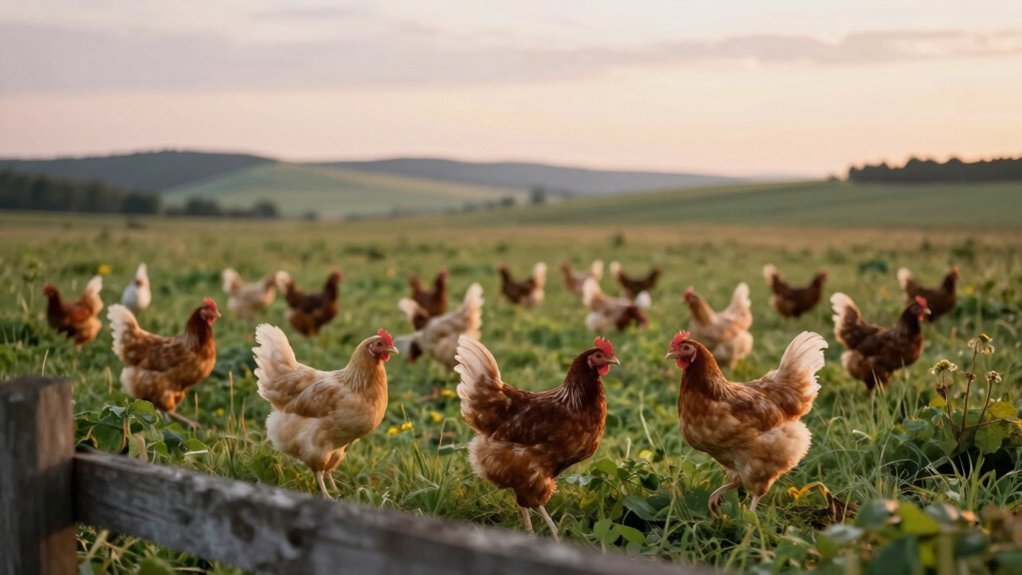
You’re probably wondering how many hens you can keep on an acre without hurting the birds or the land. The sweet spot is about 50 hens per acre – that gives each bird roughly 4 m² of vegetated range, matches EU and Australian free‑range rules, and keeps manure at a level the soil can absorb without runoff. If you stay at 50, you’ll see healthy pasture, balanced nutrients, and fewer disease risks, and the next section will show you exactly how to size your paddocks and coop.
What Is the Optimal Free‑Range Stocking Density?
Takeaway: Aim for 8,000‑10,000 hens per hectare, rotate the range regularly, and keep a close eye on welfare metrics. Next, ask yourself whether your indoor space meets the 1 m² per 120‑hen nest guideline. This approach supports natural pest control and soil aeration while balancing the higher production costs and predator risks inherent to free-range systems. Even with ample land, ensuring each bird has adequate indoor space remains critical for their health and well-being when they are not actively ranging. Allowing birds to forage for diverse natural foods like insects and greens further enhances their nutritional balance and overall vitality.
Why 50 Hens per Acre Is the Sustainable Sweet Spot
You’re probably wondering why 50 hens per acre keeps popping up as the “sweet spot.” Here’s the thing: at that density the birds can graze without turning the whole field into a mud‑filled mess, and their manure acts more like natural fertilizer than a toxic overload.
Why does 50 work?
Because the pressure spreads out, grass recovers quickly, and soil stays healthy. You’ll see fewer bare patches around the coop, and after rain the ground stays firm. This balance lets you keep a steady supply of fresh forage while avoiding costly reseeding. Maintaining this density also ensures each bird has access to adequate outdoor space which supports their natural behaviors and overall wellbeing. Just as a secure run requires sturdy posts spaced about six feet apart to maintain structural integrity, proper spacing in free-range systems prevents soil compaction and ensures the land can support the flock long-term.
How does it fit with feed rotation strategies?
When you rotate pastures every few weeks, 50 birds per acre let each section rest long enough for regrowth. The birds finish the previous patch, then move on, preventing over‑grazing. This rhythm also boosts forage biodiversity benefits—different plant species thrive, offering varied nutrition and natural pest control. Integrating pigs into this system enhances natural parasite control as they root deeply to uncover food sources while chickens follow to consume exposed insects and larvae.
Takeaway
Stick to around 50 hens per acre, pair it with regular pasture rotation, and watch your flock stay healthy while your land stays productive. Next, ask yourself: how will you schedule those rotations to maximize biodiversity?
How Manure From 50 Hens/Acre Affects Soil Nutrients
What actually happens to soil nutrients when 50 hens occupy an acre? You’re probably wondering why the manure feels so “rich.” The birds dump about 1 ton of litter per acre each year, delivering roughly 30 lb of nitrogen, 20 lb of phosphorus, and 15 lb of potassium. About half that nitrogen becomes plant‑available in the first season, while phosphorus is almost 100 % usable. This creates a nutrient synergy: potassium and micronutrients fill gaps, and the nitrogen‑phosphorus balance can boost pasture growth—if you manage it right.
How does fecal dispersion affect the field? You’ll see a patchy pattern if you spread the litter unevenly, leading to hot spots of phosphorus and cooler zones of nitrogen. Uniform distribution smooths those differences, preventing runoff and ensuring every square foot gets a balanced dose. This nutrient-rich output is partly fueled by the high-protein insects chickens consume while foraging, which support their health and enhance the quality of their waste. Unlike domesticated birds reliant on commercial feed, wild ancestors naturally sourced essential protein from diverse prey like worms and snails, contributing to this robust nutrient cycle. Since earthworms offer high-quality protein comparable to fish meal and are rich in essential amino acids, incorporating them into the flock’s diet further enhances the nutritional value of the resulting manure.
Takeaway: With 50 hens per acre, expect strong phosphorus buildup and moderate nitrogen release; spread the manure evenly and test soil often. Next, ask yourself whether you need supplemental nitrogen to keep your pasture thriving.
How Manure Overload Damages Pasture Over Time
Why does extra manure hurt my pasture over time? You’re right to wonder—too much litter throws off the nutrient balance. Nitrogen spikes while phosphorus piles up, and grass can’t use the excess. That mismatch leaves phosphorus lingering in the soil, so each new application offers diminishing forage returns and raises runoff contamination risk.
What happens to water after rain?
When the soil is saturated, water carries phosphorus‑laden particles into streams, fueling algal blooms. Nitrogen leaches as nitrate, slipping below roots and into groundwater. The result? nearby ponds turn green, and your pasture loses its clean‑water reputation.
How does the ground itself suffer?
Repeated over‑application compacts the soil, making it sticky when wet and hard when dry. Compaction cuts infiltration, so more rain runs off instead of soaking in, amplifying runoff contamination. Your pasture becomes less resilient, and future crops will struggle even after you stop adding manure. Unlike the deep litter method which relies on beneficial microbes to decompose waste gradually within a coop, accumulated manure on pasture lacks this controlled breakdown and quickly overwhelms the land. Just as dirty coops cause harmful ammonia buildup that stresses hens and reduces egg production, excessive manure on pasture creates an unhealthy environment that degrades the land’s viability.
Takeaway: Overloading manure hurts pasture health, water quality, and soil structure. Trim the litter, monitor phosphorus, and keep the soil airy. Just as rotating garden zones prevents damage to actively growing crops, managing stocking density ensures long-term pasture viability without the risks of nutrient overload. Next, ask how stocking density influences these long‑term risks.
What Long‑Term Risks Arise From Over‑Stocking?
Overcrowding your flock can quickly turn a thriving yard into a disease hotspot. You’re probably wondering why the risk keeps growing after the first season. Here’s the thing: pathogens pile up in reused ground, turning the pasture into a bacterial reservoir that fuels flock‑health disasters year after year.
How does this hit your bottom line? The soil degrades, vegetation dies, and you lose the natural buffer that once protected birds. Bare soil concentrates manure, making parasites thrive and forcing you to spend more on clean‑up. That erosion drives capital depreciation—your land and infrastructure lose value faster than you can replace them.
What about the law? Regulators notice high mortality and poor sanitation, and they can hand out regulatory fines that eat into profits. Ignoring these warnings means higher costs, lower egg output, and a flock that’s constantly stressed and sick. Beyond physical illness, the stress of overcrowding can weaken their immune system and reduce egg production, mirroring the negative health impacts seen in isolated birds lacking social well-being. When chickens are prevented from expressing instinctual behaviors due to lack of space, they exhibit frustration that further compromises their welfare. Families must also consider the emotional difficulty of rehoming or euthanizing chickens when necessary if over-stocking leads to unmanageable health crises. The takeaway: over‑stocking jeopardizes health, finances, and compliance. Next, ask yourself whether your current density matches the land’s true carrying capacity.
Short‑Term High‑Density Options and Their Management Tricks
How can you safely run a short‑term, high‑density flock? You’re probably wondering how to cram birds without ruining pasture or health. The answer lies in portable fencing, seasonal adjustments, and frequent moves.
What housing works for a quick crowd?
Daily‑move pens and machine‑portable houses let you shift the flock every 1‑2 weeks. Chicken tractors give shelter while still letting birds graze fresh ground. A simple overhead cover works when you need extra protection.
How do you keep the ground healthy?
Rotate the entire setup to new pasture each week. Electric fencing around the coop’s base lets you confine birds at night, freeing the day for larger ranging. This spreads manure evenly and prevents over‑grazing.
What density should you aim for?
If the coop only houses roosting, target 1.5 sq ft per hen. Add feed and nest boxes and bump it to 2 sq ft. In winter, 2‑3 sq ft works if you insulate and ventilate; otherwise, expect 4 sq ft. While these temporary densities differ from permanent setups, remember that large fowl require about 2-4 square feet per chicken in standard coops to prevent stress and disease. Providing adequate indoor space beyond these minimums is beneficial to reduce stress and health issues among hens, especially when outdoor access is limited. For standard-sized birds with outdoor runs, a common recommendation is 4 square feet of indoor coop space per bird to ensure comfort and health.
Takeaway: Use portable fencing, adjust for season, and move often to keep birds comfortable and pasture productive. Next, consider how local regulations shape your free‑range limits.
What EU and Australian Free‑Range Laws Permit Per Hen?
What EU and Australian free‑range laws actually allow per hen? You’re probably wondering how much space each bird truly gets. Here’s the thing: EU free range laws cap outdoor density at 2,500 hens per hectare, which works out to one hen per 4 m² of vegetated run, and they demand continuous daytime access. Indoors, the same EU rules limit you to nine hens per m² of usable area. Australian free range laws aren’t a single EU, but most certification schemes echo a similar hectare‑based limit, often expressed as birds per hectare, and they require a comparable outdoor access standard.
All right, remember that both regions insist on real, usable space—outdoor and indoor—to keep your flock healthy. The takeaway: aim for at least 4 m² of vegetated range per hen and nine hens per m² inside, and check your local Australian certification for the exact hectare figure. Next, you’ll want to figure out how that translates into pasture and coop size for a typical 50‑hen operation.
How to Calculate Pasture and Coop Size for 50 Hens/Acre
You’re probably wondering how the EU/Australian space rules turn into real‑world acreage for 50 hens. You need about 871 sq ft per bird, so one acre (43,560 sq ft) fits exactly 50 layers. Now, split that land into two or three paddocks, each 0.3–0.5 acre, and rotate weekly to keep grass low and manure spread. Pasture layout examples include a “U‑shaped” circuit around a central mobile coop, giving birds easy access to shade and water.
Coop size doesn’t replace pasture; a 10‑sq‑ft per‑hen shelter works for night‑roosting, but you’ll still need the full acre outdoors. Use supplemental feeding strategies—grain troughs placed at paddock edges—to encourage birds to move and avoid nutrient hotspots. To ensure optimal health within this system, the shelter should provide proper ventilation and natural light alongside sufficient room for pecking and dust bathing. While free-range systems prioritize outdoor access, maintaining a baseline of 10 square feet of run space per bird remains a beneficial standard for movement and health when birds are confined.
Takeaway: 50 hens = 1 acre pasture + modest coop; rotate paddocks and add feeding stations for even use. Ready to sketch your own layout?
Step‑by‑Step Guide to Implementing a Sustainable Free‑Range System
If you’re wondering how to turn a vague idea of “free‑range” into a concrete, sustainable setup, you’re asking the right question. First, map your fence, predator‑proof shelters, and grazing paddocks. Pick a spot for the coop where wind hits one side, then add vents high and low for airflow—these coop ventilation strategies keep heat out in summer and moisture out in winter.
All right, install a simple wood‑stove or solar heater for chilly nights; winter heating methods should supply 5–10 W per bird, enough to keep the floor dry.
Here’s the thing: rotate a mobile chicken tractor every 3–5 days, letting each paddock rest 2–3 weeks. This mimics natural grazing, prevents compaction, and spreads manure evenly.
Obviously, collect rainwater for drinkers and compost bedding to close the loop.
Rotational grazing improves soil fertility. Takeaway: start with secure fencing, proper ventilation, modest heating, and rotational grazing. Next step: sketch a paddock schedule and order a basic heater.