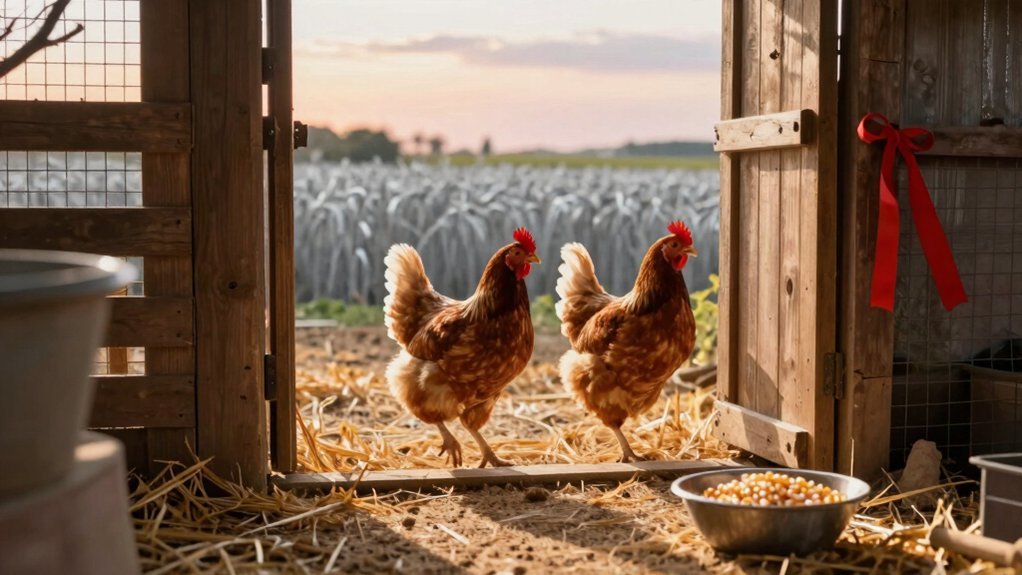
You’re probably puzzled why the hens linger outside at dusk, but the fix is simple: lock the coop for 3‑7 days so they learn it’s safe, then open it at sunrise and close it at dusk, feeding and watering inside each time. Offer a small pile of high‑value treats—mealworms or cracked corn—right at the entrance with a soft glow for the last 30 minutes of daylight; the light and cue become a habit. Capture any stubborn birds gently, cup them, and return them, then keep the routine consistent and you’ll see them roosting automatically.
Lock the Coop for 3‑7 Days to Teach the Birds It’s Home
Why lock the coop for a few days? You’re probably wondering if a short lock‑in really works. Here’s the thing: a 3‑7‑day confinement duration teaches chickens that the coop is their safe night spot. When you keep them inside, darkness and enclosure trigger roosting, and they’ll remember the space after you open the door.
How long should you lock it? Young birds usually need 3‑4 days; older hens may need 5‑7 days. Some caretakers see results in just 1‑2 days, but three days covers most flocks.
What about the coop setup? Make sure food and fresh water are always available, and check coop ventilation to prevent heat stress. A well‑ventilated coop stays cool, even if the weather climbs. This step is crucial because insufficient ventilation can make chickens anxious to leave their enclosure. While adult birds are hardy, maintaining moderate temperatures inside the shelter ensures they remain comfortable and stress-free during confinement. Since chickens prefer temperatures around 60 to 75 degrees, keeping the environment within this range prevents the stress and health issues caused by excessive heat.
Takeaway: lock the coop for the recommended confinement duration, keep ventilation good, and you’ll see chickens return on their own. Ready for the next step? Ask yourself how you’ll schedule daily checks once they’re released.
Set a Rock‑Solid Daily Schedule for Your Chicken Coop
You’re probably wondering how to turn a chaotic morning into a smooth, repeatable routine for your flock.
When should I open the coop?
Open the door at sunrise, usually 5 – 6 am, so birds can forage and dust‑bathe right away. You’ll see them rush out; that’s your cue for routine observation of gait, posture, and alertness.
How do I feed and water them?
Refill feeders and waterers immediately after opening; replace old feed and guarantee water stays clean. Consistent timing—morning and evening meals—reduces stress and steadies laying. To maintain consistent production year-round, especially in winter, you may need to provide supplemental artificial lighting to ensure hens receive about 15 hours of light daily.
What about egg collection?
Gather eggs twice daily, say 8 am and 4 pm, to keep them clean and curb broody habits.
Takeaway: A simple, repeatable schedule—sunrise opening, quick health check, timed feed/water, and twice‑daily egg collection—keeps your flock calm and productive. Since chickens rely on natural light cues to determine when to roost, aligning your evening lock-up with dusk ensures they settle safely for the night. While daytime naps occur, their nightly rest typically lasts about 8 hours as they synchronize with sunset and sunrise. Ready to map this out on a calendar?
Make the Coop Comfortable and Safe
How do I keep my coop both cozy and secure? You’re probably wondering why some coops stay comfortable while others become a mess. Here’s the thing: good ventilation systems and solid predator proofing make all the difference.
How do I stop predators from getting in?
Use half‑inch heavy‑gauge hardware cloth on every opening. Screw it to the frame with washers or heavy‑duty staples, and add a skirt that extends at least 18 inches outward or buries 12 inches deep. Secure doors with sturdy latches and check them often. Never rely on chicken wire alone, as it is easily breached by intelligent predators. For the structural frame, using 2×4 lumber provides the necessary strength to support these secure layers and withstand weather conditions.
How do I keep the temperature right?
Install adjustable roof vents so hot air escapes in summer while fresh air circulates year‑round. Balance those vents with weather‑proof seals to avoid drafts and moisture. Add insulation in extreme climates, and use shade or sunlight as needed.
Takeaway: Combine robust predator proofing with well‑designed ventilation systems, and your chickens will feel safe and comfortable, making them keen to return each night. A properly maintained environment also helps prevent disease spread by ensuring cleanliness and reducing stress within the flock.
Use High‑Value Feed and Treats to Lure Birds Back at Dusk
When dusk rolls in, chickens naturally start looking for a roost, so you’re wondering how to make the coop the obvious answer. Use high‑value feed like mealworms or corn at treat timing, and you’ll see them sprinting inside. Treat pairing with a consistent cue—like a short bell—creates a habit that forms in one to two weeks.
Now, place a small pile of premium treats right at the coop entrance exactly at sunset. The scent and the cue tell birds: “Food’s here, go home.” A short trail leading inside guides hesitant birds without overfeeding. Choosing all-natural, protein-rich options like those from Fluker Farms or Chubby Mealworms ensures your flock gets a nutritious boost while reinforcing the return routine. Since mealworms have hard exoskeletons, providing digestive grit alongside these treats helps your birds break down the food properly. Remember that treats should only be given in small amounts to avoid nutrient dilution which can compromise your flock’s overall health.
Consistent timing helps chickens learn the routine quickly. All right, keep the schedule fixed and the portion tiny; you’ll reduce reliance on treats over time. The takeaway: predictable treat timing and simple pairing turn the coop into a reward hub. Ready to try a dusk feeding routine tomorrow?
Add a Soft Light to Your Chicken Coop Entrance for Late‑Returners
If you’re puzzled why some hens linger at the yard after sunset, it’s usually the darkness that throws them off. A soft glow at the coop entrance gives them a visual cue, letting their circadian rhythms stay on track even when lunar phases dim the sky.
Now, install a low‑output LED or battery‑tap light just outside the doorway. Position it so the light shines inward but doesn’t flood the interior; a gentle overhead glow works best. Birds will see the faint beacon from outside, recognize the safe shelter, and head straight in.
Here’s the thing: most flocks learn the routine within two nights, and younger hens may need an extra 20‑30 minutes of light after sunset. Keep the light on for the last 30‑60 minutes of dusk, then let darkness return. Using a red night light can further reduce stress and prevent aggressive pecking among the flock as they settle in for the night. It is crucial to ensure hens still receive 6-8 hours of darkness daily to maintain their immune health and natural rest cycles. While artificial aids help with evening routines, remember that balanced exposure to sunlight during the day is essential for regulating hormone production that stimulates laying.
Takeaway: a modest, timed light guides late‑returners without disrupting nighttime rest. Next, consider how you’ll automate the timing for consistency. Adding a soft‑glow light helps prevent the chickens from missing the nightly lock‑down.
Safely Capture Stubborn Chickens and Return Them to the Coop
You’re probably wondering why some hens refuse to come in even when you call them, and that’s a common frustration.
How do I start a stress‑free herding session?
Now, scatter a handful of cracked corn along a short path that leads straight to the coop door. Crouch low, keep your arms out, and move slowly; the birds will follow the treat trail without spooking. If you have a partner, both of you can quietly narrow the run with a temporary chicken‑wire barrier, guiding the flock toward the entrance. The boxing method can also be used to gently confine a hesitant hen for a quick check. Understanding that chickens instinctively seek elevated perches for safety and comfort can help you design a coop entrance that feels secure enough for them to enter willingly. Since their eyes lack sensitivity in low light, they rely on their pineal gland to sense light changes and know when it is time to return for safety. This survival instinct is so strong that birds on the outer edge of the roost may utilize one eye open to watch for predators while the other half of their brain rests.
What’s the best way to capture a stubborn bird at night?
All right, wait until the roost darkens. Birds settle, become less active, and you can approach from behind, cupping their body and holding wings against the torso. A gentle, firm grip keeps them calm while you lift them into the coop.
Takeaway: Use feed lures, calm movement, and night‑time roost capture for safe, stress‑free herding. Ready to try a quick evening round?
Troubleshoot Common Setbacks and Fine‑Tune the Roosting Routine
Why does my flock linger outside instead of roosting? You’re probably wondering if overcrowding stress or drainage problems are to culprits, and you’re right to ask.
Is the coop too tight?
If you give each bird less than 4 sq ft, they’ll push, peck, and avoid the roost. Trim nesting boxes to one per four hens and spread roosts away from walls. The result? Less bullying, cleaner droppings, and a calmer evening routine. While large fowl generally need 2-4 square feet inside, keeping bantam chickens allows you to halve these space requirements without compromising their well-being.
Is the ground soggy?
Flat, wet soil creates drainage problems that invite bumblefoot and parasites. Raise the coop on a gravel pad or add a sand base, then slope the run to keep water flowing away. Dry footing means healthier birds and fewer excuses to stay outside.
Implementing an elevated floor helps prevent dampness from rising into the coop, ensuring the interior stays dry and safe year-round.
Takeaway: Give space, keep dry, and watch them settle. Next, check your predator‑proofing and make sure the wire stays tight.