You’re right to worry— a squishy, sour‑smelling crop that won’t empty means yeast or blockage. First, isolate the bird in a quiet, warm crate (80‑85 °F) with dry bedding and stop feeding for 24 hours, giving only a little water after the first 12 hours. Then gently massage the crop upward for 20‑30 seconds every few hours, and once it softens offer tiny amounts of scrambled egg or soaked pellets with a dash of probiotics and diluted apple‑cider vinegar. Watch for rock‑hard swelling or collapse; if those appear, a vet’s crop flush and antifungal meds are needed. Continue hygiene and fresh grit to keep it from coming back.
Identify What a Sour Crop Looks Like in Chickens
Takeaway: A squishy, lingering crop with wet, discolored feathers signals a sour crop. Next, check the beak’s odor to confirm. This swelling occurs because Candida albicans infects the crop, causing it to thicken and fill with fluid that fails to empty overnight. You may also notice the bird expelling undigested food along with a distinct sour smell from its breath. Additional signs often include lethargy and loss of appetite as the infection prevents the crop from emptying normally.
How to Quickly Isolate and Warm an Affected Bird
You’re probably wondering how to keep that sick chicken safe while it warms up.
How do I set up a quick isolation?
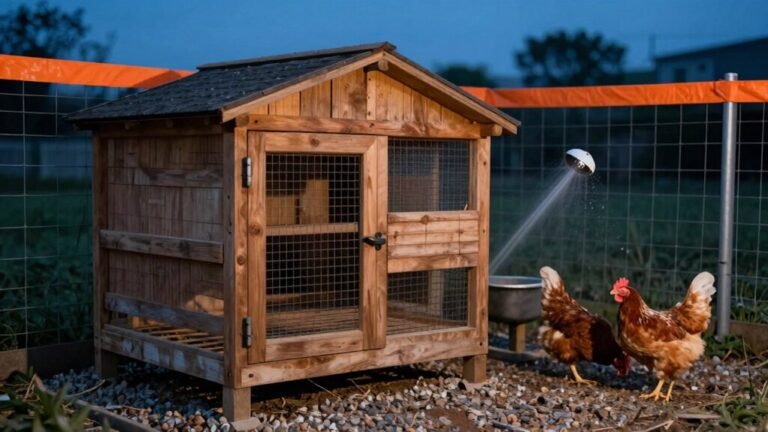
Move the bird into a quiet crate or small pen right away. Keep the space close so you can check droppings and posture often. Use clean towels or pine shavings for bedding, and make sure the enclosure stays dry. Backyard flocks often recover with basic care. Cleaning the enclosure daily helps maintain good coop hygiene to reduce the risk of recurrence. Ensure the isolation area has good ventilation to mitigate respiratory risks if using wood shavings.
What’s the best way to regulate temperature?
Place a safe heat source—like a ceramic heat emitter—near the bird, but let it step back if it gets too hot. Aim for a steady 80‑85 °F (27‑29 °C) and avoid drafts; this eases temperature regulation and lets the chicken conserve energy. Just as with baby chicks, ensuring the heat source is positioned at a safe distance prevents overheating and allows the bird to move away from the red heat lamps if necessary.
How can I support hydration while it recovers?
Put a shallow water dish at the bird’s level, add electrolytes if needed, and check that it drinks regularly. Hydration support speeds recovery and prevents dehydration.
*Takeaway:* Quick, clean isolation with steady warmth and easy water access gives the bird the best chance to heal. Next, monitor its crop and behavior closely.
The 24‑Hour Food‑Withholding Protocol: Why and How
Why should you with food for 24 hours? You’re worried the fermenting crop will get worse, right? The 24‑hour food‑withholding protocol stops new substrate from feeding yeast and bacteria, letting the crop empty and gas dissipate.
What does the fast actually do?
It reduces fermentation, prevents over‑distension, and gives you a clear view of recovery. Some guides also limit water for the first 12 hours, then restore it before food. Since this condition damages crop muscles and ligaments resulting in loss of contractility, withholding food is essential to prevent further stretching of the compromised tissue.
How do you restart feeding safely?
When the crop feels smaller, give tiny portions of soft foods—scrambled egg, boiled yolk, or softened pellets. Use regulated feeding: a few grams every few hours, not a big meal. Adding preventative probiotics at this stage supports healthy gut flora without overloading the crop.
Takeaway: Fast for 24 hours, monitor, then reintroduce food gradually with regulated feeding and a probiotic boost. Next, ask yourself how you’ll keep the bird comfortable while you watch the crop shrink. Withholding food is critical because continuing to feed provides more moldy feed substrates that exacerbate the Candida albicans infection.
Gentle Crop Massage Techniques for Moving Soft Contents
Any bird with a soft, soupy crop can feel stuck, and you’re probably wondering how to nudge the contents without causing harm. You hold the chicken gently, support its chest, and keep its head level. Now, use a light, upward stroke toward the beak, mimicking a soft push of a water hose. Keep the pressure adjustment minimal—just enough to feel the crop wall move, not to bruise it.
Here’s the thing: limit each massage duration to 20‑30 seconds, then pause and reassess. Repeat every two to three hours, watching for distress signals. If the bird stays calm and the crop softens, you’ve succeeded. Since this condition often stems from a fungal infection leading to fermentation, gentle movement helps prevent further stagnation in the sac-like storage organ. While addressing the blockage, you can also support the bird’s respiratory health by applying natural remedies like VetRx under the wings or mixing them into drinking water. Incorporating additives like black cumin into the diet can further boost the immune system and fight harmful bacteria during recovery.
Takeaway: short, light massages every few hours encourage natural movement without injury. Next, monitor the crop and decide if you need to add supportive care. The blockage can cause malnutrition if not cleared.
Using Diluted Apple Cider Vinegar and Probiotics at Home
One common worry is whether diluted apple cider vinegar (ACV) and probiotics actually help a soft, sour crop.
How do you mix ACV safely?
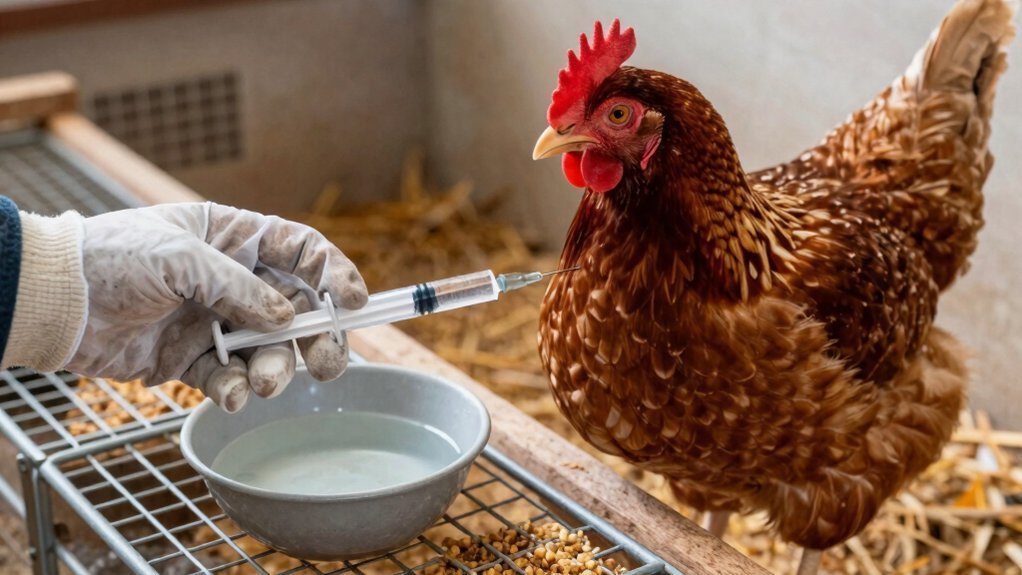
You’ll add one tablespoon (≈15 mL) per gallon of fresh water, or 5 mL per liter, and keep it in a plastic or ceramic drinker. The acid interactions lower crop pH, discouraging yeast overgrowth, but you must avoid metal containers that ACV can corrode. Offer this solution a few times a week, not continuously, and replace the water daily to prevent electrolyte imbalances from excessive acidity.
Which probiotic works best?
Plain, live‑culture yogurt or a commercial poultry probiotic works well when you sprinkle a teaspoon into the feed each morning. The good bacteria compete with pathogens and help restore gut flora after the acidic boost. Start with a small amount; if the bird shows any irritation, cut back.
What’s the bottom line?
ACV and probiotics together give a short‑term boost, but they’re supportive, not curative. Watch for signs of calcium loss or potassium drop, especially in hot weather, and call a vet if the crop stays soft. Using organic unpasteurized ACV ensures the presence of the “mother,” which provides additional antibacterial properties that support the bird’s immune system during recovery.
Next step: try the ACV‑water mix for three days, then add yogurt and monitor the bird’s response.
When to Offer Grit and How to Re‑introduce Feed Safely
You’re probably wondering when to add grit and how to get your flock back to normal feeding after a sour crop.
When should you start offering grit?
Now, give grit only after chicks leave the brooder and start eating greens, grains, or scratch. Chick grit is finer and smaller, matching their beak and gizzard, while adult grit is coarser for larger birds. Provide free‑choice grit availability in a small bowl so they can self‑regulate. Since chickens lack teeth, they depend on insoluble flint grit to mechanically grind food within the gizzard for proper digestion. It is also crucial to offer fresh water constantly to support digestion and overall health during this recovery phase.
How to re‑introduce feed safely?
Here’s the thing: start with soft, easily digested feed in several small portions throughout the day. Delay hard‑to‑digest treats until the crop empties normally. Offer the appropriate grit size alongside each feeding to aid mechanical digestion. Without this insoluble material, birds risk digestive blockages and poor nutrient uptake as their gizzard cannot properly break down tough foods.
Takeaway
Match grit size to bird age, keep grit freely available, and phase in regular feed gradually. Next, monitor appetite and crop movement before adding bulkier foods.
Red Flags: Signs That Require Immediate Veterinary Attention?
If your chicken’s crop stays bloated overnight, you’re probably wondering whether it’s just a sour crop or something more serious. You should watch for a rock‑hard, balloon‑like crop that never empties, especially if it’s squishy and gurgling. Those signs point to a surgical obstruction or severe infection, not a simple sour crop.
Now, consider systemic clues. Lethargy, collapse, or a bird that can’t stand signals dehydration and a possible aspiration pneumonia from regurgitated feed. Open‑mouth breathing, foul mouth odor, or repeated neck stretching raise the alarm. Just as early detection is vital for treating vent gleet to prevent serious complications, recognizing these crop issues immediately is essential for your chicken’s survival. While some conditions like sudden death syndrome occur without warning, most crop issues provide visible red flags that allow for timely intervention. It is critical to note that open-mouth breathing can also indicate respiratory infections caused by viruses or airway obstructions that require immediate professional diagnosis.
All right, when you see any of these red flags, act fast. Call an avian vet today; early intervention prevents complications and saves your flock.
Veterinary Options: Crop Flushing, Antifungal Meds, and Surgery
When your crop feels like a bloated balloon and you’re not sure whether to flush, medicate, or call a surgeon, you’ve hit the right spot.
What’s a crop flushing?
Now, a vet will gently insert a catheter, suction out fluid aspiration, and rinse with sterile saline. Local anesthetic eases the process, and they’ll check for crop impaction before proceeding. This removes debris and lowers yeast load, setting the stage for medication.
Which antifungal works best?
Here’s the thing: nystatin is common, but fluconazole and itraconazole also target yeast. You’ll need the crop emptied first; otherwise the drug can’t reach the infection. The vet chooses based on severity and any bacterial complications, while remembering that maintaining cleanliness and providing supportive care are also essential steps in managing these infections alongside consulting a veterinarian. Since January 2017, treating secondary bacterial issues often requires a veterinarian’s prescription for medically important antibiotics due to federal regulations restricting over-the-counter access.
Preventing Recurrence: Cleaners, Fresh Feed, and Proper Grit
Now, you’ve cleared the crop and treated the infection, but the real win comes from stopping it from coming back. Here’s the thing: a solid sanitation schedule keeps yeast and bacteria from setting up shop. Disinfect feeders, waterers, and the area around them every day, and wipe up spilled feed before it molds. Fresh feed matters too—use a feed rotation so you never serve stale grain, and scoop up any leftovers within an hour. Proper grit is your birds’ mechanical grinder; keep a grit tray stocked and refill it weekly, especially after a dust‑storm or heavy scratching.
How often should I clean?
Clean water containers twice daily, replace so water each morning, and scrub coop floors weekly.
What’s the best way to store feed?
Store in airtight bins, rotate stock every three weeks, and keep it dry.
Why does grit matter?
Grit prevents crop stasis by helping birds break down fibrous foods.
Takeaway: stick to a strict sanitation schedule, rotate feed, and keep grit always available. Next, ask yourself: do you have a reliable system to track these chores?
Long‑Term Flock Management to Keep Sour Crop at Bay
Takeaway: Consistent feed, clean water, regular deworming, and scheduled probiotics keep sour crop at bay. Ready to set up your weekly checklist?