You walked out to dead chickens and zero answers — that’s the worst kind of morning. Here’s the thing: the predator already told you exactly who it is. Headless birds mean hawks or raccoons. Piled carcasses with clean skull bites mean weasels. Scattered feathers and multiple kills usually mean dogs. Crushed eggs point toward opossums or skunks. Cross-reference the wound pattern, entry point, and timing, and the picture gets clear fast — keep going and you’ll have everything you need to close every gap.
How to Read Kill Evidence Before Assuming a Predator
Finding a dead chicken in your coop is gut-wrenching, but rushing to blame the wrong predator means you’ll set the wrong trap, fix the wrong gap, and lose another bird next week. Here’s the thing — predator tracking only works when you slow down and read the full scene before reacting.
Evidence timing matters more than you’d think. A fresh kill looks different from one that sat overnight, and that gap changes everything about what you’re actually dealing with. You need to check body position, what’s eaten, what’s scattered, and what’s still intact. Each clue points somewhere specific. Obviously, one missing bird and a pile of feathers don’t tell the same story. Read the scene right, and you’ll know exactly where to start.
How Predator Behavior Determines What Evidence Stays Behind
Every predator that hits your coop leaves a calling card — not because they’re sloppy, but because their biology and hunting instincts drive them to behave in very specific, predictable ways. Here’s the thing: predator timing shapes everything you find. Raccoons work fence lines at night, leaving headless bodies behind. Weasels pile carcasses without eating them. Dogs maul and scatter but rarely carry off. Coyotes? They vanish with the whole bird. Now, once you understand these evidence patterns, the scene stops looking like chaos and starts reading like a map. You’re not guessing anymore — you’re diagnosing. Every feather trail, every bite mark, every missing head tells you exactly who showed up and why. That knowledge is your first real line of defense. Raccoons are particularly persistent climbers capable of tearing through chicken wire in roughly thirty minutes, which is why the damage they leave behind often looks far more destructive than what other nighttime visitors produce.
Hawks: Headless Birds and Daytime Strikes
When you walk out to your flock mid-morning and find a headless bird with barely a feather out of place, you’re not looking at a nighttime break-in — you’re looking at a hawk. Hawks eat heads first, leave the breast partially consumed, and vanish before you even knew they arrived. That’s hawk hunting in one brutal, efficient move.
Here’s the thing — daytime raptor attacks are actually easier to confirm than most. No ground tracks, no scattered mess, just talon punctures on survivors and a tight cluster of feathers marking the strike zone.
Now, once you know it’s a hawk, you’re already halfway to stopping it. Cover your run, reposition decoys regularly, and limit free-ranging during peak daylight hours. Simple fixes, real results. Not every attack ends in a kill — a hawk can miss its target completely, leaving the chicken shaken and short a few feathers but otherwise unharmed.

EXTRA LARGE SIZE, ENHANCED BIRD DETERRENCE: Compared to standard bird repellents, our product features a large 15-inch size (50% bigger than standard 10-inch models), providing a stronger visual impact to effectively scare away birds and protect your orchards, farms, and gardens for large-scale agricultural or orchard use
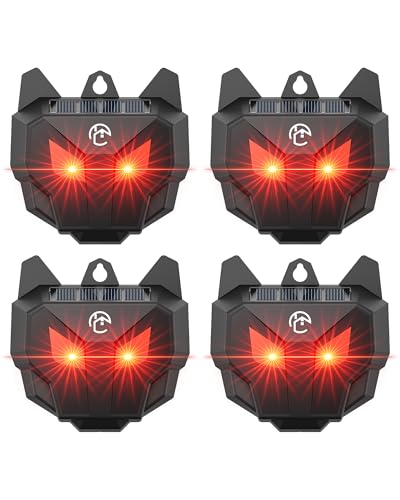
[Upgraded 4Hz Visual Deterrence] -- Featuring dual 5mm blood-red LEDs that flash at a rapid 4Hz frequency, these predator eyes animal deterrent mimic the presence of a larger, aggressive nocturnal hunter. Unlike standard lights, this intense pulse triggers a deep-seated flight response in coyotes, raccoons, and foxes.
Dogs: Scattered Feathers and Multiple Kills
Scattered feathers across half your yard, multiple birds down, and not a single clean kill in sight — that’s a dog attack, and it hits differently than anything else you’ll face as a keeper. Dogs don’t hunt clean. They chase, shake, and scatter your flock across the yard like confetti, driven purely by instinct, not hunger. You’ll rarely see consumption. Just bodies with neck trauma and feathers everywhere.
Here’s the thing — dog temperament matters enormously. Not every dog attacks, but certain breeds are wired for it. And fence jumps? More common than you’d think, especially with high-energy dogs.
Secure your perimeter seriously. If your fencing wouldn’t stop an enthusiastic Springer Spaniel, it won’t stop the next one either. Wound patterns from dogs tend to look random and sloppy, with torn wings, missing heads, and exposed organs that confirm canine involvement over other predators.

【Upgraded Dig Defense Gap】Upgraded yard fence gap is reduced to 1.26 inches, which can more effectively prevent pets from breaking free from the gap to escape or other small animals from entering and damaging your garden and yard. You will receive 10 pcs garden fencing, snaps and zip ties, total length about 10.83 ft

Longer Size for Extended Garden Coverage:This garden fence animal barrier provides wider coverage to protect your outdoor space. Each panel measures 17" long x 13" high, and the set includes 14 pack durable metal panels, creating a total fence length of 20 feet. The longer design helps form a reliable dig barrier fence that can reduce the chances of rabbits, dogs, squirrels, and other small animals digging under your fence and entering your garden
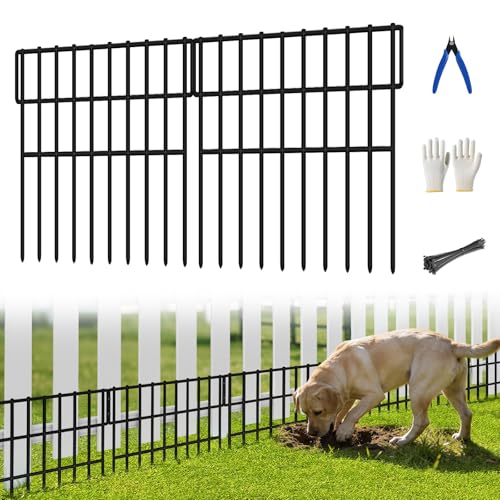
【WIDE APPLICATION】This no dig animal barrier is suitable as a path edge fence, lawn, garden, and vegetable garden border fence. They are effectively prevent small animals from escaping or entering under your garden fence, stopping them from burrowing and wreaking havoc in your backyard. 30 Panels garden animal barrier fence you can combine into different shapes such as Round Hexagonal Triangle Straight, Protection of your beautiful garden, yard and patio.
Raccoons: Head, Neck, and Chest Cavity Damage
Raccoons are the predator that’ll make you feel genuinely outsmarted — and that’s because you probably were. These masked troublemakers are raccoon nocturnal operators running your coop like a heist. Here’s the thing: they’re not just grabbing birds randomly. They target heads, necks, and chest cavity predation is their signature — reaching through fencing gaps, tearing off what’s accessible, and leaving bodies behind. You’ll find headless chickens, exposed chest cavities, and scattered parts near water fonts. Multiple birds dead, nothing carried away. Now, they’ll manipulate your latches too — obviously a simple hook won’t stop them. Your move is hardware cloth with no hand-sized gaps and latch reinforcements they can’t puzzle through. Lock it down before tonight.
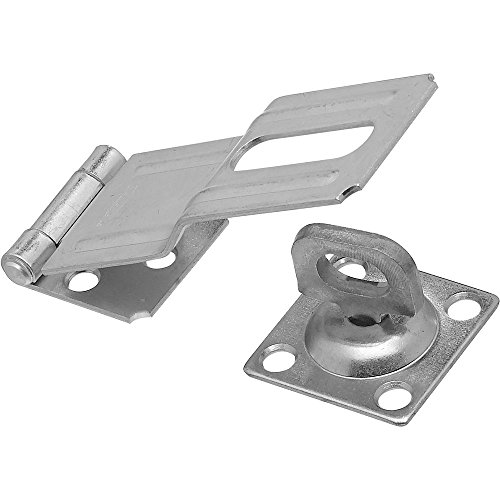
DOOR SECURITY LOCK: Heavy-duty 4-1/2 in zinc-plated swivel staple safety hasp provides reliable door security protection for cabinets, boxes, trunks, and various door reinforcement applications with concealed screws for enhanced security.

SECURITY DOOR LOCKS HASP: This 3-1/4 in zinc-plated swivel staple safety hasp provides reliable door security for cabinets, boxes, trunks, and various entry points with concealed screws when closed for enhanced protection.
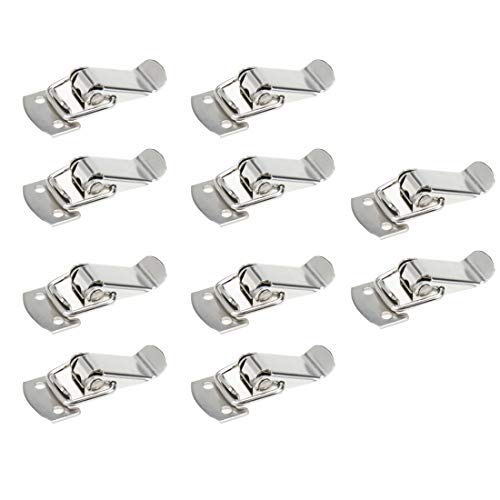
Package Content: 10pcs x Tolggle Latch
Foxes: Whole Birds Gone, Feathers Left Behind
If you walked out to find nothing — no body, no blood, just a loose ring of feathers where a bird used to be — you’re dealing with a fox, not a raccoon. Fox stealth is genuinely impressive. They’ll observe your coop for days, then strike fast during daylight while you’re inside assuming everything’s fine.
Here’s the thing: foxes carry whole birds off completely. No partial consumption, no carcass to examine — just feather scavenging left behind as their calling card. They’ll dig under walls or climb runs like it’s nothing.
Now, if your free-ranging flock disappeared bird by bird across a single morning, a fox found your routine before you noticed its pattern. In documented attacks, multiple foxes working together can kill over two dozen birds in under twenty minutes. Lock down your run. Today.

ANIMAL REPELLENT OUTDOOR - Intruder-scaring defense. Our device's performance is based on the double effect. Firstly, Dual red LED lights mimic the active presence of another nocturnal predator. Secondly, the rapid 4Hz flashing resembles the fearful for intruders glow of fire. These ensure scaring away any unwelcome visitors.
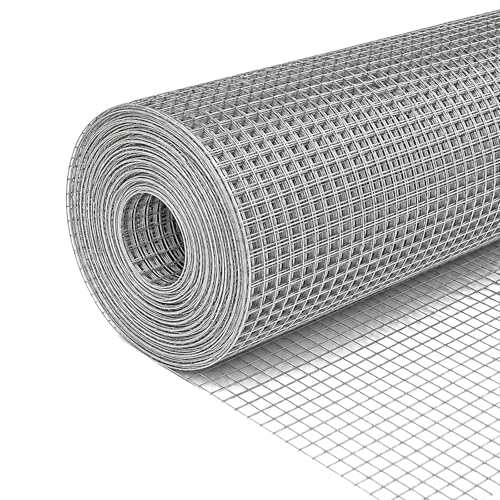
Hardware Cloth 1/2inch for Chicken Coop – 16 inch x 50 ft welded wire mesh made from 23-gauge galvanized steel hardware cloth. Provides reliable strength and flexibility for chicken wire fencing, garden protection, and general outdoor use

Strong durability: We have 30 years of experience, the use of advanced production technology.made from high-strength low-carbon steel wire,waterproof, rust proof, corrosion resistance, tear resistance, smooth surface beautiful. Even in a variety of wet, saline-alkali environment still remains the same,the use time is greatly extended,making it an ideal choice for wire mesh fencing and long-term outdoor applications.
Weasels: Small Entry Points and Skull Bite Marks
Something tiny killed your whole flock last night, and you didn’t find a single dragged carcass or torn wire — just bodies stacked in the corner like someone ran a grim inventory check. That’s a weasel. Here’s the thing — weasel entry doesn’t look dramatic. We’re talking one-inch gaps, bent mesh, a soft spot near the coop base. You’d miss it walking past. Now, check your dead birds carefully. Skull bites are the giveaway — two closely spaced puncture marks right at the base of the skull. Clean, precise, almost surgical. Weasels kill everything moving, then stop. Bodies stay mostly intact. Seal every gap under an inch with hardware cloth. Obviously, chicken wire won’t cut it — they squeeze right through. Look for fresh footprints or disturbed soil near the perimeter to confirm a weasel was moving around your coop before the attack.

Durable Welded Hardware Cloth & Ground Skirt: Features 1" x 1"(20 gauge) square welded hardware cloth on side walls with thickened PVC coating for superior durability and predator resistance. Combined with the extended ground skirt, it provides a professional safeguard for various poultry like dog kennels, rabbit cages, or sheep pens.

Durable Welded Hardware Cloth & Ground Skirt: Features 1" x 1"(20 gauge) square welded hardware cloth on side walls with thickened PVC coating for superior durability and predator resistance. Combined with the extended ground skirt, it provides a professional safeguard for various poultry like dog kennels, rabbit cages, or sheep pens.

[Heavy Duty Material]: Gbekery Hardware cloth is crafted from high-quality, robust materials. And The size of the chicken wire is 16 inch×25 ft and 1/2 inch×1/2 inch thickness.
Opossums and Skunks: Eggs, Chicks, and Random Injuries
Broken eggs with no missing carcasses — that’s your first clue something smaller and sneakier paid your coop a visit. Now, here’s the thing: opossums and skunks both target eggs, but their methods differ wildly. Opossum egg puncture? Actually, that’s skunk territory — skunks insert their muzzles into small holes to lick contents clean, making skunk meals look surgically neat. Opossums crush eggs entirely, leaving mashed shells and smeared yolk everywhere. Obviously, the smell confirms skunks before you even see the evidence. Opossums go further, targeting young chicks and using claws to lacerate survivors. You’ll find feathers, footprints, and partially consumed birds scattered around. Skunks, unlike opossums, are more diggers than climbers, meaning they’ll exploit tiny gaps and spaces at the base of your fencing rather than scaling it to gain entry. If you’re seeing both crushed shells and wounded chicks, you’ve likely got an opossum problem worth addressing tonight.
When the Evidence Points Two Ways: Narrowing It Down
Sometimes the clues overlap, and that’s where most keepers get stuck — you’re staring at a pile of dead birds thinking “raccoon,” but something about the wound pattern keeps nagging at you. Here’s the thing: raccoons pull heads and crops, but weasels pile bodies and hit the vent area hard. Those aren’t the same crime scene. Now, seasonged footprints near your coop’s base? That’s your raccoon, reaching through at ground level. No prints, just vent wounds and skulls bitten clean? That’s weasel energy. Night‑time scavenging patterns matter too — raccoons return, weasels go on killing sprees. You’re not guessing anymore. You’re reading evidence. Cross two clues together, and the answer usually becomes obvious. Trust the pattern, not the panic.
Closing Each Vulnerability the Identified Predator Uses
Once you’ve nailed down which predator’s been hitting your flock, the real work starts — and honestly, this is where most keepers either fix the problem for good or end up back at square one in two weeks. Here’s the thing — evidence timing patterns tell you *when* they’re hitting, and predator entry points tell you *how*. You need both. Raccoons exploit ground-level fence gaps and loose latches. Weasels slip through chicken wire like it’s nothing. Foxes walk right through unsecured gates. Birds of prey own any unroofed run. Opossums find every floor gap you forgot about. Now, close *each specific vulnerability* your identified predator uses — not just the obvious ones. Obviously patching one hole while ignoring three others just schedules your next loss.