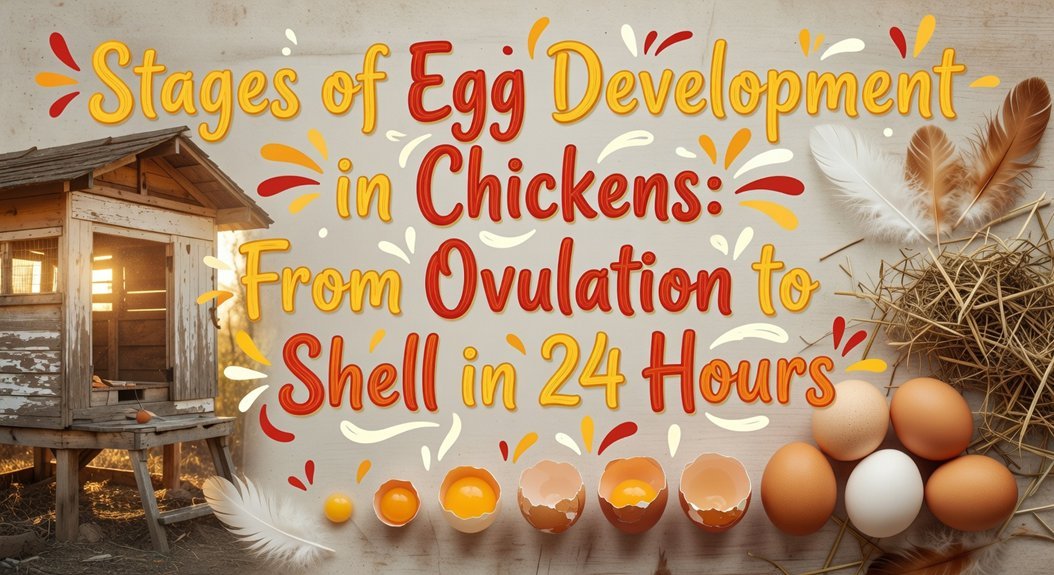
You’re frustrated thinking your hen’s 26-hour cycle is broken, but here’s the thing: that extra time isn’t a defect. You see, light triggers an LH surge, releasing a yolk the infundibulum grabs in minutes. Next, the magnum wraps it in albumen while the isthmus adds membranes. Finally, the uterus spends twenty hours calcifying the shell using dietary calcium. Obviously, this precise biological dance can’t rush. If you stick around, you’ll see exactly why patience pays off.
How Chicken Follicles Mature Before Ovulation
Ever wonder why your backyard flock isn’t laying like clockwork when you’re doing everything right? It’s all about how those tiny follicles mature before the big event. You’ve got a massive primordial pool resting in that single functional ovary, waiting for their cue. Follicle recruitment kicks things off, pulling specific candidates from the resting bunch to start growing. They swell with yolk, shifting from small white blobs to vibrant yellow spheres ready for action. Here’s the thing: hormone feedback strictly controls this whole parade, ensuring only one follicle hits the top spot daily. If that balance tips, your eggs stop coming. Obviously, you can’t force nature, but understanding this delicate dance helps you spot issues early. So, trust the process, watch your birds closely, and let biology do its heavy lifting while you handle the rest.
What Triggers the LH Surge and Egg Release?
Since you’re staring at an empty nest box wondering why the clockwork stopped, let’s cut through the noise about what actually flips the switch for egg release. You need light hitting those eyes to kickstart phothrH regulation in the hypothalamus, sparking LHRH production. But here’s the real kicker: your hen’s mature follicle dumps progesterone, creating a massive progesterone feedback loop that screams at the pituitary. This surge hits hard during the dark phase, roughly four to six hours before ovulation. Obviously, without that hormonal handshake, the egg stays put. The LH peak then weakens the follicle wall until it bursts. If your lights are off-schedule or stress blocks that progesterone spike, the whole chain reaction stalls. Fix your lighting timer and reduce coop chaos to get that cycle clicking again. It’s simple biology, not magic, so adjust your setup today.
How the Infundibulum Captures and Fertilizes the Yolk
That hormonal fireworks show you just fixed means nothing if the egg gets lost in the driveway, so let’s talk about the infundibulum, the actual bouncer at the club door. You’ve got a tiny three-inch funnel waiting right there. When that yolk drops, the muscle lining creates an infundibulum vacuum, sucking it in before it wanders off. Honestly, missing this twenty-minute window ruins everything. Now, here’s the real magic: fertilization happens only here. Sperm stored for weeks rush out, but you’ve got barely fifteen minutes to make it count. While things get cozy, chalaza anchoring starts forming fine protein fibers to hold that yolk steady later. Don’t worry about the white stuff yet; that’s the magnum’s job next. Your bird handles this perfectly every time. Trust the process, because once that yolk slides down, there’s no turning back. It’s science working exactly as designed.

【STABLE TEMPERATURE】: The circulating airflow system driven by a strong fan provides a stable temperature condition for the eggs.

【STABLE TEMPERATURE】: The circulating airflow system driven by a strong fan provides a stable temperature condition for the eggs.

Incubator Accessories (Egg Turning Motor), after receiving the egg turning motor, please make sure it is exactly the same as your old egg turning motor before replacing it
How Albumen Forms Around the Yolk in the Magnum
While you’re still wondering how that bare yolk turns into something resembling an actual egg, the magnum is already working overtime to wrap it in protective protein. You watch as the yolk slides into this thirty-three-centimeter tube, where tubular cells go wild synthesizing dense albumen. Here’s the thing: albumen timing is everything, because this four-hour transit determines your egg’s final shape and cushioning. The magnum gland pumps out layers specifically designed to sustain life for three weeks, reacting instantly to the ovum’s presence. Obviously, without those pre-ovulation steroid surges, this protein factory wouldn’t even start. You get thick, dense whites first, creating a moisture-rich buffer that centers the yolk perfectly. It’s not just goo; it’s engineered nutrition. So, when you crack open that fresh egg later, remember this intense four-hour sprint made it possible. Trust the process; nature’s got this covered.

Maximize your Potential: Enhance your active lifestyle with our Egg White Protein powder, a lactose free protein powder, designed to support your strength and performance goals. Each serving delivers a substantial 30 grams dose, catering to both fitness enthusiasts looking to push their limits.

Maximize your Potential: Enhance your active lifestyle with our Egg White Protein powder, a lactose free protein powder, designed to support your strength and performance goals. Each serving delivers a substantial 30 grams dose, catering to both fitness enthusiasts looking to push their limits.
COMPLETE PROTEIN - Each serving delivers 23g of pure egg white protein. Free of dairy, lactose, gluten, and soy, with no unnecessary additives, for clean, high-quality protein you can trust
How the Isthmus Builds the Inner Shell Membranes
Just when you think the egg’s got enough padding, you hit the isthmus, that tight little squeeze where things get serious fast. You’re wondering how those thin layers actually stick without making a mess, right? Well, here’s the thing: specialized cells kick off rapid membrane synthesis right at the junction, spinning two distinct barriers around your wobbling contents. Obviously, you need structure before that hard shell arrives later. The narrow passage forces the egg into its classic oval shape while secretions create a smooth peri-albumen layer. This layer guarantees perfect peri‑albumen adhesion, binding the messy white to the new membranes so nothing slips. It’s a one-hour ride through this constrictive tube, but it’s essential. Without this step, you’d have no protection for the yolk. So, trust the process; this tight squeeze builds the foundation you definitely need before the final calcification stage begins. Crucially, the integrity of these collagen-based barriers relies on adequate levels of copper trace metal.

Revolutionary Joint Support – Healthy Origins Natural Eggshell Membrane contains essential nutrients like Chondroitin Sulfate, Collagen, and Hyaluronic Acid to promote joint health and flexibility.*

Natural Collagen Alternative: Sourced from egg shells, our Egg Shell Membrane capsules, a dairy-free collagen supplement, offers a unique way to add collagen to your daily routine—perfect for those seeking non-bovine options.
What Happens During Shell Formation in the Uterus?
You’re probably wondering how that soft, squishy bundle suddenly turns into the hard brick you crack open for breakfast, especially after that tight squeeze in the isthmus left it feeling so vulnerable. Now, you enter the uterus, where the egg hangs out for twenty hours. Here’s the thing: membrane permeability shifts dramatically, pumping water in to inflate your egg into its classic oval shape. Obviously, this expansion guarantees tight contact with the uterine wall. Then, calcification kicks off. The uterus secretes calcium carbonate crystals onto mammillary cores, building that hard shell layer by layer. Uterine pH levels carefully regulate this crystallization process, preventing chaos while pigments deposit to create brown hues. Finally, a protective cuticle seals everything up before expulsion. You’ve got a nearly finished product ready for the final exit. Trust this biological engineering; it’s flawless. This stage represents the majority of process which takes approximately 20 hours to finalize the egg structure.

Effortless Dehumidification: Save time and avoid mess with our large, blown chicken egg shells, perfect for continuous operation


Exciting Volcano Eruptions – Activate 8 colorful eruptions with this hands-on science kit, bringing the fun of volcanoes to your Easter egg decorating experience
Where Hens Get the Calcium Needed for Eggshells
So where exactly does your hen pull off the miracle of conjuring two grams of pure calcium out of thin air every single day? She doesn’t. You feed her. If you skimp, she steals from her own bones, leaving them brittle just to finish that shell. Obviously, weak shells mean broken dreams on your kitchen floor. Now, consider your shellcium sources carefully. Limestone works, but oyster shells release slowly, matching her nighttime production schedule perfectly. That’s why supplement timing matters so much; offer it late afternoon so she absorbs it while forming the shell overnight. Some folks swear by crushed eggshells, yet bacteria risks scare me personally. Stick to clean oyster grit if you want safety without the fuss. Your hen can’t forage enough bugs to meet these huge demands alone. Give her the right tools now, and you’ll stop cracking bad eggs forever. However, if you choose to recycle shells, you must dry them thoroughly to prevent moisture complications and ensure they grind into pieces large enough for chickens to pick up with their beaks.

ESSENTIAL POULTRY GRIT FOR CHICKENS & GAMEFOWL: Premium grit for chickens made from natural granite grit for chickens, essential for grinding whole grains and improving digestive health for poultry; a must-have to include in your chicken coop accessories

Optimal Health and Egg Production - Enriched with 16% protein from organic grains, this feed provides a balanced and complete diet for laying chickens and ducks, promoting growth and nutritious, supports strong eggshells

STRONGER EGGSHELLS, FEWER BREAKS – Eggshells are 94–97% calcium carbonate; this crushed oyster shell replenishes what laying hens lose daily, reducing cracked and thin-shelled eggs.
Why the Complete Egg-Laying Cycle Takes 26 Hours
Since you’re probably wondering why your hen doesn’t pop out an egg like clockwork every single morning, let’s clear up the math behind her biological factory. Shell formation alone gobbles over twenty hours, pushing most breeds past the neat twenty-four-hour mark. You’ll see your hen lay later each day because that extra time adds up quickly. Her internal lightadian rhythm actually prevents laying after dark, forcing a pause that extends the cycle further. While production breeds hit twenty-four hours, your backyard girl likely needs twenty-six. This circadian rhythm timingassistant guarantees she rests, even if it means skipping a morning. Don’t worry; this adian rhythm isn’t a defect but a feature. She’s working hard, not slacking. Understanding this helps you expect those occasional skipped days naturally. Accepting her unique pace makes you a smarter, more patient keeper today. As hens age and their egg laying rate gradually declines after peak production, these natural pauses in the cycle become even more frequent.