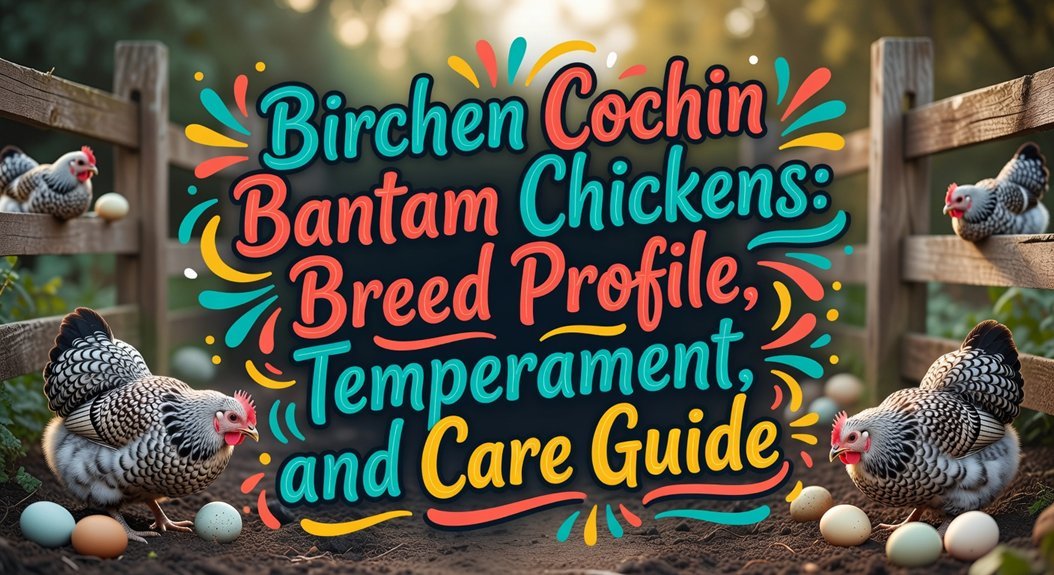
You’re worried those fluffy feet will turn into mud balls in your coop. All right, Birchen Cochins are docile, heavy-feathered beauties from China that lay small brown eggs and brood constantly. Obviously, you’ll need dry bedding and low roosts to keep them clean. They’re perfect if you want calm pets, not production machines. Now, let’s walk through exactly how to set up their home so you can stop guessing and start raising.
What Makes Birchen Cochin Bantams Unique?
Look, if you’re staring at photos of fluffy, feather-legged chickens and wondering whether the Birchen Cochin Bantam is just another pretty face or actually worth the coop space, you’re asking the right question before dropping cash on day-old chicks. You want a bird that demands attention, right? Their black feathers laced with silver create a bold contrast that’ll absolutely showcase feeding time as a visual spectacle. Obviously, those feathered legs make them look like teddy bears, but they also trap mud, so you’ll clean more often. That’s the trade-off for such unique ornamental beauty. While their compact size fits small yards perfectly, their real value lies in heritage preservation. You’re not just buying a pet; you’re keeping history alive. If you crave a calm, docile companion that turns heads instantly, this fluffy giant-in-miniature is your perfect match. Go grab those chicks. Unlike Silkies which have five toes, this breed possesses four toes on each foot.
Where Did Birchen Cochin Bantams Originate?
Since you’re probably tired of wading through confusing history books just to figure out if these birds are legitimate or some modern marketing gimmick, let’s cut straight to the chase. You want truth, not fluff. These Birchen Cochin Bantams trace their herit lineage directly back to 19th-century China. Back then, sailors brought small, feather-legged chickens from Beijing to Britain and America as a historic import. Europeans call them Pekins, while Americans stick with Cochins, but they’re the same fluffy birds. Breeders later refined this Chinese stock specifically for that compact, rounded show look you love. The APA officially recognized the Birchen color variety in 1977, proving they aren’t some fly-by-night experiment. Obviously, knowing their genuine royal Chinese roots should settle any doubts you’re harboring about their authenticity. Now you can buy your flock with total confidence, knowing you’re getting real, historic birds.
What Are the Distinct Birchen Cochin Physical Traits?
If you’ve been squinting at photos wondering whether these birds are actual chickens or just overgrown powder puffs, you’re not alone. You’ll spot their short, broad bodies instantly, looking like round balls of fluff with curved backs. Their dense, puffy plumage creates a soft appearance where legs often vanish completely. Notice the dark body contrasting with lighter accents; this Birchen pattern boosts their ornamental plumage markedly. You’ll find feathers covering everything, giving a unique plathered texture that feels incredibly loose and abundant. Even their shanks wear lustrous feathers, hiding the legs entirely while enhancing that fancy look. They sport small single combs, reddish bay eyes, and heads held high for elegant stature. Obviously, those four toes stay hidden under thick down. This distinct build suits you if you want a stunning, compact bird that truly stands out in any flock today.
How Much Do Birchen Cochin Bantams Weigh?
Two distinct weight classes might confuse you when you’re staring at those fluffy balls of feathers, wondering if they’re heavy enough to be worth the coop space. You’ll find hens tipping scales at 26 ounces while roosters hit 30 ounces. Obviously, that dense feathering tricks your eyes during any weight comparison against standard Cochins, which weigh pounds more. Don’t let the fluff fool you; these birds stay compact yet sturdy. Seasonal growth plays a huge role too, as pullets start lighter at 24 ounces before maturing fully within a year. You’re getting a heritage breed recognized since 1977, not some oversized impostor. If you need manageable size without sacrificing presence, this fits your flock perfectly. Trust the official standards here. They deliver exactly what you expect: compact charm with surprising substance. Go ahead and clear that coop corner; you won’t regret adding these lightweight giants today.
How Many Eggs Do Birchen Cochin Bantams Lay?
You’ve got the coop space ready for those feathered puffballs, but now you’re staring at your empty egg carton wondering if their charm comes with a breakfast tax. Honestly, don’t expect factory output. These ornamental stars lay roughly 150 small, brown eggs yearly, averaging just three or four weekly. They take twenty-five weeks to start, which feels like an eternity compared to production breeds. However, their egg nutrition shines brightly; those tiny shells often hide rich, deep orange yolks that taste incredible. You’ll notice seasonal trends dictate their rhythm, peaking from late spring through fall, yet they surprisingly keep laying reliably even during cold winters. Obviously, you won’t get rich selling these pee-wee treasures, but if you value flavor over volume, they’re perfect. Stop worrying about low counts and start enjoying those gourmet breakfasts instead.
Why Are Birchen Cochin Hens So Broody?
Although you might love the idea of fluffy chicks, nothing tests your patience quite like a hen who decides her only job is guarding an empty nest box forever. You’ll find your Birchen Cochin sitting tight because powerful hormonal triggers flip her switch from laying to mothering once she hits a year old. Her body literally stops producing eggs to focus entirely on warmth. Now, here’s the thing: this isn’t just bad timing; it’s a deep breed predisposition. Cochins rank alongside Silkies as champion sitters, and your bantams inherit that fierce, reliable maternal instinct directly. They’ll puff up, growl, and refuse food for days, driven by genetics that scream “hatch everything!” Obviously, this makes them terrible layers during spring but incredible mothers if you want chicks. If you need consistent eggs, look elsewhere; if you want a natural incubator, you’ve found your girl. The presence of eggs or even objects resembling them in the nest further reinforces this behavior by triggering the hormone prolactin.
How Gentle Is the Birchen Cochin Temperament?
Maybe you’re worried that a hen obsessed with sitting on eggs might turn into a feathered dragon if you try to move her, but here’s the thing: that fierce maternal instinct doesn’t make her mean. You’ll find these birds possess a genuinely gentle temperament, staying calm even when kids chase them. Obviously, they’re not easily spooked. While most roosters stay mellow, remember a few Bantam exceptions can get feisty. Still, they generally avoid quarrels and mix perfectly into your existing flock. Their slow-moving, sweet nature makes them incredibly family friendly, ideal for young hands learning to hold pets. They actually enjoy your company, often acting more like dogs than chickens. If you want affectionate birds that rarely bite, this breed fits your life perfectly. Go ahead and bring these charming, docile friends home today.
How Should You House Feather-Legged Bantams?
Since those fluffy leg feathers turn into muddy icicles faster than you can say “winter coop,” you’re probably stressing over how to keep your Birchen Cochins clean without turning your backyard into a swamp. You need smart Bantam coop design that prioritizes dry floors above all else. Give each bird two square feet inside and four in the run. Obviously, mud ruins those beautiful legs, so amend your run base immediately. Install wood floors covered deeply in pine shavings; these are essential Feather legged bedding solutions for non-flying breeds sleeping on the ground. Raise roosts just two feet high with wide perches so toes stay warm. Secure everything with half-inch hardware cloth because predators love small targets. Don’t let muck crust their feet. Build this dry, spacious haven now, and your flock will thank you with pristine plumage and happy clucks all season long. To further protect their delicate feet, you should cover the run area with pebbles, sand, mulch, or grass to ensure the ground remains clean and dry.

Dust-Free Formula: Reduces respiratory issues for chickens and keepers, ensuring a healthier living environment; Significantly reduces odors by minimizing moisture buildup and improving airflow

4X ABSORBENCY – Old Dominion Hemp bedding absorbs up to 4x its weight, keeping your chicken coops, small animal enclosures, and keep reptile habitats fresh. Ideal for a low-maintenance and fresh-smelling environment.

Clean, Ready-to-Use Sand: Washed, screened, and dried to remove fines and impurities, delivering a consistent coarse grain that’s ready to use straight from the bag without additional preparation
How Do You Protect Birchen Cochins From Weather?
Because those heavy feathers turn your fluffy friends into walking ovens in July and icy popsicles in January, you’re probably wondering if you can actually keep them comfortable year-round without turning your coop into a climate-controlled bunker. All right, here’s the thing: you need smart heat mitigation strategies immediately. Provide deep shade, fresh cool water, and chilled treats like grapes while skipping scratch grains when temperatures spike. Obviously, ventilation matters most, so install roof vents to let hot air escape naturally. Now, for winter, focus on frost prevention by sealing drafts but never blocking airflow entirely. Supplement heat only below 35 degrees and insulate walls safely. You’ll manage moisture carefully to stop respiratory issues before they start. This balanced approach keeps your Birchen Cochins thriving regardless of the forecast. Trust me, getting this right makes ownership incredibly rewarding, so you can finally relax and enjoy your fluffy crew. Since heavier standard breeds like Cochins handle winter well, they still require protection from extreme cold and moisture to prevent frostbite on their feathered feet.

【25W Solar Panel & 8-Inch】Our 8" solar fan for chicken coop is equipped with 25W high-efficiency solar panel with adjustable brackets, photovoltaic conversion efficiency of up to 21.5%, The solar exhaust fan can achieve 2300 RPM high-speed rotation, 430 CFM high airflow, ensuring a greater airflow. With its high airflow and low noise, the greenhouse fan solar powered operates at full speed with a noise level of only 36 decibels.

Convenient Ventilation Equipment: this solar vent fan operates independently using built-in solar panels, it can directly absorb sunlight and drive the silent five-blade fan to operate, requiring no external wiring, batteries, provides ongoing ventilation
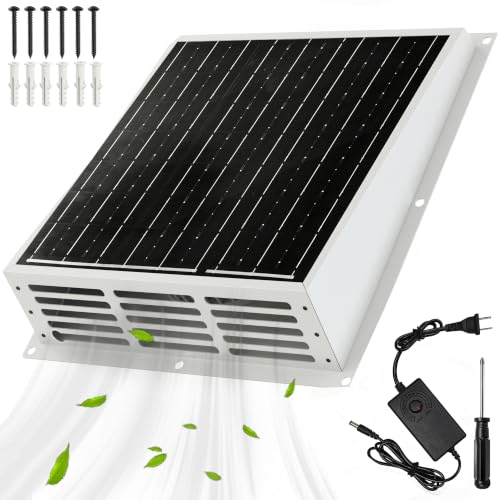
Dual-Power Reliability – Never lose ventilation again due to overcast skies or nighttime. This upgraded solar exhaust fan runs on pure solar energy during peak sun hours for zero-cost operation, while includes an exclusive power adapter cable to plug into any standard outlet when you need backup. Enjoy uninterrupted airflow, keeping your chicken coop, dog house, greenhouse, shed, attic, barn, or garage free from heat and moisture buildup, no matter the weather
How Can You Prevent Predators and Pests?
You’ve got the weather sorted, but let’s be real: a comfortable chicken is a dead chicken if a raccoon decides your coop is an all-you-can-eat buffet. You need serious fortification now. Bury hardware cloth twelve inches deep and cover that roof; snakes and hawks don’t play fair. Obviously, small holes invite disaster, so patch everything daily. For effective pest control, remove spilled feed and keep compost far away because rats love free dinners. Install motion-sensor lights and consider guardian geese if you want noisy, feathered security guards. These predator deterrents work best when you actually check them. Monitor your flock morning and night, counting heads religiously. Free-ranging? Only supervise at dawn or dusk. It sounds like a lot, but securing your Birchen Cochins protects your investment. You’ve done the research; now just build it right and sleep easy tonight.

Durable Welded Hardware Cloth & Ground Skirt: Features 1" x 1"(20 gauge) square welded hardware cloth on side walls with thickened PVC coating for superior durability and predator resistance. Combined with the extended ground skirt, it provides a professional safeguard for various poultry like dog kennels, rabbit cages, or sheep pens.

[Elite: Enhanced Reinforced Frame] - This structure features extra-reinforced galvanized poles and 12 support bars for max stability. Built to withstand winds and snow, this rust-resistant enclosure provides a secure, long-lasting home for your poultry in any outdoor farm or backyard environment.

Material and size: The size of the hardware cloth is 16 inch×50 ft and 1/2 inch×1/2 inch thickness, adopt 19 guage hot-dipped galvanized material