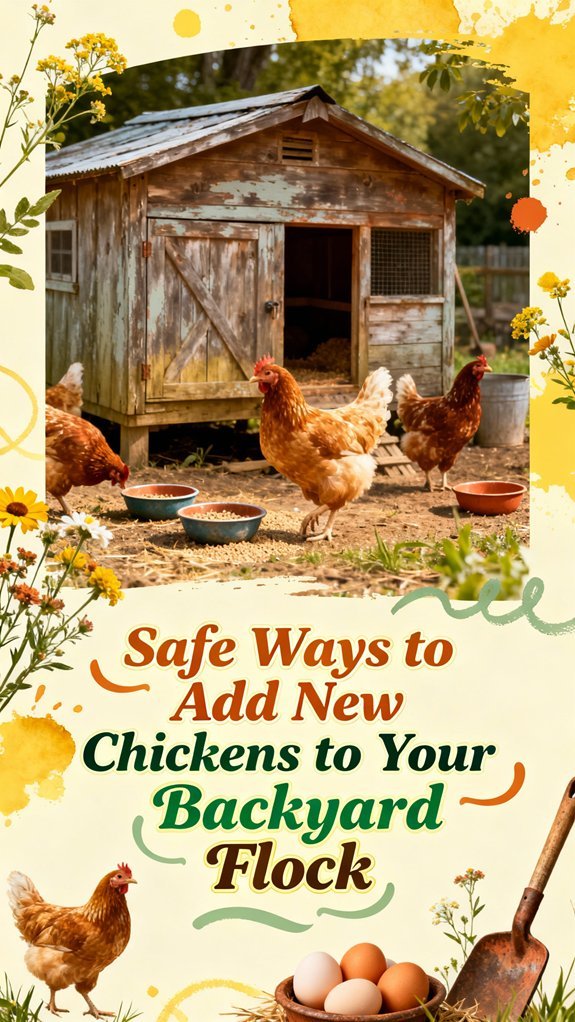
You’ll need to quarantine new birds for 30–60 days, conducting fecal testing and veterinary exams to screen for disease. Next, implement visual-contact methods using chicken wire barriers for 1–2 weeks before direct integration. Provide dedicated feeders, perches, and drinkers to minimize competition stress. Monitor curiosity levels and flock dynamics closely during the first 48–72 hours. Adjust resources to 4–6 inches of feeder space and 1 inch of drinker access per bird post-integration. Understanding the specific protocols for each integration phase will greatly improve your success rate.
Quarantine and Health Screening
Why’s quarantine the foundation of flock biosecurity? You’ll isolate new birds for 30–60 days minimum, allowing infectious diseases and parasites to manifest clinically before introduction. In low-risk situations, two weeks represents an absolute minimum; however, birds from shows or multi-source purchases require extended isolation. During this time, you can also consider adding herbs like oregano and sage to boost the overall health of your new chickens. Additionally, it’s crucial to inspect for signs of chicken mites and other external parasites during this period, as they can significantly affect the health of your flock. Providing treats and supplements with essential nutrients can further enhance their well-being during quarantine, which may include soothing Epsom salt baths to relieve stress and promote relaxation.
During quarantine duration, you’ll conduct rigorous health screening. Perform fecal testing for internal parasites and inspect for external parasites like lice and mites. Consider bloodwork or PCR testing for transmissible diseases when birds come from unknown sources. Document daily observations—appetite, droppings, behavior, respiratory signs—and obtain a veterinary physical exam before clearance. A veterinarian check for parasites and bacteria should be completed before introducing new birds to your existing flock.
Maintain separate quarantine housing downwind and at least 10 meters from your main flock. Use dedicated equipment and implement strict biosecurity procedures: separate footwear, hand-washing stations, and disinfection protocols between bird groups.

SIMPLY MIX WITH WATER: Convenient powder formula that dissolves easily for quick hydration support.

{Healthy Flock} Proper nutrition and a well-balanced microbiome can help your poultry defend against dangerous pathogens. Brewer's Yeast with Probiotics, Prebiotics and Niacin can help achieve exceptional health in your flock

Use by date: This product’s use by date is determined by the Period After Opening symbol. The Period After Opening symbol is marked by a box with a numerical number (X) followed by letter M for months. The symbol denotes that the product is recommended to be used within X months of opening
Visual-Contact Methods for Gradual Acclimation
Once you’ve cleared your new birds through quarantine and confirmed their health status, you’ll begin the gradual acclimation phase using visual-contact methods. Install chicken wire barriers between groups for 1-2 weeks, establishing your integration timeline. This separation enables visual familiarity and auditory interaction while preventing physical contact that triggers aggression.
Position the barrier within your coop run, housing new arrivals with dedicated feeders, waterers, and perches. Multiple resource stations eliminate competition and reduce bullying. By day three, curiosity typically replaces tension as birds recognize each other. Introducing multiple birds together reduces individual stress and encourages social learning patterns between younger and older chickens during the acclimation phase. Additionally, providing ample space for your birds can significantly ease the stress of integration and promote better overall interaction.
After the visual acclimation period, monitor readiness indicators before removing the barrier. Watch for relaxed posturing and reduced alarm behaviors. When you shift to full mixing, anticipate 1-2 months of pecking-order establishment. Supervise initial interactions in open areas, allowing natural dominance hierarchy formation while preventing severe injuries.
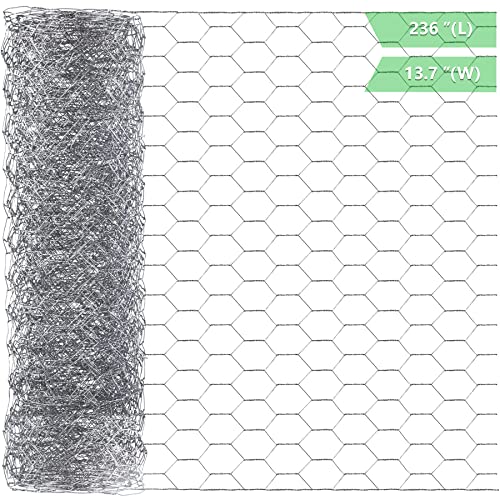
【Large Size】Each mesh is 13.7 inch (width) x 236 inch (length) / 0.35 m x 6 m, 0.8 x 1.38 inch mesh. Wire fencing is long and wide enough to enable you to cut off any shape that you need

[CUTTABLE, SPLICEABLE] Chicken wire mesh measures 16.9 inches x 32.8 feet, which is suitable for large areas. Galvanized chicken wire is soft and flexible but stronge. It is bendable and easy to cut. You can also join mesh together if the height is not enough. Chicken wire fencing is double hot-dip galvanized for maximum rust protection and longer life. Designed with double twist hexagonal, chicken fence is more durable and less likely to break

Premium Size & Material: 16 IN x 50FT Plastic Chicken Wire Mesh Roll – Made from high-strength plastic material, lighter and rust-proof compared to traditional metal chicken wire. This black chicken wire fencing is easy to cut and install, making it the ideal poultry netting and garden fence solution for your chicken coop
Nighttime-Roost Placement Techniques
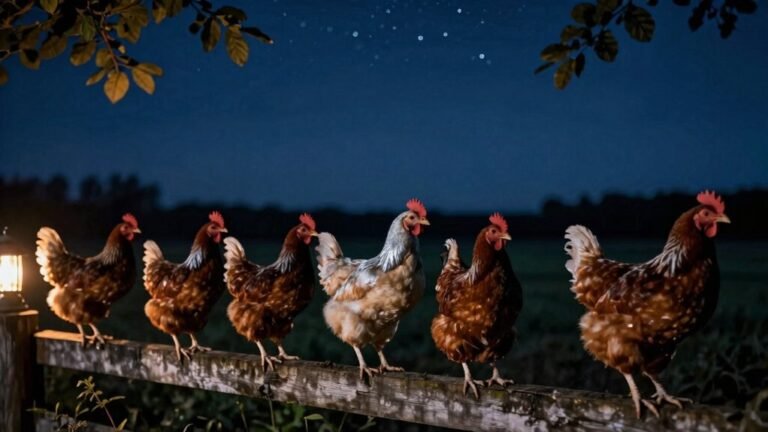
As your flock settles into the coop after integration, you’ll need to establish proper roosting infrastructure that prioritizes comfort, safety, and hygiene. Position your lowest roosting bar 12–24 inches off the ground, with higher bars staggered at 30 centimeters to 1.2 meters elevation. This roost height prevents new chickens from roosting in nesting boxes while maintaining accessibility. Properly positioned roosts contribute to a secure environment that helps prevent stress among the hens. Additionally, ensure that your coop design incorporates adequate ventilation to promote a healthier atmosphere for your flock, while also considering the importance of durable construction materials to withstand the elements. Providing access to supplemental light can enhance the overall wellbeing of your chickens and support egg production throughout the winter months.
Maintain 12–18 inches of horizontal perch spacing between bars to prevent direct droppings overlap. Offset bars vertically to create staggered heights resembling stairs. Orient 2×4 bars flat-side up with rounded edges, ensuring 8 inches of space per standard chicken. Position roosts 6–12 inches from walls for draft prevention and 12 inches below ceiling for adequate headroom, facilitating secure, hygienic nighttime placement. Proper roosting design minimizes stress and enhances social interactions within your newly integrated flock by reducing anxiety-related behaviors.

Balance Design That Grows With Them – Solid natural wood roosting bar with a seesaw-style balance base that gently rocks as chicks hop on, helping them develop coordination and proper perching instincts from day one. The two angled support brackets keep the bar stable during active use — no tipping even with multiple chicks.

CHICKEN SUPPLIES: This toys for chickens in a coop provides a place for chickens to rest and play.It consists of a sturdy and durable metal frame and natural eucalyptus wood,pecking-resistant, healthy and harmless.

Customizable Width & Height: Koutemie chicken roosting perch is designed with an adjustable screw mechanism, allowing you to effortlessly modify both the width and height to perfectly fit your coop’s unique requirements. Whether you have young chicks or mature hens, this perch ensures optimal comfort for chickens of all ages and sizes
Supervised Free-Ranging and Mixing Strategies
With your roosting infrastructure established and your coop functioning as a secure nighttime refuge, you’re ready to introduce controlled outdoor exposure for your flock. Begin supervised sessions at 8–12 weeks when chicks are fully feathered, starting with 10–30 minute intervals in mid-morning or late afternoon when predator activity decreases. Position your free-range zone where you maintain clear sightlines, and establish multiple hiding spots using shrubs or portable shelters. A well-designed predator-proof aviary can enhance the safety of your free-ranging sessions. Your behavioral observation during initial mixing is critical—monitor new birds for persistent bullying within the first 48–72 hours. Implement integration tactics by introducing birds in small groups through neutral ground rather than established territories, scattering treats to reduce competition. Assign one supervisor per 8–10 birds, separating any injured individuals immediately to prevent escalated aggression. Keep the coop and run door open during free-ranging sessions to ensure accessible escape routes for chickens seeking safety.

Prevent Predators:2 roll chicken coop predator proof apron total about 11-5/8in W x 65 ft L, expertly designed to effectively block predators.Extending the wire mesh to the bottom of the coop prevents predators from digging their way in
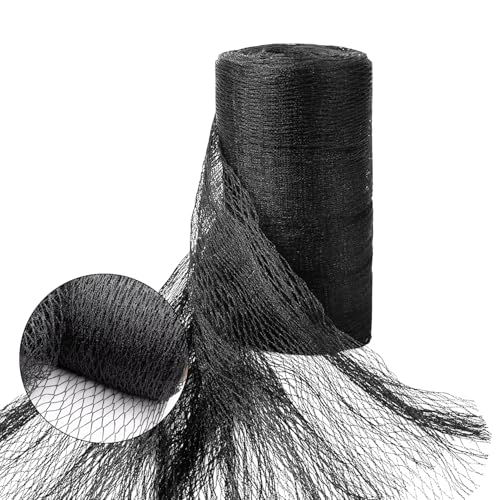
Bird Netting for Chicken Coop: Cover your chicken run, chicken pen, or poultry fence with our large mesh netting to keep predators like hawks, owls, foxes, and raccoons out. Our aviary netting with 1 inch mesh size helps prevent small animals, such as rabbits and mice from entering, unlike bird nets with larger 2.4 inch holes. This poultry netting also helps prevent your chickens from escaping and wandering into your garden or neighbor's yard, protecting your plants and vegetables
Bird Netting for Chicken Coop: Cover your chicken run, chicken pen, or poultry fence with our large mesh netting to keep predators like hawks, owls, foxes, and raccoons out. Our aviary netting with 1 inch mesh size effectively prevents small animals, such as rabbits and mice from entering, unlike bird nets with larger 2.4 inch holes. This poultry netting also prevents your chickens from escaping and wandering into your garden or neighbor's yard, protecting your plants and vegetables
Resource Management and Long-Term Monitoring
Your flock’s long-term health and productivity hinge on establishing robust resource management systems that you’ll maintain consistently throughout the birds’ productive lives. You’ll need to recalculate resource allocation as you integrate new birds, guaranteeing adequate feeder space—4–6 inches per bird—and drinker access of 1 inch per bird. Implement dietary adjustments by providing layer diets containing 4% calcium from limestone or oyster shell to support egg production. Additionally, ensure a well-balanced diet consisting primarily of quality layer feed to optimize overall health. You’ll monitor water quality daily, scrubbing drinkers with dilute chlorine bleach solution at 1–2 teaspoons per 20 gallons. Track individual bird performance, removing non-layers after 4–5 months of non-production. Maintain 14–16 hours of daily light using timers. Ensure your litter materials remain absorbent and regularly replace soiled litter to reduce disease risks and maintain optimal environmental conditions. These systematic approaches guarantee sustained productivity and flock welfare.
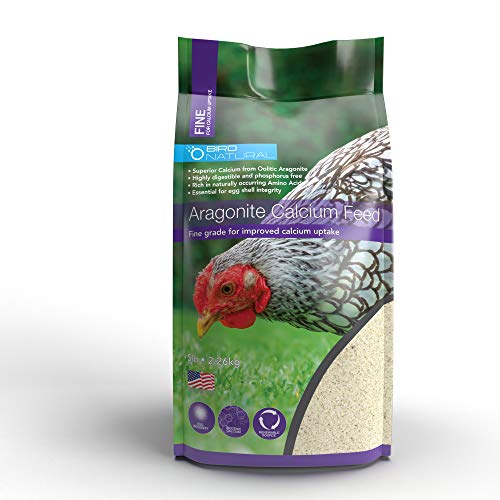
Superior calcium from Oolitic Aragonite

Superior calcium from Oolitic Aragonite: Provides high-quality calcium sourced from naturally occurring Oolitic Aragonite for optimal poultry nutrition

Cluckin' Good - All poultry require calcium to produce strong eggshells. Some breeds may require slightly more therefore it's always important to provide a free choice calcium source for your laying flock, they will take what they need.