
You might think a pricey cabinet is overkill, but the right one saves you time, money, and broken eggs. Here’s the thing: if you need a 400‑egg capacity with rock‑solid temperature control, the Pinnon Hatch Farms GQF 1502 delivers auto‑turning, a built‑in water system, and a clear candling window—perfect for serious hobbyists. If you’re on a tighter budget and only hatch 18 eggs, the compact 18‑egg model still offers auto‑turning and humidity control, though you’ll sacrifice the panoramic view and extra backup power. Choose the size that matches your flock, and you’ll see a noticeable jump in hatch rates without the guesswork.
| Pinnon Hatch Farms GQF 1502 Egg Incubator with Trays and Water System |  | Heavy‑Duty Capacity | Capacity (eggs): 288 chicken / 1368 quail / 162 duck | Automatic Turning: Electronic turning control, racks | Temperature Control: Digital thermostat with LCD | VIEW LATEST PRICE | Read Our Analysis |
| Incubator for Hatching Eggs with Automatic Turning & Display |  | Compact Pro | Capacity (eggs): 120 | Automatic Turning: Turns every 90 min | Temperature Control: 5 modes, constant‑temp alarm | VIEW LATEST PRICE | Read Our Analysis |
| Vevitts Automatic Egg Incubator with Auto Turner |  | Classroom‑Ready | Capacity (eggs): 136 | Automatic Turning: Integrated auto‑turner, independent rotation | Temperature Control: Real‑time temperature display | VIEW LATEST PRICE | Read Our Analysis |
| 400 Egg Incubator with Automatic Turning & Humidity Control (Red) |  | Premium Commercial | Capacity (eggs): 400 | Automatic Turning: Turns every 2 h | Temperature Control: Digital temp control & display | VIEW LATEST PRICE | Read Our Analysis |
| 18 Egg Incubators with Automatic Turning & Humidity Control |  | Small‑Scale Starter | Capacity (eggs): 18 (standard) / 40 (small) | Automatic Turning: Smart turning (60‑180 min), stops 4 days before hatch | Temperature Control: Professional‑grade accuracy, digital display | VIEW LATEST PRICE | Read Our Analysis |
| Commercial Digital Egg Incubator 400-Egg Capacity Auto-Turning Digital Control Red/Gray Cabinet Temp/Humidity Monitoring | 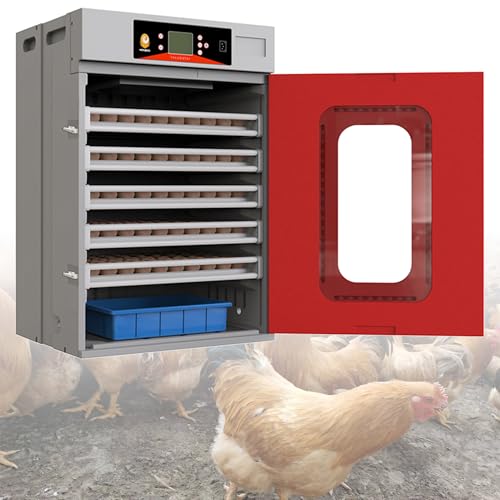 | Industrial‑Grade | Capacity (eggs): 400 | Automatic Turning: 360° auto‑turning every 2 h | Temperature Control: Precision digital control (±0.1 °C) | VIEW LATEST PRICE | Read Our Analysis |
| 400 Egg Commercial Incubator with Auto Turning and Precise Control |  | Farm‑Scale Performer | Capacity (eggs): 400 | Automatic Turning: Automatic turning, regular intervals | Temperature Control: Precise digital temperature control | VIEW LATEST PRICE | Read Our Analysis |
More Details on Our Top Picks
Pinnon Hatch Farms GQF 1502 Egg Incubator with Trays and Water System
All right, you’ve been juggling a dozen different egg types and the old incubator can’t keep up, so you need something that handles volume without breaking a sweat.
This Pinnon Hatch Farms GQF 1502 holds 288 chicken eggs, 1,368 quail eggs, or 162 duck eggs, so you can scale up or down without swapping machines. Its high‑strength plastic board keeps temperature steady, and the digital thermostat shows both heat and humidity on an LCD.
Now, the built‑in water reserve system gives you a 5‑gallon tank and a constant‑level humidity pan, meaning you won’t have to refill every few hours. The three automatic turning racks and visual/audio alerts keep you informed without constant checking.
Obviously, the unit’s size—30.25 × 15.75 × 31.75 in—fits most garages, but the rectangular shape might clash with cramped countertops. If you’re a hobbyist who wants low‑noise, easy‑clean operation, this one’s for you. Hand‑assembled, tested for 24 hours, it promises reliability, and the included trays make hatching a breeze.
Here’s the thing: if you need a versatile, high‑capacity incubator that handles multiple species and you prefer a set‑and‑forget approach, the GQF 1502 checks all the boxes. It’s a solid, no‑nonsense choice that lets you focus on hatching, not troubleshooting.
- Capacity (eggs):288 chicken / 1368 quail / 162 duck
- Automatic Turning:Electronic turning control, racks
- Temperature Control:Digital thermostat with LCD
- Humidity Control:Water reserve system, humidity pan
- Monitoring Display:LCD temperature & humidity
- Construction Material:High‑strength plastic board
- Additional Feature:5‑gallon water reserve
- Additional Feature:Hand‑assembled, 24‑hr test
- Additional Feature:Low‑noise operation
Incubator for Hatching Eggs with Automatic Turning & Display
If you’re juggling a small flock and need reliable hatches without constant babysitting, this compact pro incubator fits right on your kitchen counter. You’ll love the five incubation modes—four automatic and one constant temperature—plus a built‑in alarm that flashes when temps drift. The humidity display and external water refill keep conditions steady, so you never have to guess.
All right, the automatic turning every 90 minutes lifts hatch rates, and the display shows exactly when the rollers spin. You can swap the removable rollers to fit chicken, duck, or quail eggs, though larger birds may need a bigger unit.
Now, the day counter tracks progress, and the built‑in egg candler lets you spot unfertilized eggs in darkness without opening the lid. The 110V cord and 12V battery cable protect you from power cuts, but the 15‑pound weight means you’ll need a sturdy surface.
Here’s the thing: this incubator holds up to 120 eggs, making it perfect for hobbyists but maybe cramped for a commercial operation. If you want a reliable, low‑maintenance solution that fits on a countertop, this one checks all the boxes. Go ahead—your next clutch will thank you.
- Capacity (eggs):120
- Automatic Turning:Turns every 90 min
- Temperature Control:5 modes, constant‑temp alarm
- Humidity Control:Humidity display, external refill device
- Monitoring Display:LCD with turning interval and day counter
- Construction Material:Not specified (standard cabinet)
- Additional Feature:Built‑in egg candler
- Additional Feature:110V cord + 12V battery
- Additional Feature:5 incubation modes
Vevitts Automatic Egg Incubator with Auto Turner
Vevitts Automatic Egg Incubator with Auto Turner is the go‑to for anyone juggling a bustling classroom or a small‑scale hatchery. You’re probably fed up with constantly opening doors to check humidity, and you need a hands‑off system that still lets you watch the action. Here’s the thing: the LED display gives you real‑time temperature and humidity, while the smart alarm shouts if anything drifts off preset values, so you can focus on lesson plans instead of egg‑watching.
All right, the auto‑turner spins each egg independently, which means you won’t have to scramble to flip them manually. The adjustable cradle gaps fit chicken, quail, duck, goose, or pigeon eggs, so you can keep a mixed batch without extra trays. The rear water reservoir refills without opening the cabinet, preserving humidity and saving you time.
Now, the cabinet’s corrosion‑resistant PE body handles spills and cleaning with ease, and the insulated design cuts energy use by up to 70 %. You’ll see a hatch rate up to 30 % higher than older models, which is a solid win for a medium‑scale setup. The only trade‑off is that you need an empty water bottle for the external system—no built‑in tank.
If you run a backyard flock, a small farm, or a classroom that needs reliable, low‑maintenance hatching, this one fits you perfectly. It’s not a giant commercial incubator, but it hits the sweet spot between capacity and convenience. Go ahead, trust the Vevitts and let it do the heavy lifting while you enjoy the results.
- Capacity (eggs):136
- Automatic Turning:Integrated auto‑turner, independent rotation
- Temperature Control:Real‑time temperature display
- Humidity Control:Humidity readings, external water system
- Monitoring Display:LED display, panoramic window
- Construction Material:Corrosion‑resistant PE
- Additional Feature:External refill water system
- Additional Feature:30% higher hatch rate
- Additional Feature:Classroom‑friendly design
400 Egg Incubator with Automatic Turning & Humidity Control (Red)
You’ve got a small flock and need a reliable way to hatch dozens of eggs without losing sleep over temperature spikes; the CRIBEEO 400‑egg cabinet incubator delivers premium commercial performance in a compact, red‑finished cabinet.
All right, you’ll love the automatic turner that flips each egg every two hours—no manual labor, no missed cycles. The digital display shows temperature and humidity at a glance, and you can dial in exact values for chicken, duck, or quail. This unit holds 400 eggs, so you can scale up without buying a second incubator.
Now, the price sits at $539.99, which matches the historical low and includes free Prime shipping, so you won’t be surprised at checkout. Obviously, the red finish isn’t for everyone, but it’s easy to spot in a busy coop. If you need a sturdy, hands‑off system that works round‑the‑clock, this one’s for you.
Here’s the thing: you won’t have to monitor temperature spikes constantly; the built‑in humidity control keeps conditions steady. The only trade‑off is the size—make sure your space can accommodate a cabinet that large. But if you’re ready to hatch a batch without sleepless nights, go ahead and click purchase.
- Capacity (eggs):400
- Automatic Turning:Turns every 2 h
- Temperature Control:Digital temp control & display
- Humidity Control:Digital humidity control & display
- Monitoring Display:Digital display
- Construction Material:Cabinet (unspecified)
- Additional Feature:Prime‑eligible free shipping
- Additional Feature:Historical low price tracked
- Additional Feature:Best‑seller rank #638
18 Egg Incubators with Automatic Turning & Humidity Control
All right, you’ve been juggling manual turners and humidity guesswork, and that’s why the 18‑egg cabinet incubator shines for small‑scale starters. You’ll love the digital temperature control that stays within professional‑grade ranges, while the silent fan spreads heat evenly. Real‑time alerts keep you from missing a dip, and the sealed design blocks outside interference. The water system auto‑adjusts humidity, so you skip constant refills.
Now, the smart turning schedule offers 60, 120, or 180‑minute intervals, pausing automatically 96 hours before hatch and stopping four days early to protect embryos. The STOP indicator flashes when turning ends, giving you peace of mind. If you need to check progress, the high‑intensity LED and 360‑degree dome let you candl eggs without opening the unit.
Here’s the thing: it holds 18 chicken or duck eggs, or up to 40 smaller quail or parrot eggs, making it versatile for home, classroom, or lab. The compact 11.73‑inch cube weighs 5.52 lb, so it fits on a bench without hogging space. Follow the manual for setup, and you’ll avoid premature wear. This one works for you if you want a reliable, low‑maintenance incubator that still gives you visual control. Choose it, set it, and watch those eggs hatch effortlessly.
- Capacity (eggs):18 (standard) / 40 (small)
- Automatic Turning:Smart turning (60‑180 min), stops 4 days before hatch
- Temperature Control:Professional‑grade accuracy, digital display
- Humidity Control:Smart humidity replenishment, auto system
- Monitoring Display:Real‑time visual & audible alerts
- Construction Material:Sealed construction (unspecified)
- Additional Feature:LED candling dome
- Additional Feature:Smart turning pause
- Additional Feature:360‑degree observation dome
Commercial Digital Egg Incubator 400-Egg Capacity Auto-Turning Digital Control Red/Gray Cabinet Temp/Humidity Monitoring
If you need to hatch hundreds of eggs without babysitting each tray, the 400‑egg commercial incubator is your industrial‑grade solution. You’ll love the 360° auto‑turning every two hours—no more manual flipping. The digital control keeps temperature within ±0.1 °C and humidity between 40‑70 % RH, so embryos stay on schedule.
All right, the red/gray ABS cabinet looks sturdy and resists corrosion, and the LCD shows real‑time stats with smart alarms. You can load modular trays for chickens, ducks, geese, or quail, which means flexibility if you switch species. The panoramic window lets you check progress without opening the door.
Here’s the thing: this unit shines for small farms or hatcheries that need reliable, high‑volume output. It isn’t the cheapest option, but you gain a 30 % higher hatch rate than basic models. If you value durability, precise monitoring, and hands‑free operation, it fits your workflow perfectly. Go ahead—make the upgrade and let the incubator do the heavy lifting.
- Capacity (eggs):400
- Automatic Turning:360° auto‑turning every 2 h
- Temperature Control:Precision digital control (±0.1 °C)
- Humidity Control:Humidity 40–70 % RH, auto‑humidification
- Monitoring Display:LCD display, smart alarms
- Construction Material:ABS (industrial‑grade)
- Additional Feature:360° auto‑turning
- Additional Feature:Industrial‑grade PE cabinet
- Additional Feature:Tested 30% higher hatch rate
400 Egg Commercial Incubator with Auto Turning and Precise Control
A 400‑egg cabinet incubator is the farm‑scale performer you need when you’re tired of juggling dozens of small units. You’ll love the automatic turning—eggs rotate every few hours, so you skip the manual hassle. The digital display shows temperature and humidity in real time, letting you tweak settings without guessing.
Now, the cabinet’s insulated walls keep heat steady, and the airflow vents prevent hot spots, which matters when you run long cycles for ducks or quail. You can swap trays for different egg sizes, so mixed‑species flocks stay happy. At 38 × 24.5 × 20.5 in and 60.9 lb, it fits most barns but isn’t portable for field trips.
Here’s the thing: this unit shines for serious growers who need reliability over a season. If you only hatch a few dozen eggs a month, the size and price might feel excessive. Obviously, the precise controls reduce guesswork, but you’ll still need to monitor power spikes during storms. All right, if you crave consistent hatch rates and want to scale without buying multiple tiny incubators, this one fits your farm’s next chapter.
- Capacity (eggs):400
- Automatic Turning:Automatic turning, regular intervals
- Temperature Control:Precise digital temperature control
- Humidity Control:Digital humidity control
- Monitoring Display:Clear digital display
- Construction Material:Durable cabinet‑style (unspecified)
- Additional Feature:Large‑scale farm design
- Additional Feature:Adjustable tray cradles
- Additional Feature:Heavy‑duty insulated cabinet
Factors to Consider When Choosing a Cabinet Incubator for Eggs
You’re probably worried about fitting the right number of eggs and making sure they’re compatible with the tray layout, and that’s a legit concern. Now, the temperature and humidity controls need to be precise, the automatic turner should actually turn the eggs without jerking them, and the digital monitor must alert you before anything goes wrong. Here’s the thing: if you want a sturdy, well‑insulated cabinet that handles big batches, go for the heavy‑duty model; if you’re a hobbyist with a few dozen eggs, a lighter, cheaper unit with basic alerts will do just fine.
Egg Capacity and Compatibility
All right, you’re staring at a spreadsheet of flock sizes and wondering whether a 12‑egg unit will ever handle your next hatch. The first thing you need to know is how many eggs you’ll incubate at once; a small backyard operation can get by with 12‑18 slots, but once you start selling chicks or scaling to a few hundred, you’ll need a cabinet that holds 100‑400 eggs. Here’s the thing: you can’t squeeze a goose egg into a chicken tray without risking breakage, so look for adjustable racks or interchangeable trays that accommodate duck, quail, or goose sizes. Obviously, a model with removable trays speeds cleaning, but if you only hatch once a month, a simpler design may save you money. This one’s for you if you value flexibility and plan to diversify species, and the extra compartment for a quail tray won’t feel like wasted space. Choose a capacity that matches your current flock and leaves room for growth—then you’ll avoid the panic of “out‑of‑room” during a sudden surge.
Temperature and Humidity Control
When the temperature drifts a fraction off‑scale, embryos start to stall, so you need a thermostatically‑tight cabinet that never wavers. You’ll want a digital thermostat that stays within ±0.1 °C; anything looser risks uneven development. A sealed, insulated shell keeps outside air out, and the real‑time display plus audible alarm let you catch a slip before it hurts.
Now, humidity is the silent partner. An integrated water reservoir with an external refill port means you can top up without shaking the temperature. Smart replenishment systems adjust moisture as embryos grow, sparing you constant manual tweaks. If you prefer hands‑on control, a model with a simple dial works, but you’ll need to monitor more closely.
Here’s the thing: automated humidity isn’t a magic wand—some kits over‑mist on the first day, so you might need to dial back. This one’s for you if you value set‑and‑forget reliability and don’t mind a slightly higher price. Otherwise, a basic reservoir will do, but you’ll stay vigilant. Choose the setup that matches your patience level, and you’ll feel confident that the climate stays perfect from day one to hatch.
Automatic Egg Turning Mechanism
A stable temperature and humidity set‑up feels great, but if the eggs never get turned they’ll stick to the shell and the embryo won’t develop evenly. You’ve probably spent hours reading specs and still wonder whether a motorized turner is worth the extra cost. Here’s the thing: a reliable automatic turning mechanism rotates eggs at least every hour, mimicking a mother hen’s motion and preventing the yolk from adhering to the membrane.
All right, look at the turn angle and speed. Most units give a 45‑degree tilt, which is enough for even heat distribution, but some hobbyists prefer a full 180‑degree flip for larger eggs. If you need quiet operation, choose a model with a soft‑start motor; otherwise, expect a faint whir that won’t scare the chicks.
Now, consider capacity versus turn frequency. Bigger cabinets can hold more trays, yet the motor must handle the load without stalling. A belt‑driven system spreads force evenly, while a gear‑driven one is cheaper but may wobble at high volumes. This one’s for you if you want low maintenance and consistent motion.
Finally, think about cleaning. Removable turn trays let you scrub away residue, whereas built‑in rotators can trap debris. Pick a design you can disassemble quickly; you’ll thank yourself at hatch day.
You’ve got the facts, so decide with confidence: pick the turner that matches your batch size, noise tolerance, and cleaning habits, and you’ll be on track for a smooth hatch.
Digital Monitoring and Alerts
You’re probably tired of guessing whether the temperature’s drifting or the humidity’s slipping, and that uncertainty makes every hatch feel like a gamble. The right digital monitor ends that guesswork. You’ll see real‑time temperature and humidity on a bright LCD, so you can tweak settings before anything goes sideways.
All right, now consider alerts. Audible beeps and flashing lights scream when you breach a preset, letting you jump in instantly. If you’re a night‑owl, those alarms save you from a ruined clutch while you sleep.
Here’s the thing: on‑board computers log incubation days and turning intervals, so you never lose track of schedule. External sensors keep the climate steady even when the room temperature spikes, which matters for delicate embryos. Integrated candling lights let you peek inside without opening the door, preserving the climate you’ve fought to maintain.
Obviously, you’ll love a unit that combines all this if you want hands‑off confidence. If you’re okay with occasional manual checks, a simpler model might suffice. Choose the one that matches your patience level and you’ll hatch with peace of mind.
Construction Material and Insulation
High‑strength plastic or corrosion‑resistant PE keeps the cabinet tough, easy to clean, and long‑lasting, so you won’t waste time scrubbing or replacing it. You’ve probably dealt with flimsy shells that crack under temperature spikes; a well‑insulated wall stops that. Effective insulation locks in heat, cuts energy use, and steadies the climate even when the room swings.
All right, a sealed construction blocks outside air and contaminants, so your eggs stay in a stable bubble. Smooth interior surfaces mean you can wipe down quickly without worrying about bacteria nesting in crevices. Robust build holds up to farm chemicals or classroom spills, so you won’t need a replacement after a semester.
Now, if you work in a noisy lab, you might prioritize a quieter model later. This one’s for you if you need durability, low maintenance, and tight temperature control without fuss. Choose the material that matches your environment, and you’ll feel confident about the next hatch.
Noise Level and Cleanliness
Ever been annoyed by a whirring incubator that sounds like a kitchen blender while you’re trying to focus on hatch rates? You’ll love a high‑strength plastic cabinet; it mutes the fan and gives you a smooth, non‑porous interior that wipes clean with a single swab. All right, a sealed construction blocks outside air and contaminants, so you keep a steady temperature and humidity without hunting down hidden grime.
Now, look for external water refill ports—no door opening, no temperature dip, no extra mess. Internal layouts that curb airflow turbulence cut noise and leave fewer crevices for debris to hide. Obviously, corrosion‑resistant materials survive frequent disinfecting, so you won’t have to replace the unit after a few cycles.
Here’s the thing: if you value quiet mornings and a hygienic workspace, this setup fits you perfectly. Choose a model that matches your cleaning routine, and you’ll hatch eggs without a side of stress.
Power Supply and Backup Options
Quiet mornings turn chaotic when a power outage drops your incubator’s temperature, and you can’t afford a missed hatch. You should check the primary AC requirement—most units run on 110 V—but also hunt for a 12 V DC battery input. That backup lets you ride out short blackouts without temperature spikes. Obviously, a low‑draw, well‑insulated design saves energy; some models cut consumption by up to 70 % compared to older ones. All right, make sure the incubator screams an alarm if power fails, so you never miss a glitch. Now, look for an external water reservoir; you won’t have to swing the door open for refills, which keeps temperature steady and eases power load. This one’s for you if you value a constant‑level humidity pan or a 5‑gallon reserve tank that cuts manual interventions. Prioritize models with a reliable battery and alarm, because you’ll sleep better knowing the hatch won’t be sabotaged by a flickering outlet.
Price and Warranty Considerations
If you’re juggling a tight budget and a looming hatch, the price tag isn’t the only thing to stare at; you also need to weigh how the warranty protects that investment. You’ll find hobby‑ist cabinets under $200, but they often come with a 90‑day warranty that barely covers parts. Larger, 400‑egg units cost $500‑plus and usually include a year‑long warranty, sometimes covering labor for the control board and heating elements.
All right, now think about cost per egg capacity—bigger models drop the price per egg, making high‑volume hatching economical. Extended warranties add 10‑20 % to the upfront cost, but they give you peace of mind if you plan to use the incubator for years.
Here’s the thing: operational expenses matter too. Some models claim up to 70 % lower electricity use, which can offset the higher purchase price over the warranty period. You’ll want to compare the total cost of ownership, not just the sticker price.
Obviously, if you’re a hobbyist who only hatches a few dozen eggs a year, a low‑cost unit with a short warranty may suit you. If you’re scaling up, invest in a larger, more efficient incubator and a longer warranty; the savings on electricity and per‑egg cost will pay off.
Now, decide based on your hatch volume and how long you intend to keep the machine. Choose the model that matches your budget, warranty comfort level, and energy goals, and you’ll feel confident about the purchase.