You’re overwhelmed by fluffy Orpington colors, wondering if that rare Lavender lays different eggs or grows bigger. Here’s the thing: only Buff, Black, White, and Blue are APA-official, but emerging shades like Chocolate share the exact same 8-pound frame and light brown eggs. Obviously, plumage is the only real difference since every variety stays docile and cold-hardy. This uniformity means you can pick your favorite hue without sacrificing utility. Stick around to see which specific color matches your flock’s personality best.
Which Orpington Colors Are Officially Recognized?
Before you drop cash on a coop full of fluff balls, let’s clear up the confusion because staring at a hatchery catalog wondering which color actually counts can feel like decoding ancient hieroglyphs. You need solid facts, not guesses. The American Poultry Association officially recognizes just four varieties: Buff, Black, White, and Blue. Understanding their breed color origins saves you from buying imposters. William Cook created the Black first in 1886, while the Buff followed shortly after. The breed standard history shows Buff gained acceptance in 1902, with Black and White joining in 1905. Blue arrived last in 1923. Obviously, these standards cover both large fowl and bantams. If you want show-quality birds, stick strictly to these four. Don’t waste money on unapproved shades that judges will reject immediately. Pick your favorite recognized hue now and build your flock with total confidence today.


Eight chickens of different breeds, including a silkie and an Orpington, surround a nest of eggs in a vintage line illustration and show a backyard flock.

Premium Jigsaw Puzzle Quality - Crafted from thick, sturdy puzzle board with precision-cut interlocking pieces for a smooth and secure fit. High-resolution artwork and a matte-finish surface help reduce glare while highlighting rich colors and fine details. Available in 500 pieces, finished size 20.4 × 15 in / 52 × 38 cm, and 1000 pieces, finished size 27.5 × 19.6 in / 70 × 50 cm.
What Emerging Orpington Varieties Are Available Now?
Even though you’ve got the official rulebook memorized, staring at a hatchery catalog full of unlisted colors like Lavender and Chocolate probably feels like trying to read a menu in a language you don’t speak. Don’t sweat it, because these emerging varieties are finally hitting the market. You’ll find Lavender and Chocolate at Heritage Poultry Farm, while Hoover’s Hatchery packs Silver, Jubilee, and Mottled into their English Orpington assortments. Market availability is expanding fast for 2026, offering you distinct options beyond standard Buff. These birds aren’t just pretty faces; they lay 200 eggs yearly and handle temperature swings easily. Sure, they lack APA recognition, but that doesn’t stop their friendly, docile nature from winning over backyard flocks. If you want unique dual-purpose birds without waiting decades for approval, grab these variety packs now before they sell out completely. With the seasonal transition acting as a catalyst, many flock owners are now prioritizing the expansion of their Orpington army in preparation for the upcoming year.

3 Aromatic Dried Herbs Blended Together to Give Your Hens a Better Nest Box Experience Marigold, Lavender, and Peppermint - Our Simple but Effective Blend Provides a More...
Do Different Orpington Colors Vary in Size and Build?
You’ve picked your favorite color, but now you’re squinting at photos wondering if that sleek Black Orpington is secretly smaller than the fluffy Buff one you saw last week. Relax, because that’s just an illusion caused by feather density. Every single variety, from Blue to White, shares the exact same broad, heart-shaped frame. You won’t find any actual size differences based on color variation; a standard hen always hits roughly eight pounds while cocks reach ten. Even the bantams stay consistent between thirty-four and thirty-eight ounces across the board. Obviously, those soft, profuse feathers hide their legs and make them look massive, but structurally, they’re identical twins. So, stop worrying about hidden size secrets and just grab the color that makes your heart sing. Your coop won’t care, but you certainly will.


What Egg Colors Can You Expect From Each Variety?
Since you’re probably standing there wondering if picking a Black hen means getting dark eggs while a Buff gives you golden ones, let’s clear that up right now. You won’t find wild egg shade variations here because every single Orpington variety lays light brown eggs. Whether you choose Buff, Black, Lavender, or even rare Chocolate hens, they all produce medium-sized shells with that consistent, slightly pinkish tint. Don’t expect your plumage choice to change the output; a Black hen lays the exact same color as a Silver one. The shell texture remains smooth and standard across the board, averaging three to four eggs weekly. Obviously, feather color doesn’t dictate egg pigment. So, stop stressing over hues and just pick the bird you love looking at. You’ll get reliable, pretty brown eggs regardless.
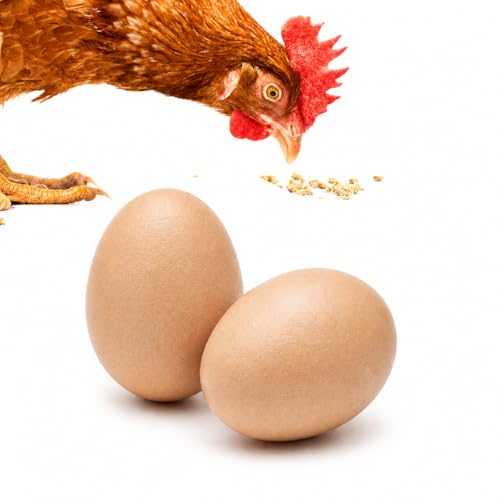
Encourages Hens to Lay Eggs in Nesting Box --- When a broody hen sees other eggs, she identifies that area as an ideal place to lay her own eggs. Place these SunGrow wooden chicken eggs inside the nesting box to encourage hens to lay eggs in a clear, cozy area instead of on the ground or chicken coop floor.


USDA CERTIFIED ORGANIC EGGS – Laid by hens raised on organic, non-GMO feed. No antibiotics, no synthetic hormones, and no toxic pesticides are used on our farms. Every dozen meets USDA organic standards you can trust.
How Do Physical Traits Differ Among Orpington Types?
While you might think picking a variety just changes the feather color, you’re actually choosing between subtle shifts in body shape and stance that define how these birds look in your coop. You’ll notice their soft, profuse feathering masks true size, creating that signature fluffy, rounded silhouette with hidden legs. Obviously, the deep breast and curved back make them look heavier than they are. Now, pay attention to the head details. The comb shape varies slightly, usually a single comb with five points, but some standards accept rose combs. Don’t overlook how comb feathering isn’t really a thing here since they’re clean-legged, yet thick thigh feathers blur those lines. Their short legs support a low stance, making them look like feathered bricks. Whether you grab a Buff or a Blue, that heart-shaped body remains constant. Pick the color that makes you smile, because the build stays gloriously the same.
Which Orpington Variety Fits Your Flock Goals Best?
Why stress over feather shades when your actual goal dictates the perfect bird? If you need eggs and meat, grab a Buff Orpington. They lay up to 250 brown eggs yearly and hit eight pounds easily. Obviously, standard sizes work best here since bantams prioritize pets over production. Want a gentle backyard companion? All varieties share that dual friendly temperament, but bantams fit small spaces perfectly. Their fluffy feathers keep them warm, and kids love their calm nature. Now, aiming for the show ring? You’ll need strict show‑standard plumage like the APA-recognized blue or black varieties. Non-standard colors like lavender look stunning but won’t win official ribbons. Here’s the thing: don’t buy a show bird just for eggs; you’ll waste money. Match your specific flock goals to the right type today, and you’ll never regret picking the wrong chicken again.

BARNYARD MIX Chicken Hatching Eggs