You’re tired of foxes digging, slipping, and ruining your garden, and you want a fence that actually works without turning your yard into a power‑plant. Now, imagine a system that blends sturdy netting, a reliable energizer, and weather‑proof posts so you can relax while the fence does the heavy lifting. Here’s the thing: each of the five setups I’ve scouted fits a different lifestyle—whether you need a portable mesh for a small backyard, a long‑range solution for a sprawling property, or a low‑maintenance option for a hobby farm. All right, let’s break down the trade‑offs, the sweet spots, and the little quirks so you can pick the one that feels like it was made just for you.
| PPOLB Electric Fence Netting – 35.4″ H × 164″ L Portable Livestock Mesh |  | Portable Protector | Height: 35.4 in | Length: 164 ft | Power Requirement: 0.25 J low‑impedance energizer (solar or AC/DC) | VIEW LATEST PRICE | Read Our Analysis |
| Ortis 12,000V LCD Fence Energizer – 3J 6.2 mi Range |  | High‑Voltage Powerhouse | Height: N/A (energizer) | Length: N/A (energizer) | Power Requirement: 12,000 V, 3 J pulse energizer | VIEW LATEST PRICE | Read Our Analysis |
| RentACoop Electric Poultry Netting Enclosure (168″x48″) | 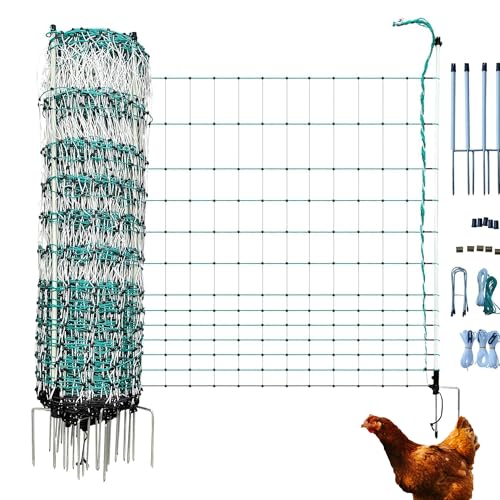 | Poultry Specialist | Height: 48 in | Length: 168 ft | Power Requirement: 0.25 J low‑impedance intermittent pulse energizer (separate) | VIEW LATEST PRICE | Read Our Analysis |
| MorningRo 2‑Mile Electric Fence with 250ft Wire | AC‑Ready Kit | Height: N/A (wire kit) | Length: 250 ft wire | Power Requirement: 110 V AC residential power (0.25 J max) | VIEW LATEST PRICE | Read Our Analysis | |
| Electric Fence Netting 35.4″ x 164″ Portable Livestock Mesh |  | Budget-Friendly Choice | Height: 35.4 in | Length: 164 ft | Power Requirement: 0.25 J low‑impedance energizer (OULUU model) | VIEW LATEST PRICE | Read Our Analysis |
More Details on Our Top Picks
PPOLB Electric Fence Netting – 35.4″ H × 164″ L Portable Livestock Mesh
You’re fed up with foxes sneaking into the garden and stealing your seedlings, and you need something that actually works without turning your yard into a permanent fence farm. The PPOLB electric fence netting is 35.4 inches tall, 164 feet long, and rolls out like a carpet when you unspool it. It’s got nine horizontal strands, eight of which are conductive, and stainless‑steel wire that’s triple‑braided for durability. You’ll see glass‑fiber rods every 12.5 feet, giving solid support without a heavy frame. All right, you’ll need a 0.25‑joule solar or AC/DC energizer—continuous‑current units won’t cut it. The set weighs 13.77 pounds, so you can move it around the garden or set up a temporary pen for goats or chickens. This is for you if you want a portable, humane deterrent that won’t scar the lawn. Obviously, you’ll have to buy the energizer, grounding rod, and connector clips separately. And while it’s great for backyards and small farms, a permanent, high‑traffic ranch might need a sturdier, welded fence. Bottom line: it’s lightweight, effective, and easy to re‑configure, making it a smart, low‑maintenance choice for anyone wanting to keep foxes out without committing to a permanent structure.
- Height:35.4 in
- Length:164 ft
- Power Requirement:0.25 J low‑impedance energizer (solar or AC/DC)
- Conductive Strands:8 conductive strands (9 total)
- Support Posts:Fiberglass rods every 12.5–13.1 ft
- Portability:Lightweight (13.77 lb), roll‑out design
- Additional Feature:Built-in glass fiber rods
- Additional Feature:Triple‑braided stainless steel
- Additional Feature:Requires separate grounding rod
Ortis 12,000V LCD Fence Energizer – 3J 6.2 mi Range
All right, you’ve got a garden that’s a magnet for foxes, raccoons, and the occasional curious cat, and you’re tired of watching them dig under or hop over your fence. Here’s the thing: the Ortis 12,000V LCD Fence Energizer can give you the punch you need without turning your yard into a sci‑fi set. It throws 12,000 V and 3 J of pulse energy, enough to deter raccoons, foxes, skunks, and even stubborn livestock. The LCD backlit display shows real‑time voltage, and a red LED flashes each pulse—clear in sunlight, and it stops flashing if a fault occurs, so you spot problems instantly.
Now, if your perimeter stretches over a couple of acres, you’ll love the 6.2‑mile range. It works with most soil types, so you won’t need a geology degree to install it. The twist‑to‑tighten terminal knobs are tool‑free, letting you connect ground rods and fence wires in minutes. Add a waterproof cover, and the flame‑retardant housing keeps it humming through rain, snow, or a summer heatwave. This unit’s for you if you need a rugged, low‑maintenance solution for a garden, coop, or small farm. It isn’t cheap, but the peace of mind and durability make it a smart, long‑term investment.
- Height:N/A (energizer)
- Length:N/A (energizer)
- Power Requirement:12,000 V, 3 J pulse energizer
- Conductive Strands:N/A (energizer)
- Support Posts:N/A (energizer)
- Portability:Portable energizer unit
- Additional Feature:Real‑time LCD voltage display
- Additional Feature:Red LED pulse indicator
- Additional Feature:Flame‑retardant rugged shell
RentACoop Electric Poultry Netting Enclosure (168″x48″)
If you’re battling foxes that snatch your chickens at night, the RentACoop Electric Poultry Netting Enclosure is the poultry‑specialist solution you’ve been hunting for. You’ll love the 168‑foot length and 48‑inch height, covering over 1,700 sq ft of yard, so you can protect chickens, ducks, turkeys—basically any feathered friend four weeks old or older. All right, the triple‑braided stainless‑steel wire delivers a deterrent voltage when you pair it with a 0.25 J low‑impedance energizer, yet it stays safe for your birds. The pre‑attached FRP posts, spaced every 12 feet, make installation a breeze—even on uneven ground, thanks to mini‑posts and double‑spiked anchors. You’ll get corner guy lines, a repair kit, and a warning sign, so the fence stays solid through rain, wind, or snow. Obviously, you’ll need to buy the energizer, gate handle, voltmeter, and ground rod separately, which adds a bit of cost but lets you choose the exact power you want. This setup is perfect for backyard hobbyists who want a durable, low‑maintenance barrier without digging deep trenches. If you value flexibility and can handle the extra accessories, you’re set for a fox‑free coop.
- Height:48 in
- Length:168 ft
- Power Requirement:0.25 J low‑impedance intermittent pulse energizer (separate)
- Conductive Strands:Triple‑braided stainless steel wire (conductive)
- Support Posts:FRP posts every 12 ft, double‑spiked
- Portability:Roll‑out netting with stakes, easy relocation
- Additional Feature:Pre‑attached FRP posts
- Additional Feature:Includes repair kit
- Additional Feature:Double‑spiked corner posts
MorningRo 2‑Mile Electric Fence with 250ft Wire
Foxes keep digging under flimsy fences, and you’ve tried everything from chicken wire to cheap solar chargers. You’re fed up with gaps and dead batteries, so you need something that actually works all day, no sun required. The MorningRo 2‑Mile Electric Fence gives you 110 V AC power straight from your house, delivering a 0.25‑joule shock that’s enough to deter foxes without hurting them. It comes with 250 ft of 17 AWG aluminum wire, 50 sturdy PP/PE insulators, and a socket‑tool, so you can mount it on posts, walls, or a garden run in minutes. The wire resists rust, rain, and snow, and the insulators stay solid in extreme temps, meaning you won’t be replacing parts every season. This kit is perfect if you want a permanent, low‑maintenance barrier and have easy nearby outlet; it’s not ideal for off‑grid cabins. All right, you’ve got the hardware—just run the wire along the perimeter, attach the insulators, plug it in, and you’ll have a reliable, pulse‑type fence that keeps foxes out while staying safe for chickens and kids. Obviously, the only trade‑off is the need for a power source, but that’s a small price for uninterrupted protection. Go ahead, set it up, and enjoy a fox‑free yard without the hassle.
- Height:N/A (wire kit)
- Length:250 ft wire
- Power Requirement:110 V AC residential power (0.25 J max)
- Conductive Strands:17 AWG aluminum wire (conductive)
- Support Posts:Insulators with optional posts (not specified)
- Portability:Roll‑out wire kit, portable installation
- Additional Feature:110V AC residential power
- Additional Feature:Aluminum 17AWG wire
- Additional Feature:PP/PE insulated insulators
Electric Fence Netting 35.4″ x 164″ Portable Livestock Mesh
You’re tired of watching coyotes and foxes raid your garden, and you need something that actually works without breaking the bank. This 35.4‑inch‑by‑164‑foot electric netting is the portable livestock mesh you’ve been hunting for. It’s built with nine horizontal strands—eight conductive—using triple‑braided stainless steel for break resistance, so a determined raccoon or a curious goat can’t chew through. The fiberglass posts snap into place, giving you a stable fence that you can unroll, stake, and connect in minutes, no assembly needed.
All right, the double‑spiked steel stakes hold firm on slopes or soft soil, making it perfect for rotational grazing or protecting a vegetable patch. You’ll need a fence energizer; the brand recommends the OULUU model, and a solar version is available if you want off‑grid power. This netting shines for backyards, homesteads, and small farms where you want a temporary, movable barrier. If you’re looking for a low‑maintenance, durable solution that won’t scar your wallet, this is the one that fits.
- Height:35.4 in
- Length:164 ft
- Power Requirement:0.25 J low‑impedance energizer (OULUU model)
- Conductive Strands:8 conductive strands (9 total)
- Support Posts:Fiberglass posts (spacing not specified)
- Portability:Lightweight, roll‑out netting, easy to move
- Additional Feature:No assembly required
- Additional Feature:Double‑spiked steel stakes
- Additional Feature:OULUU brand energizer recommendation
Factors to Consider When Choosing an Electric Fence for Foxes
You’re probably frustrated that every fox‑proof fence you’ve seen either looks like a high‑tech nightmare or a flimsy garden net. All right, the voltage you pick must be strong enough to give a fox a clear shock but not so high it burns the grass, while the impedance of the energizer has to match the length and type of mesh you’re using. Here’s the thing: if you need a portable setup on uneven terrain, go for a battery‑powered energizer with a flexible, 4‑strand mesh—just remember that a heavier strand count gives better durability, and a larger mesh size lets you see through it, though it may let smaller critters slip by.
Voltage Fence Voltage Requirements
All right, you’ve probably noticed that the foxes keep testing the fence and you’re wondering why the shock feels weak sometimes. The fix is simple: you need at least 4,000‑5,000 V to make a fox think twice. If your energizer only spits out 0.5 J, you’ll get a quick zap that fades as the fence stretches or the soil gets soggy. Choose a 1‑3 J unit for longer runs or stubborn terrain; the extra joules keep the voltage steady. Low‑impedance models win when vines or brush touch the line, because they hold the charge better. And don’t skimp on the number of strands—eight‑plus wires in a net give the animal more chances to feel the full shock. That’s the recipe for a fence that actually stops foxes, not just annoys them.
Impedance Compatibility
If your fox‑deterrent netting keeps losing its bite after a few weeks, the most likely culprit is a mismatch between the energizer’s impedance and the fence’s design. Obviously, a low‑impedance energizer (0.25 J or higher) keeps a strong pulse across weeds and long runs, so foxes feel the zap. All right, avoid continuous‑current units; they’re cheap but can fry the net or give a feeble shock. Now, portable mesh with many conductive strands needs an intermittent‑pulse, low‑impedance model—otherwise the pulse drains before it reaches the far end. This one’s for you if you have a sprawling garden with dense vegetation. High‑impedance units sound cheap but leave gaps; they’re okay only for short, bare‑wire setups. Choose the right match and your fence will stay bite‑ready without constant tinkering.
Mesh Size & Strand Count
You’ve probably noticed that foxes can wriggle through surprisingly tiny gaps, and that’s why the mesh size and strand count matter more than the brand name. Obviously, a 3‑to‑6‑inch vertical mesh blocks their heads and bodies, so you won’t waste time chasing a sneaky intruder. All right, now think about strands: eight to nine horizontal wires, most electrified, give you a layered shock that stops both jumping and burrowing. The bottom strands should sit 3‑4 inches apart—close enough to deter digging—while you can let the spacing widen toward the top to discourage climbing. Non‑conductive support strands or a tightly woven mesh add physical reinforcement, giving you that extra “no‑go” barrier. This setup works best if you have a small‑to‑medium yard and want low maintenance; larger farms might need more robust, commercial‑grade mesh. Choose the configuration that matches your terrain, and you’ll feel confident the fence will keep foxes out without constant tweaking.
Portability & Terrain Flexibility
You’re probably tired of wrestling with permanent fences that turn your yard into a construction site every time you want to shift a grazing patch or protect a new garden bed. All right, think portable. Systems with built‑in support rods spaced 12‑13 feet let you pop a fence up, stake it, and move it again in minutes—no concrete footings. The mesh is lightweight, and the double‑spiked stakes bite into uneven ground, so slopes and rocky patches stay secure. Pre‑fabricated netting just unrolls, so you can reconfigure enclosures for rotational grazing or a temporary vegetable plot without a sweat. Obviously, the trade‑off is you’ll need to keep the stakes tight on steep hills to maintain proper height and electrical contact. This one’s for you if you love flexibility and don’t want a permanent scar on the landscape. Now, picture yourself moving the fence for a new garden bed—quick, clean, and fox‑free.
Energizer Type & Power Source
All right, you’ve got the fence up, but now you’re wondering whether the energizer will actually keep a sly fox at bay. The first thing you need to know is compatibility—if you’ve chosen a portable netting, you’ll want a low‑impedance intermittent pulse energizer, otherwise you risk a weak shock that veg gets through. For a permanent yard, a 110 V AC‑powered unit gives you nonstop juice, no sun or battery worries. Solar models are great for remote spots, but only if you get enough daylight; otherwise the voltage can dip below the 12 000‑volt peak you need to deter a fox safely. Remember, the joule rating—0.25 J is a solid baseline—must overcome vegetation contact and grounding quirks. Choose the power source that matches your setup, and you’ll feel confident the foxes stay out.
Weather‑Resistant Construction
If rain turns your fence into a soggy mess, you’ll quickly wonder why the foxes are still strolling through. Obviously, you need a system that keeps humming when the sky opens. Choose conductors made from triple‑braided stainless steel or coated aluminum; they stay conductive in rain, snow, and even salty air. For posts, go with fiberglass or FRP—no rust, no rot, just sturdy support. Insulators should be high‑grade PP or PE, rated for UV and temperature swings, so they won’t melt under summer sun or crack in winter freeze‑thaw cycles. The energizer belongs in a rugged, flame‑retardant enclosure; that guarantees power even in storms. Finally, pick netting that stays flexible after repeated freezing; brittle wire will lose conductivity and let foxes slip through. All right, if you pick these weather‑proof parts, you’ll spend less time troubleshooting and more time enjoying a fox‑free yard.