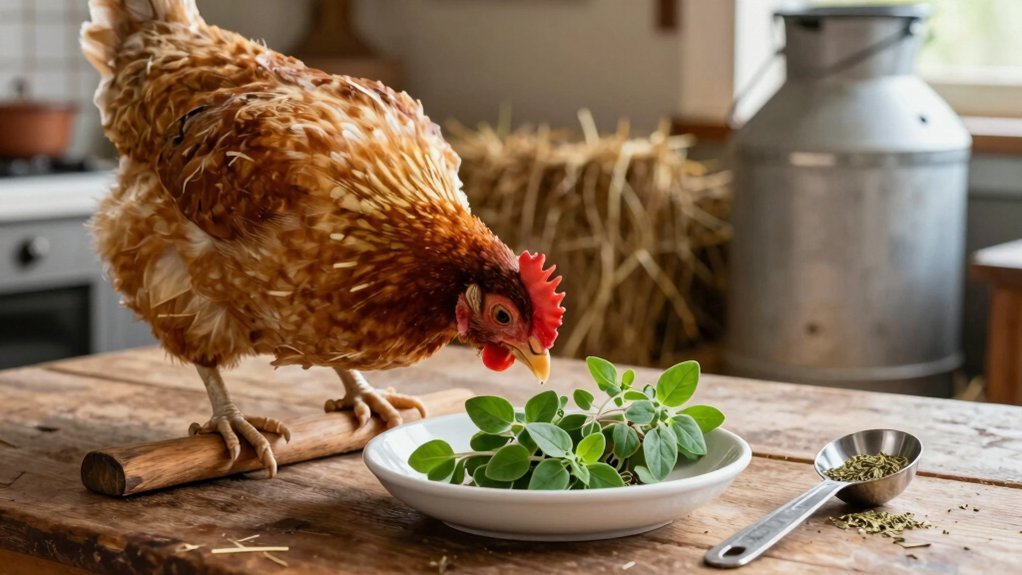
You’re right to wonder if oregano’s safe for chickens—yes, it is, when you keep the dose low and use the right form. A pinch of fresh leaves or about 1 – 9 g of dried herb per kilogram of feed works, and a few drops of diluted oil (1 : 128) per gallon of water gives antioxidant benefits without gut irritation. Oregano’s carvacrol and thymol act like natural antibiotics, boosting immunity and improving bone health, so it’s a handy supplement alongside a balanced diet. Try adding a small amount today and watch the flock’s appetite and droppings; the next steps will show you the best ways to grow, harvest, and rotate the herb for consistent results.
Is Oregano Safe for Chickens?
Is Oregano Safe for Chickens? You’re probably wondering if that fresh sprig you found in the garden could hurt your flock, especially after hearing about toxic herbs like pennyroyal. Here’s the thing: oregano ranks with culinary herbs that chickens eat without trouble, and it’s far from the danger zone of garlic safety concerns that some people raise for other strong‑smelling plants.
Now, the form matters. Fresh leaves act like a light snack—low‑risk and easy for birds to digest. Dried oregano packs more flavor, but still stays safe when you sprinkle a modest amount into feed. Essential oil, however, is a different beast; a few drops can irritate a chick’s gut, so treat it like a spice, not a medicine. This herb is particularly valuable because it provides antibiotic and anti-parasitic properties that help protect your flock from illnesses like avian flu and coccidiosis. Additionally, incorporating this herb supports intestinal health and helps ward off infections like Salmonella alongside its other protective benefits. Similar to thyme, offering this herb may also help reduce stress in your chickens while preventing parasites.
All right, your takeaway: feed fresh or dried oregano in moderation, avoid concentrated oils unless you use a vetted product, and you’ll keep your chickens healthy while enjoying the herb’s benefits. Next, consider how much to add to their diet.
How Much Oregano Should You Add to Feed or Water?
If you’re wondering exactly how much oregano to sprinkle into your chickens’ feed or water, you’ve hit the right spot. For dried herb, think tiny—a tablespoon mixed into a few scoops of feed works for backyard flocks. Research backs 24 mg/kg to 150 ppm for laying hens, which translates to roughly a pinch per 10 lb of feed. If you use essential oil, stay within 150–300 mg/kg (about 10 drops per 50 lb) for antioxidant benefits; higher doses up to 600 mg/kg support gut health in broilers. All right, water is trickier. Oil’s poor water solubility means uniform dosing is hard, so most hobbyists brew a mild tea and add a few drops per gallon, accepting less dosage precision. Fresh leaf or oregano tea can be offered free‑choice, but you won’t hit exact mg/kg numbers. Takeaway: Use a pinch of dried oregano or a few drops of oil per feed batch for consistency; avoid relying on water for precise dosing. Next, explore what those doses actually do for your flock’s health. Incorporating this herb into their diet helps combat diseases while boosting their immune system. Remember that supplements like oregano work best alongside a balanced diet tailored to your chickens’ specific life stage. These natural compounds, such as carvacrol and thymol, act as powerful antibacterial and antiviral agents that further strengthen the flock’s overall disease resistance.
What Health Benefits Does Oregano Provide for Your Flock?
You’ve nailed the dosage question, so let’s see what that pinch of oregano actually does for your birds.
How does oregano boost immunity?
Oregano’s carvacrol and thymol act like natural antibiotics, lowering salmonella and E. coli loads. Your flock produces more natural antibodies, so they fend off avian flu and bronchitis with less stress. Similar to how turmeric functions as a natural antibiotic alternative, oregano helps combat intestinal parasites and supports overall disease resistance without adverse effects. Just as garlic creates an environment hostile to bacteria and parasites, oregano’s antimicrobial properties further protect your chickens from harmful pathogens.
What about oxidative stress?
The herb raises gutunal glutathione peroxidase, superoxide dismutase and total antioxidant capacity. Lower malondialdehyde means healthier cells and stronger egg yolks, keeping birds energetic.
Can oregano help bones and joints?
Improved mineral absorption from a balanced gut supports calcium uptake, which translates to better bone health and smoother joint function—especially important for laying hens and growing broilers.
Takeaway: Oregano acts as a multi‑tool: immune guard, antioxidant shield, and bone‑support booster. Next, decide whether you’ll use fresh, dried, or powdered oregano in the feed. These natural additives also promote gut health by fighting harmful bacteria and preventing common diseases like necrotic enteritis without relying on synthetic antibiotics.
Best Ways to Incorporate Fresh, Dried, or Powdered Oregano Into Poultry Feed
Fresh oregano can be a quick, low‑effort boost for your flock, and you’ll probably wonder how to serve it without turning your feed into a herb garden. Here’s the thing: chop a handful of leaves and sprinkle them over the daily mix, then let the birds peck. It works best when you rotate seasonal herbs, so oregano doesn’t dominate the diet and you keep feed distribution even. Carvacrol in oregano acts as a natural antibiotic, helping to fight pathogens. Dried oregano: crush the flakes, then blend 1–9 g per kilogram of feed, depending on your goal. The powder spreads uniformly, so you can add it to mash or wet feed without clumping. Use it when fresh isn’t available, especially in winter. Powdered oregano: measure a pinch, mix it into the water or mash, and watch it dissolve. The fine particles guarantee consistent dosing and smooth feed distribution. This method fits small‑batch flocks and routine supplementation. For an extra health boost during colder months, you can combine these herbs with homemade chicken treats that include wholesome ingredients like molasses and oats to support immunity and warmth. Much like lavender and rosemary, oregano contributes to reducing bacteria and minimizing parasites to create a cleaner nesting environment. Just as edible flowers provide nutrition and health benefits to your flock, incorporating oregano offers a similar advantageous supplement to their diet. Takeaway: match the form to your schedule, keep rotations fresh, and secure even distribution. Next, consider how you’ll store and rotate these herbs for year‑round benefit.
How to Grow and Harvest Oregano for Your Chickens
You’re probably wondering which oregano to grow so your chickens actually benefit, and that’s a great question. Greek oregano tops the list because its strong aroma packs the most phytochemicals, but Italian and Mexican types work too. Choose untreated seedlings and practice variety propagation to keep the herd healthy.
All right, pick a sunny spot with well‑draining soil or a container with holes. Space plants 12‑18 inches apart for airflow, and rotate them yearly to prevent soil‑borne disease. Water moderately; let the top inch dry before the next sip.
Now, harvest when stems hit four inches. Cut just above a leaf node, leaving enough foliage to regrow. Tie bundles upside down to dry, then crumble for storage. While herbs are beneficial, remember that treats should not replace balanced nutrition to avoid nutrient dilution. You can further reduce expenses by saving seeds annually from your garden crops to lower long-term costs and improve adaptation for future feed production. To ensure complete nutrition alongside these herbs, always provide free-choice calcium sources like oyster shells and grit to support bird health. Takeaway: start with pesticide‑free Greek oregano, rotate crops, and harvest regularly for a thriving flock.
Oregano Essential Oil: Common Mistakes & Safety Tips
You’re probably wondering why the oregano you grew isn’t working the way you expected when you add it to water or feed. The truth is oil volatility makes it evaporate quickly, and if you skip proper dilution techniques the birds get a burst of potency that can irritate their digestive tracts.
What’s the safest way to dose?
Now, most backyard guides claim one drop per gallon, but that isn’t a veterinary standard. A safer approach mirrors commercial products: mix one ounce of a stock solution into a gallon of water, achieving roughly a 1:128 ratio. Use an emulsifier or shake vigorously so the oil spreads evenly; otherwise, some chickens will over‑consume while others get none. Similar to how apple cider vinegar helps by balancing gut pH, proper dilution ensures the oregano supports digestion without causing harm. Just as laying mash requires carefully balanced nutrients to maximize output, essential oils must be precisely measured to support health without toxicity. Like cinnamon which contains toxic coumarin in high doses, oregano oil requires strict dosage control to prevent liver damage and digestive issues.
Who needs extra caution?
Obviously, chicks and stressed birds react worst to concentrated oil. Start with half the recommended dose, watch water intake, droppings, and behavior, then adjust. If anything looks off, stop immediately.
Takeaway: Treat oregano essential oil as a supplement, not a miracle cure, and always respect oil volatility and proper dilution techniques. Ready to try a poultry‑specific product?