You’ve likely underestimated chicken intelligence. Research reveals they distinguish over 100 faces, perform addition tasks, and demonstrate self-control by waiting for larger rewards. They’re capable of abstract reasoning, use mirrors to solve spatial problems, and communicate through thirty distinct vocalizations encoding specific threats and emotions. Their neuroanatomical complexity rivals some mammals, challenging traditional intelligence hierarchies. These findings suggest you’ll uncover even more remarkable cognitive abilities as you explore the evidence.
Mirror Recognition and Spatial Problem-Solving
Chickens aren’t simply pecking around blindly—they’re capable of using mirrors to solve spatial problems. When you train hens on mirror-mediated spatial tasks, eleven of eighteen successfully locate hidden food by understanding the correlation between 2-D reflections and 3-D object locations. You’ll find that this achievement requires explicit training, revealing individual variation in cognitive flexibility across your sample. In fact, this cognitive versatility is comparable to the adaptability witnessed in prolific layers like the Leghorn, known for their consistent egg production. Moreover, providing a complete layer feed can enhance overall cognitive function, contributing positively to their problem-solving abilities.
The task demands more than basic instinct; you’re observing genuine problem-solving strategies as hens navigate a four-box apparatus, checking spatial contingency between mirror reflections and actual compartments. While this mirrors less complex than full self-recognition, it demonstrates sophisticated mirror use. Additionally, participating in activities like searching for food can also serve as a form of homemade chicken treats that encourages mental engagement and reduces stress. Interestingly, chickens have an excellent memory and can recognize over 100 faces, suggesting a higher level of cognitive processing than often appreciated. Moreover, offering chickens foods like cucumbers instead of pickles is crucial to prevent health risks associated with high sodium content. Your results suggest that chickens possess the spatial awareness and cognitive capacity to interpret visual information across dimensions, challenging conventional assumptions about avian intelligence and expanding your understanding of poultry cognition. These cognitive abilities have significant implications for animal welfare, as underrecognized intelligence in chickens necessitates enhanced enrichment and mental stimulation in production environments.

Nice Combination: you will receive 2 pieces one-sided mirrors ( orange and green) and 4 pieces beak grinding stones ( you should notice the pendant on the stone is in random color) , enough quantity to make your chicken cage interesting

Early Mathematical Abilities in Chicks
Beyond their capacity for spatial reasoning, chicks exhibit remarkable numerical cognition within hours of hatching. You’ll find they demonstrate sophisticated numerical discrimination, distinguishing quantities by ratios exceeding 1:2 and preferring larger groups when differences suffice. Their cardinality understanding emerges spontaneously, enabling preference for groups matching trained numerical values up to twenty objects.
Chicks perform addition tasks involving small quantities, anticipating correct sums when objects hide behind screens. They show violations of numerical expectations when revealed totals don’t match predictions. Their abstract reasoning extends to ordinal sequences, where they recognize positional patterns and generalize rules across novel quantities. Research demonstrates that positive attitude toward learning significantly enhances cognitive performance in developing brains, comparable to the impact of IQ itself. The cognitive abilities of chicks in association with free-range conditions can further amplify their learning experiences and overall well-being. Furthermore, providing them with a natural source of nutrition, such as grub worms, can support their cognitive development by promoting foraging behavior and overall health.
These abilities follow Weber’s law similarly to human infants, suggesting fundamental numerical cognition mechanisms. You’re observing how early mathematical abilities support survival through resource allocation and foraging efficiency.
Remarkable Memory and Face Recognition
While mathematical abilities demonstrate early cognitive sophistication, their capacity for facial recognition reveals an equally impressive dimension of chicken intelligence. You’ll find that chickens distinguish over 100 individual faces of both flock members and human caretakers, retaining this face memory across extended periods. Their nidopallium caudolaterale neurons selectively respond to face-like configurations, demonstrating innate face-selectivity without prior exposure.
This recognition capability strengthens social bonds within flocks. You’ll observe that chickens display comfort around recognized caretakers while remaining wary of strangers. They remember dominants’ social status after observing conflicts and adjust their behavior accordingly, avoiding challenges to individuals who’ve defeated known rivals. This sophisticated facial recognition system supports their survival adaptation, environmental navigation, and complex social hierarchies beyond physical feature identification alone. These memory retention abilities also enable chickens to quickly adapt to new environments and equipment changes, facilitating smoother transitions when introduced to unfamiliar settings.
Self-Control and Delayed Gratification
As their facial recognition abilities reveal sophisticated social cognition, chickens’ capacity for self-control demonstrates equally compelling evidence of mental sophistication. You’ll find that hens consistently choose delayed rewards over immediate gratification—selecting a six-second delay for twenty-two seconds of food access rather than two seconds for three seconds of access. In controlled button tasks, ninety percent of chickens waited an additional twenty seconds for larger prizes, showcasing remarkable cognitive flexibility. This self-control capacity correlates with foreplanning and mental time travel abilities, linking behavior to anticipated outcomes. Importantly, low-ranging birds achieved inhibition levels comparable to primates, while exhibiting greater improvement across trials. Research by Dr. Lori Marino demonstrates that chickens display self-assessment alongside their self-control abilities, further confirming their cognitive sophistication. These findings suggest you’re observing animals capable of complex decision-making and behavioral adaptation rivaling other cognitively advanced species. Additionally, it has been documented that chickens can safely consume spicy foods, potentially benefiting from their inclusion in their diet. Moreover, similar to chickens, animals benefiting from proper dietary formulations can exhibit improved cognitive functions and overall well-being.

【Funny Chicken Toys】7 Pcs chicken coop accessories contains: 2 x chicken swings, 1 x chicken xylophone, 1 x chicken pecking toy, 1 x chicken mirror with bells, 2 x hanging chicken feeder

Product Includes: 8PCS Chicken Coop Toy Set includes 1 chicken swing, 1 chicken xylophone toy, 1 chicken mirror with bells, 1 chicken pecking toy, 2 vegetable hanging feeders, and 2 chicken fruit racks

Value Chicken Playset Including: 1 x chicken xylophone toy, 2 x pieces chicken veggies skewer and 1x piece chicken vegetable string bags and 1 x chicken swing and 1 x chicken mrrorWith convenient hook design, you can easily install on the cage, coops or fence.
Complex Social Communication Systems
The sophistication of chicken communication extends far beyond simple vocalizations to encompass a complex system of referential signaling that rivals many recognized cognitively advanced species. You’ll find over 30 distinct vocalization types, each encoding specific information about predators, food, and nesting contexts. Alarm calls distinguish aerial from ground threats, triggering context-appropriate behavioral responses in receivers. Acoustic learning begins in ovo, with embryos and hens coordinating through prenatal communication. Parental calls modify dynamically—maternal clucks elicit selective chick responses, demonstrating acoustic specialization. Vocalization diversity reflects individual identity and emotional states; acoustic parameters correlate directly with welfare metrics. Cultural variations in call use across breeds suggest learned traditions. These vocalizations serve social functions, as the social aspect of feeding demonstrates when one chicken feeding can trigger others to start feeding, creating cascading behavioral responses throughout the flock. You’re observing cooperative interactions shaped by audience composition, where social bonding strengthens through multimodal signaling combining vocalizations with body displays, creating nuanced communicative frameworks. Additionally, ensuring that hens receive a balanced diet can enhance consistent egg production, as nutrition plays a key role in their overall health and communication abilities. Interestingly, chickens can also convey gender differences through visual cues, much like the way they use vocalizations to communicate, as seen in the differences in feather development of Silkie chickens.
Deception and Strategic Thinking
Beyond their capacity for nuanced communication, chickens demonstrate cognitive abilities that support intentional deception and strategic manipulation of both individuals and groups. You’ll find that hens employ false alarm calls to redirect conspecifics away from food sources—a clear example of tactical misdirection rather than reflexive response. They modify vocal signals based on audience knowledge, withholding food calls when competing individuals are present. Distraction displays protecting nests reveal goal-directed deceptive behaviors that enhance offspring survival. Chickens adjust their actions after observing third-party interactions, tracking reputations and making strategic social decisions. Their capacity for individual recognition, hierarchical awareness, and selective social learning enables sophisticated manipulation of alliances and conflicts within social networks, demonstrating that deceptive behaviors aren’t incidental but adaptive strategies enhancing competitive advantage. These sophisticated social dynamics reflect the same complex cognitive processes observed in mammalian species long recognized for their intelligence. Additionally, the need for proper digestion through the use of grit highlights their ability to adaptively solve problems related to their unique physiology.

Interactive Feeding Fun: These chicken swing slow-feeder toys turn mealtime into an engaging activity. As chickens peck, food is gradually released, keeping them entertained, mentally stimulated, and encouraging natural foraging behavior.

Chicken toys for coop accessories: Set include 1* wooden chicken swing toys, 1* Chicken bird toy ladder, 1* Mirror with bell, 1* Xylophone Toys, 1* pecking toy, 1* Fruit string bags, 1* vegetable skewer. Hook design, Easy installation, This kit is a good helper to relieve chicken’s boredom and pressure.

Sturdy and Vibrantly Colored Chicken Wind Chime Toy: made from durable aluminum tubes, this chicken wind chime toy grabs attention with its mesmerizing multicolor design; Weighing just 0.158kg, this chicken coop toy enhances the vibrancy of your chicken coop while meeting the playful needs of your chickens; The size is ideal at 26 x 9cm, or approximately 10.2 x 3.5 inches, making it a fit for any coop
Emotional Lives and Dream States
While chickens’ capacity for deception reveals sophisticated social cognition, their emotional and neurobiological lives suggest an even deeper complexity—one that encompasses subjective experience during both waking and sleeping states. You’ll find that chickens display measurable mood states through judgment-bias tests, where they exhibit optimistic or pessimistic responses to ambiguous cues. During sleep, they experience REM stages with phasic brain activity patterns supporting dream analysis and offline memory processing. Their vocalizations and behavioral indicators facilitate emotional recognition across social contexts. Physiological markers like corticosterone levels correlate with observable stress responses. Enriched environments demonstrably improve affective outcomes, while learning opportunities enhance optimistic choices. Additionally, providing automated feeding systems can help reduce stress and maintain a more stable emotional environment for chickens. Research on sanctuary-living Cornish Cross chickens demonstrates that those provided with training to distinguish between rewarded and empty bowls approach ambiguous stimuli more optimistically than control groups. This convergence of neurobiological, behavioral, and physiological evidence indicates that chickens possess genuine emotional lives warranting serious scientific consideration.
Personality Traits and Cognitive Biases
Individual chickens exhibit distinct personality profiles that remain stable across contexts and time, challenging the assumption that they’re behaviorally uniform. You’ll observe personality variation ranging from bold and affectionate to cantankerous and stand-offish—traits that persist after sexual maturity in anxiety assessments.
Chickens also demonstrate cognitive biases reflecting emotional states. You can measure optimism or pessimism through their behavioral responses to ambiguous stimuli. Positive human interactions shift you’ll see toward calmer behavior and reduced stress responses. Hens receiving physical contact display increased exploratory behavior, while those treated negatively show heightened vigilance. Additionally, providing comfortable roosting bars enhances overall well-being and can positively influence their mood.
This social cognition extends to individual recognition. You’ll find that chickens differentiate between familiar caregivers and strangers, adjusting their responses accordingly. Research shows that chickens can recognize and remember up to 100 faces of individuals they’ve encountered, storing these memories to inform future social interactions. Their capacity for personality variation and emotional flexibility reveals sophisticated cognitive architecture underlying seemingly simple behavior.
Learning and Social Intelligence
The emotional flexibility and individual recognition you’ve observed in chicken personalities become even more striking when you examine how they acquire knowledge and navigate their social world. Chickens demonstrate sophisticated social learning through observational mechanisms—naïve birds adopt foraging techniques and predator-avoidance strategies from experienced flock-mates within days. Experienced hens exhibit teaching behavior by modifying their own actions to facilitate juvenile learning, signaling prey items and slowing their movements. This social learning is vital in their groups since it allows them to adapt to their environment, just like how a hen’s reproductive system efficiently processes fertilization when interacting with a rooster. Interestingly, the ability to consume nutritious treats like blueberries can contribute to their overall well-being, enhancing cognitive function and social behaviors. Cultural transmission: group-specific foraging methods persist across generations within flocks. Research has documented that chickens display neuroanatomical complexity comparable to some mammals, further supporting their capacity for these sophisticated learning processes. Simultaneously, you’ll find that chickens establish stable social hierarchies enabling efficient resource distribution. They recognize dozens of individual flock-mates, remember them after prolonged separations, and even infer rank relationships through transitive inference, minimizing costly direct confrontations.
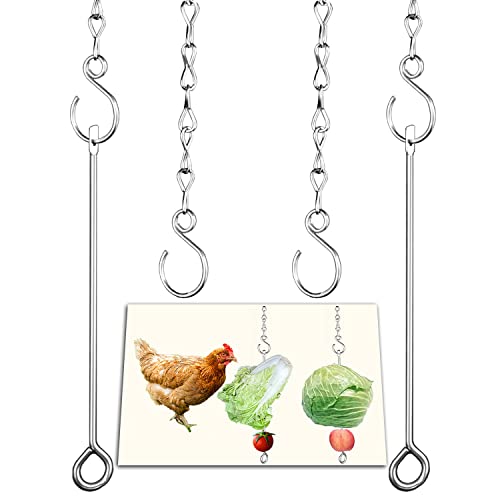
The feeder skewer built with 304 stainless steel, rustproof and safe for your favorite pets

Funny Chicken Toy: The xylophone toy is special designed for chickens. Each xylophone was fitted with a built-in bolt, two gaskets and a metal wing nut, so that it can be mounted on the inside or outside of the chicken cage, no extra tool is required for installation. You can also just put it on the ground, it will be tilted at an Angle for the chicken to peck at. When your chickens peck at the chicken xylophone toy, it makes beautiful sounds.

Chicken Double Side Mirror: this chicken mirror toy comes with hooks, dual mirrors, and a bell, making it a versatile addition to any coop; As a key chicken coop toy, it combines visual and auditory elements to keep your poultry engaged throughout the day
Comparing Chicken Cognition to Other Animals
Once you move beyond anecdotal observations of chicken behavior, meaningful cognitive comparison requires examining the neural architecture underlying their abilities rather than relying on superficial metrics like absolute brain size. You’ll find that chickens perform comparably to many mammals in numerical discrimination, problem-solving, and memory tasks despite their smaller brains. Their dense neuronal packing and specialized pallial regions support cognitive evolution pathways distinct from mammalian cortical organization. Additionally, studies indicate that chickens can have impressive long-term memory, allowing them to remember social interactions and recognize their peers. Interestingly, feeding chickens essential herbs known to boost their health can also enhance their overall well-being and potentially affect cognitive functions. You shouldn’t rank animal hierarchies solely on brain mass; chickens demonstrate executive function and delayed gratification rivaling some primates in laboratory settings. However, you’ll note they lag behind corvids and parrots in complex tool manufacture. This reveals that cognitive abilities emerge through divergent neural architectures, challenging traditional assumptions about intelligence scaling. Studies examining their social structure awareness show that chickens modulate vocal displays based on the presence of dominant individuals, demonstrating metacognitive recognition of hierarchical relationships within their groups.