If you’ve ever wondered whether chickens produce milk, you’re not alone — and the answer’s a hard no. Chickens are birds, and birds simply don’t have mammary glands. No mammary glands means no milk, full stop. Their biology directs calcium toward eggshell formation, not lactation. Prolactin exists in chickens, but it triggers brooding behavior, not milk production. Stick around, because there’s plenty more surprising chicken biology worth knowing.
Do Chickens Produce Milk?
If you’ve ever found yourself genuinely wondering whether chickens produce milk, you’re not alone — and honestly, it’s not as silly a question as it sounds. Here’s the thing: chickens are birds, not mammals. No mammary glands, no nipples, no milk. Simple as that.
Now, you might’ve heard whispers about nutal genetics or feather pigmentation somehow connecting birds to mammalian traits — interesting rabbit holes, sure, but they don’t change the core biology. Chickens simply aren’t wired for lactation.
Obviously, mammals hold that exclusive contract. Milk production exists to nourish offspring, and chickens handle that job completely differently. All right, so now that you know the straight answer, let’s dig into *how* chickens actually feed their young — because that part’s genuinely fascinating.
Why Chickens Can’t Make Milk
Now, here’s the thing — chickens can’t make milk because they’re birds, and birds simply didn’t evolve the biological machinery for it. No mammary glands, no apocrine secretion, no prolactin triggering lactation. You’re dealing with a creature whose entire calcium system works differently — avian calcium goes straight toward eggshells, not milk production. That’s just how their biology is wired.
And here’s where it gets interesting for you as a keeper: chickens also carry a natural lactose deficiency. They don’t produce lactase, so dairy isn’t just foreign to them — it’s genuinely disruptive to their digestion.
Prolactin exists in chickens, sure, but it triggers brooding behavior, not lactation. Nature gave chickens a completely different playbook. Honestly? It’s a pretty elegant system — just not a dairy one.

Superior calcium from Oolitic Aragonite: Provides high-quality calcium sourced from naturally occurring Oolitic Aragonite for optimal poultry nutrition

Essential Calcium Supplement: Pecking Order Oyster Shell is a rich source of calcium, crucial for the development of strong and sturdy eggshells. Adequate calcium intake helps prevent common issues like thin or brittle shells, ensuring your eggs are consistently high quality.

BLEND OF SOURCES OF CALCIUM : Chick’N Calcium from the Chick’N Swell product line is made from a blend of sources of calcium: calcium chloride and calcium propionate to provide essential calcium for all laying poultry including chickens, ducks, and quails; from backyard flock to commercial farms, our product is the perfect addition to your chicken water.
What Is a Chicken Breast, Actually?
So what exactly lands on your plate when you order chicken breast? It’s the white meat cut from the bird’s breast section — boneless, skinless, trimmed, and ready to work hard for you.
Here’s the thing: the protein content alone makes it worth understanding. You’re getting 23 grams of protein per four-ounce serving, zero carbs, and minimal fat. Obviously, that’s why it dominates every meal-prep conversation ever.
Now, cooking methods matter more than most people admit. You can grill it six to eight minutes per side, bake it at 375°F, or pan-sear it quickly. Just hit that 165°F internal temperature — non-negotiable.
If you’re health-conscious and want versatile, mild-flavored protein, this one’s genuinely for you. It also delivers key nutrients like niacin, vitamin B6, phosphorus, potassium, and selenium for overall health. Simple choice, honestly.
What Are the Biggest Myths About Chickens and Milk?
Knowing your chicken breast nutrition stats is great, but you’ve probably heard some wild claims floating around about how chickens are raised, what they eat, and whether any of that affects what ends up on your plate. Here’s the thing — myth debunking isn’t just fun, it’s actually useful. No hormones. No steroids. No GMO chickens. No antibiotic residue slipping past safety testing. Obviously, you want clean food, and the regulated system actually delivers that. Now, brown eggs versus white eggs? Pure genetics — nutritional comparison shows zero difference. And yes, chickens eat insects and meat. They’re omnivores. None of that changes your chicken’s quality. You’ve done enough second-guessing. The facts are solid, the standards are strict, and your confidence in choosing chicken is completely earned. The Cornish Cross, the breed behind most of your store-bought chicken, was developed through selective breeding programs, not genetic modification.
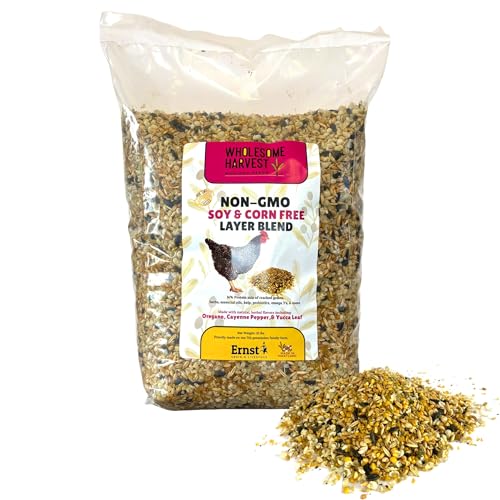
LAYER BLEND: Our Non-GMO layer mash is a complete feed fortified with minerals and additional calcium, ensuring quality eggshells. This blend of grains includes probiotic for digestive health and higher omega 3 levels from linseed (flax) oil. Ideal for supporting your flock's overall health and egg-laying productivity.

Organic and Natural: Our organic chicken feed is crafted with a carefully balanced mix of high-quality ingredients to support the health of your laying hens. It’s completely corn-free, soy-free, and non-GMO, ensuring your flock gets only the best.

Healthy and Natural Growth – Our nutritionally complete whole grain layer mash with 16% protein promotes optimal health in laying chickens and ducks. Fermentable. Corn-free. Soy-free.
Why Chickens Don’t Produce Crop Milk Like Other Birds
If you’ve ever wondered why pigeons and flamingos can produce crop milk while your backyard chickens absolutely cannot, the answer comes down to biology that diverged millions of years ago — and it’s actually pretty fascinating once you see how the pieces fit together.
Here’s the thing: evolutionary divergence sent different bird species down completely separate paths. Pigeons and flamingos developed specialized crop tissue that responds to prolactin. Your chickens have prolactin too — but their hormonal pathways simply never wired that connection. Prolactin steers chicken behavior instead, guiding brooding instincts rather than triggering nutrient secretion.
Now, that’s not a flaw. Chickens just found a different solution — regurgitated food works perfectly fine for raising chicks. Different tool, same job. Your chickens aren’t missing something; they’re just built differently.

SUSTAINABLY SOURCED: The aspen used for our nest box pads are sourced only from forest product companies that are members of the Sustainable Forestry Initiative program.

SUSTAINABLY SOURCED: The aspen used for our nest box pads are sourced only from forest product companies that are members of the Sustainable Forestry Initiative program.

Nesting Pads for Laying Hens: Made from sustainably harvested aspen excelsior, these nesting pads give your laying hens a soft, comfortable place to nest and lay their eggs
How Hens Feed and Care for Chicks Without Milk
Since chickens skipped the crop milk route entirely, their hens had to get practical — and honestly, what they do instead is more impressive once you see it up close. Here’s the thing — hen foraging does the heavy lifting. Your hen spends roughly 90% of her day teaching chicks to scratch, peck, and identify food sources through specific cluck signals. She’s basically running a survival school.
Now, chick nutrition starts before you even intervene. Chicks absorb their egg yolk pre-hatch, sustaining them 48-72 hours without your help. After that, your hen demonstrates drinking and eating directly.
All right — your job? Keep quality chick feed available, add grit, and let her teach. She’s already got this handled better than you’d expect. Make sure that feed is a chick starter feed with at least 20% protein, formulated specifically to support their immature digestive systems.
Can Chickens Drink Milk Safely?
So you’ve got a half‑gallon of milk sitting in the fridge, your chickens are eyeing it, and you’re genuinely wondering whether sharing is caring or a fast track to a messy coop — that frustration makes total sense. Here’s the thing: chickens aren’t built for lactose tolerance. They lack lactase, so undigested sugars cause diarrhea fast. Now, that doesn’t mean milk is completely off‑limits. Small amounts genuinely pass through without drama. Your milk dosage matters more than anything here. Keep liquid milk minimal, or swap it for yogurt and cottage cheese — those forms have considerably less lactose after fermentation. Obviously, free‑choice feeding causes problems. Measure it, balance it against their regular feed, and you’ll sidestep the liver and digestive issues entirely. Easy call. In fact, some farmers have repurposed spoiled milk this way, offering it to chickens rather than discarding it as waste, and the birds took to it with visible enthusiasm.

Use by date: This product’s use by date is determined by the Period After Opening symbol. The Period After Opening symbol is marked by a box with a numerical number (X) followed by letter M for months. The symbol denotes that the product is recommended to be used within X months of opening
![Flock Shield Respiratory Aid for Poultry - [Made in USA] - 4oz Chicken Supplement, Rooster Booster for Respiratory System - Dropper, Spray Top Included - Safe for All Birds - Drinking Water Additive](https://m.media-amazon.com/images/I/51QhnmS06ZL._SL500_.jpg)
Boosts Respiratory Health – Keep your flock breathing easy with Flock Shield, a chicken respiratory supplement aid ideal for colds and respiratory issues. Essential for chicken supplies and gamefowl rooster care

PROBIOTICS FOR POULTRY: HealthyGut Probiotics for Chicken and Poultry is a broad spectrum blend of carefully selected probiotic bacteria for chickens, ducks, and other poultry; Helps promote a healthy digestive system and offers your bird total digestive support
Should You Feed Dairy to Your Backyard Chickens?
Knowing milk won’t kill your chickens in small doses is useful, but the real question most backyard keepers wrestle with is whether dairy is actually worth adding to the feed routine at all — and that’s where things get genuinely interesting. Here’s the thing — dairy nutrition isn’t automatically a win. Your chickens can’t efficiently process lactose, and excess fat overwhelms their livers fast. Now, that doesn’t mean you abandon milk safety entirely. Fermented options like yogurt and clabbered milk sidestep most lactose problems while delivering real protein and calcium. You’re not locked out of dairy — you’re just choosing smarter forms of it. Measure portions, pick low-lactose varieties, and treat it as a supplement, not a staple. Easy decision, honestly.

Lactose Free

Rich and creamy, lactose free real dairy plain whole milk yogurt