You’ll find that chickens’ classification as livestock depends on your jurisdiction. Federal law distinguishes poultry from livestock under specific regulations, yet many states—including Colorado and Indiana—explicitly classify chickens as livestock. This classification greatly impacts your zoning permissions, taxation, licensing requirements, and regulatory compliance obligations. State-level variability means you must verify your specific state’s agricultural statutes. Understanding these distinctions becomes essential for your operational success and legal standing.
The Federal Regulatory Framework: Poultry vs. Livestock Distinction
Although chickens are commonly grouped with other farm animals, federal agricultural law carves out poultry as a distinct regulatory category separate from traditional livestock. Under 29 CFR 780.328, labor law explicitly excludes domesticated fowl from livestock definitions, establishing poultry as a separate classification. The OSHA SIC framework reinforces this distinction through Industry Group 025, dedicating specific codes to poultry production rather than grouping it with livestock operations. This legal separation creates regulatory challenges for producers maneuvering overlapping frameworks. The National Poultry Improvement Plan and USDA standards address poultry through distinct regulations, while the recent Organic Livestock and Poultry Standards Rule separates avian requirements from mammalian livestock. To maintain the health and productivity of chickens, producers must ensure they are fed a balanced diet similar to quality layer feed. Choosing the best chicken feed is essential for ensuring that poultry receive adequate nutrients necessary for growth and egg production. These divergent legal definitions reflect poultry’s unique production characteristics, requiring you to understand jurisdiction-specific requirements rather than assuming uniform livestock treatment. The final organic standards clarify that avian species must comply with tailored living condition requirements distinct from mammalian livestock, including adequate indoor and outdoor space designed to emphasize natural behavior expression.

ALWAYS PREMIUM NUTRITION: Our corn-free and soy-free chicken food is a complete diet for laying hens, boasting a guaranteed minimum of 17% protein. Your feathered friends will thrive on this super premium blend, producing top-quality organic whole chickens.

ALWAYS PREMIUM NUTRITION: Our corn-free and soy-free chicken food is a complete diet for laying hens, boasting a guaranteed minimum of 17% protein. Your feathered friends will thrive on this super premium blend, producing top-quality organic whole chickens.

Healthy and Natural Growth – Our nutritionally complete whole grain layer mash with 16% protein promotes optimal health in laying chickens and ducks. Fermentable. Corn-free. Soy-free.
State-Level Classifications and Variable Treatment of Chickens
While federal law establishes poultry as a distinct regulatory category, state statutory frameworks diverge considerably in their treatment of chickens as livestock. Some state statutes explicitly include poultry within livestock definitions—Indiana’s code, for example, lists avian species as livestock. Other jurisdictions employ species-group classifications that either include or exclude chickens depending on statutory text. Many states delegate classification authority to agency regulations, creating variability across regulatory programs within single states. Court interpretations of ambiguous language further fragment state-by-state treatment. Environmental statutes often classify chickens as livestock when operational thresholds are met, while animal-cruelty provisions frequently exempt farm animals from protection. This exclusion from major regulations has meant that chickens lack the protections afforded to other farm animals in many jurisdictions. Public-health and nuisance regulations may treat chickens as regulated agricultural animals regardless of their livestock designation elsewhere. This patchwork reflects evolving agricultural classifications lacking uniform national standards.
Where Chickens Are Treated as Livestock Under Agricultural Regulations
The state-by-state fragmentation of chicken classifications doesn’t remain purely theoretical; it produces concrete regulatory consequences in jurisdictions that’ve explicitly incorporated poultry into their livestock frameworks. When you raise chickens in states like Colorado that define poultry as livestock, you’ll find chicken farming operations permitted in livestock zoning areas. This classification enables you to maintain egg-producing flocks without pursuing commercial sales in zones otherwise restricted to residential use. Conversely, you’ll encounter jurisdictions adopting Connecticut’s bifurcated approach, which separately defines livestock and poultry under distinct statutory sections. Here, you must comply with specific poultry regulations rather than general livestock zoning provisions. Understanding your state’s definitional framework proves essential, as it determines whether your chicken farming activities fall under livestock zoning permissions or require separate poultry-specific authorization. The new USDA Organic Livestock and Poultry Standards Rule effective January 2, 2024, introduces space requirements and outdoor access standards that further shape how chicken operations must be structured regardless of local zoning classifications.

A Calm & Cozy Nesting Environment: Our herbal blend creates a soothing, inviting space for your flock. Its gentle natural aromas encourage hens to use their nesting boxes and support their natural instincts and well-being.

【Sturdy Structure And Materials】: Constructed with 1" thickened galvanized steel pipe and precision welding, this chicken coop features a strong frame and square protective mesh for long-term durability. The four corners are specially designed to improve wind resistance, preventing the coop from tipping over in strong winds. It also effectively protects poultry from wild animals such as raccoons and wolves, providing a safe and comfortable living environment.
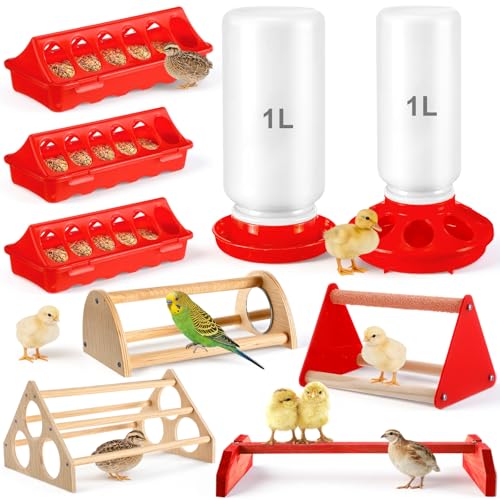
Ideal Chick Feeder Waterer Kit for Raising Chicks: the small chick starter kit offers everything your chicks need for a healthy start; Included are 3 pcs 12-hole chick feeders, 1 pcs chick waterer, 1 pcs 1L feeder and 4 pcs roosting perches; This brooder box set ensures all essentials are covered during the critical early weeks of your chicks' lives; The roosting perches add extra fun for your chicks, making them an ideal choice for new poultry enthusiasts
Where Chickens Are Treated Separately From Livestock
Beyond the jurisdictions that’ve classified chickens as livestock, you’ll encounter regulatory frameworks that establish poultry as a distinct category governed by separate statutory provisions and administrative standards. The USDA’s voluntary grading program under the Agricultural Marketing Act of 1946 treats chickens distinctly from traditional livestock, applying breed-specific classifications like broilers and roasters. Poultry regulations mandate separate inspection protocols and grade standards based on feather tolerances and meat tenderness rather than livestock metrics. In addition to these regulatory distinctions, raising happy backyard chickens can contribute to the overall well-being of both the birds and the owners involved. Zoning distinctions further reinforce this separation, with municipal ordinances regulating chickens independently—permitting them in non-agricultural zones while restricting roosters and limiting numbers by acreage. These zoning distinctions recognize poultry’s unique housing requirements, differentiating battery cages from pasture systems without applying general livestock pasture standards, creating specialized regulatory pathways for chicken ownership and production. The updated poultry class definitions based on sex and age of birds at harvest provide consumers with clearer labeling standards that distinguish chicken products by their specific characteristics and intended culinary uses.

Chicken Coop Wheel Kit with Lift Assist Handle: This poultry coop mover kit comes with ergonomic lifting handle to help tilt and shift your hen house; turn stationary chicken coop into mobile chicken tractor for backyard rotational grazing

【Complete All-in-One Kit】This set includes everything for setup and use: the foldable tunnel frame (79" or 157"), a sun protection net, a removable zipper door, heavy-duty U-shaped stakes, green zip ties, a puller, and scissors. No need to buy anything extra.

Inspection, Labeling, and Certification Standards for Chicken Products
Because chicken products destined for human consumption must satisfy rigorous federal oversight, you’ll encounter an extensive inspection and labeling framework administered by the USDA’s Food Safety and Inspection Service (FSIS).
Your inspection procedures begin with ante mortem evaluation, followed by post mortem examination of every bird carcass during processing. Federal inspectors maintain continuous presence at all facilities, possessing authority to halt production for violations. You must also implement organic rinses, maintain proper temperatures, and conduct microbiological testing to verify safety standards. Poultry companies invest millions in scientifically-validated measures to ensure 100% safety in chicken consumption.
Regarding labeling requirements, you’ll affix the official inspection legend to all shipping and immediate containers in distinctly legible form. This mark certifies wholesomeness and passage through federal inspection, confirming your product meets non-adulteration standards under applicable federal regulations before distribution.

Package Includes: galvanized steel poultry restrain cone set package includes 1 chicken slaughtering cone, 1 stainless steel lung cutter, 1 heatproof glove, 1 apron, and 1 slaughter cone knife, which can significantly improve processing efficiency

Efficient Chicken Butchering Equipment: This lung scraper is a core of professional chicken butchering equipment. It quickly and effectively removes fowl lungs, enhancing your meat processing workflow with a level of precision that a standard shred chicken tool cannot provide, ensuring a clean and hygienic carcass every time

304 Stainless Steel: Our stainless steel lung removers are all made of high-quality 304 stainless steel and are food grade. The upgraded and enlarged scraping head makes it easier and less labor-intensive to use. The stainless steel handle not only provides a comfortable grip, but is also corrosion-resistant and will not age.
Practical Compliance Implications for Producers and Sellers
While FSIS inspection and labeling standards establish the baseline safety requirements for your chicken products, you’ll find that meeting federal wholesomeness standards represents only one layer of your compliance obligations. You must navigate overlapping federal, state, and program-specific definitions that classify chickens variably as poultry or livestock, creating compliance challenges across taxation, licensing, and biosecurity reporting. Regulatory updates to state agricultural codes or local zoning ordinances can shift your operational requirements unexpectedly. You’ll strengthen your position by documenting which statutory definition you’ve relied upon for tax exemptions, permits, and registrations. Maintaining contemporaneous records demonstrating your classification basis protects you during audits or enforcement actions. State-specific animal welfare standards, such as those established through Proposition 12, may impose additional housing and condition requirements that affect your operational compliance obligations beyond federal baselines. Stay informed about disease-reporting duties and interstate movement restrictions tied to your jurisdiction’s poultry classification framework to avoid violations.