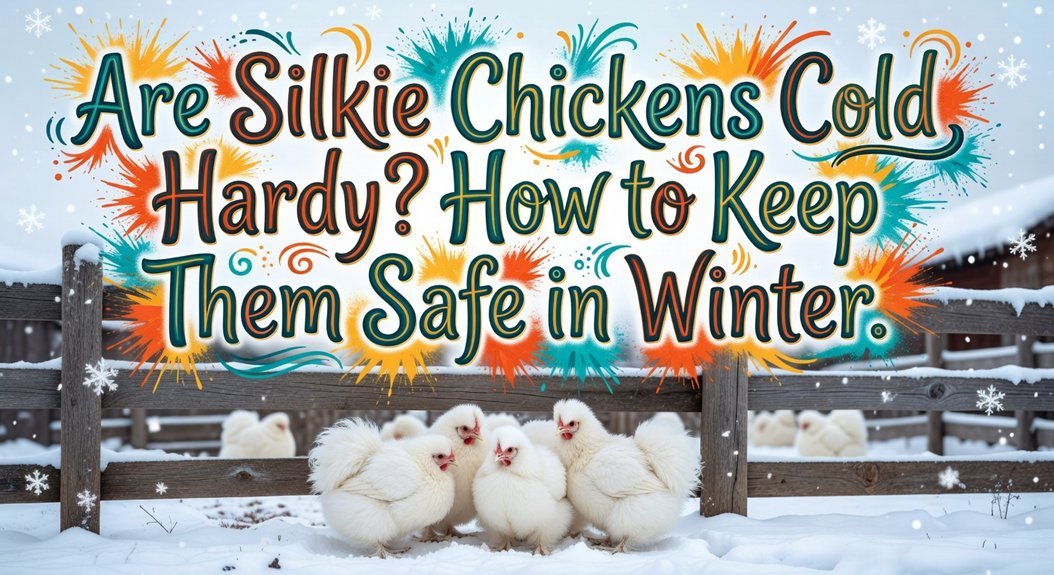
You love those fluffy Silkies, but let’s be real: their hair-like feathers lack rigid webbing, so they freeze fast when wet. Obviously, standard winter advice fails here. You need double-wall insulation, deep litter for microbial heat, and trimmed foot feathers to stop frostbite. If your bird gets damp, towel-wring and blow-dry immediately; hypothermia hits below 54°F. This breed demands extra work, but your flock will thrive if you commit to these specific dryness protocols. Stick around to master the exact drying routine that saves lives.
Are Silkie Chickens Cold Hardy? The Real Verdict
Even though you’ve probably heard conflicting stories about whether Silkies can handle the cold, the real verdict isn’t a simple yes or no. You’re frustrated by mixed reviews, right? Some folks swear they freeze in Minnesota, while others boast success. Here’s the thing: it largely depends on your specific bird’s gen health genetics. Stronger bloodlines tolerate chill better, but don’t bet your flock on it alone. Obviously, their fluffy coats look warm but fail when wet. You need an insulated coop with excellent coop ventilation to stop moisture buildup without freezing them out. Dry air saves lives here. If you live where mud freezes instantly, these birds demand extra work. But if you’re ready to manage their housing strictly, they’ll thrive. Stop guessing and start preparing your shelter now; your future flock is waiting for that smart decision today. While their feathers provide insulation, selecting birds with smaller crests prevents water collection and ice formation that larger crests suffer from in extreme cold.

𝐓𝐡𝐢𝐜𝐤𝐞𝐫 𝐂𝐡𝐢𝐜𝐤𝐞𝐧 𝐜𝐨𝐨𝐩: This chicken house features a rugged asphalt roof designed to endure heavy storms, rain, snow, and hail. More importantly, we use solid wood panels that are 1.38 inches thick—substantially thicker than most competitors. This robust construction provides superior insulation and durability, ensuring your flock stays safe and sheltered through every season

Used Book in Good Condition

Waterproof Material: Crafted from tear-resistant and translucent PE material, this chicken coop cover provides protection from rain, snow, and wind during winter. The translucent design allows sunlight in for warmth and visibility, while effectively insulating the coop to keep your chickens cozy and safe from the cold
Why Silkie Feathers Fail in Freezing Weather
Although those fluffy coats look like built-in parkas, you’re about to find out they’re actually terrible at keeping heat in when the thermometer drops. Those fur-like feathers lack the rigid webbing normal chickens use for effective feather insulation, so cold gusts punch right through to their skin. You can’t rely on their soft plumage to trap warmth or shed water, meaning moisture stays trapped against their bodies. Obviously, this unique structure leaves them shivering while other breeds stay cozy. Since their feathers fail to block wind, you absolutely must provide windproof housing to stop drafts from chilling them to the bone. Don’t expect standard coops to suffice; these birds need serious protection because their natural gear just doesn’t cut it in freezing temps. Understanding this flaw now saves you from heartbreak later, so plan your winter setup carefully before bringing them home. To combat this vulnerability, you must install a plastic cover with fine mesh windows over their run to create a snow-free area that blocks wind while maintaining essential ventilation.
How Wet Plumage Causes Frostbite on Feet
Why does your heart sink when you see those fluffy feet caked in mud? You know that damp bedding and spilled water create a perfect storm for disaster. When feather moisture soaks those unique toes, the insulation vanishes completely. Wet plumage traps cold air right against the skin, turning a chilly night into a dangerous freeze. Obviously, high humidity from breathing chickens worsens this trap inside your coop. If you don’t fix ventilation, that dampness lingers all night long. Foot freezing happens fast when mud cakes on their extra toes, preventing any natural drying. You can’t let them roost on slippery, rounded perches either; they need flat boards to tuck those vulnerable feet under warm bellies. Check those feet daily and move waterers outside. Keep them dry, and you’ll stop frostbite before it starts.
Can Silkies Survive Harsh Northern Winters?
You’ve just scrubbed the mud off those fluffy feet, only to wonder if your birds can actually make it through a Minnesota January without turning into ice cubes. Honestly, their fur-like feathers lack proper webbing, so they don’t trap heat like standard breeds do. Yet, folks in Canada and New York keep them alive every year. Here’s the thing: survival isn’t about genetics; it’s entirely up to your management. You must prioritize a high-energy nutrition diet nutrition plan to fuel their internal furnaces against sub-zero temps. Also, never ignore coop ventilation, because damp air freezes faster than dry cold and invites frostbite on those black combs. Obviously, wet conditions kill quickly. While they aren’t naturally built for this, your active care bridges the gap. If you’re ready for extra work, they’ll survive.
Building an Insulated Coop for Sub-Zero Temps
Since your Silkies’ fluffy coats fail them when the mercury plummets, you’re staring down a sub-zero winter wondering if your current shed is a death trap. Don’t panic; you just need to lock in their body heat. Start by installing double wall insulation to trap warm air between layers, effectively turning your flock into living furnaces. Obviously, sealing every crack stops deadly drafts, but never make it airtight or ammonia builds up. Ventilate high up instead. Now, consider solar gain by facing windows south; clear tarps on the run capture sunlight while blocking wind. Pile straw bales around the exterior for extra bulk protection against biting gales. You can also construct A-frame structures inside the pins so birds can huddle together and stay off the cold ground. You’re not just building a shed; you’re crafting a survival bunker. With these upgrades, your birds stay toasty without risky heaters. Ready to secure their safety? Let’s get building.

Double Bubble Foil / White Insulation

All-in-One Chick Brooder Kit:No more piecing things together!This baby chicken cage includes:a foldable octagonal brooding pen,a chicken feeder and waterer set,2 wooden chick perch,and a chicken heat plate.The moisture-resistant PVC pen keeps out wind,prevents escapes,and protects against predators,making it ideal for chicks,ducklings,quails,and more.From day one at home to the sixth week when they move to the outdoor coop,this all-in-one set covers all your brooding needs
All-in-One Chick Brooder Kit:No more piecing things together!This baby chicken cage includes:a foldable octagonal brooding pen,a chicken feeder and waterer set,2 wooden chick perch,and a chicken heat plate.The moisture-resistant PVC pen keeps out wind,prevents escapes,and protects against predators,making it ideal for chicks,ducklings,quails,and more.From day one at home to the sixth week when they move to the outdoor coop,this all-in-one set covers all your brooding needs
Using Deep Litter to Warm Silkie Coops Naturally
You’ve sealed every crack and stacked those straw bales, but let’s be honest: your coop still feels like an icebox because Silkies are basically feathered marshmallows in the snow. Here’s the thing: you need the deep litter method now. Start with four inches of pine shavings, then just keep adding thin layers as things get dirty. Don’t scoop; let those beneficial microbes work their magic. As they break down poop, they generate serious heat, creating air pockets that trap your flock’s body warmth. Obviously, this isn’t just about temperature. Proper humidity control keeps respiratory issues at bay by absorbing moisture from wet feathers. Turn it daily like a compost pile to keep odors down. This approach saves you cleaning time while giving your garden free fertilizer later. It’s the smartest, coziest move for your fluffy friends this winter. Crucially, the modest warmth produced by decomposing lower layers helps stabilize the coop temperature without requiring additional heat sources.


Elevate Your Coop with Our Premium Pine Bedding—meticulously crafted from 100% natural radiata pine. Super absorbent (3x+ its weight), low dust, and naturally odor-controlling, it keeps the coop dry, comfortable, and fresh. Compostable, fluffy and gently cushioning, it turns your chicken house into a clean, forest-fresh haven.

Trimming Foot Feathers to Prevent Winter Frostbite
Why let those fluffy foot feathers turn into icy anchors when the temperature drops? You know your feather-footed Silkie struggles with mud caking up there, creating a soaking moisture sheath that freezes fast. Honestly, long feathers hold water, and wet feet mean frostbite risks skyrocket in harsh winters. Grab sharp sewing scissors and trim those plumes back to about one inch from the leg. Don’t cut too close, though; you’ll hit blood-supplied follicles and cause bleeding, which nobody wants. Clean caked mud with warm water first if needed. Obviously, dry feet prevent tissue loss better than any ointment. This simple trim saves toes from freezing solid while keeping your bird comfortable. It’s a small effort for huge peace of mind during those freezing months. Go ahead, grab those scissors; your flock will thank you later. Just as trimming eye-area feathers improves visibility and confidence, clearing foot fluff removes a critical winter hazard.

Multi-Purpose — Cut through meat, seafood, chicken, herbs, and even tough chicken bones with ease. A versatile tool that replaces multiple kitchen gadgets

More Robust and Durable: SimCoker poultry shears are made of durable, tougher, more corrosion-resistant stainless steel that is thicker and lasts longer than regular kitchen scissors. Combined with a thicker spring and sharper blade design, the shear is easy to use

【Heavy Duty Poultry Shears】The poultry shears are forged from food-grade stainless steel, with a Rockwell hardness of 54±2. The blade is 3.5 mm thick, far exceeding the thickness of ordinary scissors for kitchen. These poultry scissors feature excellent corrosion-resistance and wear-resistance properties, combined with a reinforced spring, ensuring long - lasting durability. With sharp blades and a sturdy structure, they can quickly disassemble whole chickens and ducks.
Drying Wet Silkies to Avoid Hypothermia Risks
When your Silkie gets soaked, that cotton‑candy fluff turns into a heavy, freezing weight that can drop their body temperature faster than you’d expect. You’ve seen them shiver; it’s scary. Now, don’t just let them air dry. Grab an old towel and start gentle towel wringing to squeeze out excess water immediately. Wrap them loosely, then use a blow dryer on low heat, spreading feathers apart. Here’s the thing: perfect heat‑lamp timing saves lives. Blow dry for fifteen minutes, then move them under a lamp to finish while you handle other birds. Obviously, dampness below 54°F invites hypothermia, so guarantee total dryness before they go outside. This routine isn’t optional; it’s essential winter insurance. You’ve done the research, so trust these steps. Your flock stays warm, safe, and fluffy because you acted fast. Make drying them your non‑negotiable habit today. Avoid wringing or twisting to prevent feather damage.

Mini Travel Hair Dryer: Compact size and lightweight design for easy handling and storing, perfect for on the go and traveling and RV

Mini 1000 watts DC motor hair dryer,perfect choice for travel as it is small, compact.