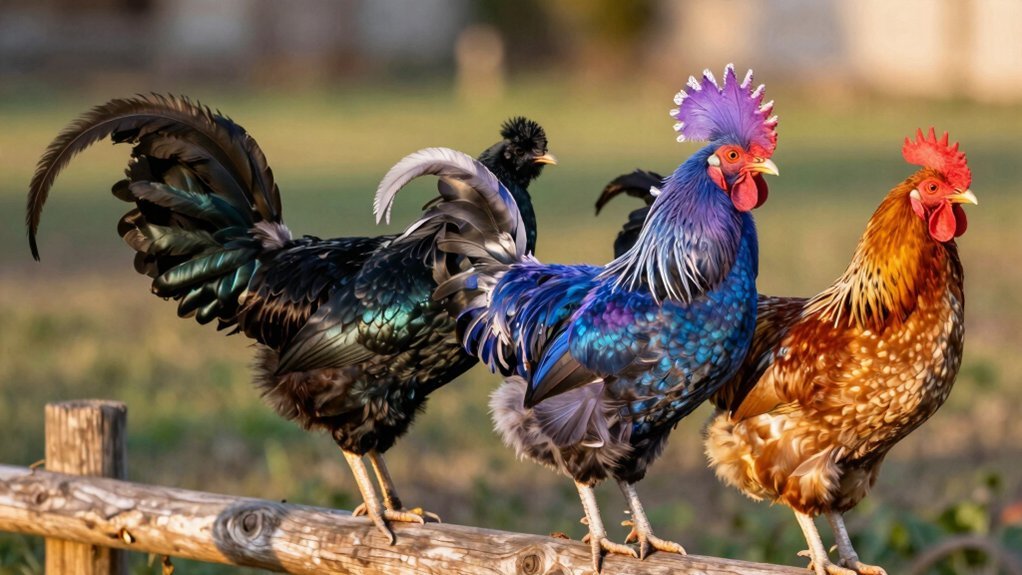
You’re right to wonder which chickens are truly “fancy” – it isn’t about egg counts but about striking feather genetics, comb shapes, and ornamental flair. Think Silkie’s fluffy, hookless plumes, Polish’s dramatic pom‑pom crest, Ayam Cemani’s all‑black look from fibromelanosis, and the frizzled curl of Frizzle or Sizzle birds; Brahma’s massive size, Phoenix’s ultra‑long tail, and La Fleche’s glossy black plumage with a V‑comb also stand out. Each breed trades some productivity for visual impact, so pick the one that matches your aesthetic goals and care capacity.
Defining Fancy Chickens: Traits That Set Them Apart
What makes a chicken “fancy” anyway? You’re probably wondering why some birds look like runway models while others just lay eggs. The answer lies in unusual feather genetics and distinctive comb shapes that breeders amplify for visual impact.
Why do those feathers matter?
You’ll notice frizzled, feather‑footed, or silk‑like plumage—each trait stems from a specific gene that changes barbicel structure or growth direction, giving you a fluffy, ruffled, or even cotton‑ball appearance. Breeds like the Silkie exhibit this unique texture because they possess a genetic lack of barbicel structure that normally provides rigidity to feathers. In frizzled varieties, a dominant mutation affects the KRT75 keratin gene, causing structural defects in the feather rachis that force the plumage to curl outward and upward. These feathered legs and feet also offer practical protection from cold climates while adding to the bird’s elegant aesthetic.
How do combs set them apart?
You’ll see V‑combs, rose combs, and flower‑like crowns—Sicilian Buttercups even sport a crown‑like rim with dozens of points. These shapes aren’t just cute; they signal a breed’s ornamental purpose and help judges spot the showstopper.
Takeaway: Fancy chickens earn their name through genetics‑driven feather quirks and eye‑catching combs, not egg output.
Next step: Look at breed standards to see which feather or comb trait excites you most.
Silkie, Polish & Sebright: Fluffy, Crested, Tight‑Laced Beauties
You’re probably wondering why the Silkie, Polish, and Sebright look so different from the other fancy breeds we just covered. The Silkie’s fluffy, fur‑like plumage comes from hookless feathers, so it feels like a downy pillow; its five‑toed feet and dark skin set it apart. Polish birds wear a dramatic pom‑pom crest that can hide their eyes, while Sebrights flaunt tight‑laced, lace‑edged feathers that sparkle in the light. Despite their turquoise-blue earlobes, Silkies lay creamy brown eggs rather than blue ones, dispelling common myths about earlobe color predicting egg shade. This unique appearance is due to the melanotic gene which causes their distinctive all-black skin, bones, and meat. Their calm and friendly temperament makes them excellent pets, especially for families with young children. How do you keep them healthy? Bird grooming tips include regular eye‑clearance trims for Polish crests and gentle fluff brushing for Silkies to prevent matting. Disease susceptibility rises in damp conditions—keep all three dry and shelter them from mud. What’s the payoff? You’ll get a living work of art that’s calm, ornamental, and surprisingly interactive. Next, consider how each breed fits into your flock’s hierarchy.
Ayam Cemani & Other Dark‑Hue Breeds: The All‑Black Spectacle
If you’re wondering why the Ayam Cemani looks like a walking night‑sky, it’s because fibromelanosis paints every feather, skin, and even internal organ jet‑black. The fibromelanosis genetics trigger a cascade that deposits melanin everywhere, giving you that metallic green‑purple sheen on the plumage. In Indonesia, the bird symbolizes mystery and power, a living night‑sky that commands respect. How big is it? Roosters hit 4.4–5.5 lb, hens 3.3–4.4 lb, so you get a lean, athletic bird that darts around a free‑range yard. It loves high roosts—four feet up or more—and can slip over a five‑foot fence, so secure runs matter. What about eggs? Expect 80 cream‑tinted eggs a year, not black ones. Hens vary: some brood avidly, others stay shy. The real draw is the all‑black spectacle, not egg output. While the Ayam Cemani is truly melanistic with black bones and meat, other popular options include dual-purpose breeds valued for both meat and egg production. Beyond simple melanin deposition, specific genes like SOX5 influence pigment distribution to create the unique dark hues seen in various breeds. Unlike the solid black of the Cemani, Silkie chickens offer a wider palette including standard show colors like black, blue, buff alongside non-standard varieties such as lavender and paint. Takeaway: If you crave a striking, culturally rich bird, the Ayam Cemani fits, but plan for space, height, and a modest egg yield. Next, consider how you’ll protect its flighty nature in your backyard.
Frizzle, Sizzle, Sultan, Houdan & Araucana: Extraordinary Feather Structures
What makes these feather‑fancy breeds so different? You’re probably wondering why their plumage looks wild instead of normal. Here’s the thing: frizzle genetics cause feathers to curl outward, and the incompletely dominant gene yields smooth, frizzled, or over‑frizzled chicks in a 1:2:1 split.
How does frizzle affect you?
You’ll see a full‑breasted, short‑erect body with soft curls that stay gentle, not sharp. Over‑frizzled birds lose feather insulation, so they need shelter from rain and wind. These birds are especially vulnerable to frostbite on their feathered legs when exposed to wet and cold conditions.
What about Sizzle and Sultan?
A Sizzle mixes Silkie fluff with frizzle curls, giving a fluffy, curly look but still reducing insulation. Sultan birds sport a dramatic crest, beard, and dense ornamental plumage, demanding dry housing to protect their feather insulation.
Why choose Houdan or Araucana?
Both flaunt unique crests and unusual plumage that stand out in shows. Their exotic feather structures need extra cleaning and good ventilation.
Takeaway
Understanding frizzle genetics and feather insulation helps you match care to each breed’s needs. Since all feathers grow from a follicle and are made of keratin protein, these unique structures still share the same fundamental composition as standard chicken plumage. Just as the mutated Crest gene dictates the unusual feathering patterns in crested breeds, specific genetic factors determine the curly or ornamental traits seen in these fancy chickens. Ready to set up a cozy coop for these show‑stoppers?
Brahma, Phoenix & Sumatra: Large, Elegant Fancy Chicken Breeds That Wow
You’re probably wondering why the big, elegant birds look so different from the frizzled and crested varieties you just read about.
What makes Brahma stand out?
Brahmas weigh 10‑12 lb, sport feathered shanks, and keep calm. Their Meat Production Advantages are clear: you can market 8‑10 lb birds for meat while still collecting 120‑200 brown eggs yearly. Housing Considerations are simple—heavy feathering handles cold, so a draft‑free coop works fine. Often called the King of All Poultry, these giants can reach heights of up to 30 inches while maintaining a gentle temperament. As one of the giant breeds, they exemplify the upper range of chicken sizes that can exceed 30 inches in height. Unlike their smaller counterparts, standard breeds like the Brahma generally lay more eggs and are favored for high-volume egg production.
Why keep a Phoenix?
Phoenixes flaunt ultra‑long tails, so you must protect them with dry, clean runs and elevated perches. They’re lighter than Brahmas, active, and mostly ornamental, so meat production isn’t a goal.
What to know about Sumatra?
Sumatras are sleek, black, and strong flyers; they need secure fencing to prevent escapes. Their aggressive, flighty nature means you’ll spend more time managing them than harvesting meat.
Takeaway: Brahmas give you dual‑purpose utility, while Phoenix and Sumatra shine in exhibition. Next, decide which purpose—meat, show, or both—fits your backyard best.
La Fleche, Derbyshire Redcap & Burmese: Ultra‑Rare Fancy Chicken Breeds
You’re probably wondering why La Fleche, Derbyshire Redcap, and Burmese chickens each feel so unique despite all being labeled “ultra-rare fancy” breeds. You’ll see La Fleche’s glossy black plumage, V-shaped “devil’s horns” comb, and bright red eyes set a striking silhouette, while Derbyshire Redcap flaunts a massive red rose comb and a full tail that screams heritage. Burmese birds add exotic flair with vivid patterns that turn any backyard into a living art gallery. In contrast to these larger heritage types, the Porcelain d’Uccle is a true bantam breed from Belgium known for its feathered legs and gentle temperament. Unlike the flighty nature of some small breeds, Old English Game Bantams demonstrate how tight feathers prevent pecking while maintaining a compact, muscular build.
Now, here’s the thing: all three carry dual purpose traits, offering respectable egg numbers—La Fleche lays 140-220 large white eggs annually—yet they’re prized for meat and show qualities too. Their critical conservation status means each bird you keep helps preserve a dwindling gene pool. Since industrial agriculture favors uniform commercial breeds, keeping these birds supports genetic diversity essential for future resilience.
All right, the takeaway: if you cherish rarity, aesthetics, and a chance to protect heritage, these breeds fit perfectly. Next, consider which breed matches your space and goals before you start a preservation project.
Temperament Profiles & Care Requirements for Each Fancy Breed
A quick look at temperament reveals why you’re tangled up in “docile vs. flighty” labels for fancy chickens. You wonder if a Cochin will cuddle or a Leghorn will bolt. Here’s the thing: breed names give a rough map, but strain, upbringing, and daily interaction shape each bird’s personality.
Which breeds stay calm with kids?
Cochin, Faverolles, Brahma, Jersey Giant, and Langshan usually greet you with soft clucks and tolerate handling. Socialization effectiveness spikes when you start handling chicks daily; a few minutes each morning builds trust. Handling frequency tips: touch, feed, and talk to them at least twice daily during the first two weeks.
What about active but friendly birds?
Sussex, Plymouth Rock, Delaware, Rhode Island Red, and Orpington thrive on curiosity. They follow you, accept treats, and stay steady if you keep handling regular. Too little contact makes them skittish, so aim for 5‑10 minutes of gentle handling three times a week. While many fancy breeds require specific care, selecting hardy breeds that adapt well to various climates can simplify management for new keepers. Beyond personality, families should also consider the educational opportunities that raising these birds provides for children through daily care and observation.
Which birds stay flighty or aggressive?
Leghorn, Mediterranean types, and game‑fowl‑derived roosters keep alert and may dart away. Aggression spikes with crowding or rare interaction. If you keep these, increase handling frequency to 10‑15 minutes daily and give them spacious, low‑stress housing.
Takeaway: Match a breed’s baseline temperament with your handling routine. Consistent, gentle contact boosts socialization effectiveness and keeps even high‑energy birds comfortable. Next, decide whether you’ll prioritize a calm companion or an active forager. friendly breeds thrive when they are hand‑fed from an early age.
Egg Production vs. Ornamental Appeal – Choosing the Right Fancy Breed
If you’re wondering whether to pick a breed for eggs or for eye‑catching plumage, you’ve hit the right spot.
Do I need colored eggs or just lots of them?
Here’s the thing: utility breeds like White Leghorn push 300 eggs a year, but they lack showy feathers. Dual‑purpose birds such as Buff Orpingtons or Wyandottes give you 200‑280 eggs and a decent plumage, while Cream Legbars, Ameraucanas, and Olive Eggers deliver colored eggs and respectable production.
Should I prioritize looks over laying?
Obviously, ornamental breeds—Polish, Silkie, Frizzle—focus on crests, silk, or unusual patterns, and they drop below 150 eggs annually. If breeding priorities lean toward exhibition, accept a lower output; if you want a steady supply, choose a dual‑purpose line.
What’s the best compromise?
All right, mix a few dual‑purpose hens with a couple of ornamental birds. You’ll enjoy visual flair and still collect enough eggs for breakfast.
Takeaway: match your flock’s goal—egg volume, colored eggs, or visual impact—to the breed’s breeding priorities. Next, list the traits you value most and pick a breed that balances them.
Selective breeding has created distinct classes of chickens that excel in either egg production or ornamental appeal.