You’ve got a fence that’s either leaking power or snapping under pressure, and you’re tired of guessing which wire will actually hold up. All right, let’s cut through the noise: Zareba’s 17‑gauge aluminum is light, cheap, and perfect for sprawling pastures—just don’t expect it to survive a herd of bullies. The 250‑ft spool of 17‑gauge aluminum is the same material, but the bulkier roll makes it easier to handle on large jobs. Kanayu’s double‑insulated underground wire is built for cattle and harsh soils, though the extra insulation adds a few dollars per foot. The 12‑1/2‑gauge 82‑ft underground wire is thick enough for stubborn livestock, but its short length means you’ll need more spools for big acreage. Blulu’s 14‑gauge 1000‑ft roll gives you a balance of strength and flexibility for mixed‑species farms, yet the aluminum can bend under very heavy tension. The thing is, each option shines in a different scenario—pick the one that matches your terrain, animal size, and budget, and you’ll stop worrying about fence failures. Ready to lock in the right fit?
| Zareba Fi-Shock 17 Gauge Aluminum Fencing Wire (250 ft) |  | Heavy‑Duty Choice | Material: Aluminum (aluminized) | Gauge / Diameter: 17 gauge (1.62 mm) | Length per Package: 250 ft | VIEW LATEST PRICE | Read Our Analysis |
| Spool Aluminum Electric Fence Wire 250-Feet 17 Gauge (1) | 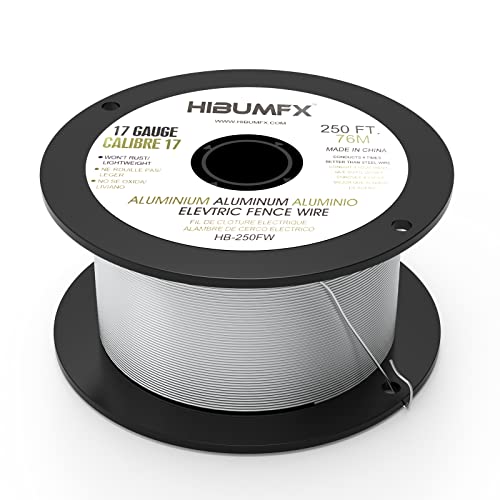 | Value Performer | Material: Aluminum (unfinished) | Gauge / Diameter: 17 gauge | Length per Package: 250 ft | VIEW LATEST PRICE | Read Our Analysis |
| Kanayu Double Insulated Underground Fence Wire (164 ft) |  | Underground Specialist | Material: Aluminum‑magnesium alloy with PVC coating | Gauge / Diameter: 12 gauge (2 mm) | Length per Package: 164 ft (≈50 m) | VIEW LATEST PRICE | Read Our Analysis |
| 12‑1/2 Gauge 82 FT Electric Fence Insulated Underground Wire |  | High‑Voltage Pro | Material: Aluminum core with double polyethylene insulation | Gauge / Diameter: 12‑1/2 gauge (2.5 mm core) | Length per Package: 82 ft | VIEW LATEST PRICE | Read Our Analysis |
| Blulu 14 Gauge Aluminum Electric Fence Wire 1000 ft |  | Long‑Run Leader | Material: Aluminum‑magnesium alloy | Gauge / Diameter: 14 gauge | Length per Package: 1,000 ft | VIEW LATEST PRICE | Read Our Analysis |
More Details on Our Top Picks
Zareba Fi-Shock 17 Gauge Aluminum Fencing Wire (250 ft)
You’re tired of flimsy fence wire that snaps the first time a horse leans on it, and you need something that actually holds up under big‑animal pressure. The Zareba Fi‑Shock 17‑gauge aluminum wire does just that. Aluminum conducts electricity four times better than steel, so you get a reliable shock without rust ruining the job. At 1.62 mm diameter and a tensile strength of 38 000 psi, it can bear a 90‑pound breaking load—perfect for cattle or horses. The 250‑ft spool weighs only 0.29 kg, making it a breeze to carry and unwind. It spins freely on the built‑in freestanding design, so you splice and tension quickly, and it works with any post or insulator you already have. If you want a lightweight, rust‑proof solution that won’t quit when the herd pushes, this is the one for you. All right, give it a try and you’ll see why it’s a solid, hassle‑free choice.
- Material:Aluminum (aluminized)
- Gauge / Diameter:17 gauge (1.62 mm)
- Length per Package:250 ft
- Tensile Strength / Breaking Load:38,000 PSI, 90 lb breaking load
- Insulation / Weather Resistance:Rust‑proof aluminized coating, no insulation
- Compatibility with Insulators / Posts:Works with all post types; compatible with plastic or porcelain insulators
- Additional Feature:Built‑in free‑spinning spool
- Additional Feature:Lifetime manufacturer warranty
- Additional Feature:Rust‑proof aluminized coating
Spool Aluminum Electric Fence Wire 250-Feet 17 Gauge (1)
If you’re wrestling with rust‑prone steel and need a fence that stays reliable in rain or salty air, this 250‑foot, 17‑gauge aluminum spool is a solid value performer. You’ll notice the silver, unfinished finish right away, and you won’t have to worry about rust because aluminum resists corrosion like a champ. The 38,000 PSI tensile strength and 90‑lb breaking load mean you can pull it taut without fear of snapping, and it won’t kink when you unwind it from the cylinder. Obviously, the conductivity beats steel, so your animals get a cleaner shock. Now, if you’re a farmer with long, straight runs, the 250‑foot length saves you trips to the shop. If you’re a hobbyist with a small garden, you might end up with excess, but you can always cut and store the rest. The brand, HIBUMFX, and the manufacturer, YICHANG TUOCHEARTH, sound reputable, and the commercial grade rating backs up the durability claim. This one’s for you if you want low‑maintenance, reliable performance without the hassle of rust. All right, give it a try, and you’ll see why it’s a smart, hassle‑free choice.
- Material:Aluminum (unfinished)
- Gauge / Diameter:17 gauge
- Length per Package:250 ft
- Tensile Strength / Breaking Load:38,000 PSI, 90 lb breaking load
- Insulation / Weather Resistance:Unfinished aluminum, rust‑proof
- Compatibility with Insulators / Posts:Compatible with standard fence posts and insulators
- Additional Feature:Unfinished silver finish
- Additional Feature:Cylindrical shape for easy handling
- Additional Feature:Commercial grade rating
Kanayu Double Insulated Underground Fence Wire (164 ft)
Your fence keeps losing voltage the you bury it, and you’re tired of digging up a mess every time the charger trips. You need a cable that stays hot underground without screaming for attention. Kanayu’s Double‑Insulated Underground Fence Wire gives you exactly that. At 164 ft of 2 mm, 12‑gauge aluminum‑magnesium core wrapped in black PVC, it resists corrosion and limits voltage drop over long runs. The double insulation means you can bury it directly, so you won’t be pulling it out for repairs. It’s light—just 3.7 lb—so you can haul the reel onto a plastic spool and store it neatly. Use it for standard hook‑up, under‑gate cabling, or permanent gate connections; it works with both over‑ground and underground systems. The brand backs it with a warranty and Amazon’s 30‑day return, so you’re covered if it doesn’t fit your layout. Obviously, if you need more than 164 ft, you’ll have to splice or buy another roll, but for most residential boundaries this length is spot on. All right, give it a try and you’ll stop digging up the yard every time the charger trips.
- Material:Aluminum‑magnesium alloy with PVC coating
- Gauge / Diameter:12 gauge (2 mm)
- Length per Package:164 ft (≈50 m)
- Tensile Strength / Breaking Load:Not specified (standard for 12 gauge)
- Insulation / Weather Resistance:Double PVC insulation, underground‑rated
- Compatibility with Insulators / Posts:Suitable for over‑ground and underground systems, works with standard insulators
- Additional Feature:Direct‑burial PVC outer layer
- Additional Feature:Double insulation design
- Additional Feature:Plastic reel for organized storage
12‑1/2 Gauge 82 FT Electric Fence Insulated Underground Wire
A 12‑1/2‑gauge, 82‑foot underground wire is the go‑to for anyone who needs a reliable, high‑voltage pro solution for a permanent fence line. You’re probably tired of losing power after a few hundred feet, and you want something that won’t sag or corrode under the soil. This CYM‑INSIST cable has a 2.5 mm aluminum core with 2.5 Ω per 100 m, so it handles up to 20 kV over 100 m without a hitch. Double polyethylene insulation cuts voltage loss and protects against moisture, making it perfect for permanent gates or long‑term agricultural fences. You’ll get a pair of random‑color gloves and two split‑bolt connectors, which is handy for quick splices. The 82‑foot length means you can cover a typical pasture segment without splicing, saving time and reducing weak points. If you’re installing a new line, this wire gives you strength and durability; if you’re repairing an existing fence, the extra insulation helps you avoid frequent re‑tensioning. All right, grab it, bury it, and you’ll have a steady, high‑voltage barrier that lasts.
- Material:Aluminum core with double polyethylene insulation
- Gauge / Diameter:12‑1/2 gauge (2.5 mm core)
- Length per Package:82 ft
- Tensile Strength / Breaking Load:Not specified (rated for 20,000 V)
- Insulation / Weather Resistance:Double polyethylene insulation, underground‑rated
- Compatibility with Insulators / Posts:Designed for direct burial, works with standard post/insulator setups
- Additional Feature:Includes protective gloves
- Additional Feature:Comes with split‑bolt connectors
- Additional Feature:Supports 20 kV over 100 m
Blulu 14 Gauge Aluminum Electric Fence Wire 1000 ft
You’re wrestling with a fence that keeps snapping under the weight of your herd, and you need something that won’t give up after a few storms. Blulu’s 14‑gauge aluminum electric fence wire gives you a full 1,000 ft of sturdy line that you can pull straight from the reel, cut on the spot, and mount on plastic or ceramic insulators without a struggle. The magnesium‑alloy blend pushes tensile strength to 260 MPa, so it resists breakage better than plain aluminum while staying light at 6.47 lb.
All right, the high conductivity means the current flows efficiently, delivering a reliable deterrent even when rain or snow hits. Low resistance keeps your charger from working overtime, and the coating resists corrosion, so you won’t see degradation over years of use.
Now, if you’re fencing a large pasture or a mixed‑species operation, this length covers big areas without constant splicing. It pairs with most electric fence systems, so you won’t need specialty hardware. The trade‑off? It’s a bit thicker than 12‑gauge options, so it’s not the lightest for ultra‑tight bends, but for straight runs it’s a breeze.
Obviously, if you want a fence that stands up to the elements and your animals’ strength, this is a solid, low‑maintenance choice. Give it a try, and you’ll feel confident that the line will stay put, storm after storm.
- Material:Aluminum‑magnesium alloy
- Gauge / Diameter:14 gauge
- Length per Package:1,000 ft
- Tensile Strength / Breaking Load:260 MPa tensile strength
- Insulation / Weather Resistance:Corrosion‑resistant alloy, weather‑proof
- Compatibility with Insulators / Posts:Works with plastic or ceramic insulators, universal post compatibility
- Additional Feature:1000 ft length for large areas
- Additional Feature:Aluminum‑magnesium alloy composition
- Additional Feature:Easy pull from reel design
Factors to Consider When Choosing Electric Fence Wire
You’re probably wondering why some fence wire sags after a storm while other brands stay taut, and that’s usually down to material conductivity and durability. Now, think about the gauge you need—thicker wire handles bigger animals but can be harder to splice, and you’ll want something that slides onto your insulators without a battle. Here’s the thing: if you’re after a low‑maintenance setup that survives rust and UV, go for a high‑conductivity aluminum alloy, but if you need extra strength for a rugged ranch, a thicker steel core might be your best bet.
Material Conductivity
You’ve probably noticed that the fence line you’re planning stretches for miles, and you’re worried the pulse will fizzle out before it reaches the far end. The thing is, aluminum conducts four times better than steel, so an aluminum‑magnesium alloy core will keep the current flowing strong. All right, high conductivity means the deterrent pulse stays sharp, and low‑resistance wire limits voltage loss over distance. Now, double insulation around that conductive core can trap the energy, preventing unwanted dissipation. Obviously, if you prioritize a punchy shock, you’ll want a wire with a pure aluminum core rather than a mixed alloy. This is for you if you need consistent power across long spans without constantly boosting the charger. Choose the alloy that matches your terrain, and you’ll feel confident the fence won’t quit on you.
Material Durability
When you’ve got miles of fence to protect, the last thing you want is a wire that rusts, kinks, or snaps under the weight of weather and wildlife. Obviously, you’ve seen steel corrode after a rainy season, and you’re worried about costly repairs. Aluminum wire solves that by staying rust‑proof, so wet conditions don’t eat it away. If you’re burying runs, choose a double‑polyethylene or PVC‑insulated core; those layers keep moisture and soil chemicals from reaching the conductor. An aluminum‑magnesium alloy core adds tensile strength—often topping 260 MPa—so the wire resists breakage when a deer leans on it. All right, you’ll notice the wire won’t kink after a snow melt, and it won’t degrade under UV exposure. This one’s for you if you need a low‑maintenance, long‑life solution that tolerates harsh climates without constant inspection.
Gauge and Strength
A 12‑gauge aluminum‑magnesium strand feels like a steel‑reinforced rope in your hands, and that’s why it’s the go‑to when you’re worried about a buck or a bull leaning on the line. You’re probably thinking, “Will this hold up?” Obviously, gauge matters: lower numbers mean thicker wire, higher tensile strength, and a bigger breaking load. If you’re fencing cattle, a 12‑gauge gives you the PSI you need to resist pressure; a 17‑gauge might snap under a single kick. Aluminum adds conductivity without the weight of steel, and the magnesium alloy boosts durability. All right, now consider the trade‑off: thicker wire costs more and is a bit harder to splice, but it saves you from a broken fence later. Here’s the thing—if you have large, strong animals, choose the lower gauge; if you’re dealing with goats or sheep, a 14‑ or 16‑gauge could be enough. In short, match gauge to animal size, budget, and how much you value peace of mind. This should make your choice feel obvious and smart.
Installation Ease
If you’ve ever wrestled with a coil that refuses to bend, you know the frustration of trying to get a thick, low‑gauge wire into place while the sun beats down and the animals stare. Obviously, gauge matters: a smaller number means a stiffer wire that resists your pull, so you’ll spend more time wrestling than wiring. All right, look for a spool that stands on its own or rolls on a tidy reel—this cuts down on juggling and lets you feed the line smoothly. Now, consider material weight; aluminum feels like a feather compared with steel, making long runs far less exhausting. Tensile strength tells you how tight you can pull without snapping; a moderate PSI rating gives you a firm line without demanding a crane. If you favor quick post‑to‑wire attachment, pick a wire that mates with standard plastic or porcelain insulators, sparing you custom brackets. Choose the combo that matches your stamina and terrain, and you’ll finish the fence before sunset.
Compatibility With Insulators
You’ve probably spent a good chunk of the afternoon wrestling a stubborn coil, only to realize the real headache starts when that wire meets the post. The material you chose dictates the insulator you need; aluminum wire, for example, won’t play nice with conductive posts, so you’ll want a non‑conductive plastic or porcelain insulator to keep the current where it belongs. Now, match the insulator’s inner diameter to the gauge of your wire—too tight and you’ll nick the strand, too loose and it’ll wobble and lose contact. If you’re using double‑insulated or PVC‑coated wire, you can stick with standard insulators because the outer layer already blocks current bleed. Obviously, a proper fit isolates the circuit and maximizes the shock along the fence line, giving you a reliable barrier without constant troubleshooting. Choose the right insulator and the rest of the system will fall into place.
Warranty and Support
One thing that trips most folks up when they’re about to buy electric‑fence wire is figuring out how the warranty and support actually protect them after the sale. You’re probably wondering whether a lifetime warranty really means the wire won’t snap, and if a 30‑day return can cover a bad fit with your insulators. Obviously, a manufacturer’s lifetime guarantee signals confidence in durability, but it usually only covers material defects—not damage from a botched install. That’s why you should also lean on the retailer’s return policy for those early‑stage hiccups. Now, think about support: access to clear installation guides and troubleshooting videos can save you hours of guesswork. If you’re a DIY farmer, a brand that offers live chat with technicians is a lifesaver; if you’re a contractor, an exhaustive PDF manual might be enough. All right, pick a wire that pairs a solid lifetime warranty with a retailer’s 30‑day guarantee, and you’ll feel covered from day one.