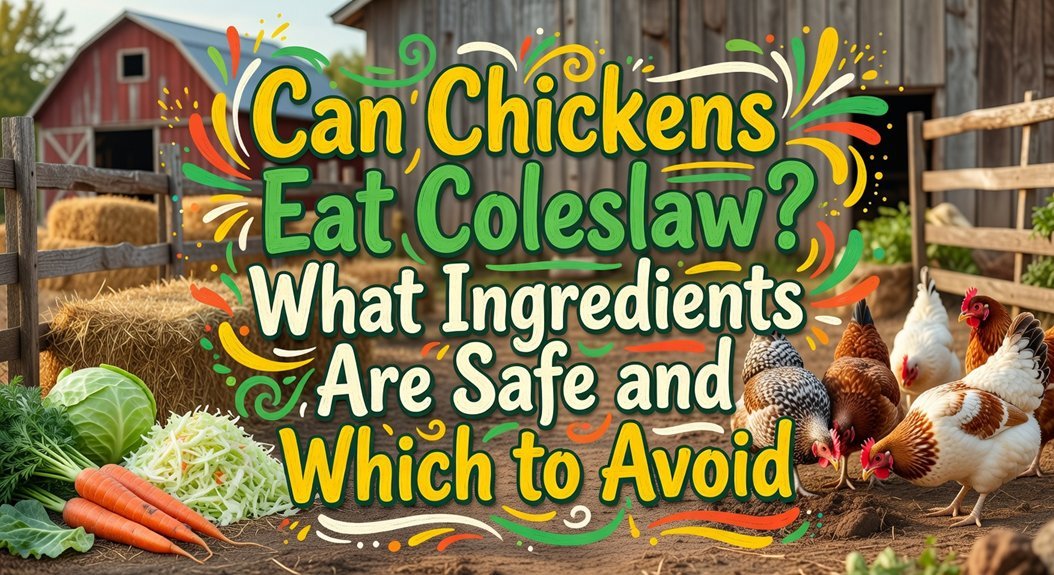
You’re staring at that leftover coleslaw, worried it’s a toxic trap for your flock. Here’s the thing: you can feed them the raw cabbage and carrots, but you must scrape off the mayo, sugar, and onion dressing immediately. Obviously, those creamy additives cause fatty liver and anemia, while plain veggies offer safe crunch. Stick to small, undressed portions twice weekly to keep things balanced. If you want to know exactly how much serves as a safe treat, keep going.
Can Chickens Eat Coleslaw?
So you’ve got some leftover coleslaw sitting in the fridge, your chickens are eyeing your every move, and you’re wondering if sharing is actually a good idea. Here’s the thing — yes, chickens can eat coleslaw, but only the plain, unseasoned kind. Obviously, that creamy, heavily dressed version from your barbecue isn’t making the cut.
Seasoneslaw nutrition matters here. Plain cabbage, carrots, and fresh greens? Totally fine. Salt, oils, and spices? Hard pass — those wreck their digestion fast.
Seasonal feeding also plays a role. That water-rich cabbage base genuinely helps your flock during summer heat stress. Now, coleslaw shouldn’t replace proper feed — treat it like an occasional bonus, not a staple. Keep portions small, skip the dressing, and you’re good. In fact, observations show that when fed suitable items, chickens will lick the bow clean, indicating high satisfaction and complete consumption.
Why Cabbage in Coleslaw Is Safe for Chickens
Since you’re probably staring at that bowl of shredded greens wondering if the cabbage part is actually a trap, let’s clear the air right now. Cabbage isn’t poison; it’s practically a superfood for your flock when served plain. You’ll find excellent cabbage nutrition packed inside those crunchy leaves, offering vitamin C and hydration without dangerous sugar or salt levels. Obviously, you shouldn’t feed them moldy heads, but fresh stuff boosts digestive health considerably. The fiber aids their gut, keeping everything moving smoothly even if they eat the tough ribs. You can hang whole heads for entertainment or chop them up for easy pecking. Just remember, moderation matters because this isn’t a complete meal replacement. Your hens need balanced layer feed too. So go ahead, toss them some raw or cooked cabbage confidently. They’ll love the crunch, and you’ll love seeing them thrive today. Interestingly, feeding purple cabbage can turn their manure a crazy green-blue and make egg yolks a darker orange.
Which Coleslaw Ingredients Are Safe for Chickens?
While you’re standing there holding that container of coleslaw and wondering which bits you can actually toss to your flock without playing Russian roulette with their health, let’s cut through the confusion right now. You can safely share shredded carrots and bell peppers; they add crunch and essential vitamins your birds crave. Even small amounts of citrus or vinegar bases won’t hurt if you keep portions tiny. Now, about those extras: nuts offer great protein, but you must chop them finely to manage that dense nut flavor texture so chickens don’t choke. Skip the celery seed entirely, though, because seed toxicity poses a real risk even in small sprinkles. Stick to the basic veggies and ditch the risky spices. Your flock will thank you for the safe snacks while you avoid any accidental poisoning scares today. Just pick the simple stuff. Remember that while pecans provide heart-healthy fat for humans, their high fat content and choking hazard make them unsuitable for regular chicken consumption.

Brought to you by Whole Foods Market

Brought to you by Whole Foods Market

Brought to you by Whole Foods Market
Which Coleslaw Ingredients Can Actually Hurt Your Chickens?
Because you’re staring at that coleslaw mix wondering which hidden ingredient could turn a treat into a tragedy, let’s get straight to the dangerous stuff before you toss a single shred. You absolutely must avoid nightshade toxicity found in potato peels or tomato stems, as solanine wreaks havoc on their nervous systems. Onions and garlic are equally deadly, causing anemia through accumulated sulfur compounds that ruin egg production too. Then there’s the serious persin risk lurking in any avocado bits; this toxin destroys heart muscle rapidly, so keep those green fruits far away. Rhubarb leaves bring oxalic acid, leading to kidney failure and soft shells, while moldy cabbage introduces aflatoxins that kill quickly. Obviously, spoiled food harms everyone, but chickens are extra sensitive. Don’t gamble with their lives over a cheap salad mix. Just pick out the safe veggies and skip the rest entirely today.

Held to higher ingredient standards, so you can feel good about what you're buying (and eating)


Usda Organic, excellent source of Vitamin K & a
How Coleslaw Dressings and Seasonings Harm Chickens
Even though you’ve picked out the safe veggies, the dressing sitting on top is where you’ll really trip up your flock if you aren’t careful. Mayonnaise packs dangerous fat levels that cause obesity and fatty liver disease quickly. Sugar spikes blood glucose, promoting insulin resistance while vinegar’s acidity erodes crop linings and disrupts gut pH balance. You might think fermented foods offer probiotic benefits, but harsh vinegars actually dehydrate birds and strip essential electrolytes. Celery seed contains apiol, which attacks nervous systems, while mustard oils irritate mucous membranes and inflame digestive tracts immediately. These additives destroy your chickens’ delicate seasonutrient balance, turning a healthy snack into a toxic trap. Obviously, creamy emulsions and sharp spices don’t belong in their feed. Stick to plain, raw vegetables to keep your birds mobile, healthy, and happy without risking pancreatitis or respiratory distress from volatile fumes. While recipes often call for a small amount of Dijon mustard to enhance flavor, even this modest quantity introduces irritating oils that are unsafe for poultry consumption.

BRING HOME THE FLAVOR YOU LOVE: Our Signature Italian salad dressing brings the tradition of authentic Italian flavor to your salads.

A flavorful dressing with a fresh ginger and sesame flavor

DELICIOUS FLAVOR: One 20-oz. Easy Squeeze bottle of Hidden Valley Original Ranch Dressing for scrumptious flavor to delight your taste buds with every bite
Signs of Coleslaw Toxicity in Chickens
Since you’ve already dodged the mayo and vinegar traps, don’t let your guard down just yet because spotting toxicity early is the only way to save a bird that’s eaten the wrong slaw. Watch closely for limberneck, where their head droops helplessly, or wobbly walking that signals severe neurological distress. You’ll notice greenish droppings within thirty-six hours, marking dangerous colonic toxicity that ravages their gut. Lethargy hits hard; they’ll sleep more, ignore food, and show obvious feather discoloration alongside ruffled plumage. Pale combs indicate anemia while labored breathing screams internal crisis. If seizures strike or wings droop permanently, the situation is critical. Young birds often die rapidly, so don’t wait. Recognizing these specific signs immediately separates
How to Prepare Coleslaw Before Feeding It to Chickens
Look, you’re probably standing there with a head of cabbage wondering if you can just toss the whole thing to your flock without turning their dinner into a digestive disaster, and honestly, that hesitation shows you care more than most. You need to shred that cabbage and carrots into thin, manageable strips so your birds don’t choke. Skip the creamy dressing entirely; mayonnaise and sugar wreck their guts faster than you can say “cluck.” Instead, mix plain veggies with a tiny splash of apple cider vinegar if you must. Your cooking method matters hugely here: serve it raw and fresh, never cooked or seasoned. Watch your storage duration closely, too. Don’t let leftovers sit in the fridge for days because bacteria love old slaw. Just chop, mix, and serve immediately for maximum crunch and safety. Your flock deserves fresh food, not fermented slop.
How Much Coleslaw Can Chickens Actually Have?
How much of that crunchy slaw can you actually toss to your flock without turning their coop into a porta-potty? You don’t want diarrhea ruining your day. Limit treats to twice weekly max. Obviously, overfeeding causes messy digestive upset fast. Start small: one tablespoon per adult hen, just a teaspoon for bantams. You need precise portioned calculations because guesswork leads to obesity or toxic salt spikes. Keep total coleslaw under five percent of their daily diet. Here’s the thing: mayo fats and vinegar acidity irritate crops quickly if you exceed safe dosage limits. Monitor droppings closely for twenty-four hours. If stools loosen, cut amounts immediately. Winter birds need less due to lower activity. Don’t risk onion toxicity or sugar crashes. Stick to plain veggies under an ounce. You’ve got the data now, so serve smartly. Your flock stays healthy, and your coop stays clean. Easy choice, right?
Coleslaw Scraps or Fresh Cabbage: Which Is Better?
Why waste time guessing whether that leftover slaw bowl is a treat or a trap when you’ve got fresh cabbage sitting right there in the crisper? You know the drill: mayo, salt, and spices turn safe veggies into dangerous scraps instantly. Fresh cabbage delivers pure vitamins without the risky dressing mess. Obviously, hanging a whole head lets your flock forage happily while you watch. Now, if you must use a for cabbage scrap, make sure it’s completely clean and sauce-free, because moldy bits cause real trouble. Seasonal feeding works best with fresh produce anyway, offering crisp antioxidants when your birds need stress relief most. Scraps often hide hidden salts that harm little bodies over time. Fresh options guarantee chemical-free purity every single time. You control exactly what goes into their bellies this way. So, skip the questionable leftovers and grab that crisp green head instead. Your chickens will thank you loudly.
Better Treats to Offer Instead of Leftover Coleslaw
Since you’re already worried about that mayo-laden slaw doing more harm than good, let’s swap those risky scraps for treats you actually know are safe. You want your flock healthy, right? Skip the dressing and grab dried mealworms for molting hens or fresh kale for daily vitamins. Obviously, sugary fruits need moderation, but watermelon slices beat any soggy cabbage during hot summers. Now, consider making your own DIY treats like peanut butter oatmeal balls; they’re cheap, easy, and birds go crazy for them. Seasonal snacks like pumpkin seeds act as natural dewormers while clearing out your garden waste. Don’t overcomplicate feeding time with questionable leftovers when cooked eggs or sunflower seeds offer pure protein without the gut issues. You’ve got better options right in your kitchen. So, toss that old slaw and watch your chickens thrive on real, wholesome food today.

【Superior Nutrition】-WORMSFARM Dried Black Soldier Fly Larvae with more calcium and insect protein than Meal Worm,would improve egg quality and Promote moult progress,WORMSFARM are superior snacks for hens.

High Protein Chicken Treat – A favorite snack for backyard chickens, poultry and wild birds with naturally occurring protein

【Trusted Quality】Mealworms from UCM GROUP are 100% safe,NON-GMO,No Preservative, No Additive, and dust-free. Our mealworms are fed by wheat bran, carrots, pumpkins, quality reliable.