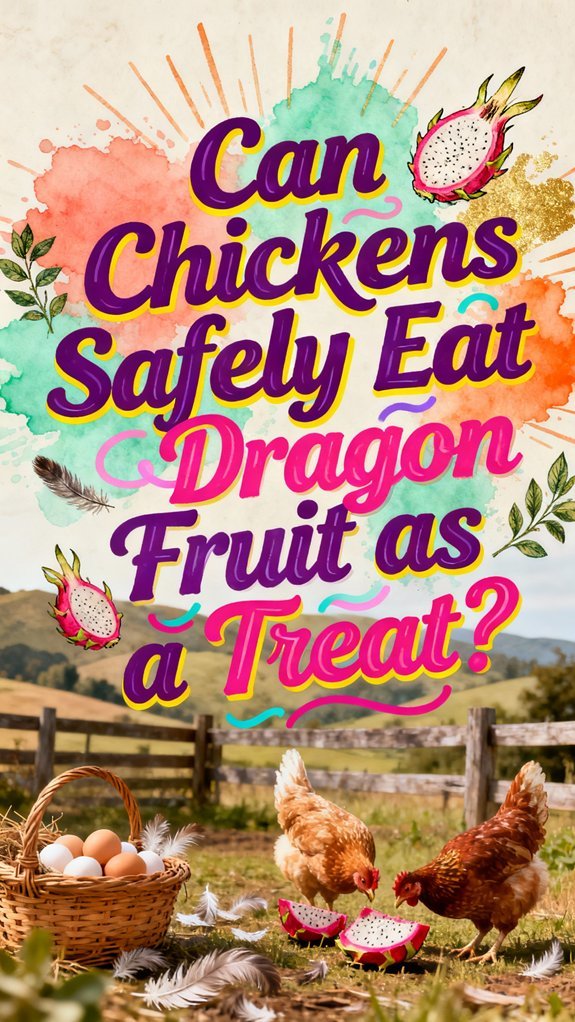
You can safely feed your chickens dragon fruit as an occasional treat. The fruit contains no documented toxic compounds and provides substantial nutritional benefits, including 56.91% dietary fiber and antioxidant-rich phenolic compounds that support gut health. Limit portions to 5–10% of daily intake, offered 2–3 times weekly, and always remove the skin before serving. Introduce it gradually to prevent digestive upset. There’s more to reflect on about preparation methods and monitoring your flock’s response.
Is Dragon Fruit Toxic to Chickens?
How concerned should you be about letting your chickens peck at dragon fruit? You can relax—dragon fruit toxicity remains among the most pervasive dragon fruit myths in poultry communities. Unlike avocado’s persin or cherry seeds’ cyanide content, dragon fruit contains no documented toxic compounds harmful to chickens. The fruit’s succulent nature initially raised safety questions, yet thorough research confirms it poses no poisoning risk. Additionally, many homemade chicken treats incorporate various fruits, highlighting the importance of diversifying their diet.
Avian veterinarians note no contraindications, and backyard chicken forums lack toxicity warnings despite widespread inquiries. Dragon fruit’s flesh is chemically distinct from genuinely dangerous foods like rhubarb (oxalic acid) or onions (thiosulphates). For chicken safety, you’re safe offering dragon fruit flesh in moderation. The absence of negative reports across permaculture and poultry forums, combined with expert consensus, confirms dragon fruit represents a nutritious, non-toxic treat option. However, it’s important to remove the skin before serving, as the outer layer presents more concern than the edible interior flesh.
Nutritional Content and Health Benefits
Now that you’ve confirmed dragon fruit’s safety for your flock, you’ll want to understand why it’s worth offering as a regular treat. Dragon fruit delivers considerable nutritional advantages through its 56.91% dietary fiber content, which mainly supports gut health and cecum development in broilers. The peel contains 36-39 mg GAE/100g phenolic compounds with powerful antioxidant properties that reduce lipid peroxidation. You’ll also benefit from its 10.36% protein and 4.48% fat composition, enhancing meat quality metrics. Research demonstrates that incorporating peel meal at 1.5% markedly improves carcass percentage, increases meat weight, and decreases abdominal fat while reducing microbial loads. The improved emulsion stability and cooking yield observed in chicken nuggets formulated with dragon fruit peel powder indicate enhanced processing efficiency for commercial poultry producers. These health enhancements make dragon fruit an evidence-based nutritional supplement for your poultry operation.
How Much Dragon Fruit Should You Feed Your Flock?
Determining appropriate dragon fruit portions requires balancing nutritional benefits against the risk of displacing your birds’ formulated feed, which should remain their primary caloric source. Limit dragon fruit to 5–10% of daily intake by weight—roughly 1–2 tablespoons (15–30 g) per standard hen per feeding occasion. For bantams, reduce portions to 1 teaspoon–1 tablespoon (5–15 g). Adjust upward slightly for large breeds while maintaining the 5–10% guideline. It is also important to consider incorporating balanced diet elements like grains and greens alongside treats. Notably, providing nutritious snacks such as dragon fruit in moderation is essential for preventing dietary imbalances.
Feeding frequency demands equal attention. Offer dragon fruit no more than 2–3 times weekly as supplemental enrichment to prevent overconsumption of natural sugars and maintain nutritional balance. This portion control strategy mitigates metabolic risks including hepatic lipidosis and obesity, particularly for birds confined in small runs without foraging opportunities. Monitor weight and egg production when introducing treats. Remember that layer feed should comprise approximately 90% of your adult chicken’s diet to ensure they receive essential nutrients and maintain optimal health.
Best Practices for Preparing Dragon Fruit
While dragon fruit’s nutritional benefits make it a worthwhile supplement, you’ll maximize safety and palatability by following proper preparation protocols from selection through serving. Start by choosing evenly colored fruit with slight firmness—similar to ripe kiwi—and wash thoroughly under running water before cutting. Your preparation techniques should minimize contamination: use sanitized knives and cutting boards, then employ efficient cutting methods like lengthwise halving and spooning out flesh to reduce handling. Cube or melon-ball pieces into uniform, bite-sized portions that prevent choking hazards. The edible tiny black seeds throughout the flesh are safe for consumption and provide additional nutritional value. Furthermore, feeding chickens spicy foods like dragon fruit can safely add variety to their diet as they are not affected by certain compounds found in fruits. Including fresh fruits like dragon fruit in moderation can also enhance the balanced diet needed for optimal chicken health, as it offers essential vitamins and minerals much like arugula does. Chickens, like Cuckoo Marans, thrive on a diverse diet that supports strong egg production. Additionally, remember to consider that certain fruits, including dragon fruit, can provide beneficial nutrients for chicken health. Serve chilled on clean trays and store any remainder in airtight containers at 4°C for two to three days maximum. Discard immediately if you notice off-odors, slime, or visible mold—never attempt salvaging compromised portions.
How to Safely Introduce Dragon Fruit to Your Chickens
Since dragon fruit’s high water content and novel nutrients differ markedly from your flock’s standard diet, you’ll need to introduce it gradually to assess tolerance and prevent digestive upset. Start with pea- to walnut-sized portions once every 3–5 days, choosing introduction timing when hens are calm—avoiding moulting, heat stress, or post-vaccination periods. Buff Orpingtons are particularly resilient in varying conditions, but it’s still important to ensure they are healthy before adding new treats. Interestingly, hens can occasionally lay two eggs in a 24-hour period, which highlights the need for balanced nutrition to support their overall health. Additionally, ensuring that dragon fruit is offered alongside other safe options—such as mold-free clover—can further enhance your chickens’ dietary variety. Mealworms, as a protein-rich supplement, can also be an excellent addition to your chickens’ diet when used alongside fresh fruits. Proper nutrition, including a complete feed, underpins their health and productivity.
Employ rigorous observation techniques throughout the 72-hour window following initial feeding. Monitor droppings for consistency changes, diarrhea, or color shifts. Track regular feed consumption over 24 hours, watching for sudden drops. Inspect for behavioral changes: reduced activity, ruffled feathers, or off-feed behavior signal intolerance. Document the vent area for staining or irritation indicating soft stools. Record date, quantity, and all observations meticulously for each bird cohort. Treats containing dragon fruit should not exceed 10% of your chickens’ overall daily diet to maintain optimal health and prevent nutritional imbalances.
Potential Digestive Issues and Side Effects
Dragon fruit’s benefits don’t come without considerations—the same components that enhance gut health can trigger problems if you’re not careful with portion sizes. High crude fiber content presents significant fiber risks, potentially decreasing nutrient digestibility and compromising growth performance. Excessive moisture and fiber levels can cause diarrhea and digestive upset in your flock. Additionally, tannins and compounds in the peels may reduce villus height in the duodenum, jejunum, and ileum, impairing nutrient absorption and intestinal structure integrity. You’ll want to introduce dragon fruit gradually and monitor your chickens’ droppings closely. Overfeeding produces loose stools, signaling that you’ve exceeded safe consumption levels. Adhering to recommended supplementation rates—typically under 1.5% of feed—helps you minimize these risks while maximizing benefits.
Dragon Fruit vs. Other Poultry-Safe Fruits
When you’re comparing dragon fruit to other common poultry treats, you’ll find distinct nutritional trade-offs worth considering. Dragon fruit benefits your poultry diet through lower calorie content (~11–13 g carbs/100 g) and moderate fiber compared to bananas and melons, which contain higher sugar levels. Apples offer superior soluble fiber for gut motility, while berries deliver denser antioxidants per weight. Melons excel at hydration but lack dragon fruit’s micronutrient profile. For your backyard flock, dragon fruit’s hydrating pulp, fiber content, and antioxidants make it particularly suitable as an occasional treat. Additionally, chickens can enjoy certain safe mushrooms, such as button and shiitake, which can provide supplementary nutrition. Dragon fruit also contains powerful antioxidants like betalains that protect cells from damage, offering immune support benefits similar to but distinct from other common treats. Additionally, fruits like dragon fruit can provide a range of vitamins, such as vitamins C and K, which contribute to overall chicken health. Chickens can also safely consume dandelions as a source of vital nutrients. Citrus fruits can safely be included in a chicken’s diet for additional immune support. While apples, berries, and melons are all poultry-safe options, dragon fruit provides a favorable nutritional balance that supports overall health without excessive caloric contribution to your poultry diet.
Signs of Adverse Reactions to Monitor
While dragon fruit offers nutritional advantages as an occasional poultry treat, you’ll want to monitor your flock closely for adverse reactions that can occur with any new food introduction. Watch for skin manifestations like hives or rashes, which indicate allergic reactions developing in susceptible birds. Gastrointestinal symptoms warrant immediate attention—observe for vomiting, diarrhea, and abdominal distress following consumption. You should also monitor respiratory signs including wheezing or difficulty breathing, as these suggest systemic involvement. Note behavioral changes such as lethargy, weakness, or decreased feed intake. Document any swelling around the head or facial areas. Similar to humans, cross-reactivity may occur if your birds have existing sensitivities to latex or other fruits, potentially triggering unexpected immune responses. If you observe multiple symptoms or severe presentations, discontinue dragon fruit immediately and consult an avian veterinarian to rule out anaphylactic responses or underlying sensitivities in your flock. Additionally, be aware that excessive consumption of certain fruits, including dragon fruit, can lead to digestive issues in chickens, highlighting the importance of moderation. It is also beneficial to incorporate nutritious herbs like oregano and garlic to enhance your flock’s overall immunity and well-being.
Storage and Food Safety Considerations
Proper storage and handling practices are essential to maintaining the nutritional integrity of dragon fruit and ensuring your flock’s safety when you offer it as a treat. Storage duration varies notably based on conditions: whole fruit lasts 3–4 days at room temperature or 7–14 days refrigerated. Keep fruit dry and separate from high-ethylene producers like apples to prevent premature ripening. Additionally, providing a variety of treats, like cornmeal, can help promote a balanced diet for your chickens. Chickens can benefit from nutritious treats like scrambled eggs, which are particularly useful during molting. Having access to clean water is also important for ensuring overall health and wellbeing in chickens.
For handling tips, refrigerate cut fruit immediately in airtight containers and use within 2–3 days. Use clean utensils when cutting to minimize pathogen introduction. Remove uneaten portions from feeders within hours to prevent spoilage and pest attraction. To further preserve quality, add a paper towel to your storage container to absorb condensation and maintain optimal freshness. Discard any fruit showing soft spots, off-odors, or mold due to mycotoxin and bacterial risks.