You’re worried your flock misses out under red bulbs, but here’s the thing: chickens actually see red just fine while you struggle. Their tetrachromatic vision spots wavelengths you can’t, plus red light penetrates their skulls to directly trigger egg-laying hormones without needing eyes at all. Obviously, this means blind hens still lay plenty. Switching to dim red reduces pecking and stress while boosting production. If you want calmer birds and more eggs, this setup is your smartest move. Stick around to learn exactly how to set it up.
Do Chickens See Red Light the Same Way Humans Do?
If you’ve ever stared at your flock wondering why they’re acting weird under that red bulb while you just see a dim glow, you’re not imagining things. You see red; they see red plus a whole UV perception spectrum you miss completely. Their eyes pack four cones, not your three, so that “dim” light hits their retinas harder. But here’s the kicker: they don’t even need their eyes for the full effect. That red wavelength slips right through skin and bone, triggering direct brain activation deep inside their skulls. You’re watching a biological hack unfold while sipping your beer. Obviously, this isn’t just about sight; it’s physiology. Your birds aren’t confused; they’re responding to signals invisible to you. This specific light boosts egg production without stressing them out, unlike brighter options. If you want healthier hens and more eggs without the drama, switching to red isn’t a guess—it’s science. Stop doubting the bulb and start trusting the biology. Your flock already knows what’s up. Unlike humans with trichromatic vision, chickens utilize tetrachromatic vision to detect ultraviolet patterns on feathers and objects that remain completely invisible to you.
Why Does Red Light Penetrate Chicken Skulls So Well?
You’re staring at that red bulb wondering how a glow barely visible to you cuts straight through a chicken’s skull like it’s made of glass. Here’s the thing: red light travels on long wavelengths, roughly 620 to 750 nanometers, which slip past feathers, skin, and bone much easier than short blue waves. Think of it like bass notes punching through walls while high pitches get stuck. This superior skull penetration lets photons reach deep brain targets, specifically the hypothalamus and pineal gland, completely bypassing the eyes. Once inside, that light triggers direct hormonal modulation, flipping switches for reproduction and growth without needing visual processing. Obviously, blue or green light just bounces off or gets absorbed too soon to do this heavy lifting. So, if you want those internal receptors firing efficiently, red isn’t just a color choice; it’s the only key that fits the lock. Go ahead and make the switch.
Can Red Light Trigger Egg Production Without Eye Contact?
Since you’ve probably spent nights wondering if your hens are just ignoring the lights you installed, let’s cut straight to the weird science that actually fixes it. You don’t need their eyes working at all. Birds possess extra retinal photoreceptors deep inside their brains, and red wavelengths penetrate right through the skull to hit them directly. This triggers immediate hormonal stimulation, kicking off estradiol production without any visual input. Obviously, this means even blind hens lay more eggs under red LEDs, hitting nearly 91% production versus 87% with white light. You’ll see them start laying earlier and maintain peak numbers longer, averaging 345 eggs yearly. It’s not magic; it’s biology bypassing the retina entirely. So, if you want maximum yield without stressing your flock, skip the bright whites. Just flip that red switch and watch your coop transform overnight.

🛡️【Superior Motion-Activated Security & Safety】: Experience peace of mind with advanced motion sensor technology. The light automatically turns on at dusk and illuminates at full brightness when motion is detected within 10 feet, scaring away pests and intruders, then reduce brightness automatically, conserving energy.

【DaToo Infrared Heat Lamp】: Still looking for an efficient and safe heat lamp for chickens, the DaToo 150W Infrared Heat Lamp will be your perfect choice! This heat lamp has a powerful heating capacity and is widely used in brooder coops, food service, pets, reptiles and amphibians. Adopting high temperature and oxidation resistant double helix tungsten filament, energy-saving and efficient, perfect for creating a warm and comfortable resting place for pets.
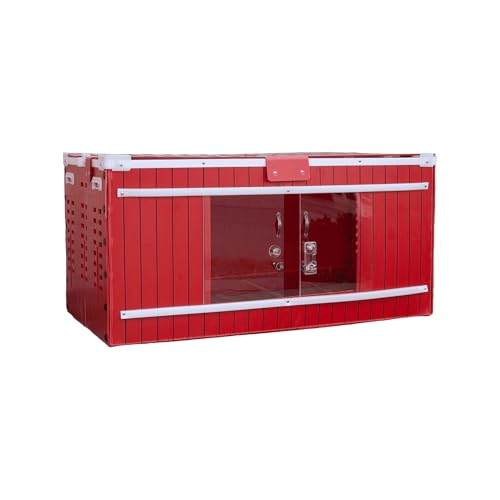
RentACoop Has a Solution! Our foldable Big Red Barn Brooder comfortably raises 10+ chicks for their first 6 weeks. Sets up in minutes, tool-free assembly, includes an LED Light with 3 color settings, liners for every stage. Perfect for chicks, turkey poults, ducklings, quail, other poultry
When Should You Switch Chicks From Blue to Red Light?
Although you’ve probably been staring at that bright blue heat lamp wondering if it’s keeping your chicks awake instead of warm, here’s the thing: you need to swap it out before those little feathers fully pop. You’re right to worry about that harsh glare disrupting their sleep cycles. All right, let’s fix your heatlight timing. Switch to a red bulb around week four as feather development accelerates. Red light provides essential warmth without blinding brightness, protecting natural rest rhythms while you gradually lower temperatures. Obviously, fully feathered birds need less help by week six. Watch their behavior; if they aren’t huddling, they’re ready. This shift supports healthy growth without the stress of constant bright light. Don’t wait until they’re shivering or sleep-deprived. Making this switch now guarantees your flock develops strong, calm habits early. It’s a simple change that makes a huge difference for your growing birds. Remember that sudden darkness causes panic and mortality, so any transition to darker conditions or night cycles must be gradual to reduce stress and improve overall flock health.
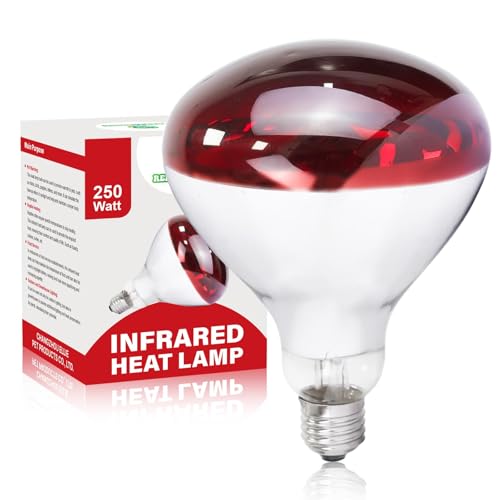
【Efficient heating】 REPTI HOME R125 infrared heat lamp for chicken, can heat up quickly and evenly. 250W power provides powerful heat output for your pets. it ensures that your chicks get enough warmth in cold conditions.

[2 Pack 250W Heat Lamp Bulbs] Power: 250W, Style:spiral, Voltage: 110V-130V, Lifetime: >8000h, Socket: medium E26 standard base, Length: 4.85 inch / 12.3 cm, Diameter: 4.92 inches / 12.5 cm

Efficient Heating : REPTI HOME 250W infrared heat lamp is mainly used for chicken coop brooder, pets and small animal. This heat lamp for chickens provides powerful heating power, and the rapid heating feature ensures that they get enough heat in cold environments
How Does Red Lighting Reduce Pecking and Aggression?
If you’ve ever walked into the coop to find a hen looking like she lost a fight with a lawnmower, you know that feather pecking isn’t just messy; it’s a nightmare you can’t ignore. Red light fixes this by masking blood and skin tones, so your hens don’t see those tempting red targets. Studies show red wavelengths cut aggressive pecking by 30% compared to white light. It’s simple physics: the specific pe wavelength aggression reduction makes wounds invisible, stopping the cycle before it starts. Now, combine that color with dim lighting protocols. Keeping intensity low at 5-10 lux lowers cortisol and calms the flock during feeding. Obviously, bright lights cause tension, but a soft red glow creates a tranquil atmosphere. This isn’t just theory; it’s a proven way to protect your birds. Switching to red makes choosing peace over panic an easy, smart decision for your coop.

【Novique Infrared Heat Lamp】: Still worried about your pets and poultry shivering in the cold at night? Choose the Novique 250W infrared heat lamp to instantly provide your pets and poultry with a warm and comfortable environment. Beyond that, this lamp offers excellent heating performance, extended lifespan, natural light illumination, and wide application. Choose Novique to keep your pet warm at all times.

HIGH-PERFORMANCE 250W INFRARED HEAT LAMP – This 250-watt R40 bulb emits focused infrared heat for food service, bathrooms, saunas, and animal habitats, with 2700K warm white light and 100 CRI.
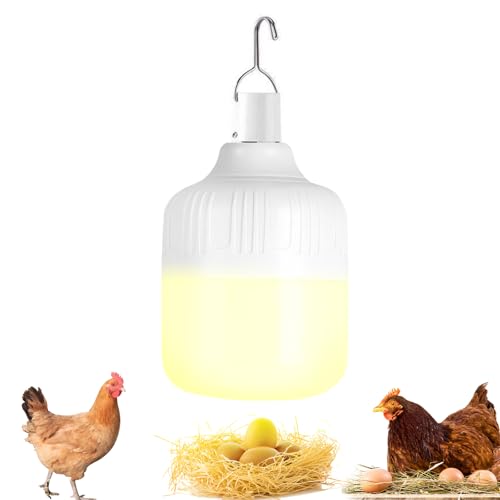
*Gentle 3000K Warm Light**:Soft yellow illumination creates a calming environment for poultry without disrupting natural routines. No harsh glare for animal comfort.
What Wattage Red Bulbs Work Best for Small Coops?
When you’re staring at a wall of heat lamps wondering which wattage won’t cook your chicks or leave them shivering, it feels like guessing games nobody asked for. Here’s the thing: 250-watt red bulbs are your standard go-to for small coops, especially if you’re brooding in unheated sheds during chilly months. They deliver intense heat that small flocks genuinely need. However, if your space stays around 65 degrees, drop down to 125-watt clear bulbs instead. Your wattage selection really depends on ambient room conditions, not just flock size. Obviously, you need proper heat distribution so chicks can move away if they get too toasty. Don’t overthink it; match the bulb to your specific environment. If you’re in a drafty barn, grab the 250-watt option and rest easy knowing your birds stay warm without frying.
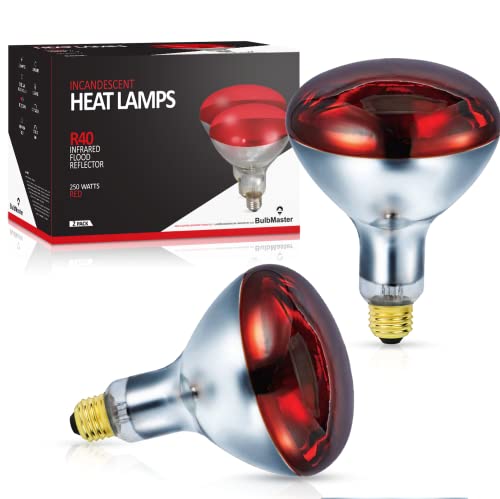
BULBMASTER - This R40 Red Reflector is a 250 Watts, 120 Volts, Red Heat Lamp With Infrared Light Medium E26 Base

1.This 250W red infrared heat lamp use standard E26 socket.It is suitable for most standard size lamp holders.The voltage is 120v, easy to install.

Efficient 250W Heat Lamp for Chickens & Pets: Provides powerful, rapid warmth for chicken coops, brooders, and small pets; Ensures a comfortable environment in cold weather for healthier growth
How Far Should You Hang Red Heat Lamps From Chicks?
Since you’re already wrestling with wattage choices, hanging that red heat lamp too low is the next mistake waiting to turn your brooder into a disaster zone. You don’t want crispy chicks, right? Start your 250-watt bulb at least 24 inches high for week-old babies. Obviously, bedding safety matters immensely, so keep that flame source a full foot above any shavings to prevent fires. If your little ones huddle directly underneath, raise the lamp; if they flee the center, lower it slightly. You’ll adjust this heat lamp height weekly as they feather out, aiming for that sweet 95-degree spot. Remember, deeper bedding demands extra clearance. Don’t guess with their lives; measure the floor temperature and watch their behavior closely. Getting this distance right now saves you heartache later, so grab that chain and hang it smartly today. Most setups use a chain to allow vertical adjustment for precise temperature control as chicks grow.

Red Light Therapy Device: Wavelength range of 600-1400 nm, infrared light lamp can penetrate deep skin, It can effectively relieve muscle tension and sore

Westinghouse Heat Lamp Flood 250 watts R40 Red

HIGH POWER FLOOR INFRARED LAMP,Infrared light using 275W high-power bulb,temperature can be adjusted freely,You need to sit at least 19” away from the heat lamp. Do not touch an infrared heat lamp when hot.
Can You Use Red Headlamps for Night Coop Checks?
You’ve got that heat lamp hanging just right, but now you’re dreading the midnight panic check where flipping on a bright white light turns your calm flock into a feathered mosh pit. Here’s the thing: chickens barely register red wavelengths at night because their cones ignore them while brain photoreceptors stay chill. You can slip in quietly with a red headlamp, seeing everything without triggering their alarm systems or spiking activity levels. This approach masters night‑check ergonomics by letting you work efficiently while birds stay roosted. Obviously, white bulbs cause chaos, but red keeps welfare intact since long wavelengths pass through skulls without waking them up. Prioritizing red headlamp safety means avoiding blue spectra that look blindingly bright to hens and invite pecking. You won’t disrupt sleep cycles or reproductive rhythms either. So, if you want stress-free inspections that respect your flock’s biology, grab that red gear tonight. It’s the smart, quiet move for any serious keeper who values calm chickens over bright flashes.
Why Does Dim Red Light Improve Flock Sleep Quality?
Although you might think any dim light works for midnight checks, blasting your flock with white bulbs actually hijacks their brain chemistry and kills their sleep quality. Here’s the thing: red wavelengths penetrate skulls forty times better than other colors, reaching deep brain receptors directly. This unique access triggers essential sleep hormone modulation without waking your birds visually. You avoid spiking stress levels because red light bypasses ocular overstimulation entirely. Instead, it supports natural melatonin production, ensuring your hens rest deeply rather than panicking in the dark. Obviously, disrupting this cycle hurts egg laying tomorrow. By choosing dim red, you align their circadian rhythms perfectly, mimicking natural sunset cues that white bulbs simply can’t match. Your flock stays calm, healthy, and productive while you perform necessary checks. Stop guessing and switch to red tonight for immediate, peaceful results your chickens desperately need right now.