If your hens are laying thin-shelled eggs or seem sluggish and grouchy, insufficient sunlight is likely the culprit. Your chickens need 15–30 minutes of direct UV-B exposure daily for bone health, plus 14–16 hours of total light to keep laying cycles running strong. Artificial light helps, but it can’t fully replace what the sun delivers. Get this right, and everything else — stronger bones, better eggs, calmer birds — starts falling into place naturally, as you’ll soon realize.
Do Chickens Really Need Sunlight?
If you’ve ever watched your chickens huddled miserably in a dim coop and wondered whether sunlight actually matters or if it’s just a “nice to have,” here’s your answer: it absolutely matters, and skipping it has real consequences. Without sunlight, your flock can’t produce Vitamin D properly, which tanks egg production entirely and weakens their bones over time. Here’s the thing — featherpecking prevention is directly tied to light exposure too. Stressed, sun-deprived chickens turn aggressive fast. Now, you don’t need a perfectly designed outdoor setup right away. But you do need a plan. Obviously, some sunlight beats none every single time. Give your flock consistent outdoor access, and you’ll immediately notice calmer behavior, better laying, and healthier birds overall.

🐓【3-Color Dimmable Lighting & 4 Brightness Options】 This solar-powered chicken coop light offers three adjustable lighting modes—Daylight White + Warm White, Daylight White, and Warm White—plus four brightness levels to create a a soothing, glare-free environment for your flock. this lamp provides calm and comfortable illumination that supports your poultry’s natural rhythms—no harsh lighting, just happy chickens.

Provides up to 8 hours of reliable illumination after solar charging, offering dependable lighting for homes, emergencies, power outages, and outdoor activities.
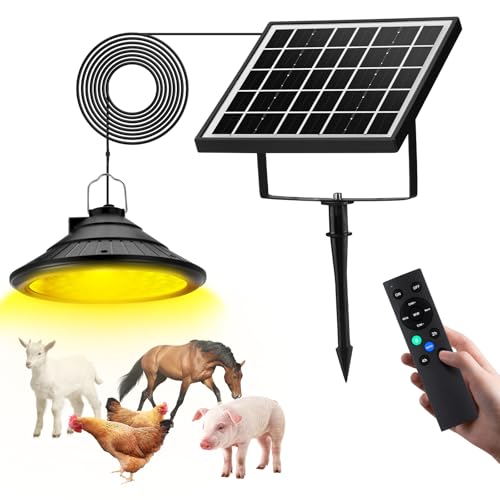
【Three-color dimmable light & four brightness levels】Solar-powered chicken coop lamp has three different lighting modes:White light+Warm white light,White light,Warm white light;Meanwhile, four different brightness levels create a soft and calming environment for poultry without harsh glare.
How Sunlight Builds Strong Bones in Chickens
That sunlight-equals-better-laying connection you just read about? It goes deeper than eggs. Here’s the thing — your chickens’ bones are literally built on UV metabolism. When sunlight hits their skin, 7-dehydrocholesterol converts to vitamin D3, which then drives calcium straight into bone matrix. No sun, no conversion. Simple as that.
Now, bone remodeling in chickens isn’t passive. It’s an active, ongoing process requiring consistent vitamin D supply. Without 15–30 minutes of daily direct sunlight, you’re looking at rickets, deformed keels, brittle bones — real problems, not hypothetical ones. Obviously, nobody buys chickens hoping for fractures.
You want 25-hydroxyvitamin D above 80 nmol/L. Sunlight gets you there. Supplements can help, but nothing replaces the real thing. Get them outside.
How Much Sunlight Do Chickens Need Each Day?
So you’ve nailed the bone science, but now you’re probably wondering how much outdoor time actually moves the needle — and honestly, that’s the right question to be asking before you finalize your setup. Here’s the thing: your hens need around 14 to 16 hours of daily light to hit peak production. That’s light timing doing the heavy lifting. Now, obviously you can’t control the sun, but you can control run access during daylight hours. Get your flock outside consistently, and you’re already covering their baseline needs. Feather growth and overall health both respond well to regular natural exposure. All right — once you’ve got a solid outdoor routine locked in, supplemental lighting becomes a much simpler decision to make.
How Sunlight Controls Egg Production in Hens?
Here’s the thing — your hen’s egg production runs on photoperiod regulation. Light enters through her eyes and skull, triggering retinal photoreceptor activation in the hypothalamus. Those photoreceptors signal the pineal gland, which sends hormones straight to the ovaries. No light signal, no eggs. Simple.
Now, the chain goes deeper. Light stimulates neuropeptides that drive yolk formation, ovulation, and shell development. Shorter days literally shut that entire system down.
You’re not guessing anymore — you’re working *with* her biology. That clarity alone makes every lighting decision you make going forward feel obvious. Hens require around 14 hours of light daily before their reproductive cycle will even begin.
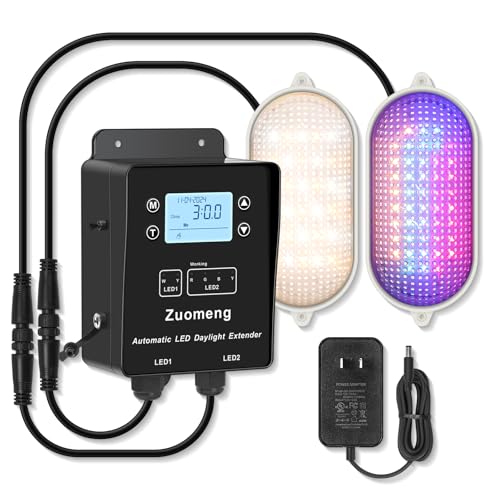
Stable Egg Production in Any Weather – The Zuomeng 2024 upgraded LED daylight extender provides six light colors (natural white, warm white, red, blue, yellow, green) to support chickens of all ages, helping maintain healthy growth and steady egg output even in colder months. (Patent pending)
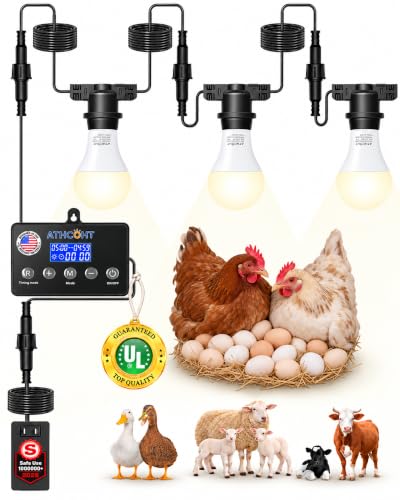
【Enhanced Egg Production】Extends perceived daylight hours to boost winter laying, giving hens ample light even in cold and rainy weather.

Dusk to Dawn Sensor & Timer Function: 1.Solar light will auto charge during the day, and auto light up at night. 2, Press 3H/5H/8H button,light will last 3/5/8hours every night then turn off, with a memory function, it will light up at dusk and last 3/5/8hours on the next days.
Does Sunlight Kill Bacteria in Your Chicken Run?
If your chicken run stays damp and shaded most of the day, you’re basically running a five-star hotel for bacteria — warm, moist, and protected from the one thing that kills them for free.
Here’s the thing — direct sunlight wipes out *M. tuberculosis* rapidly and destroys staphylococci within 70 minutes of unfiltered exposure. UV filtration through materials like Perspex blocks UV-B rays between 280–315 nm, which is exactly the range triggering photodegradation effects that destroy pathogens.
Now, design matters. Leave most of your run roof open with wire covering. Only shade the dust bath and feeding areas. East-west orientation maximizes all-day exposure.
Obviously, you can’t control the weather — but you absolutely control your run’s design. Make sunlight do the heavy lifting for you. Consistent daily sun exposure can drive up to 99% disease reduction across your flock by inhibiting bacteria, viruses, and fungi before they ever take hold.

【Clear Heavy Duty Tarp Thickened Material】The clear see-through chicken run cover is made of 8mil thick vinyl material,The tarpaulin features rust-resistant grommets spaced evenly along the edges,We upgraded the clear tarp edge stitching process of the transparent tarpaulin to a hot-melt process,Whether you need to cover your chicken coop, protect your outdoor furniture, or use it for rainproofing your garden, etc. it's up to the task.

90% Sunblock Shade: The black chicken coop cover is constructed from high-density polyethylene, capable of blocking approximately 90% of light and sunlight. This durable material protects poultry from sunburn. It permits a small amount of light and moisture to pass through without obstructing natural light, providing a cooler environment during the hot summer, supporting healthy plant growth, and offering excellent resilience and durability.

【Transparent Waterproof Tarpaulin】: You will receive 1 pieces of 4x6 ft rainproof tarpaulin and a 33ft windproof rope and 20 Zip Ties. Clear tarps heavy duty waterproof are made of high-quality vinyl plastic with heat-sealed reinforced edges for superior tear resistance. Whether you need to cover your chicken coop, protect your outdoor furniture, or use it for rainproofing your garden, etc., it's up to the task.
How Sunlight Regulates Chicken Sleep, Molting, and Activity
Sunlight isn’t just lighting up your yard — it’s running your chickens’ entire internal clock. Here’s the thing: without consistent natural light, your flock’s circadian rhythm falls apart fast. The pineal gland reads incoming light signals and releases melatonin accordingly, triggering sleep, molting, and laying cycles automatically. Under 14–17 hour photoperiods, melatonin stays rhythmic. Under continuous artificial light? It flatlines completely.
Now, molting is where you’ll really notice problems. Shorter days trigger feather loss naturally — that’s your flock’s built-in reset. Hens won’t resume laying until daylight exceeds 12 hours again.
Activity suffers too. Chickens under longer continuous light rest more and move less, which sounds relaxing until you’re dealing with weaker birds. Twelve to sixteen hours keeps everything balanced.
Signs Your Flock Isn’t Getting Enough Sunlight
When your chickens aren’t getting enough sunlight, they’ll tell you — just not with words. You’ll notice it in the eggs first. Thin, fragile eggshells mean their Vitamin D levels have tanked, and calcium absorption is suffering. That’s your clearest signal.
Now watch their behavior. Increased pecking, grouchiness, and huddling indoors aren’t personality quirks — they’re stress responses from disrupted circadian rhythms. Here’s the thing: a flock avoiding sunny spots in the run is practically waving a red flag at you.
Physically, soft bones and mobility issues follow prolonged deficiency. Egg production drops noticeably below fourteen daily light hours. Rooster breeding efficiency also declines when the flock isn’t receiving adequate light exposure.
Obviously, you can’t fix what you don’t recognize. Spotting these signs early makes solving the problem genuinely straightforward.


Adjustable Temperature Control – The chicken coop heater has a temperature range of 59–90℉ (15–32℃). Easily adjust the temperature to suit your needs. Once the chicken heat lamp reaches the set temperature, it maintains a constant warmth to keep your pets comfortable

✨Upgraded Chicken Coop Heater: The QRQ design team adheres to the concept of caring for animals and protecting their healthy growth. It has developed this chicken coop heater lamps with independent switches for your pets. It integrates heating, supplementary lighting, and timing, providing your chickens with gentle heat and ultraviolet rays necessary for growth. It makes your pet raising activities easier. And it can be widely used in small animals such as cats, dogs, birds, lizards, turtles, snakes, etc.
What Happens When Chickens Don’t Get Enough Light?
Light deprivation hits your flock harder than most keepers expect, and the consequences stack up fast. Here’s the thing — reduced immunity, feather quality issues, and diet light deficiency don’t announce themselves loudly. They creep in quietly while you’re wondering why your egg numbers tanked.
Without adequate light, your hens experience hormone imbalance that triggers reproductive delay, activity decline, and noticeable behavior changes. Vitamin D production drops, which weakens bones and dulls feather quality fast. Stress levels climb because disrupted circadian rhythms affect everything, including eye health and overall mood.
Now, your pituitary gland conversation gets complicated — less light means fewer hormonal signals reaching the ovaries. Obviously, fewer signals means fewer eggs. Your flock isn’t being lazy. They’re running on empty.
Coop and Run Features That Maximize Safe Sun Exposure
Now that you know what light deprivation costs your flock — weak bones, tanked egg production, stressed birds running on empty — the obvious next move is making sure your coop and run actually work with the sun instead of against it. Here’s the thing: it’s not about blocking all sunlight. It’s about managing it smartly. Reflective roofing — think white-painted metal panels — keeps interiors dramatically cooler without sacrificing brightness. Pair that with proper shade ventilation: windows positioned high, facing multiple directions, covered with hardware cloth so fresh air actually moves through. Orient your coop east or southeast. Morning sun? Great. Brutal afternoon rays? You’re deflecting those. Add shade sails, angle them toward midday sun, and you’ve built a setup your flock will actually thrive in.

10 PANELS, 105 SQ FT: Ten clear polycarbonate trapezoid corrugated sheets, each 72" L x 21" W (10.5 sq ft per panel before overlap), enough for a small patio cover, greenhouse roof or under-deck drip barrier. Fasteners sold separately.

FRP daylighting board is a material with high impact resistance, insulation, and lightweight

Wide Application: Aluminum flashing rolls usually are placed around discontinuities or objects which protrude from the roof of a building, such as pipes, chimneys, or the edges of other roofs. Also,It is suitable for home projects, DIY crafts and more