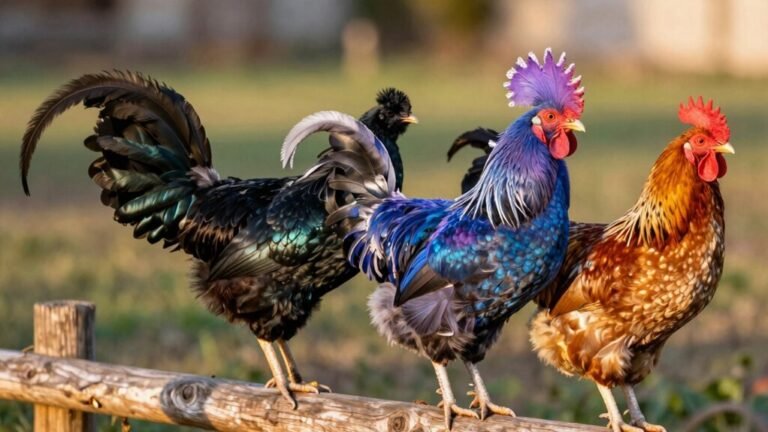
Your chickens aren’t running away — they’re chasing better food, more space, and anything more interesting than what’s back home. If your yard’s bare, boring, and full of gaps, you’re basically pointing them toward the exit. The good news? A few smart fixes — better fencing, enrichment, and a proper run — stop most wandering fast. Stick around, because there’s a lot more to unpack about keeping your flock safe, happy, and exactly where you want them.
Why Do Chickens Wander Away From Home?
Chickens don’t wander because they’re rebellious or poorly trained — they wander because they’re doing exactly what chickens are built to do. Here’s the thing: their natural foraging instinct drives them to scratch, peck, and roam constantly searching for a varied diet packed with bugs, worms, and vegetation. Obviously, a bare yard can’t compete with a neighbor’s lush garden.
Now, when your yard lacks foraging spots, perches, or dust baths, your chickens notice. Boredom kicks in fast. They’ll hop fences, explore roads, and raid flower beds without a second thought. Feather loss from stress and poor nutrition pushes them even further from home.
You’re not dealing with problem birds — you’re dealing with under-stimulated ones. Understanding that changes everything about how you keep them home.
Is Your Yard Setup Pushing Your Chickens to Escape?
Before blaming your birds, take a hard look at what you’ve actually built for them. Here’s the thing — your yard layout might literally be inviting escapes. Gaps in fencing, weak chicken wire that buckles under predator exposure, and no underground barriers are rookie mistakes that cost you birds daily.
Obviously, chickens bolt when they’re scared, bored, or hungry. If your coop sits near the fence edge, you’re practically pointing them toward the exit. No overhead netting? Now you’ve got a flight path. Sparse interior space with nothing interesting inside? They’ll find something interesting outside.
Fix the setup first. Bury wire mesh, secure every gap, and position your coop centrally. Suddenly, escapes drop dramatically — and you’ll wonder why you waited. For serious containment, consider going up to 10-foot fence height with 2×4 wire to eliminate any realistic chance your birds have of clearing the perimeter.
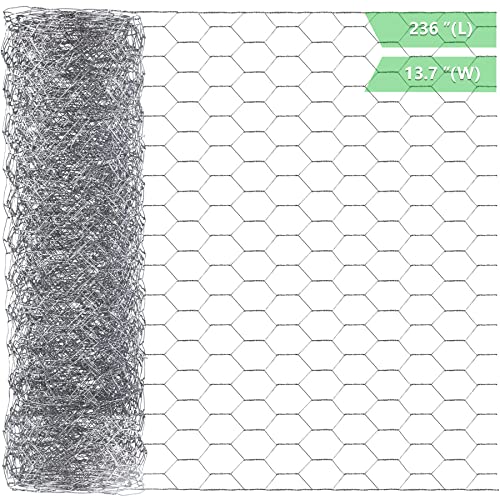
【Large Size】Each mesh is 13.7 inch (width) x 236 inch (length) / 0.35 m x 6 m, 0.8 x 1.38 inch mesh. Wire fencing is long and wide enough to enable you to cut off any shape that you need

High-Quality Anti-Rust Process This hardware cloth is made from high-strength low-carbon steel wire, combining excellent strength with flexibility. After precision welding, the entire product undergoes a premium anti-rust treatment—hot-dip galvanization—with special reinforcement at all seams and corrosion-prone areas to ensure uniform, dense coating and outstanding rust resistance. This process grants the product superior weather resistance, making it an ideal choice for wire mesh fencing and long-term outdoor applications.

[CUTTABLE, SPLICEABLE] Chicken wire mesh measures 16.9 inches x 32.8 feet, which is suitable for large areas. Galvanized chicken wire is soft and flexible but stronge. It is bendable and easy to cut. You can also join mesh together if the height is not enough. Chicken wire fencing is double hot-dip galvanized for maximum rust protection and longer life. Designed with double twist hexagonal, chicken fence is more durable and less likely to break
What Happens to Chickens That Roam Unsupervised?
So you’ve patched the gaps, buried the wire, and repositioned your coop — good. But here’s the thing: unsupervised chickens face serious predation vulnerability the moment they cross your property line. Coyotes, hawks, foxes — they’re not waiting for an invitation, and they move faster than you can react.
Now, obviously, foraging benefits are real. Your chickens find bugs, scratch instinctively, and genuinely thrive with space to explore. Feed costs drop. Birds stay active and happy.
All right, but here’s the honest trade-off: unsupervised free-ranging consistently reduces flock numbers over time. Multiple predator species operate around the clock, compounding losses gradually.
You already know the risk exists. The question is whether your current setup minimizes it enough to protect what you’ve built. In fact, high chick mortality is so common among unsupervised flocks that hens instinctively compensate by producing large clutches of eggs just to ensure a few survive.
How a Chicken Run Keeps Your Flock Safe and Happy?
Now, flock happiness comes down to enrichment. Scatter some seeds in the bedding. Hang a feeder. Toss in a fallen branch. Obviously, chickens aren’t complicated — they just need enough stimulation to stay curious instead of stressed.
All right, bottom line: a properly built run with secure hardware cloth, shade coverage, and regular maintenance isn’t a luxury. It’s the smart, low-regret choice you’ll thank yourself for making.
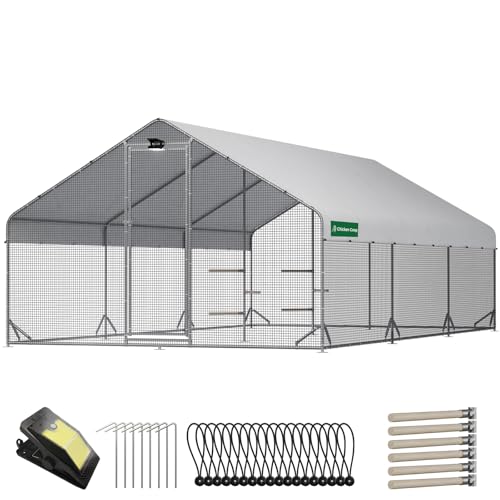
THREE-ROOM WALK-IN CHICKEN RUN: Measuring 19.5 x 9.8 x 6.5 ft, this metal chicken coop features three connected sections for a larger flock. The full-height entrance provides convenient access for feeding, cleaning, and everyday poultry care.

Material and size: The size of the hardware cloth is 16 inch×50 ft and 1/2 inch×1/2 inch thickness, adopt 19 guage hot-dipped galvanized material

Galvanized After Welding: Hot-dip galvanized after welding coats every welded joint, so the heavy duty mesh resists rust and breakage far longer than pre-galvanized wire in rain, soil, and sun.Thicker wire builds a sturdier fence that resists bending and animal push-through
What’s the Easiest Way to Stop Chickens From Wandering?
Keeping chickens from wandering feels like herding cats — they’ve got their own agenda, and your yard boundaries mean absolutely nothing to them. Here’s the thing: the easiest fix isn’t one giant move, it’s layering small wins together. Start with your visual coop placement — move it away from restricted zones and anchor feeding stations right beside it. You’re basically rewiring their daily routine without a fight. Now, perch‑blocking matters more than you’d think. Use sheet metal cones on poles and eliminate distant trees they’d otherwise claim as outposts. Add flashy pinwheels near boundaries and supervise them just before dusk when they naturally want to head home anyway. You’re not controlling chickens — you’re just making home the obvious, easiest choice. Installing a pecking garden with netting along range edges gives chickens a reason to stay close, since they strongly prefer pecking at live, growing plants over wandering in search of them.
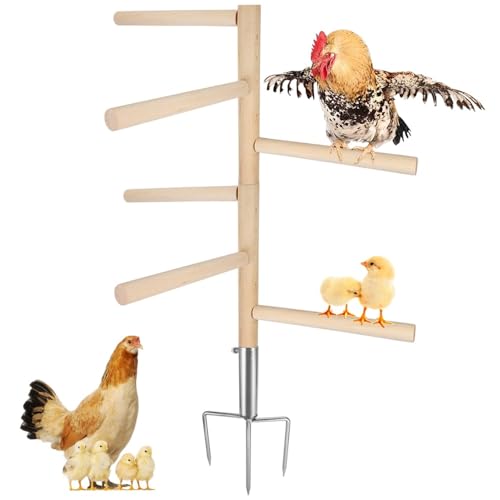
【Premium Durable Materials】: Made of ultra-hard beech wood & rust-resistant stainless steel tripod base, outperforming flimsy pine perches. Withstands heavy use by all chicken sizes.

EASY INSTALLATION: with the included hardware, screw it to the walls inside your coop and you're done.

Safe and Solid Material - Vehomy Chicken ladder perch is made of natural solid pine wood, safe to peck and play on it for chickens. With special sturcture, it is enough stable to support at least 30lb.