You’re staring at a hen glued to her nest, frustrated by that stubborn three-week hormonal lockup. Normally, this cycle lasts about 21 days, driven by prolactin and daylight, though heavy breeds like Silkies might linger longer. If you don’t want chicks, break it fast: remove eggs, block the box, or isolate her on a cool wire floor for two days. Obviously, this stops the behavior, but it’s tough on the hen. If you’re ready to manage the timeline or stop it completely, the next steps make that choice simple.
Identifying Broody Chicken Behavior Signs
Even though you love your flock, nothing frustrates you quite like walking out to the coop and finding a hen who’s turned into a feathered bouncer, guarding an empty nest like it holds the crown jewels. She puffs up, growls low, and might even peck your hand if you get too close. Obviously, she’s gone broody. You’ll notice her chest feathers are missing, her comb looks pale, and she barely leaves to eat. These aren’t random mood swings; specific broody triggers like long daylight hours or hidden nesting preferences often spark this instinct. She might steal eggs or sit overnight without laying. Now, don’t panic. Recognizing these signs early saves you headache later. Once you spot that intense blank stare or smell those notorious massive droppings, you know exactly what’s happening. Understanding this behavior makes breaking the cycle much simpler for everyone involved.

Nesting Boxes – Provide a natural, comfortable, and safe environment for the poultry during egg laying
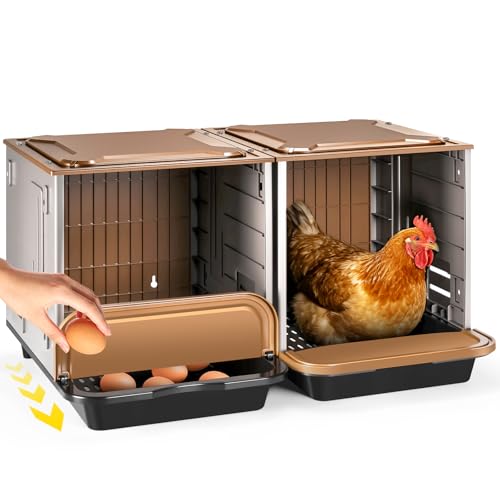

3-Compartment Design: This chicken nesting box features three separate laying compartments, providing private, comfortable spaces for multiple hens to lay eggs simultaneously. Each independent nest can be freely arranged to suit your coop layout, while the built-in perch offers extra resting support for your poultry.
How Long Does a Natural Broody Cycle Last?
Since you’re probably staring at that stubborn hen wondering if she’ll ever snap out of it, let’s cut straight to the timeline so you can plan your next move. Typically, she stays broody for about three weeks, matching the exact time needed to hatch fertile eggs. Her internal clock usually ticks down those twenty-one days before she naturally quits if no chicks appear. However, strong broody hormones can sometimes trick her into sitting much longer, especially during a peak seasonal cycle like spring. You might see some hens persist for months if their individual instinct runs deep. Obviously, daylight length and prolactin levels drive this fixation hard. While most resume laying within a month after breaking, others need extra recovery time. Don’t panic if she ignores you; nature often fixes this alone. Just monitor her weight closely while she sits tight on that empty nest.
Which Chicken Breeds Are Most Prone to Broodiness?
Five breeds consistently top the list when you’re hunting for a hen that won’t quit the nest, and knowing this saves you from guessing which bird will actually sit. You’re tired of empty nests, right? Well, broodiness genetics heavily favor Silkies, Cochins, Buff Orpingtons, Brahmas, and Sussex hens. These girls possess a breed temperament that screams “motherhood.” Silkies hatch anything, even golf balls, while fluffy Cochins act as natural incubators. Buff Orpingtons balance laying with sitting, whereas giant Brahmas offer calm reliability. Sussex hens shine in warm weather. Obviously, small Silkies cover fewer eggs than massive Brahmas, so pick wisely. If you want a foster mom who never quits, these are your champions. Don’t overthink it; just grab a Silkie or Cochin if you need guaranteed chicks today. Your hatching success starts here.

【Temperature & Humidity Control】Built-in sensors automatically maintain stable hatching conditions, external automatic water refilling and air vents keep humidity levels constant, and the 360°air circulation system eliminates hot/cold spots


Automatic Egg Turner: Our chicken egg incubator is equipped with an advanced automatic egg turning mechanism that gently rotates the eggs, mimicking the natural turning behavior of a mother hen, enhancing the hatching success rate and ensuring healthy chicks. After entering the incubation period, the egg turning will stop automatically on the third day before the end.
What Is the Day-by-Day Egg Hatching Timeline?
How exactly does a tiny speck turn into a chirping chick under your hen’s feathers? You watch days one through three as the heart beats and legs form. By day seven, those fragile blood vessels glow bright when you candle. Don’t panic; understanding egg incubation patterns helps you spot real trouble versus normal growth. Days eight to fourteen bring claws, beaks, and rapid down growth. Your hen knows hatchery logistics better than any machine, positioning the head right by day fourteen. Lockdown hits day eighteen, so stop turning eggs immediately. The chick absorbs its yolk and breathes inside the shell by day nineteen. Finally, that little beak pips the shell, zipping around until freedom arrives day twenty-one. It’s a wild ride, but your broody hen handles the heavy lifting while you just wait enthusiastically.

【STABLE TEMPERATURE】: The circulating airflow system driven by a strong fan provides a stable temperature condition for the eggs.

【STABLE TEMPERATURE】: The circulating airflow system driven by a strong fan provides a stable temperature condition for the eggs.

【Constant Temperature & Humidity Control】The chicken incubators for hatching eggs LED display screen allows for easy temperature setting and reading in Fahrenheit, enhancing convenience to maintain perfect conditions, ensuring reliable and consistent hatch success with minimal effort. No need to buy additional temperature hygrometer meter to monitor incubator.
When Should You Remove Unfertile Eggs During Incubation?
Why waste weeks watching a hen sit on a dud? You’re frustrated, and honestly, it’s pointless. Candling timing is your best friend here; check those eggs between days 7 and 14. If you see clear shells by day 10, that egg’s definitely infertile. Don’t wait longer because embryo viability drops fast, and degeneration messes up your assessment. Remove those bad eggs immediately to stop bacterial growth from spreading to healthy ones. Obviously, you don’t want explosions or rot in your nest. Retest unsure eggs later if you’re doubtful, but act fast on confirmed dead germs. This mimics what a smart broody hen does naturally. All right, so pull those duds out early. It keeps your hatch clean and safe. Now you know exactly when to clear the clutter for a successful brood.

UPGRADE DESIGN:This candler can be used directly after charging without plugging in which is easy to carry and can be used indoors or outdoors.

<1>Egg Candler Tester light Egg Candler Tester Candling Lamp for All Egg Type.

【2025 All-New Upgraded Egg Candler】A major breakthrough in the egg candler lamp industry, with over 30 authoritative certifications and global sales exceeding 500,000 units. Deeply loved and trusted by customers, it provides a reliable guarantee for poultry hatching and grouth.
How Do You Break a Hen’s Broodiness?
You’ve just cleared out those dead eggs, but now your hen is still glued to the empty nest like it’s her job, and honestly, it’s exhausting watching her starve herself for a fantasy. All right, here’s the thing: you need immediate broody suppression to snap her out of this trance. Start with strict nest removal; take every single egg away frequently so she finds nothing to cuddle. Lift her stiff body gently, carry her outside for fifteen minutes to air out, then place her on cool ground with treats. If she persists, dunk her lower half in revitalizing cool water or isolate her in a wire-bottom cage for two days. Obviously, blocking her favorite box helps too. This isn’t cruel; it’s saving her health. Once she starts scratching and interacting with the flock again, you’ve won. Just keep watching closely. Using a block box entrance as a simple physical barrier can effectively deter her from returning to that specific spot while ensuring other hens still have access to lay.
How Long Does a Mother Hen Care for Her Chicks?
Even though you’ve finally got those fluffy chicks running around, you’re probably wondering when this non-stop mothering gig actually ends because, let’s be honest, watching a hen hover 24/7 gets old fast. Typically, your hen stops caring between four and six weeks post-hatch. During this maternal duration, she teaches them to forage and keeps them warm while feathers develop. Then, suddenly, she shifts gears. She might peck them to force distance, signaling it’s time for chick independence. Don’t panic; they adapt quickly without lasting distress. By one month, you should move chicks to roost with the main flock or a secure separate space. Obviously, this changeover happens fast, sometimes in a single day. Once she rejects them, her job is done, and they’re ready to become teenage chickens. You’ve got this. Note that chicks specifically shed down feathers for “teenage” feathers during weeks 4-6, marking their improved ability to regulate body temperature just as maternal care concludes.
How Do You Help a Hen Recover After Broodiness Ends?
Once those chicks are flying the coop and your hen stops acting like a feathered helicopter, you’re left with a bird that looks like she just ran a marathon without training. She’s depleted, so don’t just toss her back in the mix immediately. Start with solid post broody nutrition; hit her with high-protein feed and electrolytes to fix that hydration mess. You’ll want to gradually reintroduce layer feed over two days to avoid digestive drama. Now, here’s the thing about flock reintegration monitoring: watch for bullying like a hawk. Introduce her during daylight and maybe provide a separate feeding spot if the others get aggressive. Check her weight weekly and make sure she’s dustbathing again. If she’s foraging and social within three days, you’re winning. Obviously, a recovered hen lays sooner, so give her the care she needs to jumpstart that cycle.