You’ve watched that predatory switch flip, turning your peaceful flock into a tragedy before you could drop your coffee. All right, here’s the fix: identify triggers like low crouches, then socialize puppies early with towel-scented chicks. Correct chases instantly with a firm “no” and a slip-lead pop, because timing is everything. Obviously, you also need ½-inch hardware cloth buried deep to stop diggers. If you stick with these steps, you’ll see exactly how to keep everyone safe.
Identify Prey Drive Triggers
Look, if you’re standing there watching your dog lock eyes on your flock like they’re the main course at a steakhouse, you know that sinking feeling in your gut. That freeze, the low crouch? It’s pure prey psychology kicking in before they even move. You’ve got to spot these visual fixation cues immediately because once that stare locks, disengaging gets tough. Fast running or erratic flapping screams “chase me” to their ancient brains, while high-pitched squawks just ramp up the arousal. Don’t ignore scent triggers either; lingering smells from the coop spark that investigative digging instinct instantly. Breed matters too, since terriers pounce and hounds stalk differently. Obviously, a Husky’s drive differs from a herder’s nip. Recognizing exactly what flips that switch—whether it’s size resemblance or sudden movement—lets you interrupt the sequence early. Catch those signals now, and you’ll save your chickens later.

Humane Behavior Interruption: Helps redirect barking, lunging, or jumping using a short burst of plant-based citronella scent. Designed to interrupt behavior quickly — without causing pain or injury

Added Safety: Carry SprayShield Animal Deterrent Spray with you when you and your dog go on walks together to protect you both against a potential encounter with aggressive animals

Support Your Pet’s Training Routine: Individual responses may vary based on breed, age, individual temperament, and behavior. Some may adapt quickly, while others take more time. To reinforce good habits, we recommend consistent use alongside a regular training routine. Observations suggest that some pets may respond within 5 -7 days, while others may require extended training periods beyond 14 days for noticeable improvement.
Socialize Puppies to Chickens Early
You’ve spotted the triggers, but if your dog’s already got that predatory stare locked in, you’re fighting an uphill battle against hardwired instincts. That’s why you need early scent exposure before they even meet face-to-face. Rub a towel on your chicks, let your puppy sniff it, and reward calmness immediately. Their minds are sponges right now, so use that adaptability. Start indoors with a leash, keeping sessions short to match their attention span. Once they’re bored of staring, move outside. Begin thirty meters away from the coop. Execute a gradual distance increase over the next week, rewarding every relaxed sit-stay. Don’t rush this; letting them chase once ruins months of work. Obviously, supervision is non-negotiable until you see zero prey drive. If you start young, you’ll likely raise a dog that ignores chickens entirely. It’s easier than fixing bad habits later, so start today. Remember that puppies adapt more readily to these introductions than older dogs do.
Stop Chasing With Immediate Corrections
How do you stop a heart-stopping chase when your dog’s already locked onto a chicken? You act instantly. That surging prey drive demands immediate interruption, not delayed lectures. Grab your long line and issue a firm “no” the second ears perk up. If they surge, apply a quick slip-lead pop paired with your verbal correction. Timing is everything; late reinforcement timing just confuses them, making the chase feel rewarding. You must stop the behavior before teeth fly. Keep moving to avoid standstill temptation, retreating to a thinking distance if fixation happens. Obviously, habitual chasers need moderate restraint and higher corrections to proof their come command. Don’t wait for disaster. Lock them up during training for constant visual supervision. This method works if you commit to consistency. Ready to finally relax around your flock? Start correcting today. Use a collar that emits a sound beep to interrupt the predatory sequence without causing pain, as the audio cue alone is often sufficient to make dogs cease pursuit within seconds.

Safe, Effective, Easy Setup: The dog bark collar has 4 working modes; 5 adjustable sensitivity levels. Just press the M button at any time to enjoy quiet time. Please refer to the user manual before use for optimal performance and safety

【3.6X MORE EFFECTIVE BARK CONTROL — DUAL-MOTOR POWER】When barking is hard to interrupt, clearer feedback can make a difference. The Tittron dog bark collar features dual brushless motors that deliver strong, consistent vibration to quickly get your dog’s attention. With 3.6X more effective bark control, it provides clear, timely feedback to help encourage better barking habits and calmer moments at home

【HUMANE BARK CONTROL, QUIETER HOME】Help reduce excessive barking by up to 98% with gentle, effective training. FESTYLES anti barking collar features 3 customizable modes—Beep (2 levels), Vibration (7 levels), and Beep+Vibration—with dual motors delivering stronger, consistent vibration feedback. Designed as a humane bark collar to support positive training and create a calmer, more peaceful home
Build Secure Coops and Invisible Fences
You’re tired of heart-stopping chases, but let’s be real: even the best-trained dog can have an off day when a chicken flaps right under its nose. That’s why you need physical barriers that don’t rely on impulse control. Start by wrapping your entire coop in 1/2″ hardware cloth, not flimsy chicken wire your pup could tear through. Secure it tightly with screws and washers, burying the edges twelve inches deep using an L-shaped trench to stop digging cold. Next, pour solid concrete foundations around your perimeter posts; eight inches won’t cut it, so go deeper to block burrowing completely. Obviously, this takes more effort than just hoping for the best, but it guarantees safety while you work on training later. Stop gambling with your flock’s lives and build a fortress they can’t breach today. For added structural integrity, you can drill holes through your pressure-treated beams to insert rebar at each corner, creating a rigid base that resists both canine impact and ground shifting.

Hardware Cloth Master: Sanzeus chicken wire fencing features a 48 inch x 100 foot roll with 1/2 inch x 1/2 inch openings. Employ this to shield vegetables and flower roots, bulbs, rhizomes, etc from burrowing animals. It can be utilized to create individual baskets or line elevated garden beds

【Heavy-Duty 19-Gauge Black Vinyl-Coated Hardware Cloth (48"x100')】 Built tough! 19-gauge galvanized steel with double-layer black vinyl coating resists rust and harsh weather—thicker than standard 23-gauge! Perfect for chicken wire fencing, vinyl fencing, and underground gopher wire mesh—no corrosion, even in wet soil.
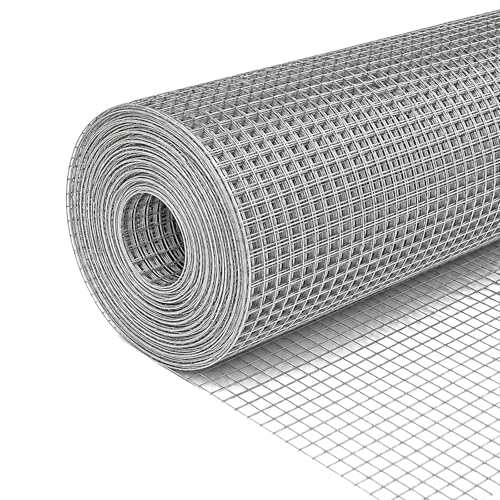
Hardware Cloth 1/2inch for Chicken Coop – 16 inch x 50 ft welded wire mesh made from 23-gauge galvanized steel hardware cloth. Provides reliable strength and flexibility for chicken wire fencing, garden protection, and general outdoor use
Manage Prey Drive With Leash Commands
Even if your coop is Fort Knox, a dog with a racing heart and locked-on eyes will still find a way to cause trouble if you don’t manage that prey drive directly. You need rock-solid leash cues before trusting them off-lead. Start indoors; reward instant eye contact when you say their name. Once they’re glued to you, move outside with a long line. This safety net prevents self-rewarding chases while you practice recall. Teach “leave it” by marking their glance away from chickens with a high-value treat. It’s not magic; it’s impulse control built through repetition. Use a flirt pole to drain that frantic energy safely, simulating the hunt without the bloodshed. Obviously, this takes patience, but seeing your dog choose you over a chicken? That’s worth every minute. Grab that long line today and start building a bond that actually holds. Treat the long leash as a safety belt to ensure control without over-reliance on physical restraint.

Dog Leash Dimensions: training leash measures 3/4 inch width by 20 feet length, offering you dog for more wandering area and freedom.
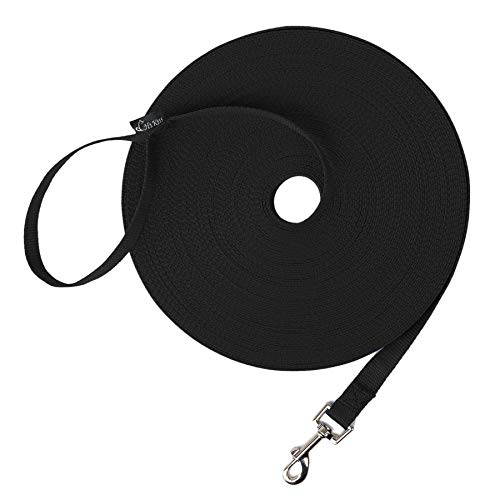
DIMENSIONS - This dog leash measures 3/4in wide by 30 feet long. Great for hiking, camping, training, hunting, backyard, beach, recall training, outdoor play with tennis balls, and swimming!

Dimensions - This dog leash measures 3/4in wide by 15 feet long. Great for hiking, camping, training, hunting, backyard, beach, recall training, outdoor play with tennis balls, and swimming!
Fence Out Neighboring Dogs
While you’ve been working hard on your own dog’s impulse control, a neighbor’s loose cannon can undo all that progress in a single afternoon. You need a solid visual barrier immediately. Chain link fences invite trouble, so cover them with bamboo rolls or thick hedges to block sightlines. Obviously, smell and sound still get through, but removing that visual trigger stops most fence fights cold. If you have the space, build an airlock fence inside your current one to create a no-dog’s land buffer. It costs more, but it physically separates the animals effectively. Now, talk to your neighbor. Secure neighbor agreements regarding outdoor schedules so both dogs aren’t out simultaneously. You might even toss treats over the fence together to change your dog’s emotional response. Don’t wait for an incident; install these barriers today and protect your flock with confidence.