You’re worried about turning your trip into a poultry sauna, and honestly, you should be. Match crate size to your breed—Bantams need ten inches, Giants need fourteen—then line them with straw for long hauls or towels for quick runs. Keep air moving by cracking windows and never stack too tight. Offer water every few hours with ice cubes if it’s hot. Secure everything so nothing tips, and unload only when it’s cool enough outside. Get these basics right, and your flock arrives happy; miss them, and well, you’ll find out why the rest of this guide matters.
Select the Right Crate Size for Your Flock
Why are you still guessing how much room your birds need when the math is already done? You’re stressing over transport while the specs sit right there. Bantams need ten-inch boxes, but your Jersey Giants demand fourteen inches minimum. Ignoring breed compatibility means squashed birds or wasted space, and nobody wants that mess. Your crate selection hinges on weight; fit four to six chickens max per standard unit. Obviously, bigger personalities need extra breathing room, so don’t crowd them. A twenty-nine-inch length works for most, yet varied flocks require multiple sizes. You wouldn’t wear someone else’s shoes, so don’t force birds into wrong crates. Stop second-guessing dimensions and trust the guidelines. Grab the right size now, load up confidently, and hit the road knowing your flock travels safe and sound without any silly cramping issues today. While proper spacing is critical during travel, remember that chickens generally require 2–3 sq ft inside their stationary coop for adequate rest and egg-laying.

Superior Quality : lukar poultry carrier crate is made of thickened & heavy duty plastic, it's strong and sturdy. The border is burr-burrless, the bottom mesh is smooth and flat to avoid poultry hurt. It features good ventilation and air permeability, will not affect the life and rest of poultry

【4 Pcs Practical Poultry Crate Set】Comes with 4-pack poultry transport crates, perfect for farmers, breeders and animal rescue teams. Great for moving chickens, ducks and other livestock in batches efficiently.

SNAPS TOGETHER BY HAND—NO TOOLS NEEDED | Carrier Crate panels snap together by hand without tools, making it easier to get all four chicken carriers assembled and ready for transport within minutes
Line Crates With Straw or Towels for Stability
Since you’ve already wrestled with crate sizes, don’t let your birds slide around like loose change in a dryer now that the real journey begins. You need traction, fast. For long hauls, layer three inches of coarse straw. This Straw cushioning absorbs seven times its weight in moisture while insulating against temperature swings, though you’ll deal with some scratching displacement. Obviously, it’s cheap and effective if you don’t mind tossing it afterward. Prefer short trips? Fold cotton towels twice for instant, non-slip stability. Towel hygiene wins here because you can simply wash and reuse them, avoiding pathogen buildup entirely. Just secure the edges so they don’t bunch up during bumps. Straw offers deep comfort for distant destinations, while towels provide clean, flat security for quick errands. Pick your fighter based on trip length, secure that lining tight, and watch your flock travel calmly without slipping or stressing out today.
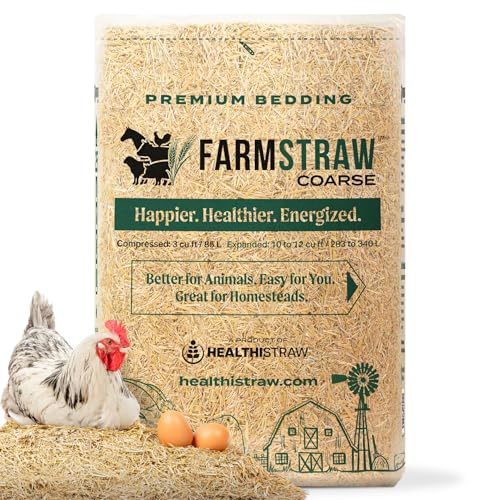
Coarse-Cut 100% Non-GMO Wheat Straw– 2-3 inch pieces are cut, split and bent for extra fluffy cushioning, superior insulation, and durability; ideal for chicks and hens in high-traffic areas in chicken coops, runs, and nesting boxes.
Coarse-Cut 100% Non-GMO Wheat Straw – 2-3 inch pieces are cut, split and bent for durability, insulation, and soft cushioning – a versatile bedding for livestock like chickens, ducks, sheep, goats, pigs, cows, horses, and even feral cats —perfect for homesteads, and hobby farms.

4X ABSORBENCY – Old Dominion Hemp bedding absorbs up to 4x its weight, keeping your chicken coops, small animal enclosures, and keep reptile habitats fresh. Ideal for a low-maintenance and fresh-smelling environment.
Keep Air Flowing to Prevent Chicken Overheating
Even if you’ve nailed the crate lining, you’re still playing Russian roulette with your flock’s survival if you ignore the air. You think stacking crates tight saves space? Wrong. It cooks your birds alive. Proper ventilation design demands you distribute air evenly, not just hope for the best. Airtight trailers are death traps in warm weather, so ditch them immediately. Now, here’s the thing: natural circulation stops when traffic halts, so crack those windows open during delays. You need active airflow optimization to slash humidity and remove excess CO₂ before it kills your flock. Don’t fill commercial crates to capacity; leave gaps using boards to guarantee breathability between containers. Obviously, direct sunlight plus poor flow equals disaster, so maximize shade without blocking breezes. Load at night, keep moving, and unload early. Your chickens can’t sweat, so you must breathe for them. Make that smart call today.

Spacious & Comfortable:Measures 28.7" L x 21.3" W x 12.8" H, comfortably holds 10-13 adult chickens, ducks, geese, pigeons, or other poultry without overcrowding, ensuring stress-free transportation.
【4 Pcs Practical Poultry Crate Set】Comes with 4-pack poultry transport crates, perfect for farmers, breeders and animal rescue teams. Great for moving chickens, ducks and other livestock in batches efficiently.

3 Doors: One Top and Two side doors for easy loading/unloading of chickens, ducks, quail, and chicks.
Secure Crates Firmly Inside Your Vehicle
Although you’ve picked the perfect crate, a sudden stop turns that sturdy plastic box into a deadly projectile if you don’t lock it down. You’ve seen how quickly birds panic when things slide, right? Now, let’s fix that. Proper crate anchoring isn’t just about tying a rope; it’s about eliminating every inch of potential movement. Strap those heavy-duty polyethylene carriers tightly to your vehicle’s anchor points so they can’t tip during sharp turns. Don’t forget vibration damping either, because constant shaking stresses your flock immensely. Place thick rubber mats or absorbent pads underneath each unit to soak up road buzz. Obviously, stackable carriers save space, but guarantee the bottom layer bears the weight securely. Since these units typically hold approximately eight birds per crate, ensuring the load is balanced across your inventory of twenty-five is critical for stable transport. All right, you’ve got the gear and the know-how. Stop guessing and start strapping everything down today; your chickens’ safety depends entirely on your preparation before you even turn the key.

Compatible Design: Dog Crate with Locking Hooks designed specifically Fits for Ruffland dog kennel, this securing kit provides a secure and reliable way to hold the crate during vehicle transport

Ample Quantity: you'll receive 12 pack heavy duty swivels in each pack, providing ample quantity to outfit multiple tie cords or support larger flocks; You'll avoid frequent restocks, saving you time and simplifying your poultry care routine

600D Silver-Coated Oxford Fabric: Our dog kennel cover is made from heavy-duty 600D Oxford with a silver coating that resists water, wind, and daily wear. The tough outer layer stands up to scratching, biting, and outdoor elements, keeps your pet secure and protected in any environment
Schedule Water and Feed Stops for Long Trips
You’ve strapped those crates down tight, but don’t pop the champagne yet because a secure bird is still a thirsty bird if you ignore the clock. Dehydration hits fast, especially in heat, so your water schedule demands strict attention every few hours. Offer ice cubes or watermelon slices to keep them cool while they sip. Food matters less immediately, yet you must plan feed intervals carefully to prevent squabbling during delays. Pack extra grit and oyster shell since automatic feeders might spill on bumpy roads. Obviously, a hanging bell system beats open pans for cleanliness. If you’re hauling beyond three days, arrange neighbor check-ins for fresh supplies. Don’t gamble with their health; map those stops now. It’s simple math: hydrated hens equal happy arrivals. Just do it, and you’ll sleep better tonight knowing they’re sorted. Unlike stationary setups where 5-gallon buckets can provide up to a week of water without refilling, transport requires you to manually offer water every few hours to prevent rapid dehydration.

【Stop the Mess, Keep the Coop Dry】 Tired of soggy bedding and constant cleaning? Our Gravity-Fed Automatic Chicken Waterer Cups feature a precision-engineered drinking valve that refills only when the water level drops. This prevents overflow and leaking, ensuring your coop floor stays dry and your poultry enjoys a cleaner environment

Insulated | Water stays cool in summer, helps prevent freezing in winter.

1 Gal Automatic Chicken Waterer: Directly connected to the water pipe through a hose, with a built-in float ball valve. When the water level drops, it automatically replenishes water and maintains a clean water source 24 hours a day, eliminating the hassle of frequent water refilling
Load Chickens Late at Night to Reduce Stress
Why fight a flock of frantic birds when you could just wait for the sun to go down? You know they panic under bright lights, so why put them through that? Night loading lets you catch them in their natural sleep-like state, making the whole process smoother. Darkness triggers relaxation, mimicking their roosting time and drastically lowering stress hormones. You’ll see less frantic movement and fewer injuries because they’re simply too sleepy to fuss. Obviously, this approach minim disruptions from noise and light too. By using dark crates with minimal air holes, you simulate that deep night calm effectively. This isn’t just theory; it’s proven stress reduction that keeps your birds healthy before the trip even starts. So, skip the daytime chaos. Wait for dusk, load calmly, and you’ll both arrive relaxed. It’s the smartest move for your flock.
Drive Smooth Routes to Avoid Bird Injury
Since you’ve already spent the effort loading them calmly at night, don’t let a bumpy ride ruin all that good work by jostling your birds around like loose change in a dryer. You need smooth roads. Avoid potholes and construction zones that bounce your vehicle violently. Prioritize highways over washboard backroads, using GPS to find the best road surface conditions. Obviously, sudden stops panic your flock, so accelerate gently and maintain steady speeds between forty and sixty miles per hour. Take corners slowly to prevent crates from tipping. Now, consider noise reduction. Loud horns and engine rumble stress chickens terribly. Choose insulated vehicles and place crates on rubber mats to dampen vibrations. Avoid high-traffic urban routes during rush hour. Secure crates firmly so they don’t rattle against walls. Drive defensively, anticipating traffic to eliminate hard braking. Your birds deserve a calm journey, not a rollercoaster ride.
Monitor Birds for Heat Exhaustion Signs
Even after you’ve nailed the smooth driving, heat can still turn your calm cargo into a panic-stricken mess before you hit the exit ramp. You’re hauling living beings, not luggage, so ignore heat monitoring at your peril. Watch for open-beak panting or wings held away from bodies; these scream distress. Now, perform frequent temperature checks inside the crate because trapped air cooks birds fast. If they look droopy or stagger, your behavior observation skills just saved a life. Don’t forget hydration monitoring either, as thirst spikes while eating drops. Obviously, a dry comb means trouble, but wet droppings signal worse internal chaos. You need to act instantly if you spot lethargy or isolation. This isn’t rocket science, just attentive care. Keep water accessible and airflow moving. Your flock’s survival hinges on your vigilance right now, so stay sharp and keep them cool until you unload.
Prepare the Destination Coop Against Predators
You’ve kept them cool and calm on the road, but don’t let a raccoon turn your safe arrival into a Saturday night snack fest. Before you unload, fortify that coop immediately. Swap flimsy chicken wire for 1/2-inch hardware cloth; it actually stops stretching. Bury an apron twelve inches deep or bend it L-shaped underground because diggers are relentless. Seal every gap larger than a quarter-inch to exclude sneaky snakes. Obviously, solid locks beat simple latches against intelligent paws. While predator proof fencing forms your primary shield, consider adding baited decoys nearby to distract lingering threats from your main structure. Secure the roof tightly too, since climbing critters love overhead access. Don’t cut corners on fasteners; use screws with washers, not staples. Your birds deserve a fortress, not just a shelter. Make it tough now so you sleep easy later. To further deter aerial and ground threats, install LED lights that flash at night to simulate the presence of larger predators like foxes or wolves.
Unload Chickens Carefully Upon Arrival
Although your hands are itching to pop those crates open the second you kill the engine, hold up because dumping tired birds into a chaotic scene is how you turn a smooth trip into a casualty report. You’ve driven far; don’t wreck it now. Wait until the house hits eighteen degrees, ideally morning, avoiding peak heat. Proper crate timing matters hugely here. Move fast but gently, carrying birds straight to feeders and drinkers scattered evenly across the floor, not just by the door. This specific approach guarantees maximum stress reduction for your flock. Obviously, water must flow immediately. Watch them drink within six hours; if they’re panting, you waited too long. Don’t rush movements, yet keep steady. Your patience pays off when weight stays stable weekly. So, take a breath, check the temperature, and release them right. It’s the smart, safe finish you’ve worked for. Once the birds are settled, remember they require a full day to adjust to their new pasture lifestyle before expecting normal foraging behavior.