You’re staring at empty nests, wondering if your hens quit for good. Here’s the thing: they’re just waiting for you to flip their internal switch with 14 hours of light. Obviously, spring triggers this naturally, but you can’t rely on nature alone if you want eggs now. Light breeds bounce back faster than heavy ones, yet all need that specific daylight duration to restart ovulation. If you’re ready to stop guessing and start collecting again, the exact setup details follow.
When Do Chickens Start Laying Eggs After Winter?
Even though you’ve watched your coop go quiet for months, you’re probably wondering exactly when the eggs will start showing up again. Here’s the thing: your hens usually restart between late February and April, but only after daylight hits twelve hours. You’ll notice their combs reddening two weeks before any real action starts. If you see consistent squatting, check your nest coop immediately because breakfast is just days away. Obviously, lighter breeds like Leghorns beat heavier Orpingtons to the punch, so don’t panic if your fluffy girls lag behind. While winter pauses production completely, that break actually boosts future egg quality markedly. Young fall chickens might make you wait until next spring, which feels like an eternity. Now, since natural light triggers this hormonal reversal, you can trust the season. Stop guessing and start watching those wattles closely; your flock knows exactly what they’re doing.
Why Increasing Daylight Triggers Spring Egg Production
Since you’re tired of guessing why your coop stays quiet while the days get longer, let’s cut through the noise: it’s not the warmth waking your hens up, it’s the light hitting a specific spot in their brains. Red wavelengths penetrate that thin skull between their eyes, directly stimulating the pineal gland. This isn’t about what they see; it’s pure pineal signaling triggering a hormonal cascade. Once daylight hits fourteen hours, your flock’s internal clock flips the switch for ovulation. You can actually use photoperiod manipulation to mimic spring anytime by adding morning light. Just guarantee you’re using red-spectrum bulbs at low intensity to avoid stress. Obviously, consistency matters more than brightness here. If you want those fresh eggs before nature decides, controlling the light cycle is your only real lever. Start extending their day now, and watch the magic happen. While natural cycles resume in spring, hens require approximately 14 hours of light to restart laying after the short days of winter cause production to cease.
How Rising Estrogen Levels Restart Hen Ovulation
All right, so you’ve got the lights dialed in, but your hens are still acting like they’re on strike. Here’s the thing: daylight flips the switch, yet rising estrogen actually restarts the engine inside. As ovaries wake up, follicle recruitment kicks off, pulling small buds into mature eggs ready for launch. You need that critical estrogen feedback loop to signal the brain properly. Once levels hit between 30 and 350 pg/mL, the preovulatory peak triggers a massive LH surge. Obviously, this hormonal relay race happens just six hours before ovulation. High-performing birds maintain these spikes better than sluggish layers, proving chemistry matters more than patience. If your flock lacks this internal spark, no amount of waiting helps. Trust the science, guarantee their system gets the cue, and watch those cycles synchronize perfectly for spring production starting soon.
Signs Your Hen Is Ready: Red Combs and Wattles
How do you actually know if your hen is about to pop an egg or just posing for the camera? You watch her face closely. Her comb and wattles swell up, turning a vibrant, waxy red as hormones surge. Obviously, a pale pink pullet isn’t ready yet, but that bright crimson shade signals maturity. You’ll notice the comb texture feels plump and glossy, while increased blood flow boosts wattle firmness markedly. Don’t get too excited immediately, though; this reddening can happen weeks before the first egg drops. Some birds sport these flashy features for months without laying a single thing. It’s a strong hint, not a guarantee. Still, seeing those enlarged, drooping wattles means you’re on the right track. Keep checking daily, because once that color hits peak intensity, you’re likely just days away from breakfast.
Why Squatting Behavior Means Eggs Are One Week Away
If you’ve been scratching your head wondering why your hen suddenly flattens herself like a pancake every time you reach out to pet her, don’t panic—she’s not broken, she’s just about to get to work. This submissive squat signals a massive hormone surge kicking her reproductive system into high gear. She crouches low, spreads wings, and freezes because her nesting instinct screams that mating time has arrived. Even without a rooster, she treats you as the flock leader, offering this vulnerable posture to show readiness. Obviously, she isn’t actually seeking your affection; she’s preparing for eggs. You’ll likely see that first shell within a week of spotting this behavior. It’s nature’s countdown clock. So, start checking those nesting boxes daily because your breakfast is officially on its way soon. In practical observations, when this submassive bending is noted on a Thursday, the bed often begins laying by the following Tuesday.
How Breed Age Affects Your Spring Laying Timeline
That squatting signal gets your heart racing, but don’t pop the champagne yet because your hen’s birthday matters just as much as her posture. You might expect eggs tomorrow, yet a June-hatched Rhode Island Red won’t lay until spring light hits fourteen hours. ISA Browns start early at four months, but that precocious horm timing often sacrifices breed longevity later. Leghorns need strict daylight to kickstart ovulation, while Easter Eggers wait until six months regardless of your patience. Obviously, older hens maintain production better through cold snaps than immature pullets. You can’t force biology; a hen under twenty weeks simply lacks the reproductive maturity for sustained output. If you want immediate spring eggs, choose mature birds over cute chicks. Understand these specific breed timelines now, and you’ll stop guessing when that first warm egg actually arrives in your nesting box.

Rich yellow yolks - A high level of xanthophyll, a coloring agent derived from marigolds, produces deep yellow egg yolks

Added Marigold Extract - For rich yellow yolks — A high level of xanthophyll, a coloring agent derived from marigolds, produces deep yellow egg yolks

Do Young Pullets Lay Through Their First Winter?
Since you’re staring at those fluffy fall chicks wondering if they’ll actually pay their rent when the snow flies, let’s cut straight to the chase: most young pullets simply won’t lay through their first winter without your help. Nature tells them to rest, conserving energy so you don’t face tragic winterlet mortality when temperatures plummet. Obviously, their bodies prioritize survival over breakfast. However, you can trick their biology. Adjusting your feed formulation with extra protein and micronutrients gives them the fuel needed to keep going. High-production breeds might persist longer, but heavy breeds usually pause until spring. Now, here’s the thing: adding light helps, but nutrition is your real lever. If you want fresh eggs while neighbors wait, you must actively support their diet. Don’t guess; get specific with their rations. Ready to keep those ovens hot? Start tweaking that feed today.
Which Hens Restart Laying With Less Than 12 Hours Light?
You’ve probably stared at your coop in January, wondering why even your toughest hens have gone on strike despite your best feeding efforts. Here’s the thing: no hens reliably restart laying with less than 12 hours of natural light. Your cold hardy breeds might survive the freeze better, but they still halt production when days shrink. It’s not stubbornness; it’s biology. Their pineal‑gland adaptation prioritizes sleep over reproduction once daylight dips below that critical threshold. Obviously, older birds quit sooner than pullets, yet every hen needs more sun to trigger egg hormones. You can’t force nature without help, and hoping for miracles won’t fill your basket. Accept that short days mean empty nests until spring returns or you intervene. Don’t wait for magic; understand the limit so you plan your next move wisely today. In fact, a minimum 14 hours of light per day is strictly required to restore productivity and overcome this biological shutdown.
How to Add Artificial Light Safely for 14-Hour Days
While you’re standing there shivering in the dark wondering why your best girls have gone on strike, the fix isn’t magic—it’s just math and a cheap timer. You need fifteen total hours, so add morning light gradually, fifteen minutes weekly, until you hit that mark. Don’t shock them; sudden changes cause stress. Now, consider light safety seriously. Secure those bulbs dry and high to prevent shattering or electrical fires in your dusty coop. Use low-wattage LEDs; you only need enough brightness to read a book, not perform surgery. Regarding light placement, position fixtures above feeders to minimize shadows but keep nest boxes dim so hens don’t get confused. Avoid evening extensions because sudden darkness disrupts roosting. Obviously, you’ll need a reliable timer to automate this dawn simulation. This approach mimics summer without burning your house down. Just set it, forget it, and watch those eggs return.

Smart Dusk-to-Dawn Automation: Experience hassle-free daily lighting with an intelligent built-in light sensor. Simply turn on the bulb and press the "AUTO" button on the remote to activate the continuous daily cycle—automatically turning on at sunset and off at sunrise. It reliably illuminates up to 100 sq. ft. without electricity.

【3-Color Adjustable & 4 Brightness Settings】 This solar chicken coop light offers three adjustable color modes—Daylight White + Warm White, Daylight White only, or Warm White only—plus four brightness levels. Create a soothing, glare-free environment that supports your flock's natural rhythms, with calm illumination that keeps your chickens happy and stress-free

Solar Powered Lights Fits Anywhere: This solar light bulb is equipped with a 2W Solar Panel, making it charge faster than other small panels, suitable for use in areas without electricity, such as shed, chicken coop, or tent.
What Nutrition Boosts Post-Winter Egg Return?
All right, you’ve got the lights timed perfectly, but if your hens are still staring at you blankly from the roost, you’re likely feeding them winter maintenance rations when they need a spring feast. Switch immediately to layer feed containing at least sixteen percent protein. Toss in black oil sunflower seeds or mealworms as essential protein supplements to fuel egg formation and recover lost strength. Obviously, shells matter too, so maintain strict calcium balance by offering crushed oyster shells separately rather than mixing them in. Overdoing calcium harms non-layers, so let hens self-regulate their intake for strong shells without kidney damage. Add fish oil for vitamin D since winter sun barely helped absorption. Now, stop guessing with scratch grains alone; your flock needs this specific nutritional boost to restart production. Feed them right today, and you’ll see those baskets fill up by tomorrow morning.

PREMIUM CHICKEN FOOD FOR LAYING HENS WITH OMEGA-3: High-quality chicken layer feed made for strong egg production; fortified with chicken feed omega 3 & extra chicken feed calcium to support healthy shells & provide complete daily nutrition for your hens
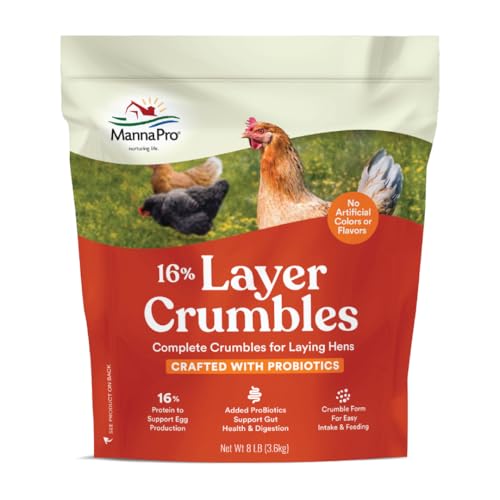
COMPLETE CHICKEN FEED FOR LAYING HENS: Manna Pro Chicken Feed delivers complete nutrition designed for laying hens, supporting strong egg production, healthy feathers, and overall wellness; balanced formula helps maintain optimal health in backyard flocks

[WHAT'S INCLUDED]: Complete layer feed in pelleted form for laying chickens from 16 weeks through productive life. 50 pound bag with 16% protein, 2.5% fat and 8% fiber. Feed as sole ration. Pelleted form reduces waste compared to mash formulations