You see pale combs and ruffled feathers, wondering if it’s just a bad day or something worse. It’s likely worms stealing your flock’s nutrients. You’ll spot yellow droppings or even visible white wrigglers in the poop. Gapeworms make them gasp; roundworms cause weight loss despite eating more. Obviously, ignoring this risks mortality. You need fenbendazole for gut issues or ivermectin for breathing trouble. Clean that coop daily and rotate grazing spots to stop reinfestation. If you want to save your birds before it’s too late, keep going to learn exactly which treatment fits your specific mess.
Spot Early Signs of Worms in Chickens
Even when your flock looks fine on the surface, those sneaky worms are already throwing a party in their guts that you can’t see without knowing exactly where to look. You might miss the subtle cues until it’s too late. Watch closely for pale combs or wattles shrinking right before your eyes. Your birds could be losing weight despite eating more, a frustrating trade-off where parasites steal the nutrients. You’ll notice ruffled, disheveled feathers signaling poor health, often described as feedy feathering by old timers. They might isolate themselves, showing a drooping posture that screams exhaustion. Obviously, lethargy hits hard as energy reserves drain. Don’t wait for visible worms in droppings; that’s a later stage. Spotting these early signs like stunted growth or dirty vents saves your flock from severe decline. Recognizing this now makes treating them an easy, smart choice.
Identify Specific Symptoms of Infestation
Since you’ve already spotted the vague warning signs, let’s get specific about what’s actually happening inside your birds before you lose half your flock. You’ll notice your hens eating a wormworm diet yet still losing weight rapidly because parasites steal every nutrient. Watch for pale combs signaling anemia or gasping birds stretching necks to breathe. Layers stop producing entirely, or eggs arrive with pale, fragile shells. Your flock looks depressed, standing with tails down and ruffled feathers everywhere. Severe infestations cause dramatic feather loss as birds peck themselves in frustration. Obviously, slow growth rates mean your chicks won’t thrive without intervention. Don’t ignore lethargy or that unthrifty appearance; these aren’t just bad days. You need to act now before mortality spikes. Trust these specific symptoms to guide your next move confidently.
Find Worm Evidence in Droppings and Throats
While you’re already scanning for sick birds, the real smoking gun often sits right under their tails or hides in their throats waiting for you to look closer. You’ll spot yellow, loose droppings dro sticking to feathers or foamy pale piles signaling overload. Sometimes, you actually see white worms up to eight centimeters long in the poop; that’s a massive infestation. Don’t ignore green or black runny messes either. Now, check the mouth. If your hen gasps, stretches her neck, or shakes her head, perform immediate throat worm detection. You might spot red juveniles or larger parasites blocking the airway directly. Obviously, seeing actual worms confirms what those weird droppings suggested. A vet’s fecal float test offers absolute proof if you’re unsure, but visible evidence rarely lies. Trust your eyes here. Spotting these signs early saves your flock from severe suffering and production drops, so grab a flashlight and look now.
Compare Roundworms, Gapeworms, and Threadworms
You’ve spotted the mess in the coop and maybe even caught a glimpse of something wiggling, but now you’re staring at your flock wondering exactly which uninvited guest is crashing the party. Roundworms hog the small intestine, stealing nutrients while producing resilient eggs defined by specific egg morphology. Gapeworms are different; they lock onto the trachea in a creepy Y-shape, using earthworms as transmission vectors to choke your birds. Then there’s threadworms, tiny nasties inflaming the crop and upper gut. You can’t treat them all the same, obviously. Fenbendazole handles roundworms and threadworms well, but gapeworms demand stronger meds like Ivermectin over three weeks. Heavy loads kill production across the board. Don’t guess blindly when respiratory distress screams gapeworms while diarrhea hints at threadworms. Pick the right weapon for the specific worm, treat twice, and watch your flock bounce back stronger than before.

Broad-Spectrum Chicken Dewormer for Layers, Broilers, Replacement and Breeding Chickens: Formulated with fenbendazole to help manage common internal parasites, including roundworms, hookworms, whipworms, and tapeworms. Designed to support effective parasite control across all production stages.

High-potency fenbendazole suspension chicken dewormer, proven efficacy against common chicken parasites including Ascaridia galli and Heterakis gallinarum, effectively eliminating adult worms, larvae, and eggs to protect your flock’s overall health.

ADVANCED CARE FOR POULTRY & BIRDS.Formulated with active Fenbendazole, our poultry dewormer for chickens and pet birds provides focused support for intestinal well-being. When a mild organic or natural chicken dewormer for laying hens is not enough, this concentrated suspension offers reliable help for your entire flock and aviary.
Test Your Flock for Parasites
Even if your birds look picture-perfect, those invisible egg-laying machines could be silently stealing your flock’s health right under your nose. You can’t see microscopic eggs, so you need a fecal flotation test. Grab fresh droppings from near waterers, skipping the white caps. For bigger groups, use flock sampling by collecting one sample per ten birds to save time. Mix that lime-sized bit with float solution and wait fifteen minutes. Now, lift the coverslip onto your slide. Peek through your microscope at 40x magnification for egg quantification. Counting helps you gauge severity; a few eggs might mean no action needed, while lots signal trouble. Obviously, labs offer deeper insights if you’re unsure, catching things tapeworms hide. Don’t guess when science gives clear answers. Testing now prevents massive headaches later, making your next move smart and simple.

Includes 2 McMaster Method microscope slides, 2 glass beakers, 2 strainers, 2 transfer pipettes, digital scale, flotation solution mixing bottle, tweezers, gloves, scale cups, and collection bags.

MATERIAL: Made of premium quality Polypropylene

iFOB Self-Checking for Home -- This is a home-use test kit designed to measure the presence of hidden (occult) blood in your stool (feces). It is an over-the-counter product, does not require a professional lab test, and allows you to test early at home for peace of mind and to know your health status beforehand.
Select the Best Chicken Dewormer
So, how do you pick a dewormer without turning your coop into a chemistry lab? You’re staring at bottles, wondering which one actually works without poisoning your breakfast. Here’s the thing: Flubendazole is the vet favorite because it zaps roundworms, tapeworms, and gapeworms with zero egg withdrawal period. Want to keep laying while treating? That’s your guy. If you’re dealing strictly with roundworms, Safe-Guard AquaSol works fast, but you must calculate that worm dosage carefully since a little goes a long way. Avoid Levamisole if you’re nervous about toxicity on hot days. Moxidectin works well too, but you’ll halt egg collection for a bit. Obviously, matching the medicine to your specific parasite problem saves headaches. Don’t overthink it; pick the one fitting your flock’s needs and get those hens healthy again today. For those preferring natural options, mixing charcoal directly into feed for five consecutive days offers a cheap and effective alternative to chemical treatments.

The original Chicken De-wormer Chili Mix: A natural blend of ingredients your girls and their eggs will love.

🌿 ALL-NATURAL HERBAL POULTRY SUPPLEMENT: Made with pumpkin seed, papaya seed, garlic, oregano, thyme, turmeric, and other premium herbs to support daily nutrition and overall wellness for chickens—no chemicals, no synthetic additives.
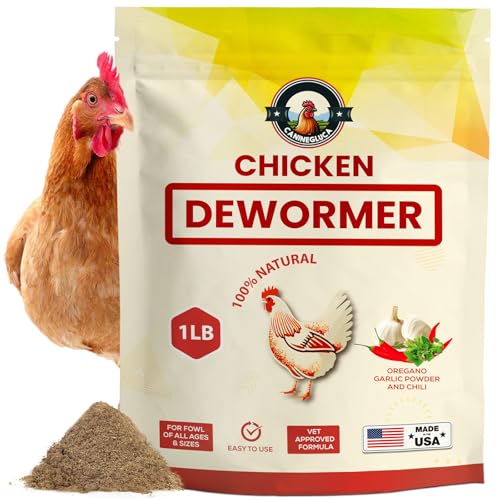
All-Natural Health Formula: CanineGluca Chicken Dewormer Powder utilizes a 100% natural formula to promote digestive health and protect your poultry against internal parasites, harnessing the power of nature to keep your flock healthy from the inside out..
Treat Chickens to Stop Reinfestation
Since you’ve already picked your dewormer, don’t let those sneaky eggs hatch and ruin your hard work by skipping the double-treat protocol. You need that second dose in two weeks to zap newly hatched worms before they mature. Obviously, one shot won’t cut it. While you wait, mix natural feed additives like garlic or pumpkin seeds into their meals to keep things moving. Don’t rely solely on seasonal deworming; target treatments only when tests confirm heavy loads to prevent resistance. Water meds are tricky, so stick to precise pastes or pour-ons for accurate dosing. Rotate their grazing area immediately after treating to break the cycle completely. This approach saves your flock from recurring misery without building super-worms. You’ve got the plan, so trust the process and protect your birds smartly today.

Effective within 3-5 days; allow at least 7 days between consecutive applications

Broad Worm Coverage – Formulated to address a range of common intestinal worms found in cats and dogs, including roundworms, hookworms, whipworms, lungworms, and pinworms.

Ivermectin Paste - Horse Wormer 1 Tube 6.08 Grams (3-Pack)
Prevent Worms With Coop Hygiene
Look, nobody signs up for chicken keeping to become a poop-scooping maniac, but skipping the daily cleanup is exactly how you end up with a wormy flock. You’ve got to remove droppings daily and change bedding weekly to break those nasty life cycles. Now, here’s the thing: proper litter management means swapping out straw or pine shavings every ten days, not just when it smells bad. You also need solid coop ventilation because damp air invites parasites while dry floors repel them. Scrub your feeders monthly and elevate them so feces don’t contaminate the water. Obviously, rotating grazing areas helps too. Don’t let mud accumulate near ponds where slugs hide. If you stay on top of this hygiene routine, you’ll save yourself a massive headache later. Keep it dry, keep it clean, and your birds will thank you.

【Pays for Itself via 13W DC Motor】 Cut your utility bills by 76% compared to outdated AC models. This energy-efficient DC drive runs cold without heat buildup, extending lifespan while delivering powerful ventilation. A smart investment that returns value through long-term electricity savings.

*Cool & Fresh Air: The solar powered fans can provide higher wind speeds to effectively cool and fresh the air , remove dust and odors and allow fresh air to enter. It’s an excellent ventilation solution for small greenhouse, chicken coop, shed, pet house, attic, camping, window fan, Outside & Inside. Suitable for a space of 9 square meters (6ft. x 6ft)or smaller, large space can buy more fans.

【8" Exhaust Fan】- Our shutter exhaust fan rapidly removes heat, humidity, odors, and dust from enclosed workspaces. Equipped with a high-speed motor, it ensures efficient ventilation while maintaining durability. ETL-listed with grounding protection to help reduce electrical risks and ensure safe operation
When to Call a Veterinarian
You’ve scrubbed the coop, swapped the bedding, and kept everything dry, yet your hens still look miserable. Now, stop guessing and call the vet immediately if you spot visible worms, pale combs, or gasping birds. These signs scream for emergency treatment before your flock crashes hard. Don’t wait when diarrhea persists despite your best home remedies or if multiple birds sicken simultaneously. You need professional diagnosis because guessing worm types wastes precious time and money. A quick veterinarian consultation identifies the specific parasite through fecal flotation, ensuring you grab the right prescription meds instead of ineffective over-the-counter stuff. Obviously, severe anemia or unexplained weight loss demands expert eyes, not internet forums. Trust me, paying for a vet visit now saves your entire flock later. Stop hesitating; pick up the phone and get those hens the targeted care they desperately need today.