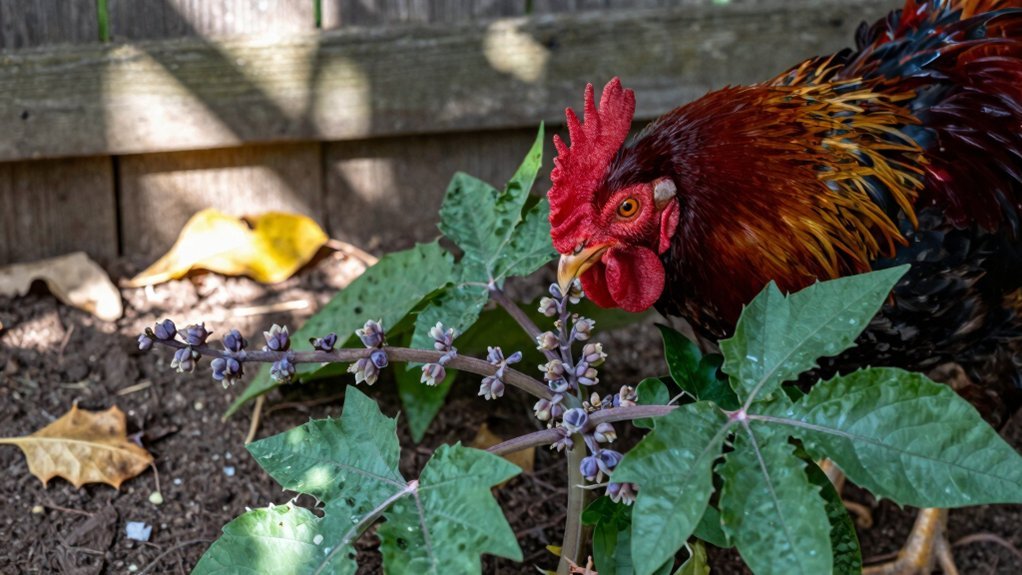
You’re right to wonder if pokeweed is safe for chickens; the plant’s saponins, oxalates and phytolaccatoxin make every part—from roots to ripe berries—highly toxic, and even a few bites can trigger vomiting, diarrhea, tremors and, in severe cases, paralysis or respiratory failure. Obviously, the roots and seeds are the most lethal, but leaves, stems and immature berries still contain enough toxin to sick a bird. If you catch a chicken nibbling it, isolate the bird, give fresh water, keep it warm and call a poultry‑savvy vet right away; the sooner you act, the better the odds of recovery.
Is Pokeweed Safe for Chickens?
You’re probably wondering if that shady, purple‑flowered plant in your yard could be a harmless snack for your flock. The short answer: no. Pokeweed contains saponins and oxalates that make chickens sick, and the risk climbs as the plant matures. You’ll see vomiting, diarrhea, or even breathing trouble after a peck, and severe cases can be fatal.
Here’s the thing: every reputable poultry guide lists pokeweed as toxic, so the warnings are solid, not anecdotal. Replace it with safe forage like lettuce, kale, dandelion greens, or chickweed—these are proven pokeweed alternatives that keep your birds healthy. Much like how rhubarb leaves harbor oxalates leading to kidney failure in chickens, pokeweed poses a similar lethal threat through its toxic compounds. Just as experts advise that foxglove should be completely removed due to its high toxicity, pokeweed requires the same strict elimination strategy to protect your flock. Similarly, avoiding onion toxicity is crucial because sulfur compounds in alliums can cause anemia and death in chickens.
All right, make a habit of removing any pokeweed you spot near the coop and fencing off infested areas. The takeaway: avoid pokeweed entirely and choose proven, safe greens for your flock.
Which Parts of Pokeweed Are Toxic to Chickens?
All right, you’re probably wondering which parts of pokeweed actually hurt your chickens. The short answer: every part. Roots are the most lethal, followed closely by seeds—seed toxicity tops the poultry warnings list. Even the leaves, stems, and flowers contain saponins and alkaloids, and the mature purple‑black berries are definitely unsafe. Chickens can nibble juvenile foliage, but toxins increase as the plant matures, so you can’t assume young leaves are harmless. Here’s the thing: if you see any pokeweed in your run, treat it as a total no‑go zone. Remove roots, pull up seedlings, and clear berries before they drop. The takeaway? No part of the plant is safe, so keep your flock away from the whole thing. Next, check how to spot pokeweed early and prevent accidental access. Like other toxic flora, the danger level can vary depending on the growth stage and the specific part consumed by the bird. Similar to how nightshade family plants contain harmful compounds, pokeweed poses a severe threat that requires immediate removal. Unlike safe options such as dandelions and clover, pokeweed offers no nutritional benefit and poses a severe health risk to your flock.
How Do Chickens Show Signs of Pokeweed Poisoning?
All right, now watch their movements. Lethargy turns into ataxia: they wobble, stagger, and can’t keep balance. Neurologic tremors appear, sometimes escalating to convulsions. Leg weakness follows, and in severe cases, paralysis sets in.
Here’s the thing: these signs can hit multiple systems at once, worsening quickly. If you see any of this, act fast and call a vet. The takeaway: early detection saves lives—monitor appetite, breathing, and gait, then intervene promptly. While pokeweed causes neurological collapse, it is crucial to distinguish these symptoms from other ailments like sour crop, which presents with a swollen, foul-smelling crop and head flicking rather than paralysis. Unlike the neurological failure caused by pokeweed, a yeast infection in the crop leads to a squishy swelling that fails to empty overnight and emits a distinct sour odor. Proper management of such conditions often requires isolating the affected chicken to prevent further health complications and ensure focused care.
Why Pokeweed Persists & How to Keep It Out (Or Safely Remove) From the Coop
Worried why pokeweed keeps popping up around your coop? Obviously its deep root system survives a simple cut, so you see fresh shoots each spring. The plant also drops seeds that birds and other wildlife carry into fence gaps, creating new seedlings near your run.
How does it keep coming back?
Root smothering defeats a shallow mow; the underground network stores energy and sprouts anew. Wildlife exclusion—closing fence cracks and covering compost—stops birds from dumping berries where they can germinate.
What can you do to keep it out?
Inspect fence lines and shaded corners weekly; pull seedlings while soil’s damp, or dig deeper for larger roots. Apply a thick mulch layer to smother seeds and block light. If you herb a herbicide, follow label rules and keep birds away until it dries. Implementing sturdy fences alongside these removal tactics helps prevent chickens from accessing treated areas or spreading seeds further. You can also construct physical barriers like chicken wire to effectively exclude flock members from vulnerable garden sections while you manage the weeds. Since some weeds are toxic and potentially deadly, you must carefully identify plants before allowing your flock to free-range unsupervised.
Takeaway: Consistent inspection, root removal, and wildlife exclusion break the cycle. Your next step? Choose one method and start clearing a small section today.Pokeweed thrives in moist, well‑drained soil with full or partial sunlight.
What Immediate Steps Should I Take If My Chicken Eats Pokeweed?
One thing’s clear: if your chicken nibbles pokeweed, you’ve got a potential poisoning emergency. You should act now, not wait for symptoms. First, remove the bird from any access to the plant and keep it in a quiet, shaded spot away from the flock.
What should you do while you wait for a vet?
Now, give clean water, keep the bird warm, and limit handling. Do not induce vomiting or give human meds—those are unsafe home treatments. Observe breathing, posture, and droppings for distress. While monitoring the bird, you can gently clean any external plant residue from its beak or feathers using a 50/50 Betadine solution to prevent further ingestion or skin irritation without causing tissue damage. Maintaining cleanliness and providing supportive care are also essential steps in managing the bird’s condition while awaiting professional advice. Although natural additives like black cumin often boost immunity in healthy flocks, they are not a treatment for acute pokeweed poisoning and should not be administered during this emergency.
How do you get professional help?
All right, call a poultry‑experienced veterinarian immediately. Provide details: which part of the plant was eaten, how much, and when. The vet will discuss detoxification methods and treatment options tailored to your bird.
Takeaway: Quick isolation, supportive care, and fast veterinary contact are your best defenses. Ready to call the vet?