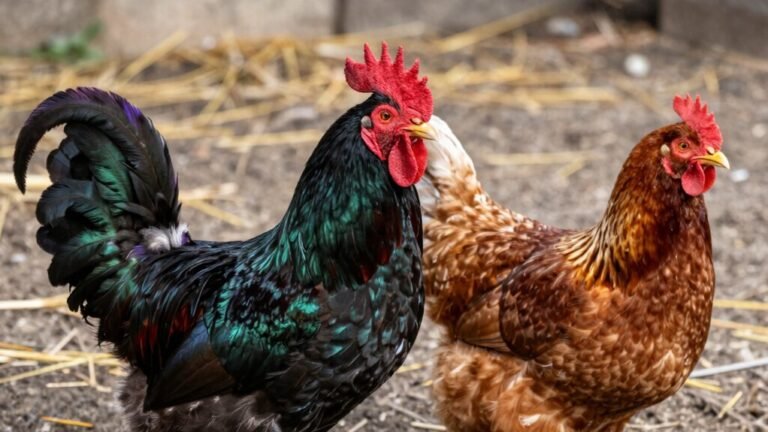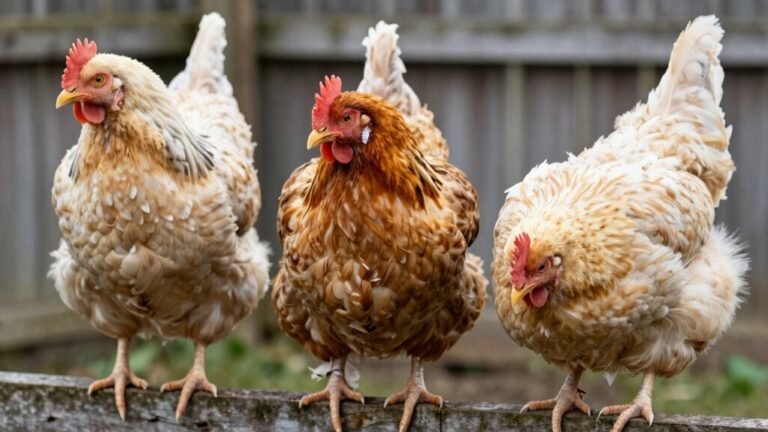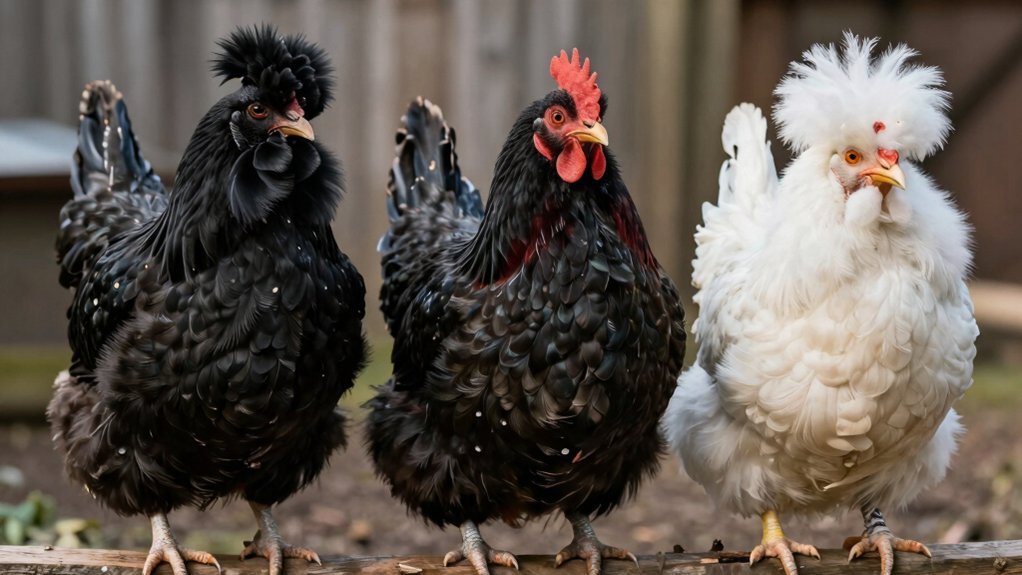
You’re right to wonder which chickens sport those fluffy “muffs” and beards; the Mb gene creates soft, rounded cheek patches and a throat beard, and breeds like Silkies, Faverolles, Ameraucana, Araucana, and Sultan carry it consistently, while Crevecoeur, Houdan, and Easter Eggers can show it when the right genetic mix occurs. Homozygous Mb/Mb birds display full muffs and beards, whereas heterozygotes give about a 50/50 split. Knowing this lets you pick a breed that matches your yard’s space, climate, and egg‑color preferences—next, you can explore breeding strategies to lock the trait in.
What “Fluffy Cheeks” Really Mean
What does “fluffy cheeks” actually mean? You’re probably wondering why some birds look like they’re wearing a tiny beard. It’s simply the informal name for the muffs—soft, rounded feathering that frames the beak and face. Here’s the thing: the trait comes from a genetic explanation, a mutation that breeders amplified, not a temporary grooming stage. You’ll see it in Ameraucana, Araucana, Easter Eggers, Faverolles, D’Uccles, and Silkies, but also in mixed‑breed crosses marketed as “fluffy‑cheek” chickens. All right: breed misconceptions arise when people assume those birds guarantee pure lineage or specific egg colors—neither is true. The feathers are cosmetic, with no proven impact on productivity or gender. Takeaway: fluffy cheeks = inherited facial feathering, not a breed‑purity badge. Only the Ro chicken breed produces true tufts, and they appear in about 25 % of hatchlings. Unlike ear tufts, these facial muffs help distinguish breeds like the Ameraucana while offering protection from frostbite. It is important to note that true ear tufts differ from facial muffs because the absence of a tail is another unique genetic trait found specifically in the Araucana breed. The Porcelain d’Uccle exemplifies this charming look with its full beard** and muffs, contributing to its gentle and docile temperament ideal for families. Next, ask yourself which breeds you actually want for your flock’s look and purpose.
How to Spot Muffs and Beards on a Chicken
How can you tell if a chicken has muffs or a beard? You’re probably confused by the fluffy outlines on the face, but the clues are simple. First, look for feather cleanliness on the cheeks; muffs appear as soft, rounded feather patches that hide the bare skin. Check both sides for facial symmetry—if one side shows more feathering, you have a partial muff. Now, turn the bird sideways; beard feathers cluster under the beak and along the throat, often covering the wattle. A strong beard looks like a small tuft that can be seen even when the chicken pecks. While muffs and beards are distinct facial features, some breeds also display unique head feathering like the pronounced crest feathers found on Silkies and Houdans. Unlike typical chickens, Silkies possess five toes which distinguishes them from most other breeds that only have four. These fluffy breeds often have turquoise-blue earlobes that contrast sharply with their dark skin and feathered faces.
What should you examine first?
Start with the front view, then scan each side. Notice any feather density differences; full‑expression birds have both muffs and a beard, while clean‑faced birds lack them entirely.
Takeaway: Spotting muffs and beards hinges on cheek feather cleanliness, facial symmetry, and throat feathering. Next, compare several birds of the same age to confirm the trait’s consistency.
Which Breeds Give You Both Muffs and Beards?
You’re probably wondering which chickens actually give you that fluffy‑cheek, bearded look after learning how to spot the traits. Obviously, the Mb locus drives those Genetic variations, so you’ll see full muffs and beards in Mb/Mb birds and partial expression in Mb/mb birds.
Which breeds consistently show both? Ameraucana, Araucana, Faverolles, Silkie and Sultan top the list; each carries the Mb allele and displays heavy facial feathering. Crevecoeur, Houdan, Belgian bantams, Easter Egger and Olive Egger also produce fluffy‑cheeked birds, especially when you select parents that already show the traits. While Faverolles and Silkies are prized for their beards, these breeds are also notable for laying pink-colored eggs due to their unique genetics. Unlike the egg color misconception, Silkies are distinct for their black or bluish-black skin caused by a melanotic gene, setting them apart from other fluffy-faced varieties.
How to boost your odds? Breed two Mb/mb birds or cross an Mb/Mb rooster with an Mb/mb hen; you’ll get 50 % full‑expression chicks. Keep only the fluffy‑faced offspring and practice gentle plumage care to prevent matting.
Takeaway: Choose a breed with known Mb genetics, use selective breeding, and maintain proper feather maintenance for consistent muffs and beards. Next, consider how those genetics affect your flock’s overall health. Just as the mutated Crest gene dictates head feathering, understanding these specific genetic drivers helps owners anticipate vision impairment caused by excessive facial feathers which can affect a bird’s behavior and social hierarchy.
What Egg Colors and Laying Habits Come With Fluffy Cheeks?
Ever wondered which egg colors actually pair with those fluffy‑cheeked birds you love? You’ll see Ameraucanas and Araucanas laying light‑blue shells, while Easter Eggers can surprise you with blue, green, pink, tan, or dark brown hues. Shell intensity stays steady for each hen, but a Faverolles will give you tinted brown eggs instead of the vivid blues.
Now, here’s the thing about laying consistency. Ameraucanas and Faverolles usually produce 3‑4 eggs a week, and Easter Eggers hit roughly 200 eggs a year. Some individuals may dip lower if heat or stress hits, but most fluffy‑cheeked layers keep a reliable rhythm. Newer breeds like the Arkansas Blue and Whiting True Blue also contribute to this variety with traits suited for high egg production. Although myths suggest otherwise, the blue pigment results from a dominant gene that makes these eggs nutritionally equivalent to other shell colors. While the Araucana originates from Chile and offers a hardy nature, all breeds require balanced nutrition to stay healthy and productive regardless of their fluffy features.
All right, remember: each bird’s genetics set the color, while health and environment tweak intensity. Your next step is to match a breed’s egg palette to your kitchen’s aesthetic.
Tips for Breeding and Keeping the Muffs‑and‑Beard Gene
How do I spot the right breeders?
Look for full‑muffed faces and sturdy comb types during health checks. A rooster that sires many chicks should carry at least one Mb copy; a hen with strong feathering boosts homozygosity.
What pairing gives the best results?
Mate a known Mb carrier to a clean‑faced bird. If the carrier is homozygous, you’ll get 100 % muffed offspring; if heterozygous, expect a 50/50 mix. Test‑mate clean‑faced birds from a muffed line to confirm genotype.
How do I keep the trait strong?
Select only birds that consistently pass on full muffs and beards, discard weak‑feathered individuals, and repeat the cycle each generation.
Takeaway: Focus on full‑feathered birds, run regular health checks, and pair strategically to drive Mb toward homozygosity. Next, map your current flock’s comb types and plan test matings. Breeding two partial beards together yields a 25 % fully bearded offspring ratio.
How to Pick the Right Fluffy‑Cheeked Breed for Your Yard
If you’re wondering which fluffy‑cheeked breed fits your yard, you’re not alone—many backyard keepers face this exact dilemma. First, think about temperament. Docile birds like Silkies, Faverolles, Buff Orpingtons, Brahmas, and Cochins stay calm when you hand‑feed them and won’t bolt at a sudden noise. Keep in mind that while hens are generally less assertive, roosters can display bold, protective behaviors that may require extra management in a mixed flock.
What space do you have?
Low‑activity breeds such as Cochins adapt well to smaller runs, while Houdans need a larger area for free‑range diets. Check your yard fencing; sturdy, tall fences keep larger, heavier breeds like Brahmas safe from predators. Just as Polish chickens require a covered outdoor run to protect their limited vision from feather crests, breeds with heavy facial feathering may also need predator protection due to potential sight obstruction.
How does climate affect you?
Cold‑hardy birds—Brahmas, Cochins, Buff Orpingtons—thrive in northern yards, but Silkies dislike wet, chilly weather because their feathers aren’t waterproof.
What’s your primary goal?
If you want eggs, Faverolles and Buff Orpingtons lay consistently; Crevecoeurs give moderate numbers and meat.
Takeaway: Match temperament, space, climate, and utility to your yard’s limits. Next, sketch your run layout and compare it to the breed traits listed here. Notably, the Brahma is often called the King of All Poultry due to its massive size, with roosters weighing up to 14 pounds and standing as tall as 30 inches.