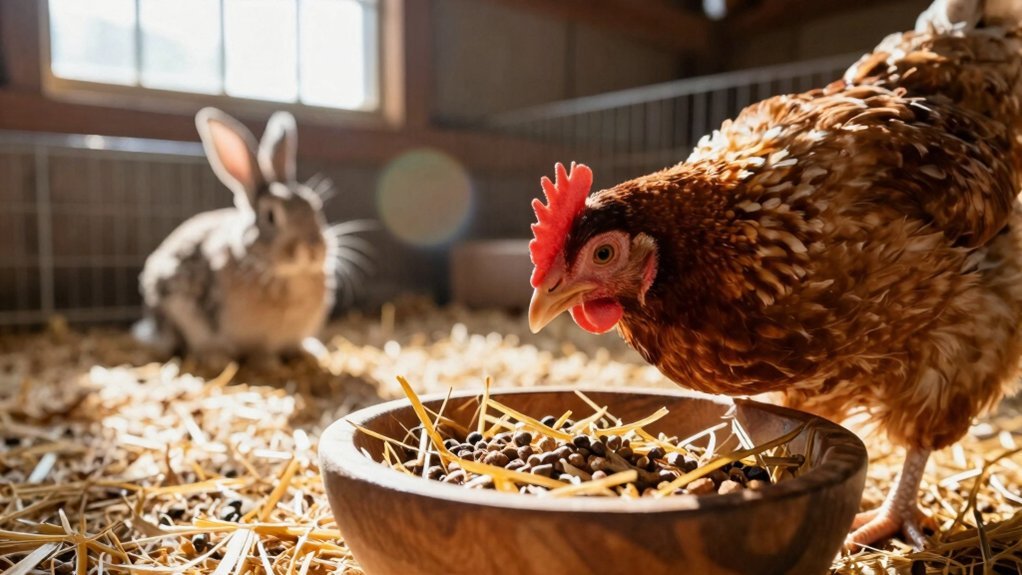
You’re right to wonder if rabbit food works for chickens, but the quick answer is no—rabbit pellets only have 10‑14 % protein and a lot of fiber, while laying hens need 16‑20 % protein, about 4 % calcium, and vitamin D₃ for strong shells. Hay and straw can be great bedding or enrichment, yet they lack the energy and nutrients chickens need for growth and egg production. Use a proper poultry feed as the staple, keep rabbit feed sealed away, and you’ll avoid dull feathers, weak shells, and digestive issues. Keep reading to learn how to separate the feeds and what safe supplements you can add.
Can Chickens Eat Rabbit Pellets? Chicken Feed Safety
You’re probably wondering if those tiny rabbit pellets are safe for your flock, and it’s a smart question. The short answer: they’re non‑toxic, but they’re not a full‑time chicken diet. Rabbit pellets score high on pallet palatability, so your birds will eat them enthusiastically, yet they only deliver 10‑14 % pellet protein compared with 16‑20 % in proper chicken feed.
All right, consider the big picture. If you sprinkle a handful into a balanced ration during a feed shortage, the risk stays low. But relying on them as a staple can cause calcium shortfalls, dull feathers, and reduced egg output. To prevent these issues, you should offer large particle calcium separately from the main feed so hens can regulate their intake for optimal eggshell quality and bone strength.
Here’s the thing: keep a complete poultry feed as the primary source, treat rabbit pellets as an occasional backup, and monitor egg production and feather quality. The takeaway? Use them sparingly, not as a primary feed, and switch back to proper chicken feed as soon as you can. Since laying hens require adequate calcium ranging from 2.75% to 4.1% for proper eggshell formation, the low mineral content in rabbit food makes it insufficient as a standalone diet. Experts recommend transitioning pullets to a balanced layer feed around 16 to 20 weeks of age to ensure they receive the specific 16-18% protein and elevated calcium levels necessary for healthy egg production.
What Nutritional Differences Separate Rabbit Pellets From Chicken Feed?
If you’re wondering why rabbit pellets and chicken feed aren’t interchangeable, the answer lies in their nutrient recipes.
How do protein sources differ?
Rabbit pellets usually hover at 10‑14 % crude protein, sometimes nudging 14‑16 % when they overlap chicken formulas. Chicken feed, in contrast, targets 16‑20 % protein and relies on corn‑based meals and soy. Those protein sources boost rapid growth in birds but give rabbits excess nitrogen they don’t need.
What are the ingredient differences?
Chicken mixes lean on grains, high‑energy meals, and vitamin premixes for egg production. Rabbit pellets load up on forage‑style fibers—often 18‑22 % crude fiber—using hay, beet pulp, and alfalfa to keep gut motility humming. Protein content in rabbit pellets is lower than in chicken feed, matching rabbit digestive physiology. Feeding chicks a diet with insufficient protein can severely hinder their muscle and feather growth. Unlike rabbit formulas, starter feeds for chicks contain higher protein (20–22%) to support their rapid development. While rabbits thrive on high-fiber forage, poultry require high-quality commercial feed specifically matched to their age and production needs to maintain flock health.
Takeaway
The high fiber and lower protein of rabbit pellets support hindgut fermentation, while chicken feed packs more protein and less fiber for energy‑dense growth.
Next step
Check the fiber percentage on any feed you consider; it’s the quickest clue whether the product fits your bird or bunny.
Why Laying Hens Need Extra Calcium and Vitamins in Their Feed?
Ever wonder why your laying hens need more calcium and vitamins than a regular chicken feed provides? You’re right to ask—egg production pulls a lot of minerals. Each day a hen makes a shell that’s 95 % calcium carbonate, so she needs about 4–5 g of calcium, far more than a typical diet supplies.
How does calcium timing affect shell quality?
Now, you’ll notice that shells form mostly overnight. Giving hens access to large‑particle calcium in the late afternoon lets the mineral release slowly, matching the night‑time building phase. This timing boosts shell quality, preventing thin or cracked eggs. Unlike fast-acting limestone, crushed oyster shells reside in the gizzard to provide a sustained calcium source while the hen sleeps and cannot eat from her feed.
Why add vitamins?
Here’s the thing: vitamin D3 facilitates calcium absorption, while phosphorus, zinc, magnesium, and manganese fine‑tune shell formation. Without these micronutrients, even enough calcium won’t translate into strong shells. It is also vital to provide large particle calcium separately so hens can regulate their own intake and prevent deficiencies like weak shells or osteoporosis. Offering this supplement starting at 18-20 weeks ensures hens have adequate resources when they begin laying, supporting better immune and cardiovascular function alongside strong bones.
Takeaway
Give your hens a layer feed with ~4 % calcium, add free‑choice oyster shell in the evening, and guarantee the diet includes vitamin D3 and trace minerals. You’ll see sturdier eggs and healthier birds. Ready to check your feed composition?
What Signs Indicate Chickens Are Overeating Rabbit Food?
When you notice your flock suddenly gravitating toward the rabbit feeder, you’re probably right to wonder if they’re overdoing it. You’ll see a sudden avidity for pellets, a shift away from regular feed, and rapid gulping when food is free‑choice. This behavioral addiction often comes with loose droppings or, conversely, a drop in output, hinting at digestive blockage.
What does a bloated belly look like? Swollen abdomens, gas discomfort, or a fluffed‑up stance signal gut upset. Weight gains happen fast—rounder bodies, excess fat, and sluggish movement follow high‑energy pellets.
How can you tell the diet is unbalanced? Dull feathers, lower egg production, and refusal of normal feed mean essential nutrients are missing. Consuming too many scraps or inappropriate feeds can harm egg production and bird wellbeing by displacing the balanced diet required for optimal health. Just as excessive cracked corn leads to poor eggshell quality, relying on rabbit food displaces the specific proteins laying hens need. Unlike rabbit pellets, quality poultry feeds are formulated with optimal protein levels of 16-18% to support robust health and efficient production.
Takeaway: watch for appetite shifts, abnormal droppings, bloating, and weight changes. If you spot these, separate the feeds and monitor recovery. Rabbits are highly susceptible to bloat when fed improper diets, and poultry feed can trigger this condition.
How to Keep Rabbit Feed Separate From Chicken Feed
You’ve noticed the chickens eyeing the rabbit pellets and wonder how to stop the mix‑up.
Where should you put each feeder?
Now, hang the rabbit feeder a few inches off the ground and mount the chicken feeder at perch height. This feeder placement keeps chickens from pecking down and rabbits from hopping up. Use solid‑lid containers for rabbit feed and a lidded bin for chicken feed; both blocks accidental nibbling.
How do you store the feed safely?
Obviously, keep each ration in a sealed, airtight bin labeled clearly. Store the bins in separate cupboards or on opposite sides of the shed, away from drafts. Clean up spills daily so no stray pellets lure the wrong bird. Since rats are drawn to unsecured feed associated with backyard animals, ensuring all containers are tightly sealed is critical to prevent attracting rodents to your coop area.
What’s the bottom line?
Separate zones, distinct containers, and smart feeder placement protect both species. Implementing a treadle mechanism in your chicken feeder design can further prevent rabbits and wild birds from accessing the poultry ration while keeping the feed dry and waste-free. Trusted brands like Grandpa’s offer durable feeders designed to reduce waste and protect your flock from pests while maintaining a healthy coop environment. Next, consider how to keep water stations apart for even cleaner feeding.
Is Rabbit Hay a Good Supplement for Chickens?
You’re probably wondering if rabbit hay can actually help your chickens, and that’s a smart question.
Can hay replace feed?
Obviously, hay isn’t a complete feed. It’s mostly indigestible fiber, low in protein, calcium, and energy—nutrients chickens need for eggs and growth. A few bites won’t hurt, but if hay displaces their balanced ration, you’ll see slower growth or fewer eggs. Chaff hay provides high protein and beneficial bacteria for digestive health, making it a more nutritious supplement than regular hay.
Is hay safe as a snack?
Here’s the thing: clean, dry hay is non‑toxic, but moldy or dusty bundles can cause respiratory and digestive issues. Offer only short strands, and watch for waste or reduced appetite.
What’s the best use for rabbit hay?
Hay shines as bedding benefits and coop insulation. It keeps litter dry, adds warmth in winter, and gives chickens a natural foraging toy. Use it sparingly for enrichment, not nutrition. However, keep in mind that straw is the better choice for bedding because its hollow stems trap warm air more effectively and it resists molding better than hay. Alternatively, you might consider the deep litter method to naturally generate heat and produce nutrient-rich compost while minimizing cleaning frequency. While hay has its uses, pine shavings are often preferred for their quick drying capabilities and fresh scent in coops and nest boxes.
Takeaway: Use rabbit hay for comfort and enrichment, never as a primary supplement. Next, consider how to keep hay dry and mold‑free in your coop.
FAQ: Common Questions About Mixing Rabbit Pellets & Chicken Feed
Can I mix rabbit pellets with my chickens’ feed? You’re probably wondering if those cheap alternative treats can replace a balanced diet. Here’s the thing: rabbit pellets are safe in tiny amounts, but they lack the 16‑20 % protein and calcium hens need.
Will they eat them?
Chickens find rabbit pellets surprisingly tasty—pellet palatability is high—so they may favor them over proper feed. Offer a pinch as a snack, not a staple.
What if I run out of chicken feed?
You can use rabbit pellets temporarily, but keep the main ration chicken feed. Monitor feather quality, egg shells, and overall vigor.
Is there a risk of deficiency?
Yes. Too many pellets dilute essential nutrients, leading to weak feathers, lower egg output, and bone issues. Unlike the high-protein starter feed designed for rapid growth in meat birds, rabbit pellets do not provide the specific nutritional balance required for poultry health. Relying on improper nutrition can prevent hens from achieving optimal egg laying capacity and result in irregular or weak eggshells compared to those on a specially formulated diet.
Takeaway: Use rabbit pellets only as occasional alternative treats, never as the primary diet. Next, check your flock’s condition and adjust portions accordingly.