You’ll maximize laying hen productivity by providing 16–19% crude protein, 2,700–2,900 kcal/kg metabolizable energy, and maintaining a 4:1 to 7:1 calcium-to-phosphorus ratio. Your hens consume 100–140 grams daily, influenced by breed and production stage. Quality complete feeds contain named ingredients, essential amino acids like methionine and lysine, and trace minerals including zinc and selenium. You can supplement with oyster shells for calcium or create homemade recipes using wheat, barley, and fish meal. Implementing phase feeding strategies and split feeding programs considerably enhances eggshell quality and overall flock performance.
Essential Nutrient Requirements for Laying Hens
To sustain consistent egg production and quality, you’ll need to balance multiple nutrient categories that work synergistically—protein and amino acids, energy and fats, minerals, and vitamins. Your layer feed should contain 16–19% crude protein from quality protein sources, supplemented with crystalline amino acids like methionine and lysine to optimize egg size and production. Additionally, using a specially formulated laying mash can significantly enhance egg production rates. Include essential fats, particularly linoleic acid around 1.1%, alongside 2,700–2,900 kcal/kg metabolizable energy. Calcium requirements reach 3.5–4.5% to support shell formation, maintained at a 4:1 to 7:1 calcium-to-phosphorus ratio, and ensuring sufficient large particle calcium helps hens regulate their intake effectively. Incorporate trace minerals—zinc, manganese, copper, selenium, iodine—and fat-soluble vitamins, particularly vitamin D3 for calcium metabolism. Vitamin D3 metabolites enhance calcium retention and support optimal bone calcification during the laying phase. Furthermore, premium layer feeds often utilize quality ingredients that promote overall hen health and egg production. Moreover, a growing trend in the feed market is the availability of non-GMO options that align with consumers’ preferences for healthier feeding solutions. Strategic feed additives enhance nutrient bioavailability and support consistent laying performance. Selecting premium quality layer pellets formulated with the right protein content can significantly influence egg production outcomes.

PREMIUM CHICKEN FOOD FOR LAYING HENS WITH OMEGA-3: High-quality chicken layer feed made for strong egg production; fortified with chicken feed omega 3 & extra chicken feed calcium to support healthy shells & provide complete daily nutrition for your hens
Nourish to Flourish - Our premium pellet feed for laying chickens and ducks is packed with cracked grains and whole food ingredients, free from soy, medications, and fillers. This natural feed supports healthy egg production and flock vitality.

Watch Your Birds Flourish: Our nutritionally complete whole food pellet feed with 18% protein promotes optimal health in laying chickens and ducks. Corn-free and Soy-free formulation
Daily Feed Consumption and Feeding Schedules
Establishing appropriate daily feed consumption and feeding schedules is critical for maintaining consistent egg production while maximizing feed efficiency and hen welfare. You’ll find that adult laying hens typically consume 100–140 g/day, depending on breed, age, diet energy density, and production stage. Your hens eat primarily to meet energy requirements, so higher dietary metabolizable energy (ME) reduces feed intake while maintaining adequate nutrient supply. You should implement phase feeding strategies that adjust nutrient density across prelay, peak, and post-peak periods. Ad libitum feeding remains standard practice, allowing voluntary consumption aligned with physiological needs. You can employ timed feeding programs—such as midnight lighting with calcium supplementation—to enhance eggshell quality. Supplementing diets lacking essential nutrients with Mega Mineral supplement ensures hens maintain optimal health and productivity throughout their laying cycle. Monitoring daily intake alongside egg weight and body condition enables you to fine-tune energy and protein balance for peak performance.
Selecting Quality Complete Layer Feed
Since your hens’ productivity hinges on the nutrient density and ingredient quality of their daily ration, you’ll want to scrutinize the guaranteed analysis panel and ingredient list before purchasing layer feed. Verify minimum protein at 16%, calcium between 3.0–4.5%, and essential amino acids (lysine ~0.7%, methionine ~0.3%). Examine feed ingredient sourcing carefully—prefer named meals like soybean meal over vague terms such as “animal by-product.” Checking for essential amino acids is vital, as they play a crucial role in your hens’ growth and egg production. Check manufacturing dates for freshness and assess packaging integrity. Look for quality nutritional additives including probiotics, enzymes, and yeast culture, which enhance gut health and nutrient absorption. Laying hens require at least one cup of complete layer feed daily from 18 weeks onward to maintain consistent egg production. Additionally, ensure that your feed includes coarse oyster shell for providing essential calcium supplements, which are crucial for strong eggshells. Compare pellet versus crumble forms based on your flock’s needs. Finally, verify calcium sources—coarse oyster shell supplements complement fine limestone incorporated into mash formulations.

Essential Calcium Supplement: Pecking Order Oyster Shell is a rich source of calcium, crucial for the development of strong and sturdy eggshells. Adequate calcium intake helps prevent common issues like thin or brittle shells, ensuring your eggs are consistently high quality.

May improve the hardness and durability of egg shells

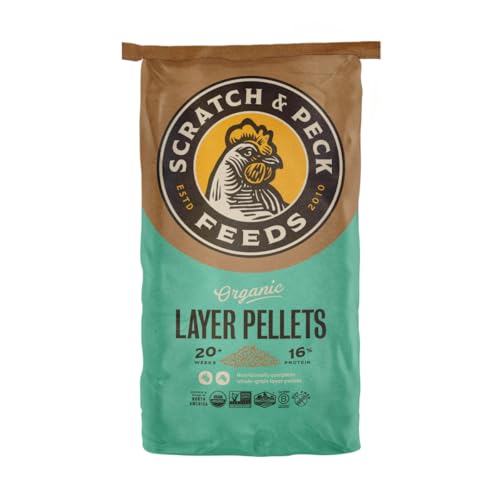
Optimal Health and Egg Production - Enriched with 16% protein from organic grains, this feed provides a balanced and complete diet for laying chickens and ducks, promoting growth and nutritious, supports strong eggshells
Creating Homemade Layer Feed Recipes
You can formulate nutritionally complete layer feed by combining whole grains, legumes, and targeted supplements to meet your flock’s protein requirements of 16–17.5%. Start with hard red wheat (14 cups) as your base grain, then add barley (12 cups) and oats (8 cups) for balanced carbohydrates. Incorporate split peas (19 cups) and brown lentils (2.75 pounds) for essential amino acids. Fish meal contributes 10% of your mix for additional protein density. Providing proper digestion is also essential, so including grit in their diet helps grind food in the gizzard, aiding in nutrient absorption. Additionally, alfalfa pellets can be included in the diet as they offer a rich source of fiber and essential vitamins, further enhancing your hens’ overall health. Ensuring a balanced diet is crucial for overall health and optimal egg production. Cantaloupe can also serve as a refreshing treat for chickens, providing hydrating properties that support their well-being, especially in hot weather.
For nutritional balancing, include kelp (1/2 cup) for omega-3s, garlic powder (1/2 cup) for immune support, and red pepper flakes (1.5–2 cups) for carotenoids. Consider ingredient substitutions like dried mealworms (1 pound) or black oil sunflower seeds when availability changes. Many chicken keepers find that non-GMO ingredients sourced from local suppliers provide better quality options while reducing overall feed costs.
Mix thoroughly in a large tub and store covered. Feed 1/4 pound per hen daily alongside free-range forage.

Added Marigold Extract - For rich yellow yolks — A high level of xanthophyll, a coloring agent derived from marigolds, produces deep yellow egg yolks

[WHAT'S INCLUDED]: Complete layer feed in pelleted form for laying chickens from 16 weeks through productive life. 50 pound bag with 16% protein, 2.5% fat and 8% fiber. Feed as sole ration. Pelleted form reduces waste compared to mash formulations

Rich yellow yolks - A high level of xanthophyll, a coloring agent derived from marigolds, produces deep yellow egg yolks
Calcium and Phosphorus Management
While your homemade layer feed provides balanced macronutrients, it won’t sustain ideal eggshell quality without proper mineral management. You’ll need to maintain a critical calcium-to-phosphorus ratio, as imbalance directly weakens shells and reduces production. Offer calcium sources like oyster shell and defluorinated rock phosphate separately, allowing hens to self-regulate intake based on physiological demands. Calcium deficiency can lead to thin, soft, or malformed eggshells and reduced hen health, preventing the problem of excess calcium suppressing phosphorus absorption. Additionally, without crushed oyster shells, hens risk drawing calcium from their bones, causing weakness and potential fractures. It is also beneficial to provide crushed eggshells as a natural calcium supplement, especially when hens begin laying. You should target minimum phosphorus levels of 0.30–0.40% in your formulations, ensuring adequate phosphorus absorption through proper calcium balance. Frizzle Cochin Bantams, being friendly and docile, benefit greatly from nutritious diets that support their egg-laying needs. It is crucial to provide both small and large particle calcium for optimal health and egg production. Vitamin D facilitates mineral uptake, so verify its inclusion in your recipe. Together, these minerals comprise over 70% of avian skeletal content and directly influence both bone strength and eggshell integrity throughout extended laying cycles. Key micronutrients for shell formation include zinc, magnesium, and vitamin D3 alongside calcium and phosphorus to ensure comprehensive mineral support.
Optimizing Egg Production Through Nutrition
Achieving consistent, high-quality egg production hinges on precise nutritional management that accounts for your flock’s specific metabolic demands across different production phases. You’ll optimize performance by targeting 16–18% crude protein using high-quality protein sources like soybean meal to maximize amino acid bioavailability. Balancing ideal amino acid ratios—particularly methionine, lysine, and threonine—directly improves egg size, shell quality, and feed conversion efficiency. Additionally, incorporating essential herbs into your chickens’ diet can further enhance their overall health and well-being, contributing to better egg production. Providing access to high-quality feed consistently is crucial for maintaining overall flock health. Chickens also serve as sentinel animals in other contexts, showing how proper care and nutrition can contribute to their role in monitoring health threats.
Moreover, feeding your hens dark leafy vegetables can significantly improve yolk quality and nutritional value of the eggs produced. You should adjust metabolizable energy concentration to match your breed’s genetics and environmental conditions, preventing both underfeeding that limits egg mass and overfeeding that reduces persistency. Monitor feed conversion ratios and energy intake per dozen eggs as key economic metrics. Winter conditions may require a 5%-10% increase in feed energy to maintain optimal production during colder months. Implementing split feeding strategies—high-protein, energy-dense morning rations paired with calcium-rich afternoon feeds—aligns nutrition with your hen’s egg-formation physiology, extending laying persistency while reducing costs per egg.
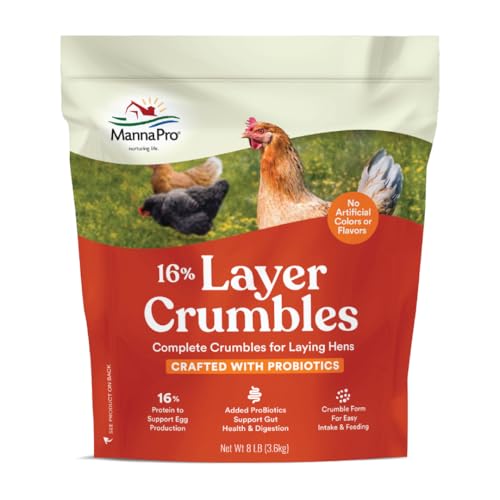
COMPLETE CHICKEN FEED FOR LAYING HENS: Manna Pro Chicken Feed delivers complete nutrition designed for laying hens, supporting strong egg production, healthy feathers, and overall wellness; balanced formula helps maintain optimal health in backyard flocks

ALWAYS PREMIUM NUTRITION: Our corn-free and soy-free chicken food 25lb (chicken feed 25 lb bag) is a complete diet for laying hens, boasting a guaranteed minimum of 17% protein. Your feathered friends will thrive on this super premium blend, producing top-quality organic whole chickens.

Premium Whole Grain Nutrition: Wholesome Harvest Non-GMO bird food is a complete 10-pound mix of cracked corn, wheat, soybeans, and sunflower seeds. With 18% protein, it’s the perfect duck food for pet ducks, geese, and other waterfowl for healthy growth and daily feeding.
Monitoring Health and Feed Quality
Optimized nutrition establishes the foundation for egg production, yet performance gains depend equally on systematic health monitoring and feed-quality assurance that catch deviations before they compromise flock productivity. You’ll track daily feed and water intake, mortality, and egg quality as primary health indicators—deviations signal emerging problems. Implement standardized welfare scoring protocols alongside behavioral observation to flag stress or disease early. For feed monitoring, you’ll conduct multi-point sampling of incoming materials and finished feed, analyzing for nutrients and contaminants using bromatology and NIRS. Retain samples for batch traceability. Understanding supplier practices ensures quality monitoring across seasonal variations that affect ingredient adherence to negotiated standards. Automated sensors detecting consumption drops, integrated data platforms, and threshold-based alerts enable real-time detection, transforming fragmented monitoring into actionable flock management.