You’re right to wonder why your hens wobble, lay soft shells, and start pecking each other—those are classic signs of calcium deficiency. Usually each egg needs 2–2.5 g of calcium, and if the feed drops below 3 % or you’re missing free‑choice oyster shell, the birds leach calcium from their bones, causing weak shells, leg tremors, and even fractures. Fix it fast by sprinkling about 5 g crushed oyster shell per bird for three days, add vitamin D₃ to water, and switch to a proper layer feed with at least 4 % calcium; if a hen can’t stand or shows cyanotic comb, call a vet right away. Next, you’ll learn how to keep calcium levels steady for the whole flock.
Identify Early Signs of Calcium Deficiency in Chickens
What should you look for first? You’re probably wondering why your flock seems off‑track, and you asked the right question. Early lameness shows up as a wobbly walk or a hen that refuses to roost on the perch, preferring a flat surface instead. That limp often signals calcium draining from her bones, so you’ll see her sit more and avoid moving.
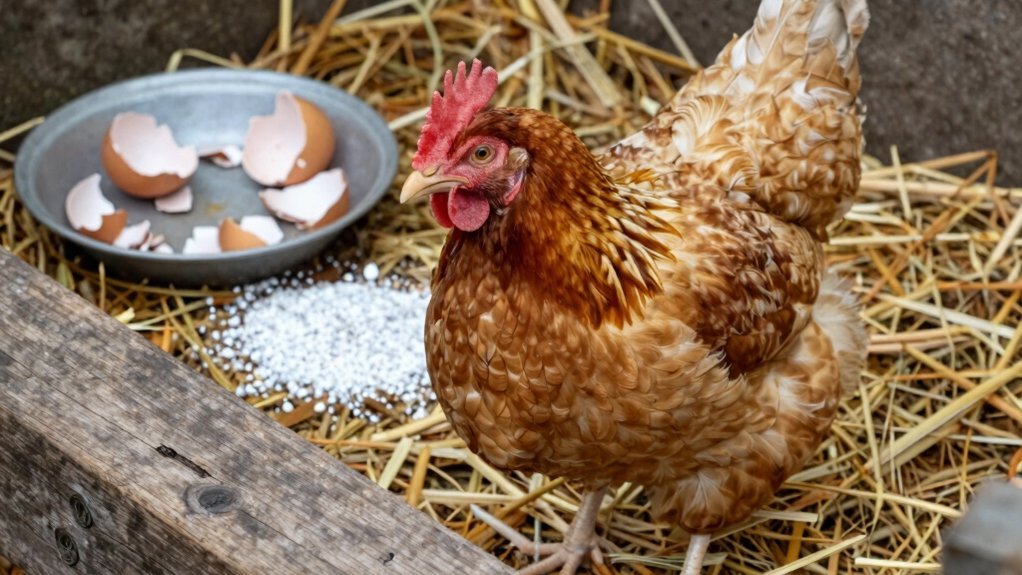
Why do some hens become egg eaters? When shells turn thin or soft, a few birds start pecking at them, hoping to reclaim the missing calcium. You’ll spot more shell fragments in the nest and a sudden increase in feather pecking. Since calcium-deficient hens will draw from their own bones, providing crushed eggshells separately allows them to self-regulate intake and prevent skeletal problems. While small particles support immediate shell formation, offering large particle calcium separately ensures slow release overnight to aid bone strength. To further support overall hen health and cardiovascular function, you can provide oyster shells as a reliable calcium source that helps maintain strong bones and consistent egg production.
Takeaway: Spotting limps and shell‑eating behavior early lets you intervene before bone fractures or severe production loss hit. Next, check your feed’s calcium source and adjust the ratio.
Why Calcium Deficiency Matters for Eggshells and Bones
You’re probably wondering why those wobbly walks and shell‑eating habits matter beyond the obvious signs. Here’s the thing: each egg needs 2–2.5 g of calcium, and 94 % of a shell is calcium carbonate. If you don’t feed enough, the hen pulls calcium from her bones, thinning shells and weakening the skeleton. That’s why you see cracked eggs and leg fractures. Metabolic alkalosis can sneak in when you over‑correct with alkali‑rich feeds, while phosphorus toxicity worsens calcium loss because excess phosphorus binds calcium and hinders absorption.
How does this affect bone health?
Low calcium forces continual bone resorption, turning strong keel and leg bones into brittle, fracture‑prone structures. Older hens feel it most; their calcium reserves dwindle while demand stays high. To prevent these issues, hens require large particle calcium that releases slowly overnight to support shell formation while they roost. Unlike fast-acting feed calcium, crushed oyster shells reside in the gizzard to provide a sustained release during the night when hens are not eating. Commercial layer feeds are formulated with around 3.25% calcium to support continuous egg production and overall hen health without causing harm from excess intake.
Takeaway
Enough calcium protects both eggshell integrity and skeletal strength. Next, ask yourself: which feed adjustments will keep calcium, phosphorus, and pH in balance?
Top Triggers of Low Calcium in Chickens
Why does my flock suddenly start laying thin‑shelled eggs? You’re probably wondering if something in their diet or environment slipped. Here’s the thing: low calcium can spring from several triggers.
Is my feed missing calcium?
A layer diet needs 3–4 % calcium; dropping below 1 % is a recipe for soft shells. Using grower or maintenance feed for layers cuts calcium intake dramatically, and tiny limestone particles won’t dissolve enough for absorption. While feed provides some calcium, offering oyster shell separately ensures hens can self-regulate their intake to produce strong eggshells and maintain healthy bones. Transitioning pullets to a balanced layer feed around 16 to 20 weeks of age ensures they receive the specific nutrient profile required for optimal egg production.
Could genetics play a role?
Some breeds carry a genetic predisposition to weaker shells, so even a modest diet shortfall hits them harder.
Am I over‑medicating?
Excessive antibiotics or anti‑parasitics can disrupt gut flora, reducing calcium uptake—overmedication effects matter.
What about stress?
Heat, crowding, or chronic stress spikes corticosterone, pulling calcium from bones and lowering blood ionized calcium.
Takeaway: Check feed formulation, respect breed limits, avoid unnecessary meds, and keep stress low. Next, ask yourself which of these factors you can control right now. You can also safely supplement their diet by feeding them baked eggshells that have been dried and crushed to prevent bacterial risks while boosting calcium levels.
Fast Fixes for Mild‑to‑Moderate Calcium Deficiency
One or two days of extra calcium can turn thin‑shelled eggs into firm ones, and you’re right to wonder how to get there fast.
How can I boost calcium instantly?
Now, give your hens free‑choice oyster shell or limestone grit. Sprinkle about 5 g crushed oyster shell per bird for three consecutive days—Merck recommends this for hypocalcemia. Keep the grit separate from the main feed so they self‑regulate. This approach prevents overconsumption in non-laying birds like young pullets and roosters, which can suffer kidney damage from excess calcium.
What about a calcium injection?
Here’s the thing: a single calcium injection can jump‑start blood calcium, but it doesn’t fix a phosphorus imbalance. Use it only if you suspect a sudden drop, then follow up with daily grit and vitamin D3 water.
Do I need to watch phosphorus?
Obviously, bone meal adds phosphorus, which can worsen a mild deficiency. Stick to pure calcium sources; avoid excess phosphorus until the diet normalizes.
Takeaway: Separate grit, short‑term top‑dressing, and D3 water restore shells quickly—no injection needed unless emergency strikes. Creating a homemade laying mash with balanced protein and high calcium content further supports optimal egg laying capacity and healthy eggshell formation. Consistent access to fresh water is also fundamental to maintaining a healthy feeding regimen during recovery.
When Your Hen Needs a Vet Right Away?
If your hen suddenly can’t stand, is straining at the vent, or shows rapid breathing, you need a vet today. You’re probably wondering why this happens now and what to do. Here’s the thing: acute hypocalcemia can trigger neurological complications and even cardiac involvement, so waiting isn’t an option.
What signs scream emergency? Egg binding, seizure‑like tremors, or a cyanotic comb mean the crisis is already systemic. You’ll notice rapid breathing, wing spreading, or collapse—each a red flag that the heart and nervous system are under stress. While these symptoms indicate a critical calcium issue, it is important to distinguish them from conditions like sour crop, where fungal infection causes regurgitation and lethargy rather than the tremors associated with hypocalcemia. Other physical indicators of this distress include a penguin-like walk caused by the hen straining to pass a stuck egg.
What’s the next step? Call your veterinarian immediately. Ask for injectable calcium, supportive fluids, and a full exam to rule out heart strain or nerve damage. Acting fast can save your hen and prevent permanent injury. Severe straining from soft-shelled eggs caused by low calcium can also lead to vent prolapse, a painful condition where tissue protrudes and requires immediate isolation and veterinary care to prevent flock pecking and infection.
Long‑Term Prevention Plan for Calcium Health
How can you keep your flock’s calcium steady for the long haul? You’re right to wonder—steady calcium isn’t magic, it’s a plan.
What daily feed should I use?
Pick a complete layer ration that already balances calcium and phosphorus. Keep treats under 10 % of total intake, and never give high‑calcium feed to pullets. This prevents early phosphorus interference and rickets.
How do I let hens self‑regulate?
Offer oyster shell or limestone grit in a separate dish. Large particles let each hen take what she needs, especially older layers whose medullary bone reserves are low.
What extra support helps absorption?
Add vitamin D3 to feed or water, manage light, and let hens move freely. Exercise preserves bone strength, just like a daily jog keeps human joints healthy. Addressing factors like heat stress is also vital, as environmental strain can weaken shells alongside nutritional gaps. Layer feeds typically contain 16-18% protein alongside essential amino acids to support overall health while maintaining proper calcium levels.
Takeaway: Consistent, balanced nutrition, free‑choice calcium, and good light/health management keep calcium recycling and phosphorus balancing in sync.
Next step: Check your feed label for calcium‑phosphorus ratio and set up a grit station today.
Remember that diet transitions should be gradual to prevent digestive upset while your flock adjusts to new nutritional levels.