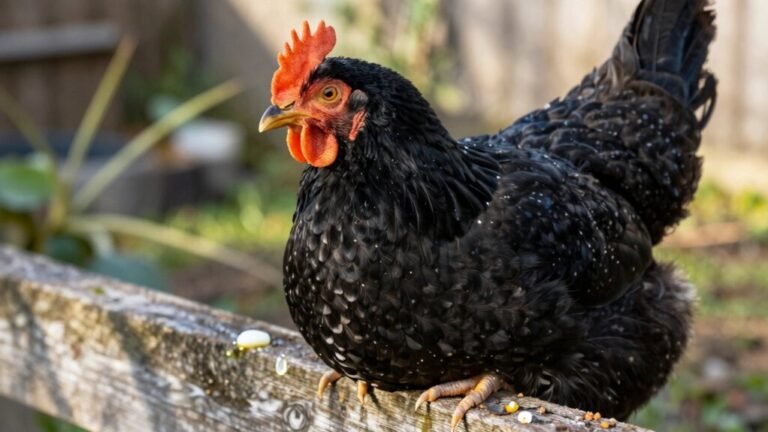
You can rest assured that rabies in chickens is extraordinarily rare—documented cases number in the single digits worldwide despite decades of surveillance across the US, EU, and rabies-endemic regions. Your chickens lack the specific viral receptors that enable efficient lyssavirus entry, and their elevated body temperature creates an inhospitable environment for virus replication. Even if infected, they don’t shed rabies virus in saliva, eliminating the primary transmission route to humans or other animals. Understanding the biological factors that protect your flock reveals why this risk deserves minimal concern.
The Reality of Rabies in Chickens: How Rare Is It?
Rabies in chickens is extraordinarily rare, with natural infections documented in only a handful of cases worldwide despite decades of surveillance. You’ll find historical cases primarily in Germany, where researchers identified 11 chickens among 25 avian rabies instances—a minuscule fraction of all rabies cases. India reported its first naturally acquired case in domestic fowl from a canine-endemic region, demonstrating spillover potential in highly endemic areas. Yet rabies myths persist among chicken owners. Current surveillance data from the US and EU consistently exclude poultry from reported cases, indicating either genuine rarity or significant under-reporting due to insufficient testing protocols. The lack of documented human transmission from infected poultry further underscores the minimal practical risk you face as a chicken owner. In contrast to the 99% dog-mediated transmission documented in developing countries like India, where stray dog populations drive rabies prevalence, poultry involvement remains virtually nonexistent in epidemiological data. Additionally, chickens can be kept healthy and entertained through homemade chicken treats, which provide essential nutrients and enrichment. To further alleviate concerns, it’s important to remember that keeping chickens in secure coops can also help protect them from common predators that might pose threats to their safety.

Prevent Predators:2 roll chicken coop predator proof apron total about 11-5/8in W x 65 ft L, expertly designed to effectively block predators.Extending the wire mesh to the bottom of the coop prevents predators from digging their way in

【Include】Chicken Wire mesh x 10 pieces, hooks x 20 pieces, black ties x 40 pieces.Suitable for chicken coop item number AIR23,AIR27,AIR61,AIR45,AIR49.

MULTIFUNCTION: This garden fence animal barrier is suitable as a path edge fence, lawn, garden, vegetable garden border fence, it can prevent small animals from escaping or some small animals enter and destroy your garden or backyard
Why Chickens Are Less Susceptible to Rabies Than Mammals
While mammals fall prey to rabies virus with devastating efficiency, chickens possess multiple biological safeguards that render them substantially resistant to infection. You’ll find that chickens lack the specific viral receptors mammals have, preventing efficient lyssavirus entry. Their elevated body temperature—37-39°C—exceeds the virus’s best replication range, creating an inhospitable environment. Physiological barriers like shorter CNS pathways limit viral propagation compared to mammalian hosts. Additionally, your chickens mount a superior immune response, producing IgY antibodies with fifteen times higher neutralization titres than rabbit IgG over extended periods. Studies show that IgY antibodies can be isolated from egg yolks following immunization protocols, providing a scalable source of rabies-specific antibodies. Viral adaptation differences further disadvantage the rabies virus in avian hosts, as evolutionary mismatch reduces lyssavirus fitness. These combined epidemiological factors and biological mechanisms explain why rabies remains exceptionally rare in chickens despite their exposure to infected mammals.
Can an Infected Chicken Transmit Rabies to Humans or Other Animals?
How likely is it that an infected chicken could transmit the virus to you or other animals? Extremely unlikely. Infected chickens don’t shed rabies virus in saliva, eliminating the primary transmission mechanism for rabies. You face minimal risk handling or processing an infected bird unless you’ve exposed open wounds to its saliva—a scenario never documented in humans. Additionally, chickens, such as Leghorn chickens, are known for their high feed-to-egg conversion ratio, showcasing their efficiency in production without posing significant health risks to handlers.
Transmission to other animals is equally improbable. Chickens lack the biological capacity to disseminate virus through typical shedding mechanisms. The isolated case of a chicken bitten by a rabid dog produced no onward spread to mammals or other species. Brain lesions in infected birds differ from typical mammalian presentations, suggesting a fundamentally different disease progression that further limits transmission potential.
The virus requires direct saliva contact with mucous membranes or wounds for infection. Without this exposure pathway, infected poultry pose negligible transmission risk regardless of context.
Steps to Take If Your Chicken Is Exposed to a Rabid Animal
Because exposure to a rabid animal creates an urgent public health concern, you’ll need to act quickly and systematically to protect both your flock and yourself. Begin with immediate wound care by thoroughly cleansing any bite or scratch sites with soap and water for at least 15 minutes, then apply a virucidal agent like povidone-iodine solution. Additionally, consider using soothing Epsom salt baths to assist in the recovery of your chicken during its isolation period. It’s also helpful to maintain a clean watering system for your chickens during this time to promote their overall health. As chickens can be sensitive to various dietary changes, it’s important to provide nutrient-rich treats that support their health during this time, including grit to aid in digestion during their recovery. Keep in mind that an unhealthy or stressed chicken can also be more susceptible to other threats such as mite infestations, which can further compromise its condition. Immediately isolate your exposed chicken from the flock and begin animal observation, monitoring daily for neurological symptoms including aggression, paralysis, or excessive salivation. Confine the bird securely for up to 10 days. Contact animal control to capture the suspected rabid animal for rabies testing at a public health laboratory. Direct contact with infected saliva is necessary for rabies transmission, so avoid proximity alone to potentially infected animals. Report the incident to your local health department and seek veterinary consultation regarding your chicken’s evaluation.

EFFICIENT ANTISEPTIC: The Dynarex Povidone Iodine Prep Solution is specifically designed to provide highly efficient skin antisepsis for skin preparation prior to any minor invasive procedure.

One 8-fluid ounce bottle of first aid antiseptic

Trusted By Healthcare Professionals: The Betadine brand has been trusted and used in hospitals for over 50 years; Simply dab Betadine Antiseptic Solution, an antiseptic skin solution, over the minor wound after cleaning and let dry; use as directed
Prevention and Biosecurity Measures for Chicken Owners
Five critical biosecurity layers—quarantine protocols, cleaning and disinfection, human hygiene controls, wildlife management, and preventive practices—form the foundation of rabies risk mitigation on your poultry operation.
You’ll implement quarantine protocols by isolating new birds for 30-60 days at minimum 12-yard distances from your existing flock. Your disease prevention strategy includes regular equipment disinfection, dedicated footbaths, and designated clothing for coop access. You’ll control visitor traffic, requiring hand washing and protective gear from all individuals entering poultry areas. Unsanitized footwear can transfer pathogens between flocks, so enforce strict shoe and clothing protocols at all entry points.
You’ll minimize wildlife contact by eliminating bird feeders and controlling rodents, raccoons, and stray animals near housing. You’ll establish veterinary care relationships, source birds from disease-free herds, and maintain detailed records of all bird movements. These biosecurity practices create multiple barriers that markedly reduce rabies exposure risks on your operation.