You’ll raise market-ready broilers in six to eight weeks by mastering four critical areas. Start by selecting a breed like Cornish Cross for rapid growth or Red Rangers for hardier birds. Next, you’ll implement proper nutrition, shifting from starter feed at twenty-two percent protein through grower and finisher stages. Control your brooder environment carefully—maintain appropriate temperature and space while monitoring daily for health issues. Vaccinate against common diseases and keep detailed records. Master these fundamentals, and you’ll achieve consistent success.
Setting Up Your Brooder
You’ll want to start with at least 0.5 square feet per chick, then expand to roughly 1 square foot by weeks 2–3 to minimize crowding and stress. Your brooder design should feature a square or rectangular layout with wide access doors and no tight corners for easy cleaning and inspection.
Maintain 12–18 inches of clear headroom under your heat source and avoid multilevel setups that risk piling and suffocation. Use pine shavings for bedding—they provide traction to prevent splayed legs and offer insulation. Start with 3–8 inches of depth and adjust as chicks grow. Sturdy walls around 3 feet tall will prevent your chicks from escaping as they develop and become more active. Additionally, be mindful of using the deep litter method to keep your chicks warm while providing a comfortable environment.
For temperature control, position your brooder away from direct drafts. Guarantee passive ventilation near ceiling level while maintaining calm airflow. This setup reduces respiratory issues and keeps your flock comfortable.

Elevate Your Coop with Our Premium Pine Bedding—meticulously crafted from 100% natural radiata pine. Super absorbent (3x+ its weight), low dust, and naturally odor-controlling, it keeps the coop dry, comfortable, and fresh. Compostable, fluffy and gently cushioning, it turns your chicken house into a clean, forest-fresh haven.

100% Natural and Biodegradable: These pine shavings are entirely natural and fully biodegradable, ensuring eco-friendly use and easy composting.

HATCHERY'S CHOICE: Give your brooder-raised chicks a great start with Hatchery Preferred Excelsior Bedding. This aspen excelsior, commonly used by hatcheries for chick transport, offers a better footing for your little ones.
Essential Supplies and Equipment
Raising meat chickens successfully depends on having the right equipment before your chicks arrive. You’ll need sturdy coop materials—hardware cloth, buried predator aprons, and reinforced latches—to protect your flock from raccoons and foxes. Inside, plan 2–4 sq ft per bird and install ventilation to manage ammonia buildup. It’s also vital to offer a mix of ingredients in your feed that mimics their natural diet, including whole grains for added nutrition.
For feeding, provide multiple feeders to reduce competition and scaled watering systems with redundancy to prevent dehydration. Use commercial starter feed with 20%+ protein, and keep grit available free-choice. A big hanging feeder efficiently dispenses food and accommodates growing chickens as they develop.
Stock kiln-dried pine shavings for bedding, maintaining 4 inches depth initially. Prepare for processing by gathering scalding equipment, plucking tools, and butchering knives. Don’t overlook biosecurity supplies—footbaths, gloves, and hand sanitizer prevent disease spread. Organization now saves headaches later.

[Heavy Duty Material]: Gbekery Hardware cloth is crafted from high-quality, robust materials. And The size of the chicken wire is 16 inch×25 ft and 1/2 inch×1/2 inch thickness.

Material and size: The size of the hardware cloth is 16 inch×50 ft and 1/2 inch×1/2 inch thickness, adopt 19 guage hot-dipped galvanized material

【High quality raw materials】Our hardware cloth chooses the strength, toughness and ductility of low carbon steel wire as the inner core. This determines the basis of the high quality of our products.
Choosing the Right Chicken Breeds
Once you’ve secured your equipment and coop, selecting the right breed becomes your most consequential decision—it’ll determine your timeline, feed costs, meat quality, and overall flock health. Your breed selection hinges on three factors: production speed, carcass quality, and management capacity.
Cornish Cross hybrids mature in 6–8 weeks with superior feed conversion, ideal if you prioritize efficiency and volume. It’s crucial to ensure they have access to fresh water, especially in hot weather, as dehydration risks can quickly escalate for meat chickens. Additionally, meat birds are specifically bred for rapid growth and can require more intensive management to maintain their health. Regularly providing a clean and dry environment with suitable bedding types can also enhance their overall health and comfort. Red Rangers require 8–12 weeks but offer better leg health and foraging capability. Heritage breeds like Rhode Island Reds take 12–20+ weeks yet provide dual-purpose value and breeding sustainability. Dual-purpose breeds also produce flavorful, nutrient-dense meat when given extended pasture time, making them suitable for farmers prioritizing meat quality over rapid growth cycles. It’s essential to consider that the typical lifespan of chickens ranges from 8 to 10 years, which can influence your long-term planning and egg production cycles.
Growth rates directly impact your infrastructure demands and biosecurity protocols. Fast-growing hybrids need stringent sanitation; slower breeds thrive in pasture systems with lower mortality risk. Match your breed’s growth trajectory to your management style and market timeline for best results.

No Antibiotics Ever


High Protein Content: 20g Protein Per Serving helps power lunches, salads, tacos, wraps, and weeknight dinners in minutes
Feeding and Nutrition Guidelines
Proper nutrition—from medicated starter feed through finisher rations—forms the foundation of efficient meat chicken production, directly impacting growth rates, feed conversion, and flock health. You’ll start chicks on medicated feed for two weeks, maintaining 22-24% protein content in starter crumbles. Provide 1-2 inches of feeder space per chick during this critical phase. Ensuring adequate calcium levels in the diet is crucial for overall bird health. Additionally, choosing the right commercial feeds tailored for meat chickens is essential to meet their specific nutritional needs.
At 3-4 weeks, you’ll shift to grower feed (18-20% protein), then finisher feed (16-18% protein) by week four. Mix feeds gradually over several days to prevent digestive upset. Consider incorporating probiotics and enzymes into your feeding regimen to support gut health and nutrient absorption without relying on antibiotics.
Implement a 12-hour on/off feeding schedule from week two onward to prevent overeating and leg problems. After the first week, distribute feeders around your pen and raise them to chick back level. Guarantee 2-4 square feet per bird to minimize stress and mortality while optimizing space requirements for healthy development.

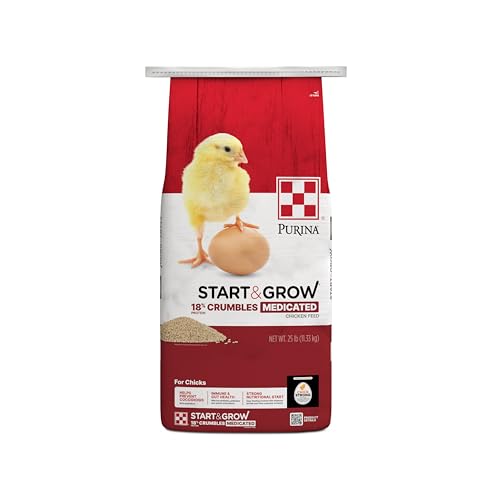
MEDICATED CHICK STARTER FEED: This complete chicken feed is made with added Amprolium to aid in the prevention of coccidiosis, and contains 18% protein for weight gain, our chicken food is essential for your young birds.

COMPLETE STARTER FEED FOR CHICKS: Specifically formulated for chicks from hatching to 16 weeks, this non-medicated chick starter feed delivers balanced nutrition and essential nutrients to support strong, healthy early growth and development.
Prebiotics and Probiotics - Supports immune and digestive health
Managing Health and Growth Timeline
Every single day you’ll need to monitor your flock for early disease detection—the difference between catching a problem at first light and losing birds to a preventable outbreak often comes down to consistent morning inspections. Check feathers, combs, eyes, vents, and feet for abnormalities. Watch for lethargy, coughing, or labored breathing. Regularly assessing your chickens can also lead to early interventions such as therapeutic Epsom salt baths for muscle relaxation or toxin flushing.
Implement biosecurity measures immediately: quarantine new birds thirty days, use footbaths, and separate sick chickens promptly. Purchase chicks from NPIP hatcheries only. Regular observation of your flock ensures prompt intervention when health issues arise.
Track growth milestones carefully. Weeks one through four demand strict temperature and environmental control. Weeks four through eight require monitoring respiratory and digestive signs. Maintain clean, dry litter and proper ventilation throughout.
Vaccinate against Marek’s, Newcastle, and infectious bronchitis per schedule. Cull problem birds decisively. These disease prevention strategies and growth milestones guarantee market-ready broilers at six to eight weeks.