You’ll uncover chickens come in self colors like black, blue, buff, and lavender, determined by specific genetic mechanisms. You can find barred and cuckoo patterns offering natural camouflage, columbian and belted varieties balancing aesthetics with egg production, and laced designs creating striking visual contrast. Rare mutations like chocolate and tolbunt varieties command premium prices due to limited breeding stock. Understanding these genetic traits helps you make informed breeding decisions. The full spectrum of available colors and patterns reveals sophisticated hereditary systems worth exploring further.
Self Colors
Self-colored chickens display a single, solid hue without any patterning—a distinctive characteristic that sets them apart from other plumage varieties. You’ll find self color breeds across multiple lines, including Ameraucanas, Barbu D’Uccles, and Marans, each offering distinct color options.
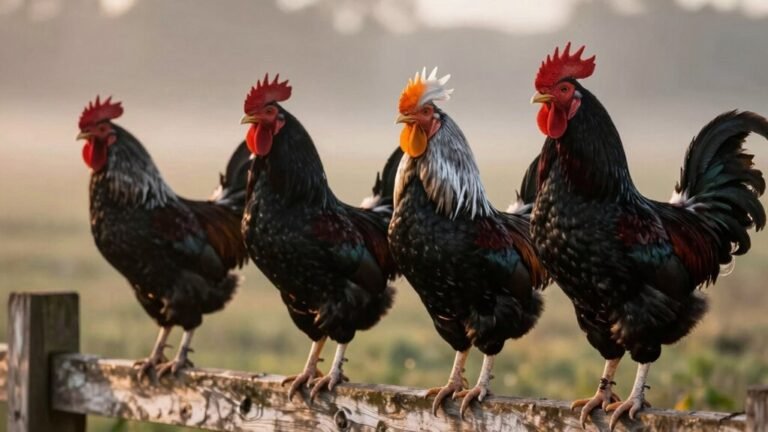
Common self color characteristics include black, blue, splash, buff, lavender, red, and white varieties. Black appears in Sumatra and Silkie breeds, while blue features prominently in dark blue-laced Andalusians. Splash represents the homozygous form of blue, particularly notable in Splash Ameraucanas and Splash Cochin Bantams. The desired green iridescence in beetle black show chickens is an important trait for breeders seeking exhibition quality birds.
Rare self color variants exist too. You can find chocolate in Orpington bantams, Tolbunt exclusively in Polish chickens, and Exchequer limited to Leghorns. These self color breeds produce consistent egg colors ranging from blue to brown, making them valuable for selective breeding programs.
Barred and Cuckoo Patterns
Moving beyond the solid hues of self-colored varieties, barred and cuckoo patterns introduce rhythmic striping that defines several heritage breeds. You’ll recognize barred patterns by their regularly spaced, parallel bars alternating dark and light across feathers. A sex-linked dominant gene creates this effect by preventing pigment formation on colored feathers, producing white bars against dark backgrounds.
Cuckoo patterns present a similar genetic mechanism but with less uniform, zigzag striping. Though often interchangeable in terminology, cuckoo typically denotes irregular barring seen in breeds like Cuckoo Marans.
Both patterns provide excellent camouflage against aerial predators. The sex-linked inheritance means males appear lighter overall with narrower bars, while hens display darker, broader striping. These patterns showcase nature’s functional design within poultry breeds. The Barred Rock breed exemplifies this aesthetic appeal while maintaining practical advantages in predator evasion.

Upgrade Poultry Feeder: The internal height of our poultry feeder port has been increased by 0.6 inches. The clever design effectively reduces 30% feed spillage and mess. Every grain of feed is fully utilized, allowing the chicken coop to say goodbye to messiness and maintaining a clean automatic dining environment for the flock

No-waste design: Chicken feeder features a no-waste design with the feed opening extending downward, solving the problem of spilled feed, avoiding feed waste and providing a cleaner coop for your chickens. With the chicken feeder you can feed your chickens efficiently, avoiding mess and waste, saving you money and time. We recommend a distance of 3 inches between the feeder hole and the bottom of the bucket

LARGE 30 LB CAPACITY:Holds up to 30 pounds of feed—perfect for flocks of all sizes. Reduce refill frequency and keep your chickens happy and full.
Columbian and Belted Varieties
Columbian and belted varieties serve dual purposes: egg production and meat quality. You can expect approximately 200 medium cream or brown eggs yearly. The ornamental plumage enhances visual appeal while maintaining reliable performance in cold climates. Their rose combs are naturally resistant to freezing temperatures, making them well-suited for small family flocks in colder regions. Additionally, these breeds are known for their steady egg production, ensuring a reliable supply of eggs even in challenging conditions. It is essential to start with a small group of 3 to 6 chickens to ensure they have companionship and a stable social order. It’s important to ensure that the chickens’ diet is healthy, avoiding items like commercial cranberry sauce, which can be detrimental to their health. Additionally, providing automatic waterers can greatly improve hydration consistency for chickens in various conditions.

Insulated | Water stays cool in summer, helps prevent freezing in winter.

SMART DRINKING, HANDS-FREE HYDRATION: The intelligent float valve in this automatic chicken waterer turns the water on when needed and off when full, eliminating spills. It manages the flow in your chicken water system seamlessly, ensuring your flock always has access to fresh, clean water. This automatic chicken waterer system provides worry-free hydration whether you're away for days or just busy

Automatic Water Level Control: Equipped with a sensitive float valve system, this poultry waterer automatically refills when water level drops and stops when full, ensuring a continuous supply of clean
Duckwing and Black-Breasted Plumage
Beyond the bold, uniform patterns you’ll find in Columbian and belted varieties, duckwing plumage represents a fundamentally different genetic architecture rooted in wild-type ancestry. Duckwing genetics derive from the red junglefowl’s e+ allele and sex-linked modifiers that distribute pigments distinctly across male and female phenotypes. Males display contrasting bright gold or silver hackles, saddles, and heads against black wing feathers with greenish sheens. Females exhibit barred backs with buff and black markings, featuring lighter shoulder patches edged by darker feathers—the signature duckwing pattern. Duckwing breeds like Phoenix and Old English Game preserve this ornamental phenotype through selective breeding, exhibiting the sex-linked dimorphism that defines the pattern’s genetic expression and visual distinctiveness. The Silver Duckwing Phoenix breed exemplifies this pattern with its striking silver and black plumage that maintains aesthetic appeal across generations. Additionally, providing one nesting box for every 4-5 hens can help reduce competition among hens and encourage proper egg-laying behavior. Incorporating proper feeding practices can optimize nutritional intake and support overall flock health. Automated feeders can help provide consistent nutrition and reduce feed waste, promoting improved feed efficiency in your flock’s diet. This is especially useful for managing poultry in remote areas where battery-powered solutions are popular, as they offer innovative options for maintaining fresh water in winter months. Incorporating fresh herbs like basil into their diet can improve their overall health and enhance egg production.
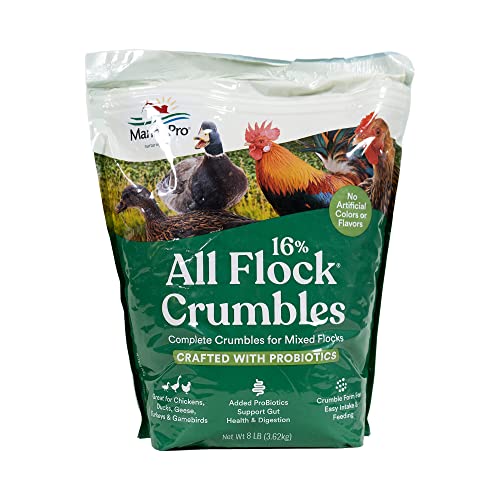
COMPLETE ALL FLOCK FEED FOR MIXED BACKYARD FLOCKS: Versatile poultry feed & all flock feed designed to support chickens, ducks, turkeys, geese, & more; a balanced bird food that simplifies feeding a diverse species in your backyard or homestead

PROGRAMMABLE DIGITAL TIMER: Our programmable digital timer lets you schedule up to 6 feedings per day, with each feeding adjustable from 1 to 60 seconds. Take control of your feedings by deciding how much and when to dispense feed, saving you both time and energy. The throw range extends approximately 5 to 6.5 feet (about 1.5 to 2 meters)

Extra-large capacity: The 30 lbs metal chicken feeders reduces the need for frequent refilling and is suitable for medium to large flocks for long-term outdoor use
Laced, Pencilled, and Mottled Designs
Feather pattern genetics in Wyandottes reveal three distinct design systems that modify base coloration through overlaid markings. You’ll find laced patterns create sharp, black outlines on golden or silver feathers, producing striking visual contrast in sunlight. Pencilled designs offer finer details—narrow parallel lines resembling pencil strokes on grayish or brown bases. Mottled textures display irregular white splashes at feather ends against black bases, generating a spotted effect that enhances camouflage appeal. Additionally, many breeds, including Wyandottes, are known for their dual-purpose qualities, providing both eggs and meat. These birds share some hardy traits with American Game fowl, allowing them to thrive in various environments. Notably, the good temperament of Wyandottes makes them a popular choice among backyard flock keepers. To ensure their safety from predators like hawks, it’s crucial to employ effective safeguarding methods that enhance their protection while they roam freely. These traits contribute to their popularity, highlighted by breeds like the Dominique, which also exhibits attractive plumage and is favored for its friendly nature.
These pattern varieties combine with breed characteristics like the rose comb and dense feathering to create functionally beautiful birds. The rose comb is particularly suitable for cold climates, protecting the birds during harsh winters. You can expect 6-9 pound birds laying 180-260 brown eggs annually while maintaining docile temperaments. The combination of aesthetic appeal and dual-purpose utility makes these patterned Wyandottes valuable additions to your flock.

BIRD NETTING FOR CHICKEN COOP: Are you worried that hawks or owls might attack your chicken? This high-tenacity nylon netting features ultra-strong multifilament fibers—finer than ordinary coarse ropes yet with a 5.26kg tensile strength for superior tear resistance. You can keep Keep predator like hawks or owls out by simply draping your chicken run with this mesh netting. It keeps your chicken safely contained—no more jumping into neighbor's yard or destroying your garden!

【Heavy Duty Nylon Bird Netting】 Made of nylon multifilament net which is UV-proof, our lightweight but heavy duty bird net won't tangle and tear easily, highly durable and reusable, stronger than plastic, so you can use over and over again, season after season.

🌱🌱Heavy Duty Bird Netting: Made of UV-proof recyclable nylon multifilament that stands up to sharp branches, pecking beaks, and animal impacts, without tearing or fraying. Heavy-duty yet lightweight, it's built to last for years in sun, rain, and frost – stronger than plastic netting.
Rare and Uncommon Color Variations
While patterned Wyandottes showcase predictable aesthetic modifications, you’ll reveal that rare color variations operate through fundamentally different genetic mechanisms—often involving dilution alleles, complex pigmentation pathways, or semi-dominant traits that create phenotypes rarely encountered in commercial flocks.
You’ll encounter fibromelanistic traits in breeds like Ayam Cemani and Svart Hona, where complete black pigmentation affects feathers, skin, bones, and internal organs. You’ll also identify dilute pigments producing lavender, cream, and blue-gray plumage through eumelanin and pheomelanin reduction. Blue and splash varieties demonstrate incompletely dominant inheritance patterns, yielding predictable Mendelian ratios. These variations demand careful genetic management—you’ll need precise pedigree records and sometimes genetic testing to maintain color stability while preserving vigor. Many rare breeds are listed as threatened by the Livestock Conservancy, making their preservation through selective breeding practices increasingly important for maintaining genetic diversity. Rarity drives specialty-market demand, though breeding stock remains limited and expensive across most uncommon morphs.