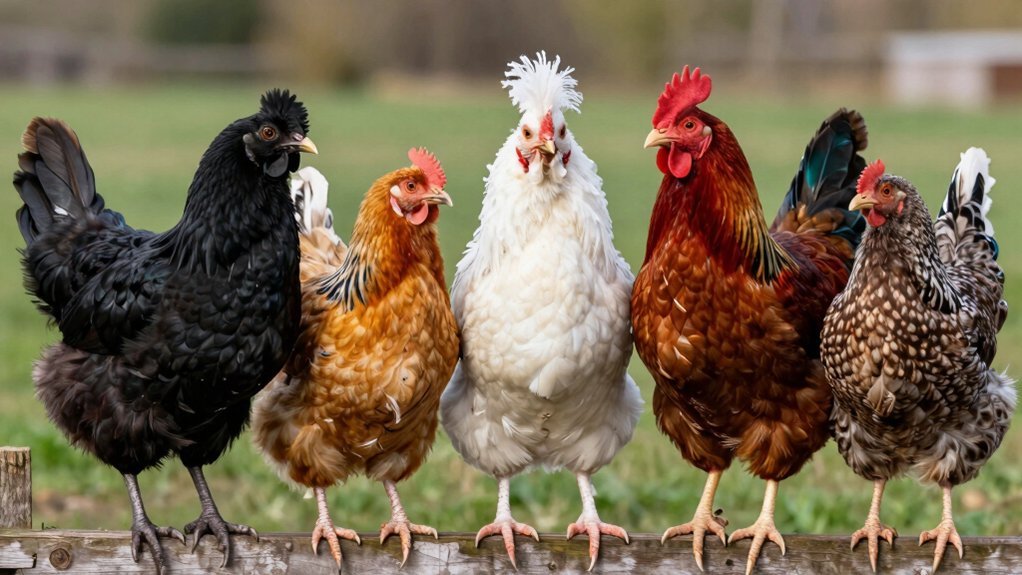
You’re probably wondering which chickens actually look like living art, and you’ve asked the right question. Think of laced birds—silver‑laced Wyandottes or golden‑laced Cochins—as feathered mosaics, while Frizzle Cochins and Silkies give you fluffy, curl‑filled textures that remind you of clouds or cotton candy. If space is tight, true bantams like Silkies fit a 6 × 6 ft corner and still turn heads, and a simple coop with good ventilation keeps those spectacular feathers healthy. Keep exploring to uncover how each breed’s pattern, color, and size can fit your backyard canvas.
Ornamental Chicken Feather Patterns to Evaluate
What makes ornamental feather patterns worth evaluating? You’re probably wondering why you should care about each stripe or speckle. Here’s the thing: pattern contrasts give you instant visual clues about breed history and genetics, and they help you spot health issues early. While many patterns are purely decorative, some feather-footed breeds possess leg feathers that offer protection from cold climates, adding a functional layer to their aesthetic appeal. Certain breeds also display unique head structures, such as the soft crest feathers found on Silkies, which result from a lack of barbicels that normally provide rigidity.
What are the main patterns? Barred and cuckoo birds show bold black‑and‑white bands that have thrilled keepers for 300 years, a trait driven by sex-linked genes on the Z chromosome like the Barring gene found in barred Plymouth Rocks. Lemon Cuckoo and chocolate barrers prove genetics can swap colors while keeping the same striking contrast.
Why does mottling matter? Mottling challenges you with a speckled, snow‑dusted look that needs generations of careful breeding to perfect. You’ll see dark bands, pigment‑free tips, and a base color that together create a starry effect.
How do you compare them? Look for sharp edges, consistent spacing, and how the free pigment areas sit on each feather. Strong pattern contrasts mean a healthier, more true‑to‑type bird.
Takeaway: Focus on contrast and consistency, then decide which pattern fits your flock’s aesthetic. Ready to dive deeper into laced varieties next?
Ornamental Chicken Laced Color Varieties
If you’re wondering why laced plumage matters, you’re on the right track. Laced colors give each feather a dark outline, creating a striking contrast that catches the eye in the coop and on the show ring. You’ll see silver, gold, blue, and buff bases with black edging on Wyandottes, Cochins, and Polish birds—each pattern a result of feather genetics that mix black, gold/red, and dilution genes.
Here’s the thing: exhibition judging rewards that symmetry and contrast, so breeders focus on the standard laced forms accepted by the American Poultry Association. Silver‑laced Wyandottes and golden‑laced Cochins entered the Standard of Perfection in 1965, and judges still score them on the crispness of the lacing. While the Silver Laced Orpington shares this striking aesthetic, it is also prized for its calm, friendly temperament alongside its ornamental value.
Obviously, the visual impact matters more than utility, so you’ll choose a laced variety for its ornamental appeal. Take a look at breed standards, compare the four main base colors, and decide which contrast fits your flock’s aesthetic. Your next step? Pick a breed, then follow a reputable line to guarantee the feather genetics produce the lacing you love. While admiring these patterns, remember that breeds like the Polish require protection for feather crests to maintain their unique appearance and health. Beyond laced patterns, breeds such as the Silkie are celebrated for their distinctive pom-pom crest which adds to the diversity of ornamental head plumage available to enthusiasts.
Ornamental Chicken Unique Feather Features
Why do some ornamental chickens look like fluffy clouds? You’re probably puzzled by their airy silhouettes, and you asked the right question. Here’s the thing: breeds like Silkies and Polish sport a soft, cloud‑like texture because their feathers lack the barbs that normally hold them together, making them delicate and prone to feather fragility.
How do you keep those feathers looking their best? Obviously, regular crest grooming helps prevent matting and reduces the risk of frostbite, especially for Crevecoeur or Sultan birds with large, floppy crests.
What about the odd curls and frizzles? Frizzle feathers curl outward due to an incompletely dominant gene, giving a loose, fluffy appearance that adds visual flair. This distinctive shape results from a mutation in the KRT75 keratin gene that creates structural defects in the feather rachis.
Beyond facial fluff, breeds like the Faverolle feature beard-like facial feathers that contribute to their distinctively soft and fluffy look.
While these unique traits are beautiful, the curled feather effect reduces insulation, making birds like the Frizzle Cochin Bantam vulnerable to cold and wet conditions.
Takeaway: handle each bird gently, schedule weekly crest grooming, and provide dry shelter to protect fragile plumage. Next, consider which feathered leg and foot breeds fit your coop’s climate.
Breeds That Showcase Those Features
You’re probably wondering which breeds actually flaunt the crests, muffs, feathered legs, and fluffy textures you just read about.
Which breeds give you upright postures and dramatic silhouettes?
Polish and Bearded Polish lead the pack with umbrella‑like crests and dense facial feathering; they stand tall, making their dramatic silhouette impossible to miss. Houdan adds a beard and a fifth toe, while Faverolles brings feathered legs and a soft, rounded shape.
Where do feathered legs and fluffy fluff shine?
Cochins, Silkies, and Mille Fleur d’Uccle sport puffball feet and shanks; Silkies even feel like fur, giving you a cloud‑like silhouette. Onagadori, Phoenix, and Sumatra boast long, flowing tails that amplify an upright carriage into a regal, dramatic outline. The rare Porcelain d’Uccle from Belgium also displays these traits with its feathered legs and distinctive straw-colored plumage marked by pale blue spangles. These feather-footed varieties generally possess calm, friendly temperaments that make them popular among backyard keepers and exhibition enthusiasts who value gentle birds.
What’s the takeaway?
Choose a breed that matches the feature you love—crests, feathered legs, or long tails—to instantly create an eye‑catching, upright, dramatic silhouette in your flock. Beyond these classic features, the Polish breed offers remarkable diversity with varieties ranging from the iconic white-crested black to rare types like the Tolbunt Polish which showcase unique laced patterns and genetic complexity.
Single‑Color Ornamental Chickens That Wow
A single‑color ornamental chicken can transform a backyard flock into a living work of art, and you’re probably wondering which hues truly wow.
What makes a golden hue stand out?
Golden Leghorns flash a crisp, buttery sheen that catches morning light like polished brass. Their small frame and bright comb keep the focus on that uniform gold, so you’ll notice them from across the yard.
Which black‑blue bird creates drama?
Mottled Cochins blend deep sable with subtle lighter speckles, giving a textured, almost marble effect. Their fluffy feathering adds volume, making each bird look like a moving sculpture.
How do you choose a single‑color star?
Pick a breed whose color matches your garden’s palette—gold for sunny spaces, mottled brown for rustic corners. The right hue instantly elevates your flock’s visual impact.
Takeaway: A single‑color bird can be a focal point; choose the shade that best reflects your outdoor vibe.
Next step: Which color will you spotlight first?
While many breeds offer solid colors, the Silkie chicken provides a unique option with recognized varieties like black, blue, and white alongside their distinctive fluffy feathers. These birds possess a melanotic gene that results in distinctive all-black skin, bones, and meat, setting them apart from other ornamental varieties. Despite their calm temperament and popularity as pets, owners must provide extra warmth because their lack barbicels makes the feathers less effective at repelling cold and moisture.
Choosing Ornamental Chickens for Your Space
What space do I actually have? You’re probably wondering how to fit a flock into a tiny yard without turning it into a chaos zone. Space solutions start with measuring your usable area—think of a standard coop as a 4 × 6 ft rectangle, which comfortably holds two to three true bantams. If you only have a 6 × 6 ft corner, choose ultra‑compact breeds like Silkie hens or Belgian d’Uccle bantams; they need just a few square feet of foraging and stay docile around kids. These Silkie hens are particularly ideal for small spaces due to their calm and friendly temperament, which ensures they remain gentle even in confined areas. Their unique fluffy plumage adds charm to compact coops while their small size means they require less food and space than larger breeds. In the U.S. and Canada, these birds are typically classified as true bantams that weigh around 3 pounds and stand only 8–10 inches tall, making them perfectly suited for limited areas.
How do you design a coop that works? Opt for vertical perches and tiered runs; a 2‑foot‑high loft adds extra roosting without expanding the footprint. Use lightweight, modular panels that snap together, allowing you to reconfigure as your flock grows. Obviously, a well‑ventilated coop keeps feathered feet and fluffy bodies healthy, and a small door helps you control predators while saving space.
Takeaway: Pick a compact, docile breed and pair it with a vertically oriented coop design. Next, sketch your yard’s dimensions and match them to a breed’s size and temperament. Ready to draft your layout?
Care Tips for Ornamental Chickens
Since you’re wondering how to keep ornamental chickens healthy, let’s clear up the basics. Secure a predator‑proof coop with proper coop ventilation, and dry bedding you can refresh weekly—straw, hardwood chips, or sand work well. Replace soiled litter promptly to keep waste management simple and deter pests.
Now, feed them a balanced starter, grower, or layer diet and keep fresh water flowing all day; use tip‑resistant drinkers to limit droppings in the water. Add grit if they’re not free‑ranging enough, and treat sparingly.
Here’s the thing: monitor feather condition, droppings, and behavior daily. Isolate any sick bird immediately.
All right, give them shade in heat and a warm roost in cold, and maintain stable flock dynamics. The takeaway: consistent hygiene, ventilation, and nutrition keep ornamental chickens thriving. Ready to set up your coop?