
Yes, bears absolutely eat chickens — and three birds alone pack nearly 4,500 calories, making your coop basically a fast-food drive-through they’ll hit repeatedly once they find it. You’re not dealing with a raccoon here; bears rip doors off hinges and shred hardware cloth like tissue paper. Your standard coop won’t cut it. Electric fencing and airtight metal feed storage are your real solutions — stick around and you’ll have everything you need to keep your flock safe.
Do Bears Actually Eat Chickens?
If you’ve got chickens, you’ve probably already lost sleep wondering what’s lurking around your coop at night — and if you live in bear country, that worry is completely justified. Here’s the thing: bears absolutely eat chickens. It’s not random, either. A bear’s diet shifts with the seasons, and during late summer and fall, their seasonal cravings intensify dramatically as they bulk up before winter. Obviously, blackberries and acorns are preferred when available. But your coop? That’s an easy, calorie-dense jackpot. Three chickens deliver nearly 4,500 calories. Now add eggs and feed to that equation, and you’ve essentially built a bear buffet. Worse, once a bear finds your flock, it remembers. You’re not dealing with a one-time visitor — you’re dealing with a repeat customer. Bears are powerful enough to rip open coops and tear doors clean off their hinges, leaving nothing behind but feathers and broken wood.
Why Do Bears Target Chicken Coops in the First Place?
Why do bears keep zeroing in on your chicken coop specifically? Here’s the thing — bear behavior isn’t random. Bears possess olfactory senses more powerful than any other mammal, and your coop broadcasts an irresistible olfactory cocktail: chickens, eggs, feed, and warm occupied air. That’s basically a dinner invitation written in scent.
Now, bear odor detection operates at extraordinary distances, meaning your backyard setup gets noticed long before you realize there’s a problem. Bears are also pure opportunists — they want maximum calories for minimum effort. Confined chickens? Easy protein. No chasing required.
Obviously, natural food scarcity pushes bears toward human settlements faster. But even when forests offer plenty, a coop advertising multiple food sources nearby remains too tempting to ignore. You’re effectively running a 24-hour diner for bears.
How to Tell If a Bear Killed Your Chickens
bears leave a signature. You’ll notice the roof caved inward from sheer body weight, hardware cloth ripped clean off, and large paw prints surrounding the damage. Unlike coyotes targeting the throat, bears open the body cavity first, pulling organs before anything else. You might find feather remnants scattered everywhere but entire birds gone. Giant scat mounds containing chicken feed nearby? That’s bear scent territory, basically a calling card. Bears attack day or night, so “it happened at 2 a.m.” tells you nothing useful. Trust the physical evidence instead. Raccoons, by contrast, are known to manipulate latches and reach through fencing to brutally kill multiple chickens, leaving the carcass behind with the neck or chest missing.

【7.5mil Semi Clear White Tarp】 Our semi Clear tarp is made of high quality polyethylene material,tear resistant,tough and durable.Tarp is easy to fold,not easy to deform,at the same time,semi clear tarp is waterproof and easy to clean,tarps cover cold, snowproof,waterproof,dust, UV protection,suitable for repeated use

ONE-ROOM WALK-IN CHICKEN RUN: Measuring 9.8 x 6.5 x 6.5 ft, this metal chicken coop provides a practical outdoor area for poultry. The 6.5 ft height and full-size entrance allow convenient access for feeding, cleaning, and routine flock care.

Main Design-The chicken coop gate hardware kit adopt door latch and T-strap shed hinges design, which are designed with 90 degree and 270 degree rotating design,providing smooth and quiet operation,making it easy to open and close.
Why Your Current Coop Won’t Stop a Bear
Most chicken keepers assume that because their coop stops foxes and raccoons, it’ll stop anything — and that’s exactly the assumption that gets their flock wiped out on a Tuesday morning. Here’s the thing: your current coop design wasn’t built with bears in mind. Obviously, foxes can’t rip car doors off hinges — bears can. A several-hundred-pound bear tears through wooden walls, climbs ten-foot chain link fencing, and pushes past barbed wire like it’s decorative ribbon. Your thick lumber? Kindling. Your padlocks? A mild inconvenience. Bear deterrents alone won’t save you either, because bears don’t raid on your schedule. Now, understanding *why* your setup fails isn’t discouraging — it’s actually the clearest path toward building something that genuinely works.

【7.5mil Semi Clear White Tarp】 Our semi Clear tarp is made of high quality polyethylene material,tear resistant,tough and durable.Tarp is easy to fold,not easy to deform,at the same time,semi clear tarp is waterproof and easy to clean,tarps cover cold, snowproof,waterproof,dust, UV protection,suitable for repeated use

【7.5mil Semi Clear White Tarp】 Our semi Clear tarp is made of high quality polyethylene material,tear resistant,tough and durable.Tarp is easy to fold,not easy to deform,at the same time,semi clear tarp is waterproof and easy to clean,tarps cover cold, snowproof,waterproof,dust, UV protection,suitable for repeated use

【12mil Heavy Duty Clear White Tarp】 Our clear white tarp is made of high quality polyethylene material. Clear tarp Waterproof is soft, easy to fold, not easy to deformation, reusable, Tarp cold, snow, water, dust, UV protection
What Happens to Bears That Keep Raiding Coops?
What actually happens to a bear that keeps breaking into your coop is something most chicken keepers never think about until it’s too late — and honestly, once you understand it, the whole situation hits differently. Here’s the thing: bear habituation is a one-way door. Once a bear learns your coop means easy calories, that behavior spreads throughout Massachusetts’ entire bear population.
Now, the legal consequences aren’t just the bear’s problem — they become yours too. Repeat raiders trigger calls to Environmental Police, potential hunting on your property, and in rare cases, relocation attempts that rarely work. Obviously, nobody wants that outcome. You’re not just protecting your flock here. You’re genuinely protecting the bear from a situation that almost never ends well for either of you.
Why Electric Fencing Is the Only Thing That Actually Works
If you’ve tried hardware cloth, padlocks, and motion lights and still found your coop torn apart by sunrise, you already know that most physical barriers are just a minor inconvenience to a determined bear. Here’s the thing — bears learn fast, and once they associate your coop with an easy meal, you’re in a losing battle.
Electric fencing changes that equation completely. A properly energized power wire delivers a sharp, memorable shock that rewires a bear’s instincts instantly. That’s real bear deterrence — not discouragement, actual behavioral conditioning.
You need at least 0.7 joules, alternating hot and ground wires, and a low-impedance energizer. Set it up right, and bears don’t come back. That’s not a promise — that’s just how the science works.

POWERFUL PLUG-IN POWER. CHICKENS SLEEP SOUND, GARDENS STAY YOURS - Steady 110V AC power runs your netting or wire fence day and night—no sun or batteries. A cost-effective alternative to solar with safe, pulsed deterrent built in.

ELECTRIC FENCE CHARGER: The Ortis fence charger having been designed for use with electric animal fences, powers up to 2-mile fence and covering approximately 8 acres of land, and is compatible with most soil types. Ideal for containing pets and keeping out small nuisance. Output Voltage: 5000V, 0.1 joule

[Available Controlling Range] Having been designed for use with electric animal fences, the fence energizer is capable to control an area of 8 acres, and is compatible with most soil types
How to Store Chicken Feed So Bears Never Smell It
Bears have a nose that puts bloodhounds to shame — they can smell your chicken feed through a closed garage door, across a yard, and probably through your general optimism about hardware cloth. That’s your actual problem here. Bait deterrence isn’t about hiding feed visually; it’s about eliminating aroma masking at the source.
Here’s the thing: opaque, airtight metal containers with locking lids genuinely cut odor escape. Chest freezers work brilliantly for large flocks — rodent-proof, airtight, and practically scentless. Store feed in its original bag inside the metal container to prevent chemical reactions.
Keep containers elevated, away from humidity, and positioned in cool, ventilated spaces below 60°F. You’re not just preserving nutrients — you’re removing the invitation entirely. Even under ideal conditions, chicken feed only lasts 3–5 months, so buying in smaller quantities during warmer months reduces the volume of scent-producing feed you’re storing at any one time. That’s the smart move.

DEAYOU pet food storage canister container can safely store your pet food where no paw can reach and keep the food fresh. It is perfect for storing dry food items such as birdseed, biscuits, feed and treats, a much better choice than leaving food in cardboard boxes or paper bags
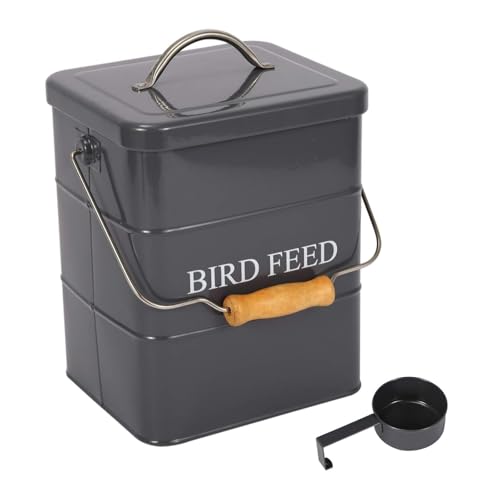
【Versatile bird seed storage】-Crafted with a powder-coated galvanized iron body, this container is both stylish and practicality,for food safety,Rust-resistant zinc coating protects against rain, snow, and UV damage. Perfect for garages, patios & sheds.

Crafted from premium galvanized steel, this container offers exceptional strength and durability, providing a more robust and longer-lasting storage solution compared to plastic alternatives.
How to Bear-Proof Your Flock Without Getting Rid of Your Chickens
Keeping chickens when bears have decided your yard is a buffet sounds like a losing battle — but it genuinely isn’t, and you don’t have to choose between your flock and your sanity. Understanding bear psychology helps — bears are opportunists, not enemies. Make access hard enough, and they’ll move on. Start with electric fencing at 6,000 volts minimum, three strands positioned at 12, 30, and 45 inches. Now, wrap raw bacon on the strands initially — counterintuitive, but one memorable zap changes bear behavior permanently. Here’s the thing: coop aesthetics don’t have to suffer either. Solid hardwood framing, elevated floors, and heavy-gauge hardware cloth look clean and hold up. You’ve already done the hard part — deciding to protect your flock. Now just build it right. For added mite and lice control inside the enclosure, fill an apple crate with peat moss to give your chickens a designated spot where they can take a dust bathing area and keep themselves clean naturally.

Aluminum conducts electricity 4x better than steel, ensuring your fence can perform well in any weather condition
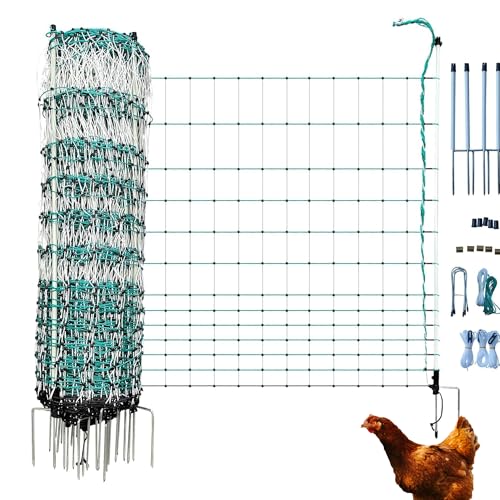
Consistent Power, Reliable Protection | Triple-braided stainless-steel and copper conductive wires deliver steady current when connected to a compatible low-impedance intermittent pulse energizer. This 42" electric poultry netting helps create a dependable electric fence for chickens, ducks, turkeys, and other poultry. Energizer sold separately