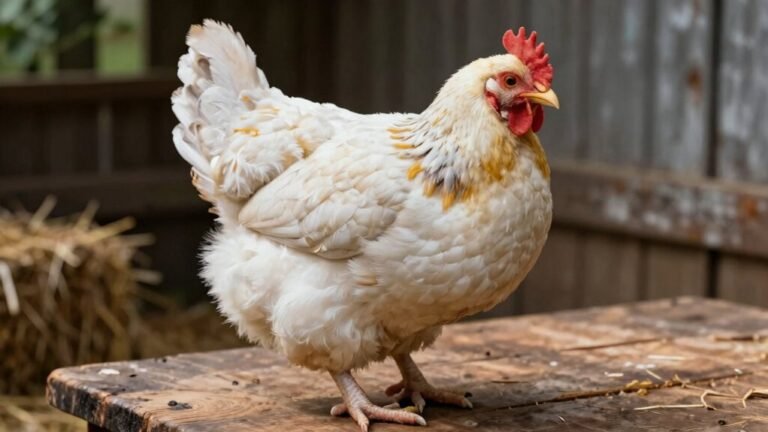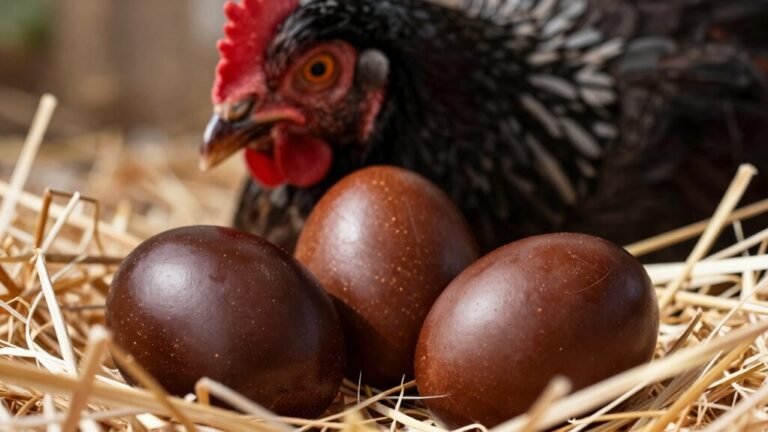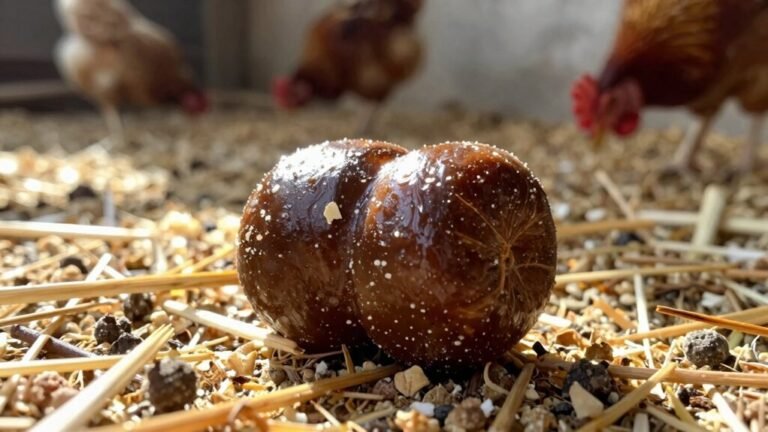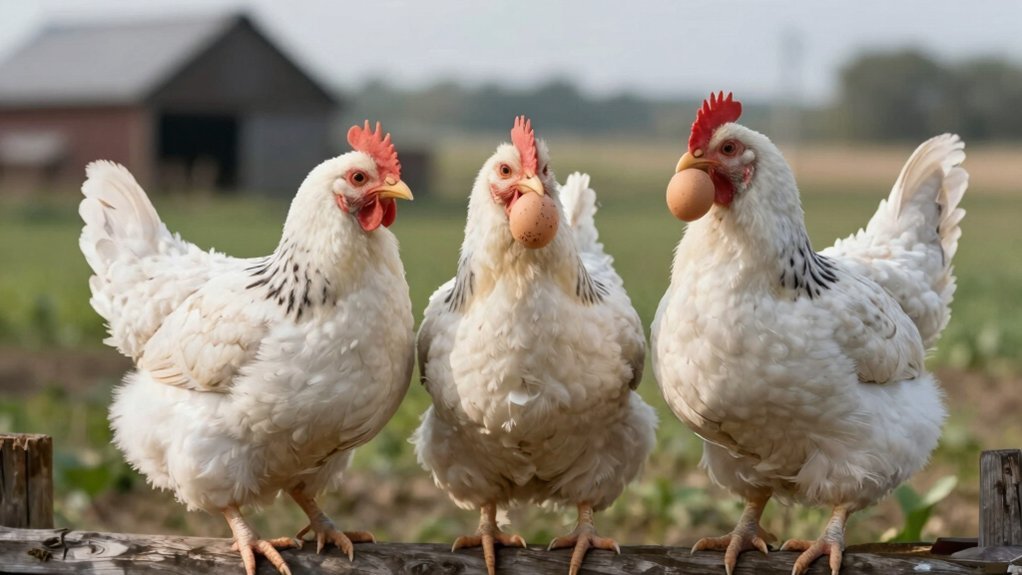
You’re probably wondering why a feather‑white hen can still drop a brown egg, and the answer’s simple: feather color and eggshell pigment are controlled by separate genes, so a white‑feathered bird can carry the brown‑shell allele. Breeds like White Plymouth Rock, White Wyandotte, White Orpington, White Jersey Giant, White Australorp, White Sussex, White Cornish, Rhode Island White, and Amberlink sex‑links all lay 180‑280 brown eggs a year, many in extra‑large size, with solid shells. If you keep a uniform flock, pick one of these breeds, source all pullets from the same hatchery line, and you’ll get consistent brown eggs without breaking the “white‑feather” look.
Why Do Some White Chickens Lay Brown Eggs?
Why do some white chickens lay brown eggs? You’re puzzled because feather color seems obvious, but genetics basics tell a different story. The breed’s DNA carries the brown‑shell gene, so even a white‑feathered hen can deposit pigment in her eggs. Here’s the thing: the pigmentation process adds protoporphyrin during the final shell‑forming stage, coating the outside while leaving the interior white. The amount of pigment varies, giving shades from light tan to deep brown. Obviously, health, age, and stress can dim the color, but the underlying gene stays the same. While earlobe color often hints at egg shade, it is the genetic traits that ultimately determine whether a white chicken lays brown eggs. Interestingly, these visible earlobe colors are also genetically linked to eggshell hues, though exceptions exist where white-feathered birds possess red earlobes and lay brown eggs. Unlike the Pearl White Leghorn which is known for its white plumage, some white-feathered breeds carry the specific genetics to produce brown shells. Takeaway: feather color doesn’t dictate shell color—genes do. Next, explore which breeds consistently show this trait.
Which White‑Feathered Breeds Consistently Produce Brown Eggs?
If you’re scratching your head over why some white‑feathered hens drop brown shells, you’ve hit the right spot.
Which white‑feathered breeds consistently produce brown eggs?
Here’s the thing: the White Plymouth Rock, White Wyandotte, White Orpington, White Jersey Giant, and White Australorp all belong to brown‑egg genetic lines despite their plumage. They’re dual‑purpose, calm, cold‑hardy, and lay medium‑to‑large brown shells year‑round. While these white breeds are excellent, the Rhode Island Red is another top choice known for its reliable production of 200–300 medium to large brown eggs annually. The White Plymouth Rock specifically contributes to this category with a sturdy build that makes it ideal for dual-purpose use on small farms. Unlike their white counterparts, Rhode Island Reds possess a robust, hardy nature that allows them to thrive in varied climates and on marginal diets while maintaining strong egg output.
Why does that matter for you?
Obviously, if you raise them for meat consumption, you get solid protein plus reliable brown eggs. Their foraging ability keeps production steady, and you won’t need genetic engineering to change egg color.
Takeaway
Pick any of those five breeds for a dependable brown‑egg supply without extra tech. Next, ask how many eggs each hen yields annually.
How Many Brown Eggs Do These White Layers Yield Annually?
How many brown eggs can you expect from each white‑feathered layer? You’re probably wondering why a white bird can still give you brown shells. The answer lies in breeding strategies and scientific explanations that focus on genetics, not feather color.
Most commercial‑type whites land between 180 and 250 eggs a year. A White Plymouth Rock typically hits 200‑250, while a White Sussex pushes around 240 extra‑large eggs. Strong lines of Rhode Island White can stretch to 240‑280, and a White Wyandotte usually sits at 200‑240.
Heritage or utility strains like White Orpington hover near 180‑220, and lower‑output birds such as White Cornish drop to 150‑200. While white varieties are popular, Heritage Rhode Island Reds provide a dependable alternative with similar annual yields of 150-250 eggs and superior hardiness for various climates. Unlike Mediterranean breeds known for white shells, these white-feathered birds demonstrate that feather color does not dictate the pigment deposited on the eggshell. Notably, the standard Plymouth Rock is a dual-purpose breed producing about 200 eggs yearly, confirming that utility birds often maintain steady production regardless of plumage.
Takeaway: Choose a breed that matches your egg‑count goals, then fine‑tune feed, light, and age for peak yield. Next, explore how egg size and shell quality vary among these white brown‑egg layers.
What Egg Sizes and Shell Qualities Do White Brown‑Egg Breeds Offer?
You’re probably wondering why the egg size and shell quality matter after you learned how many eggs a white‑feathered layer can produce. Here’s the thing: most white breeds that lay brown shells drop large to extra‑large eggs, averaging 2 oz (large) to 2.25 oz (extra‑large) each. That translates to about 24‑27 oz per dozen, so you get a solid, market‑ready egg every time.
Now, let’s talk shell durability. Brown pigmentation doesn’t weaken the shell; the breed’s genetics and husbandry do. White Jersey Giants and strong Plymouth Rock lines consistently deliver reliable shell integrity, handling transport and cracking with ease. Barred Rocks specifically produce large eggs averaging just over two ounces each while maintaining this durability throughout their laying years. While egg size differences between medium and large may seem small, they are actually important for baking and culinary uses where precise measurements matter. These hens are known as consistent layers that often continue producing through the winter months with adequate light.
All right, the takeaway: expect large‑to‑extra‑large brown eggs with dependable shell durability. Next, you might wonder how these birds behave in different climates.
What Is the Temperament and Climate Hardiness of These Breeds?
Now, about climate: dense feathering and small combs give White Rocks and Wyandottes excellent cold tolerance, even in northern winters. Chanteclers thrive in chill because of tiny wattles. Heat is trickier—heavy‑feathered birds overheat quickly, so provide shade and cool water. Australorps handle moderate warmth but still appreciate ventilation. The takeaway: match breed hardiness to your climate, give early handling, and monitor health quirks. Proper environmental management is also key to maintaining optimal egg output during molting or extreme weather conditions. While some white breeds like the White Leghorn are known for being flighty, selecting calm varieties ensures better adaptability to backyard environments. Next, think about which breed fits your dual‑purpose goals. The White Orpington also has a calm temperament that suits backyard flocks. With optimal care, these heritage breeds can live 10 years or more, far exceeding the lifespan of commercial chickens.
Which White Breed Is Best for Dual‑Purpose (Meat & Eggs) Use?
Which white breed gives you the best balance of meat and eggs? You’re probably wondering which dual‑purpose bird fits your backyard. The answer: White Plymouth Rock. It nails white feather genetics, offers 200–280 brown eggs a year, and gives a solid, table‑size carcass.
All right, here’s the thing: White Sussex rivals the Rock for egg numbers (225–250) but stays a bit lighter on meat. White Wyandotte adds bulk, yet its egg output (200–240) trails the Rock’s top end. White Orpington produces the biggest birds, but they mature slower and lay fewer eggs (175–200+). While Buff Orpingtons are also friendly and good egg layers in various climates, the white variety specifically excels in meat yield for dual-purpose needs.
Obviously, if you want reliable white egg production and a meat yield that won’t disappoint, the Plymouth Rock wins. Like their Barred Rock relatives, this variety shares the breed’s renowned hardiness and docile temperament, making them equally suitable for backyard flocks. To ensure optimal health and hygiene, owners should provide access to a dirt patch for dust bathing alongside regular parasite monitoring.
Takeaway: Choose White Plymouth Rock for a steady, balanced flock. Next, compare how their temperament fits your coop climate.
How to Keep a Uniform‑Look Flock of White Brown‑Egg Layers
A uniform white‑feathered flock that still drops brown eggs can feel like a puzzle, especially when you see different shades and body shapes in the same yard. You’re probably wondering why the colors clash and how to fix it. The answer starts with choosing one breed or hybrid—White Plymouth Rock, White Wyandotte, or a single sex‑link line—and sticking to it. Buy all pullets from the same hatchery batch, and replace aging hens with birds from that exact line.
Now, manage the space. Keep the flock size right for your coop, use dry bedding, and provide a dust‑bathing area so feathers stay clean. Rotate the flock every few weeks to avoid wear spots, and place feeders and waterers consistently to protect coop aesthetics. While sex-linked genes on the Z chromosome often create barred patterns in breeds like the Plymouth Rock, selecting specific white varieties ensures those genetic markers do not disrupt your desired uniform appearance. Although the Barred Plymouth Rock is a popular choice for its docile nature, you must specifically select the White Plymouth Rock variety to maintain the solid color palette required for this aesthetic.
All right, track hatch dates, breed, and egg color in a simple log. When a bird dies, match the replacement exactly. This routine preserves a tidy, white‑feathered look while you still enjoy brown eggs.
Takeaway: One breed, same source, careful housing, and regular flock rotation give you the uniform look you want. Next step? Decide which white breed fits your climate and space, then order a batch of same‑batch pullets.
White Breeds Often Mistaken for Brown‑Egg Layers (White or Blue Egg Layers)
You’re probably wondering why a white‑feathered hen can drop brown eggs—your flock looks like a puzzle.
Which white birds actually lay brown eggs?
White Plymouth Rock, White Wyandotte, White Orpington, Rhode Island White, and White Jersey Giant all produce brown shells despite their pale plumage. Amberlink sex‑links, often listed in hatchery identification records, also lay 240+ extra‑large brown eggs yearly.
Why do Mediterranean whites get confused?
Leghorns, Anconas, Andalusians, Catalanas, and Buttercups lay white or tinted eggs, yet their all‑white feathers make you assume they’ll stay white. Egg color follows breed classification genetics, not feather color.
What about blue‑egg birds?
Araucana‑type, Ameraucana, and Easter Egger hens can sport white feathers while laying blue, green, or olive eggs, adding to the mix‑up.
Takeaway: Check hatchery identification or pedigree for accurate breed classification before guessing egg color.
Next step: Look up your hen’s hatchery source to confirm its true egg‑color genetics.
Quick Reference Table: Breed, Egg Color, Annual Yield, Ideal Use
Looking at white‑feathered hens and wondering which ones actually drop brown eggs? Here’s the thing: you can compare breeds with a quick reference table that meets your egg selection criteria and fits your flock management strategies.
Which breed gives the biggest brown eggs? Amberlink tops the list with very high annual yield, uniform large brown shells, perfect for backyard winter layers.
Which breed balances size and steady output? White Jersey Giant delivers about 240 extra‑large brown eggs yearly, ideal if you need big birds and big eggs.
Which breed offers reliable, moderate production? Rhode Island White, White Plymouth Rock, and White Wyandotte each produce 180‑300 brown‑to‑cream eggs, great for dual‑purpose or ornamental flocks.
Takeaway: match breed yield and egg color to your flock goals, then plan feeding, housing, and nesting to hit your target. Next, decide which breed aligns with your space and climate.