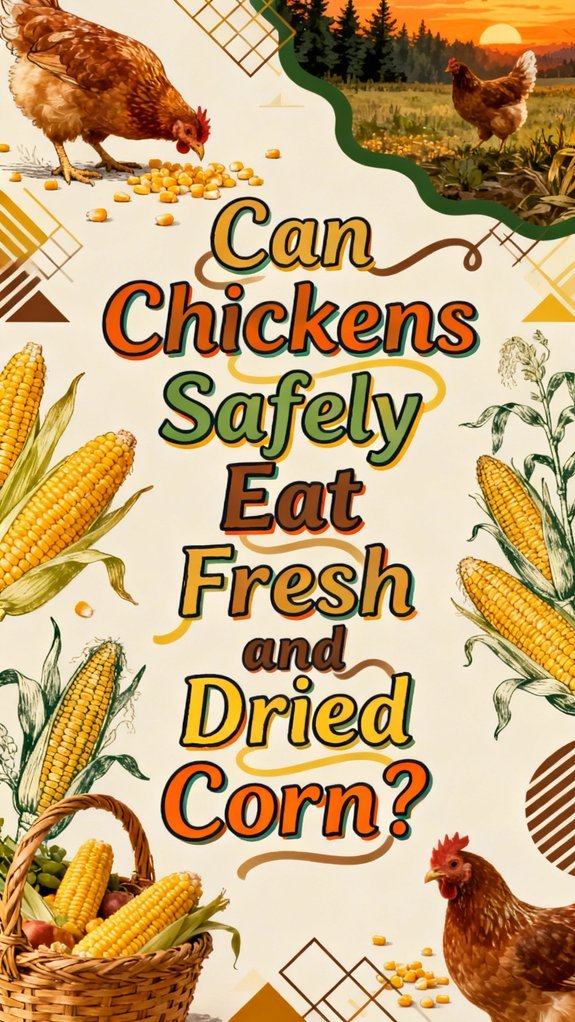
Yes, you can safely feed your chickens both fresh and dried corn, but you’ll need to limit it to 10-20% of their daily diet. Fresh corn requires no cooking and provides carbohydrate energy, while dried corn delivers approximately 3,373 kcal/kg of metabolizable energy. However, corn’s low protein content and lack of essential amino acids make it unsuitable as a primary feed source. Understanding the nutritional gaps and proper feeding ratios will help you optimize your flock’s health and productivity.
Fresh Corn: Safety and Benefits for Your Flock
When you’re considering fresh corn for your flock, you’ll find it’s a safe, nutritious addition that doesn’t warrant the common myths surrounding summer feeding. Raw, mold-free corn on the cob requires no cooking and poses no health risks when fed moderately. Your chickens safely consume fresh corn without overheating concerns, even during warm months. Corn consumption provides high carbohydrate energy sustaining activity while promoting shiny, strong feathers through essential vitamins and fats. Additionally, roosting habits indicate that chickens thrive best when balanced nutrition is provided alongside their natural behaviors. The fiber aids digestion when not overfed. You should limit corn to 10-20% of daily dietary intake to prevent nutritional gaps and obesity. Fresh corn is particularly beneficial during winter months when its high energy content helps keep your flock warm and comfortable. Moreover, serving fresh corn as a hydrating treat can further enhance their diet, especially alongside other nutrient-rich foods. Serve it plain without additives, offering whole cobs for natural pecking behavior that enriches your flock’s engagement while supplementing their balanced feed regimen.
Dried Corn: Nutritional Value and Proper Usage
While fresh corn offers seasonal variety, dried corn serves as a reliable, nutrient-dense feed component year-round—particularly valuable for winter management when you’re seeking to maintain flock energy levels. You’ll find dried corn delivers approximately 3,373 kcal/kg metabolizable energy for poultry, making it an excellent carbohydrate source. However, chickens can consume deer corn occasionally, but it should not constitute their primary diet.
However, you must follow strict feeding guidelines to prevent nutritional imbalances. Limit dried corn to 10-20% of your flock’s daily diet, as its low 7.5% protein content proves insufficient as a sole feed. You should crack or grind dried corn to optimize digestibility across all ages. To further enhance nutrient availability, consider incorporating low-phytate corn varieties which reduce the need for supplemental phosphorus while improving mineral uptake in your birds. Combining dried corn with soybean meal balances methionine deficiencies, ensuring complete nutrition. Evening feeding maximizes overnight energy retention during colder months, enhancing your birds’ thermal regulation and overall winter performance.
Essential Nutrients Corn Provides to Chickens
Understanding corn’s nutritional composition reveals why proper feeding ratios matter so greatly for flock health. You’ll find that corn delivers 60-75% starch, providing substantial energy for warmth and activity. However, its protein quality presents limitations—the zein protein has low solubility and lacks essential amino acids like lysine and methionine. While corn contributes 20% of crude protein in broiler diets, you shouldn’t rely on it as your primary protein source due to these deficiencies. To promote optimal health in the winter, it’s beneficial to provide chickens with additional natural thermal mass that can help retain their body heat. Ensuring that corn is supplemented with quality layer feed helps meet the complete nutritional needs of your chickens.
You’ll benefit from corn’s mineral profile, which includes decent magnesium and potassium levels with improved nutrient absorption from certain origins. Phosphorus availability varies since some remains bound to phytate. Additionally, corn supplies lutein and zeaxanthin antioxidants plus essential fatty acids. The yellowish color from carotenoids in corn can indicate nutritional quality and influence your chickens’ overall appearance. Limiting corn to 10-20% of your flock’s daily diet optimizes energy utilization while preventing nutritional imbalances.
Critical Nutritional Gaps in a Corn-Based Diet
Although corn delivers substantial energy to your flock, it can’t sustain ideal health as a primary diet component because it lacks critical amino acids, essential vitamins, and balanced minerals. Corn’s deficiency in lysine, methionine, and tryptophan impairs growth, feather quality, and egg production unless you provide amino acid supplementation. Vitamin deficiencies pose equally serious risks: inadequate vitamin D3 compromises shell quality and bone metabolism, while marginal niacin levels increase disease susceptibility. Your birds also face calcium-phosphorus imbalances that trigger osteoporosis and thin eggshells, plus insufficient trace minerals like manganese and copper that affect skeletal development and reproduction. During hot summer months when birds experience reduced activity levels, lethargy becomes more pronounced if corn-only diets lack adequate carbohydrates and magnesium supplementation. Commercial poultry premixes address these gaps, but corn-only diets inevitably produce performance losses and health complications that require corrective feeding strategies.
Best Practices for Feeding Corn to Chickens
Now that you understand corn’s nutritional limitations, you can mitigate these gaps by following evidence-based feeding protocols that maximize corn’s benefits while minimizing health risks. Your best practices should adhere to the 90/10 rule: ninety percent commercial layer feed and ten percent treats. Implement strategic feeding strategies by offering cracked corn for ideal digestibility across all ages. Time corn supplementation during winter months when its high-energy content supports thermoregulation, or feed small nightly amounts in cold climates for fat addition. Additionally, ensure your hens have free-choice access to complete layer feeds that meet nearly all nutrient needs to promote optimal flock performance. Feeding chickens a balanced diet is crucial because different life stages have varying nutritional requirements. Combining corn with high-protein treats like mealworms and greens addresses nutritional imbalances and helps to improve egg production, which can be adversely affected by excessive corn. Furthermore, incorporating occasional homemade chicken treats can enhance their diet with additional nutrients and support overall well-being. Excessive corn can lead to obesity and reduced egg production, so careful monitoring is essential. Store cracked corn in pest-proof containers and provide fresh water simultaneously. This systematic approach guarantees corn supplements rather than replaces balanced nutrition while supporting your flock’s overall health.
Health Risks Associated With Overfeeding Corn
While corn’s energy density makes it valuable for winter supplementation, excessive feeding creates serious metabolic and physiological consequences that can compromise your flock’s health and productivity. Overfeeding corn triggers obesity risks and metabolic disorders like Fatty Liver Hemorrhagic Syndrome, particularly in laying hens. You’ll observe reduced egg production and increased susceptibility to heat stress as overweight birds lose thermoregulatory efficiency. Nutrient deficiencies emerge when corn displaces complete layer feed, resulting in poor feathering and weakened immunity. Digestive issues including gizzard impaction occur from high carbohydrate intake and insufficient fiber. Additionally, behavioral problems develop as birds become sedentary and less active, compounding joint stress and metabolic complications. Whole corn should constitute only 15 to 20 percent of your chickens’ total daily feed to maintain nutritional balance. Strategic corn rationing prevents these interconnected health deteriorations in your flock.