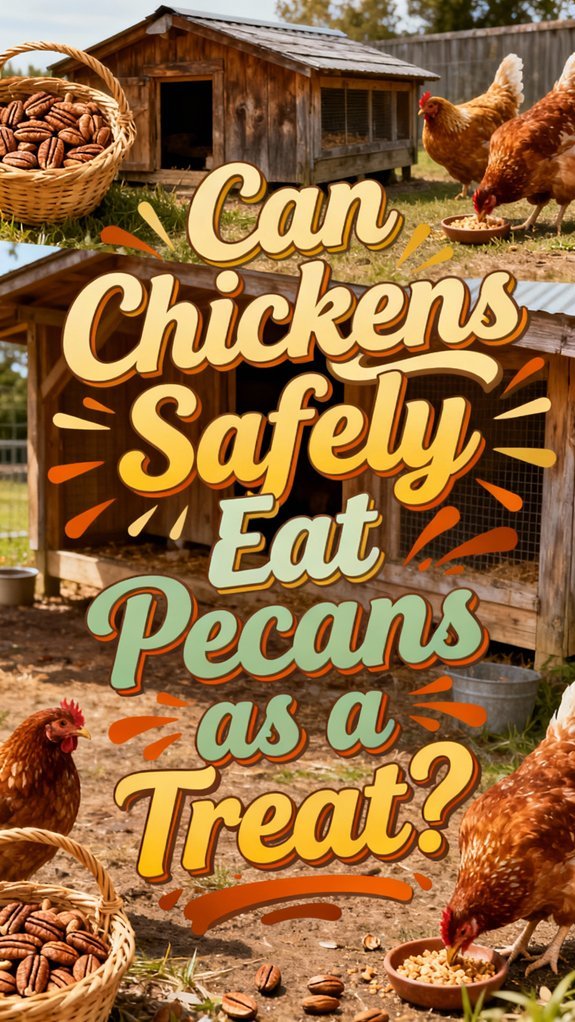
You can safely feed your chickens fresh, unsalted pecans as occasional treats. Shell and crush them to prevent choking hazards. Pecans provide concentrated energy, monounsaturated fats, and antioxidants supporting metabolic function and immune health. Keep portions to roughly a small handful per hen, capping treats at 10% of daily caloric intake. Critically, inspect pecans for mold before offering—Aspergillus and Penicillium species cause toxicity. Uncover how to optimize pecan feeding strategies and avoid common preparation mistakes.
Safety Profile of Pecans for Chickens
When you’re considering pecans as treats for your flock, you’ll need to evaluate several safety factors that determine whether they’re appropriate for your birds. Fresh, unsalted pecans pose minimal risk when you follow proper guidelines for treating chickens. However, moldy pecans present serious concerns—Aspergillus and Penicillium species cause toxicity in birds. You should inspect pecans carefully before offering them.
The high fat content demands moderation; excess consumption triggers digestive upset, pancreatitis, and obesity. You’ll want to chop pecans into small pieces to prevent choking hazards. Limit servings to a handful mixed with other nuts, offered just a few times weekly. Like other nuts and seeds, pecans should be fed in moderation to maintain your chickens’ nutritional balance.
You must avoid salted varieties entirely, as they risk electrolyte imbalance. When you select fresh, properly stored, unsalted pecans and practice portion control, they become a reasonably safe occasional treat for your flock.
Nutritional Composition and Benefits
Because pecans pack exceptional caloric density at 690 kcal per 100g, they’re nutrient-rich treats that can substantially impact your flock’s dietary intake. Your nutrient analysis reveals a fat-dominant macronutrient profile where monounsaturated fats comprise 87% of composition, providing concentrated energy for maintaining body temperature and supporting metabolic function. Additionally, as chickens lack teeth, they can benefit from grit for digestion when consuming harder treats like nuts, which aids in breaking down food in their gizzard. It is essential to ensure that the chickens have access to appropriate grit to prevent any digestive issues while enjoying such treats.
The health benefits extend beyond calories. Pecans deliver approximately 3g protein per ounce, essential for feather development and muscle maintenance. Dietary fiber content at 9.6g per 100g supports digestive health, while minimal sugar—just 3.97g—prevents metabolic disruption. To maximize nutrient absorption, crush pecans in a bag and allow your chickens to forage through the pieces, which encourages natural feeding behaviors while improving accessibility to the nutritious meat inside.
When you incorporate pecans into supplemental feeding, you’re providing bioavailable nutrients that enhance overall flock wellness without introducing excessive carbohydrates or sugars that could compromise dietary balance.
How Pecans Support Chicken Health
Pecans offer multifaceted health benefits to your flock through their antioxidant content and micronutrient profile. Vitamin E and polyphenols function as potent antioxidant properties, reducing oxidative stress and protecting immune cells. Trace minerals like zinc and manganese enhance immune function and wound healing when integrated into balanced nutrition.
You’ll find pecans particularly valuable as energy sources during cold weather or molt periods. Their high monounsaturated and polyunsaturated fat content delivers concentrated calories that digest slowly, extending satiety between meals. However, you must monitor total caloric intake carefully to prevent overweight conditions or fatty liver syndrome. Pecans also provide plant protein essential for growth and health maintenance in your chickens.
The dietary fiber in pecans supports gut motility, while polyphenols may act as prebiotic-like compounds, selectively supporting beneficial microbiota. Introduce pecans gradually to observe any digestive changes before expanding inclusion in your feeding strategy.
Proper Feeding Methods and Preparation
Maximizing the nutritional benefits you’ve identified requires thoughtful preparation and strategic integration into your flock’s diet. You’ll need to shell pecans and crush them into appropriately sized pieces to prevent choking hazards and crop blockage. If you’re sourcing grocery-bought pecans, rinse them thoroughly to remove pesticide residues. Additionally, offer pecans occasionally as a treat to promote healthy foraging behaviors, similar to the way mealworms are presented as nutritious snacks for chickens. Remember, providing species-specific feed is essential for maintaining overall health in your chickens. Your feeding frequency should treat pecans as occasional supplements rather than dietary staples, offering them in quantities your chickens finish within twenty minutes. Implement these preparation techniques by crushing nuts with a hammer and scattering them in designated treat areas or feeders positioned at back height to minimize spillage. Since treats should compose 1-2% of diet, pecans must be carefully rationed alongside other supplemental foods to maintain proper nutritional balance. Store prepared batches separately and discard any showing mold development. Fresh preparation for each feeding session guarantees peak safety and nutritional value for your flock.
Moderation and Portion Control
While pecans offer genuine nutritional value, they’re calorie-dense treats that’ll quickly exceed safe limits if you don’t implement strict portion control. Your portion guidelines should cap treats at 10% of daily caloric intake—roughly a small handful per hen, once or twice weekly. Adjust amounts based on individual bird size and condition; overweight or molting hens require smaller portions. A well-designed chicken coop ensures that your hens have a safe environment to enjoy their treats. Additionally, incorporating health-boosting herbs alongside treats like pecans can further enhance your chickens’ overall well-being.
Pre-weigh servings in grams to guarantee consistency rather than free-feeding. Chop or crush pecans and mix them into low-calorie scatter like leafy greens, distributing intake across your flock. This treat frequency schedule prevents habitual overfeeding while preserving commercial feed’s nutritional primacy. Like potatoes, pecans should be introduced gradually to avoid digestive issues when first offered to your flock.
Track weekly consumption per bird, rotating pecans among other occasional treats. Increase frequency only under veterinary guidance for therapeutic purposes.
Potential Risks and Considerations
Though pecans provide nutritional benefits, their composition and preparation demands create several hazards you’ll need to address before feeding them to your flock. The 87% fat content strains your chickens’ digestive systems and gizzards, potentially causing illness if you exceed the 10% dietary limit based on feeding frequency and bird size.
Whole or unshelled pecans present choking risks, particularly for smaller breeds, and can damage beaks. You must shell and chop pecans into manageable pieces before offering them. Since treats should not exceed 10% of their diet, pecans are best reserved as occasional treats rather than staple foods.
Mold contamination poses serious toxicity concerns, so inspect pecans carefully and store them properly. Grocery-bought pecans often carry pesticide residues, making organic or foraged options preferable. Always use unsalted varieties and rinse thoroughly to remove seasonings and chemical contaminants.
Real-World Experiences From Chicken Keepers
Backyard keepers consistently report that their flocks enthusiastically consume whole and halved pecans left on the ground, demonstrating strong palatability across diverse flock compositions. Your birds’ pecking behavior and foraging instincts activate naturally when you scatter nuts, encouraging physical activity and mental engagement. You’ll observe minimal feed waste when pecans drop seasonally, as chickens work to extract kernels from shells. Keepers document that occasional pecan treats don’t noticeably reduce egg production when offered in moderation. Due to the opportunistic nature of chickens, you should note that daily feeding produced measurable weight gains in informal keeper observations, while weekly offerings remained inconsequential. Many backyard operations employ scattered feeding methods to slow consumption and reduce competition-driven aggression over premium treats. Just as pecan weevil larvae can damage nuts by consuming their interiors, chickens naturally process pecans by breaking through shells to access the nutritious kernel inside.