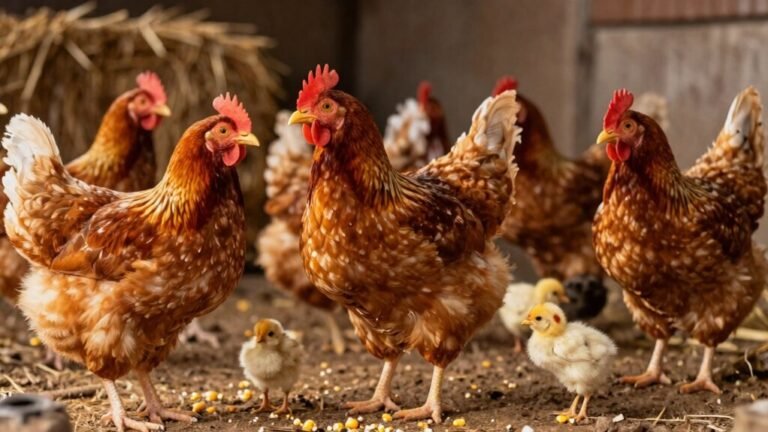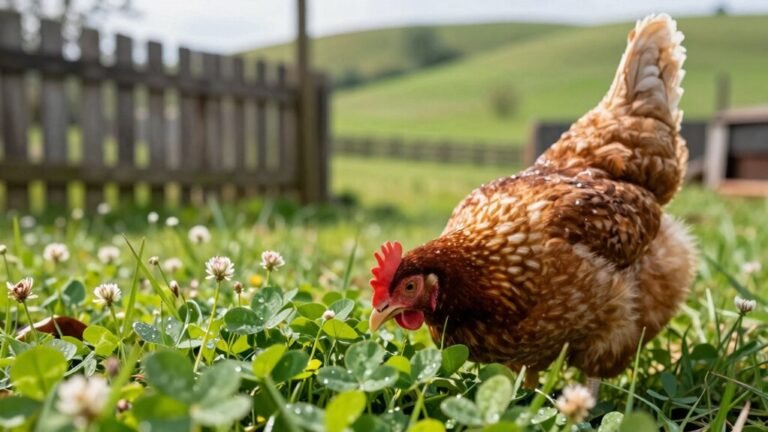
Your chickens need grit for ideal digestion since they don’t have teeth. This vital supplement functions in their muscular gizzard to break down food particles, especially when consuming whole grains or foraging. Both insoluble grit (like granite) and soluble grit (like oyster shells) play significant roles in digestive efficiency and nutrient absorption. Understanding the specific types and amounts of grit your flock needs will guarantee their continued digestive health.
Understanding the Role of Grit in Chicken Digestive Systems
When examining the role of grit in chicken digestive systems, you’ll find it serves as a critical mechanical component that compensates for these birds’ lack of teeth. The grit functions within the muscular gizzard, where it actively breaks down food particles to increase surface area for enzymatic digestion. Food is quickly processed after being stored in the temporary crop pouch.
You’ll encounter two primary grit types: insoluble grit, like granite and flint, which remains in the digestive system until worn down, and soluble grit, such as oyster shells, which dissolves while providing calcium. This mechanical grinding process directly impacts digestive efficiency by facilitating nutrient absorption and preventing gastrointestinal issues. In the gizzard, retained grit works alongside muscular contractions to process tough plant fibers, seeds, and insects effectively. Without adequate grit, you’ll notice reduced feed conversion and incomplete digestion in your chickens.

ESSENTIAL POULTRY GRIT FOR CHICKENS & GAMEFOWL: Premium grit for chickens made from natural granite grit for chickens, essential for grinding whole grains and improving digestive health for poultry; a must-have to include in your chicken coop accessories

ESSENTIAL GRIT FOR HEALTHY DIGESTION: Manna Pro Chick Grit aids proper digestion in chicks & bantam breeds by helping grind whole grains and poultry feed in the gizzard; our chick grit supports optimal nutrient absorption and overall gut health.

DIGESTIVE SUPPLEMENT: Essential supplement for young, growing poultry and bantam breeds; supporting healthy digestion, nutrient absorption, and overall growth while helping chicks and young birds thrive during critical early stages of development.
Natural vs. Commercial Grit Options for Your Flock
Two distinct categories of grit exist for chicken keepers to contemplate: natural environmental sources and manufactured commercial products. Natural grit types include small stones, pebbles, and coarse sand that chickens naturally forage during outdoor activities. While free and readily available, natural sources can vary in quality and may contain contaminants. Young chickens require finer particles than mature birds for proper digestion. The muscular gizzard relies on these hard particles to grind down seeds and grains effectively. Nutrient absorption improves when chickens have access to appropriate grit.
Commercial grit advantages include consistent particle sizing, sanitized materials, and specialized formulations for different age groups. You’ll find both insoluble options, typically made from crushed granite or flint, and soluble varieties like oyster shell grit for calcium supplementation. Commercial products also offer enhanced options with probiotics or mineral additives that aren’t available in natural sources.
For ideal results, you’ll need to match your grit choice to your flock’s living conditions and dietary needs.

Perfect Particle Size (20–40 Mesh): Specially sized for poultry, these well-graded particles are easy to pick up and use, avoiding overly fine dust or overly large chunks
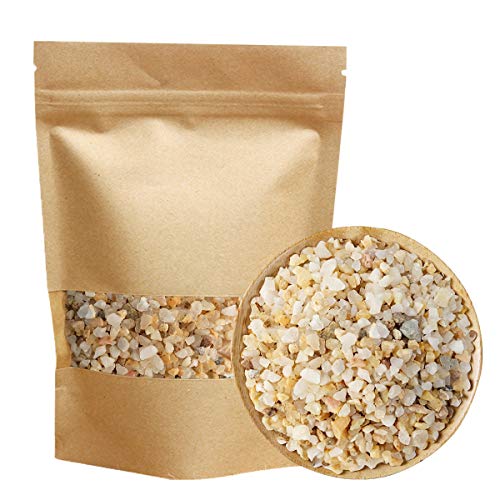
While beautifying the aquarium environment, the whole aquarium environment is closer to nature, and it can also be used for fish itching.

Pure Natural Silica Sand: A durable, nature-sourced base material that retains its appearance. Its color richly deepens when wet yet rinses clean without fading. Made from pure natural silica with no dyes, it's the reusable base for potting plants, aquarium setups, landscaping, and creative projects
How Different Diets Affect Grit Requirements
Understanding your chickens’ diet directly influences their grit requirements, as different feed types create varying demands on their digestive systems. If you’re feeding pellet or crumble diets, your flock needs minimal grit supplementation, though it’s still beneficial for ideal health. Mixed diets and foraging benefits require consistent grit availability to process diverse food materials effectively. Since chickens lack natural teeth, providing appropriate grit is essential for their ability to properly digest food. Impacted crops can develop when chickens consume food without adequate grit supplementation.
Your laying hens need both insoluble grit for digestion and soluble grit like oyster shells for calcium supplementation. When managing dietary restrictions, you’ll need to adjust grit types accordingly. Free-range chickens naturally consume environmental grit but may require additional supplementation. While birds on medicated feeds might temporarily need less grit, you should monitor their digestive health closely. The health implications of proper grit supplementation include improved nutrient absorption and reduced risk of digestive complications. Feeding hens a diet with optimal protein levels between 16-18% supports overall digestive efficiency.

SUPPORTS HEALTHY DIGESTION: This chicken grit feeder ensures your flock always has access to grit, promoting smooth digestion and overall better health.

Natural Chicken Dewormer Support – This herbal chicken wormer for laying hens, chicks, and roostys is a chicken dewormer chili mix that offers gentle, year-round support for your flock. A natural poultry dewormer for chickens that backyard poultry keepers trust.
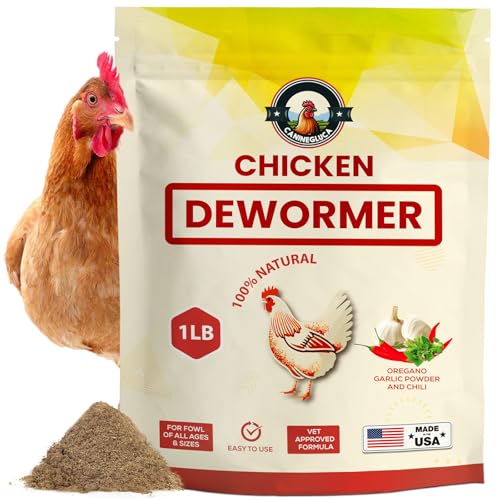
All-Natural Health Formula: CanineGluca Chicken Dewormer Powder utilizes a 100% natural formula to promote digestive health and protect your poultry against internal parasites, harnessing the power of nature to keep your flock healthy from the inside out..
The Science Behind Grit-Assisted Digestion
Through the specialized muscular organ called the gizzard, chickens process their food using a remarkable mechanical digestion system that relies on grit particles. When your chickens consume insoluble grit, such as granite pieces, these particles remain in the gizzard where they function like teeth during the grinding process.
The gizzard mechanics involve powerful muscular contractions that force food against the retained grit particles. This action pulverizes feed materials, considerably increasing their surface area for improved enzymatic digestion. The grinding efficiency depends on both the grit’s characteristics and the feed type. Hard, angular grit particles demonstrate superior performance, particularly when chickens consume fibrous materials or whole grains. Research confirms that proper grit supplementation enhances gizzard development and overall digestive function, leading to improved nutrient absorption and feed conversion rates. Recent studies demonstrate that chickens fed with granite-grit showed a remarkable increase in gizzard weight from 31.63g to 48.00g compared to birds without grit supplementation. Maintaining adequate protein levels through proper nutrition helps ensure optimal feather condition and digestive health in chickens.
Signs Your Chickens Need More Grit
While chickens’ grit-assisted digestion operates efficiently when properly maintained, specific indicators can signal a deficiency in grit supply. Behavioral changes often manifest first – you’ll notice your birds struggling to swallow food, showing reluctance to eat grains, or increasing their pecking behavior for small stones. These signs typically accompany reduced foraging enthusiasm and altered social dynamics during feeding times. Since chickens lack natural teeth, they rely heavily on grit to process their food properly in the gizzard.
Health indicators become apparent as the deficiency progresses. Watch for visible crop impaction, where the crop feels hard or swollen, and monitor for weight loss despite normal food intake. You’ll also observe pale combs and wattles, decreased egg production, and compromised shell quality. If your chickens consume whole grains, scratch mixes, or forage outdoors, these symptoms particularly warrant immediate grit supplementation to prevent digestive complications. Maintaining proper grit levels is especially crucial for layers requiring high calcium levels to produce strong eggshells. Providing oyster shell grit separately from their main feed allows hens to self-regulate their calcium intake based on their individual needs.

Necessary For Digestion - Made up of insoluble crushed quartzite or granite, grit remains in the bird’s gizzard to help with digestion. Grit is an essential part of your bird’s diet and should always be provided.
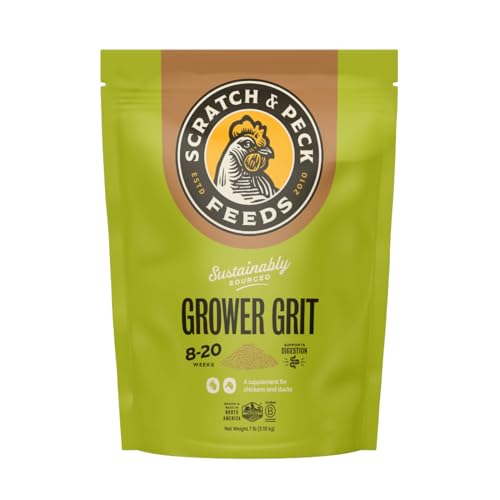
Necessary For Digestion - Made up of insoluble crushed quartzite or granite, grit remains in the bird's gizzard to help with digestion. Grit is an essential part of your bird’s diet and should always be provided.

Natural ingredients: Our liquid chicken elixir formula contains Omega-3, Origanum Oil, Turmeric and essential poultry vitamins (D3, D & E). A natural alternative to artificial chicken medicine like poultry cell.
Best Practices for Providing Grit to Your Flock
Successful grit provision requires careful attention to both type selection and delivery methods for ideal flock health. You’ll need to match grit size to your birds’ ages: chick grit for birds under 3 weeks, grower grit from 3 weeks to 2 months, and layer grit for mature chickens. For best grit presentation, use stable containers mounted at bird level and keep grit separate from feed to allow self-regulation. Since chickens depend on grit to help grind food in their gizzard, providing it consistently is essential for proper digestion. Similar to selecting organic feed options for optimal nutrition, choosing appropriate grit is crucial for digestive health.
Proper grit storage demands dry conditions to prevent clumping. Much like double-yolk eggs require special handling, grit storage needs particular attention to maintain quality. You’ll want to maintain separate, clearly labeled containers for different grit sizes and calcium supplements. For free-range flocks, monitor natural grit availability, but guarantee year-round supplementation for confined birds. Keep containers clean and regularly refilled, positioning them in accessible areas within the coop.

May improve the hardness and durability of egg shells

【Automatic Filling Chicken Feeder】This chicken oyster shell feeder is specifically designed for feeding chicken sand and oyster shells. With its large capacity, it can easily meet the food needs of 6 chickens for up to 15 days. The chicken grit feeder adopts a gravity based feeding mechanism, which ensures a continuous and stable feed supply, eliminating the trouble of daily feeding for you.

Mountable Chicken Feeder: the package includes 2 pack metal chicken oyster shell and grit feeders, come with both screws and hooks for mounting, can be installed in the place as needed; About 10.24 x 3.94 x 3.94 inches/ 26 x 10 x 10 cm, it is large enough to allow chickens to access food for extended periods, significantly reducing the frequency of daily feeding
Health Benefits of Proper Grit Supplementation
When chickens receive proper grit supplementation, they experience significant improvements in their digestive capabilities and overall health outcomes. Both soluble and insoluble grit types work together to maintain ideal digestive balance, with insoluble grit enhancing mechanical breakdown while soluble varieties provide essential calcium for egg production. Since chickens lack natural teeth, grit becomes a crucial element for processing their food effectively. Adding oregano to feed helps boost immunity and provides natural antibiotic properties while supporting digestive health. Granite grit retention in the gizzard enables chickens to effectively process whole grains and scratch feeds that would otherwise be difficult to digest.
You’ll find that proper grit supplementation leads to increased nutrient absorption, improved feed conversion, and enhanced gut microbiota health. Chickens utilizing grit efficiently break down their feed, reducing risks of crop impaction and digestive blockages. The presence of adequate grit in their diet also supports gizzard muscle function and prevents gastrointestinal complications. This improved digestive efficiency directly contributes to your flock’s health, leading to better egg production, stronger shells, and reduced likelihood of nutrition-related health issues.